Pörkölt
The thick paprika stew of Hungarian kitchens
- Local name
- Pörkölt
- Served with
- Nokedli, pickles
- Best eaten at
- A Hungarian csárda
- Pairs with
- Egri Bikavér
What it is
Pörkölt is the thick, deeply flavoured meat stew that forms the backbone of Hungarian home cooking and restaurant menus alike. While international menus often label this dish "goulash", the true gulyás is a herdsmen's soup with far more liquid, potatoes and vegetables. Pörkölt is distinct: it is a concentrated sauce where the meat swims in its own juices, thickened by the slow breakdown of onions and the oil from the paprika.
The name derives from the verb pörkölni, meaning to singe or roast. This etymology hints at the technique rather than just the result. The dish relies on a specific sequence: onions are softened in lard until golden, the meat is browned in that fat, and then sweet paprika is stirred in only after the pan has been removed from the heat to prevent burning. Water or stock is added sparingly, just enough to cover the ingredients, allowing the sauce to reduce over a long period until it coats the meat heavily.
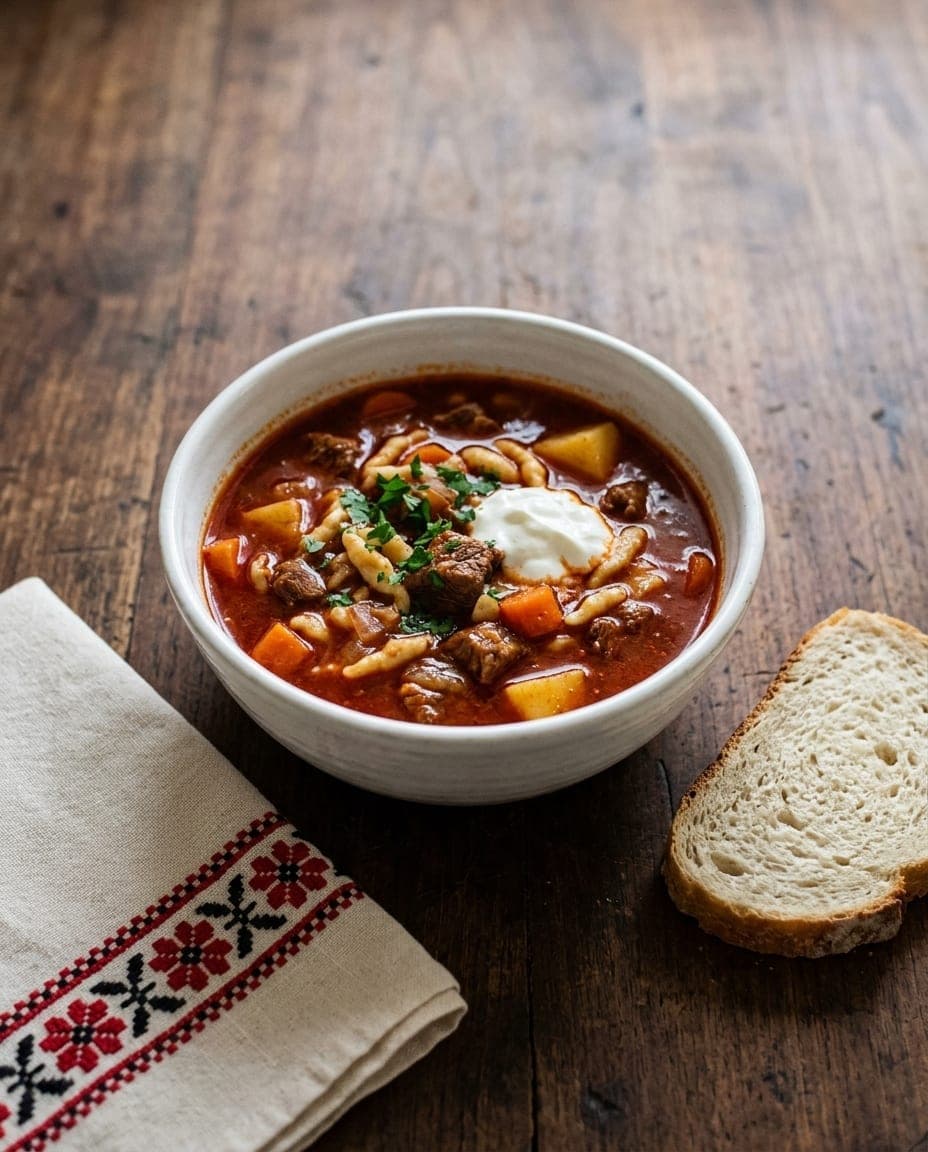
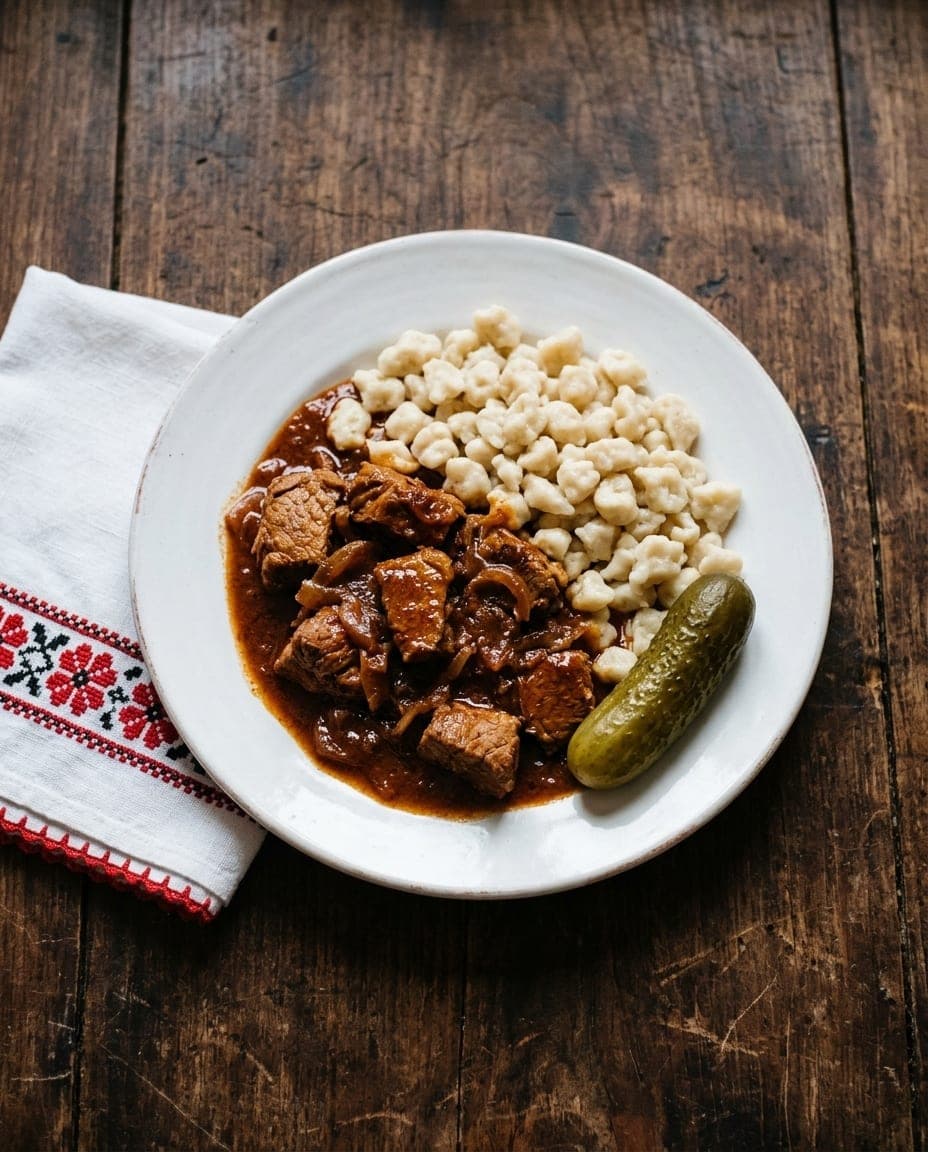
It is a dish of substance. A bowl of it comes with nokedli dumplings, pickles and bread, and nothing in it is thickened with flour or cream: the body is the reduced liquid and the emulsified fat of the paprika.
The origins of the slow roast
The roots of pörkölt lie in the open-air cooking traditions of Hungarian herdsmen, known as pásztorok, who tended cattle and sheep across the Great Plain (Alföld) and the Transdanubian hills. These cooks prepared their meals over campfires in a hanging cauldron, the bogrács. The method of roasting the meat in its own fat with onions was a practical solution for feeding large groups with limited resources.
Over centuries, this rustic technique moved from the open range into the kitchen hearths of village homes and eventually into the kitchens of the capital, Budapest. While the herdsmen's version was mostly beef or mutton, village and town kitchens used whatever was to hand, pork above all. The dish became a staple of the national cuisine in the 19th century not because it was invented in a single moment, but because it perfectly balanced the available ingredients: the abundant livestock, the local onions, and paprika, which reached Hungary around the time of the Ottoman wars but only became an everyday seasoning in the 18th and 19th centuries.
The paprika goes in off the heat because high temperatures turn it dark and acrid, and that timing is most of the difference between a good pot and a burnt one.
What goes into it
Every region and most families claim their own version, and the same three decisions shape all of them. The dish is defined by the quality of the meat, the type of onion used, and the grade of paprika selected.
- Meat: Beef is the most common choice, particularly cuts from the shin or shoulder which benefit from long cooking. Pork, mutton, veal, game such as wild boar, and offal such as tripe are also traditional, each with its own name: marhapörkölt (beef), sertéspörkölt (pork), birkapörkölt (mutton), pacalpörkölt (tripe).
- Onions: The foundation of the dish is a large quantity of onions, finely chopped. They are fried slowly until they dissolve into the sauce, providing sweetness and body without any added starch.
- Paprika: Sweet paprika (édesnemes) is standard, though some cooks add a small amount of hot paprika for depth. The spice must be of high quality to avoid bitterness.
- Lard: Traditional recipes use rendered pork lard rather than vegetable oil or butter. This fat carries the flavour of the paprika and gives the sauce its characteristic gloss.
- Liquid: Only water, stock, or a splash of wine is added.
- Vegetables and seasoning: A green pepper and a tomato (or a spoon of tomato paste) are common additions, along with salt and black pepper; garlic, caraway and marjoram are optional.
It is important to distinguish pörkölt from paprikás. While both dishes share the same base of meat, onions, and paprika, paprikás includes a generous amount of sour cream added at the end, which changes the name, the colour, and the taste entirely. Pörkölt remains dark and red; paprikás turns a creamy, pale orange.
How to eat it
Pörkölt is almost always served as a main course, typically for lunch or dinner. It is too heavy to be a starter and rarely appears on a breakfast menu. The stew is ladled into deep bowls, often accompanied by a mound of nokedli, the small egg dumplings made from flour, eggs, water, and salt. These dumplings are perfect for soaking up the thick sauce, though boiled potatoes, pasta, tarhonya or slices of crusty bread are also common alternatives.
Pickles play an essential role in the meal. A side dish of sour cucumbers, pickled peppers, or a sharp cabbage salad cuts the richness of the meat and the lard. The contrast between the warm, savoury stew and the cold, acidic pickle is a defining feature of the dining experience.
Egri Bikavér, the "Bull's Blood" of Eger, is a classic glass beside it: a blended red with enough tannin to hold against the paprika. Beer does the job too.
The regional variations
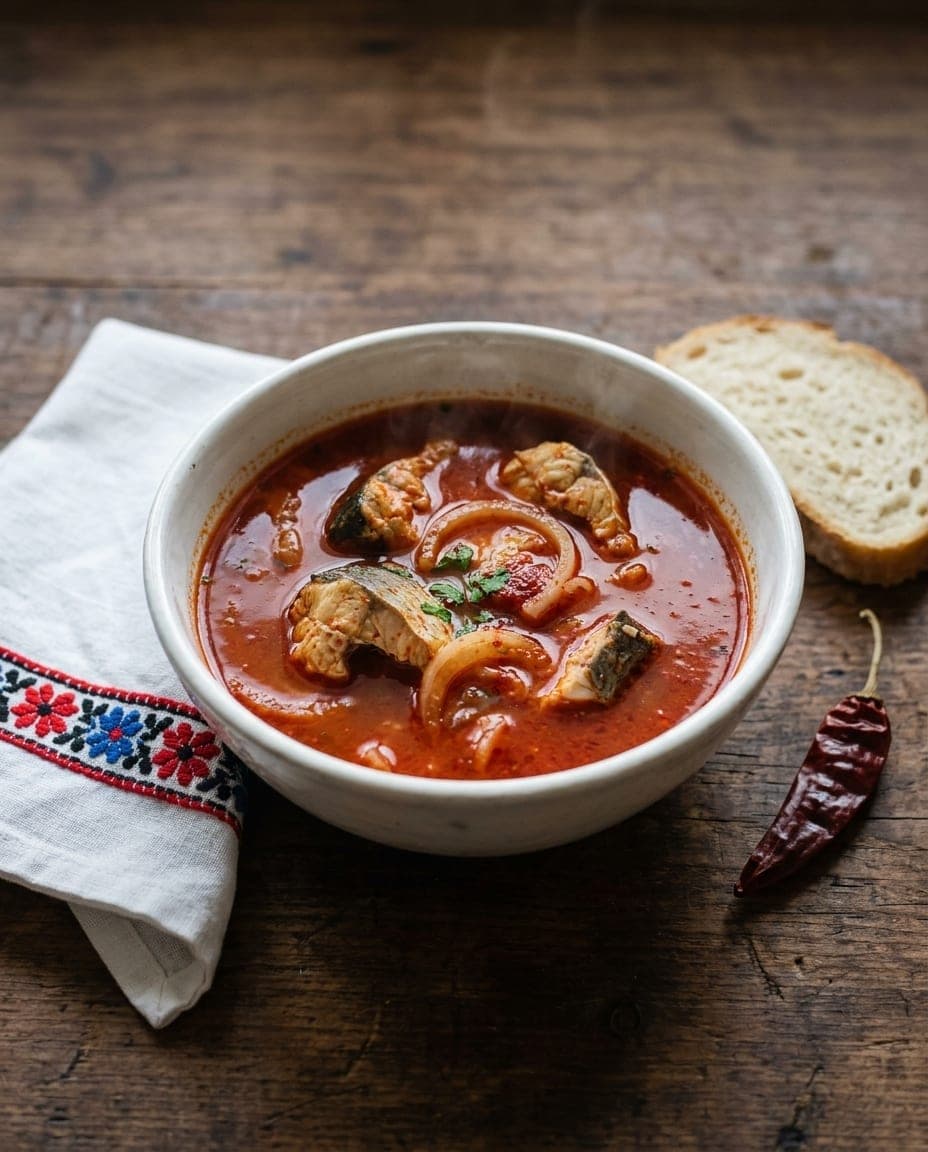
While pörkölt is eaten across the whole country, the specific ingredients often shift depending on the region and the type of livestock available. In the northern hills, game meats like wild boar or venison are common, reflecting the local hunting traditions. Along the Danube and the Tisza, catfish pörkölt (harcsapörkölt) is a riverside favourite, and mushroom pörkölt is the meatless version.
Some regions prefer a slightly thinner consistency, while others insist on a thick, almost dry stew that requires the dumplings to be dipped rather than mixed in. These differences are rarely written down; they are passed down through generations of cooks who judge the dish by eye and taste alone.
Curious facts
- The name is a verb. Unlike many dishes named after their ingredients or place of origin, pörkölt takes its name directly from the cooking action of "singeing" or roasting over fire.
- No flour, no cream. A true pörkölt never uses thickening agents like flour or cornstarch, nor does it contain cream until it is transformed into paprikás. The sauce relies entirely on the reduction of meat juices and onions.
- Paprika off the heat. Adding sweet paprika while the pan is still boiling will burn the spice, turning it bitter and dark. The cook must remove the pan from the fire first to preserve the colour and flavour.
- A dish for sharing. Outdoors, pörkölt is still cooked in a bogrács over a wood fire for a whole party, and served straight from the pot.
- The paprikás distinction. The addition of sour cream changes the name from pörkölt to paprikás, marking it as a different dish rather than a variation of the same stew.
Where to try it
To experience pörkölt in its most authentic form, visit a csárda in the countryside or near a vineyard. These taverns are found throughout Hungary, from the Great Plain to the hills of Transdanubia. In the Győr-Moson-Sopron region, look for a traditional establishment that focuses on local produce and simple, hearty cooking. The plainest versions are in the places that cook a weekly menu for regulars rather than a card for visitors.
The dish is available year-round, though it feels particularly comforting during the cooler months when the air turns crisp. Autumn and winter are its season, with a glass of Egri Bikavér and pickles put up after the last harvest. The experience is less about finding a specific restaurant and more about finding a place where the tradition of the csárda is still alive.
Where to try it
1 region
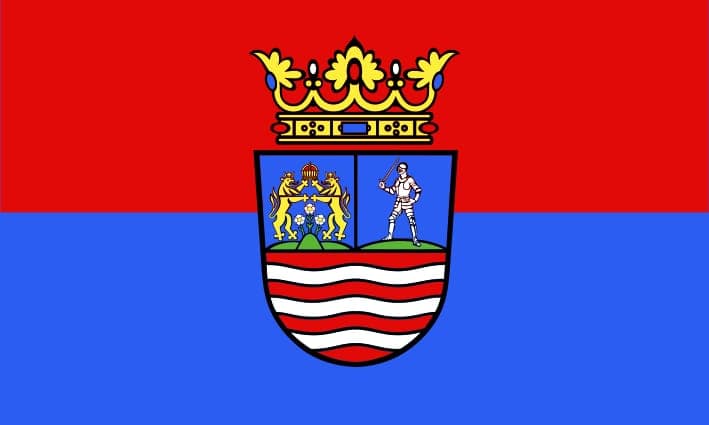
Győr-Moson-Sopron
This region is known for its diverse landscapes, including the scenic Danube River and the fertile plains of the Great Hungarian Plain. Győr, the largest city, boasts a rich history with well-preserved baroque architecture and the impressive Basilica of Győr. The region is also famous for its thermal baths, particularly in the town of Héviz. Wine enthusiasts can explore the vineyards producing quality white wines, especially from the Sopron area. Unique local festivals celebrate traditional crafts and gastronomy, offering a glimpse into authentic Hungarian culture. Lesser-known towns like Sopron and Mosonmagyaróvár reveal medieval heritage and local artisans, inviting a deeper understanding of the region's past and present.