Zwiebelkuchen mit Neuem Wein
Savoury onion tart with fizzy new wine in Baden's harvest season

- Local name
- Zwiebelkuchen mit Neuem Wein
- Best eaten at
- A Straußwirtschaft at harvest time
- Pairs with
- Neuer Wein (Federweißer)
What it is
Zwiebelkuchen mit Neuem Wein is the defining dish of autumn in Baden-Württemberg, a region where the harvest turns the landscape gold before the first frost. The name translates literally to "onion cake with new wine", though it is less a cake and more a substantial savoury tart. It appears on menus in September and October, arriving just as the grapes are picked and the air turns crisp.
The dish consists of a base made from either a soft yeast dough or a crumbly shortcrust, topped with a thick layer of onions that have been slowly softened in fat until they are sweet and golden. This onion bed is bound with a mixture of cream, egg and sour cream, often studded with strips of smoked bacon and sprinkled with caraway seeds. The whole tray is baked until the edges are browned and the filling is set but still moist. It emerges from the oven in large squares or rectangles, cut for sharing, and is eaten warm, often by hand in a rustic setting.
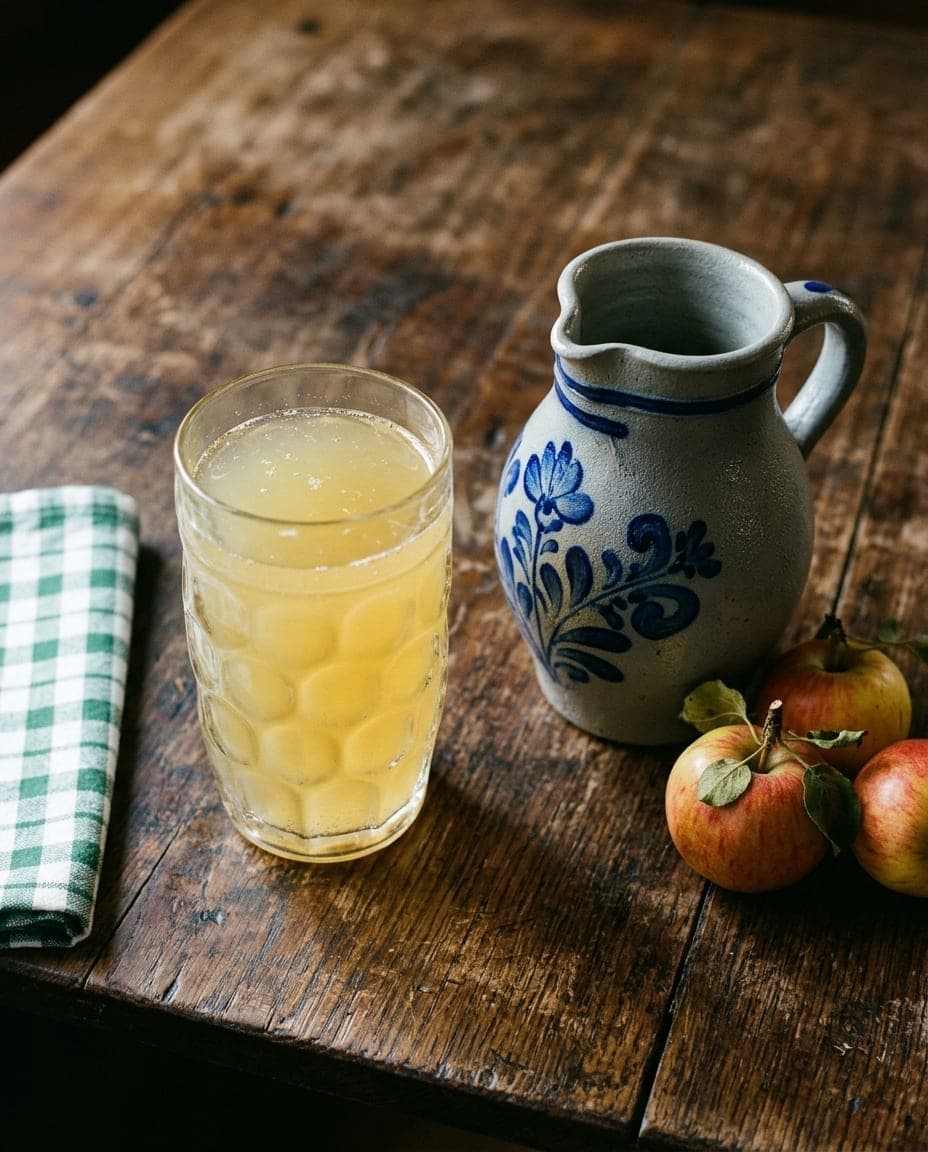
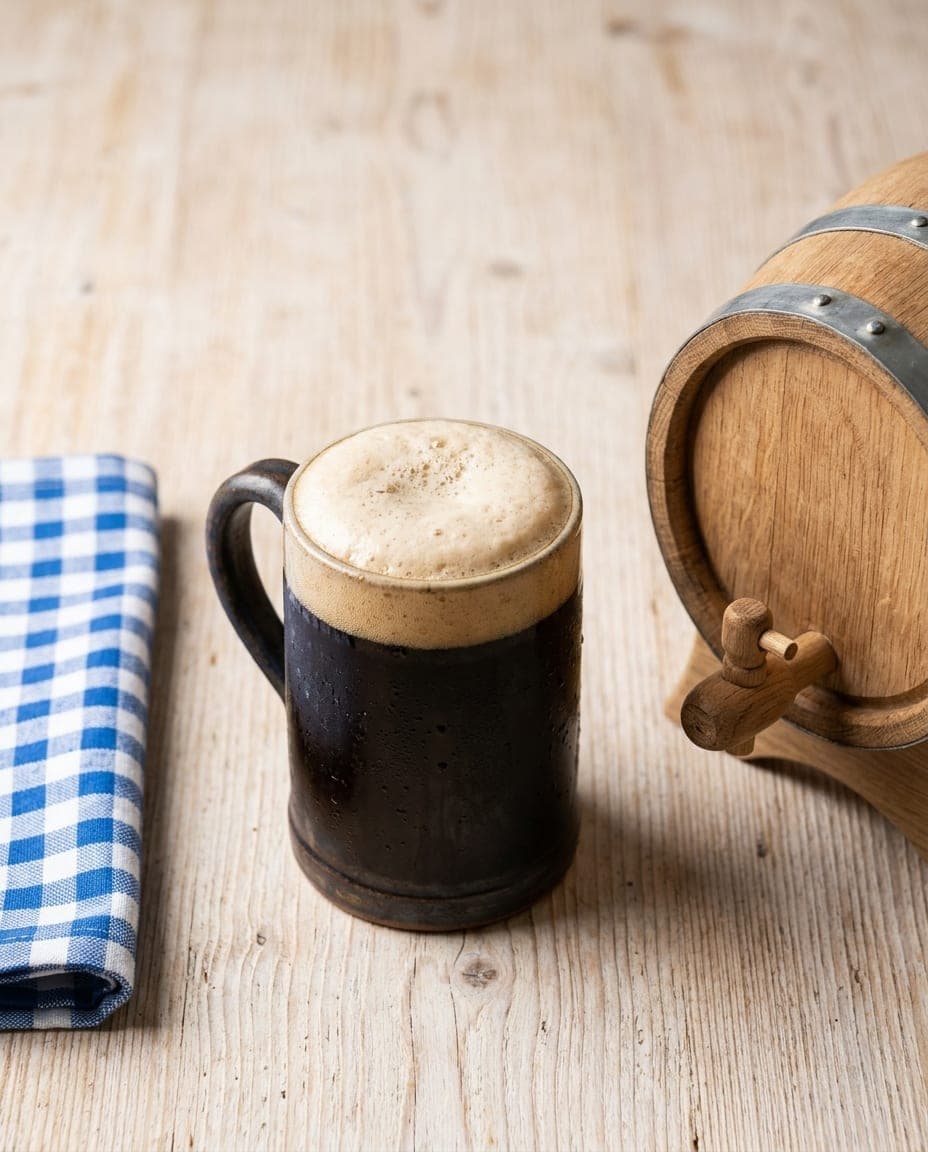
The "mit Neuem Wein" part of the title is not an optional side order. The dish is designed to be eaten with Neuer Wein, the cloudy, partly fermented new wine of the current year. Known as Neuer Süßer or Sauser in the south-west and as Federweißer in much of the rest of Germany, this wine is still working in the bottle, producing carbon dioxide bubbles that give it a slight fizz and a sweet, yeasty taste.
Where it comes from
This dish belongs firmly to the wine regions of south-west Germany: Baden-Württemberg, though its presence extends into neighbouring Franconia, the Palatinate and Rheinhessen. Bakeries across Germany sell onion tart in autumn, but its heart lies in the vineyards of Baden and Württemberg, where it is part of the harvest calendar rather than simply a bakery item.
The tradition is tied closely to the Straußwirtschaft, a simple seasonal tavern run by wine growers themselves and known in Württemberg as a Besenwirtschaft. A bunch of twigs or a broom hung outside the property signals that the grower is serving their own wine with simple food. In Baden-Württemberg these taverns may open for up to four months a year, split into at most two periods, and many choose the autumn harvest weeks.
The dish is often said to have fed workers during the long days of grape picking, the bacon and cream providing calories for heavy labour. Over time, it became a celebrated ritual of the harvest season, marking the end of the growing year and the beginning of the cellar work.
How it is made
There is no single official recipe, but the structure remains consistent across the wine regions. The base is typically a simple dough, either a leavened yeast mixture that puffs up slightly or a buttery shortcrust that offers a firm crunch. The onions are the star; they must be sliced thinly and cooked slowly in bacon fat until they lose their sharp bite and turn sweet and translucent.
The binding agent is crucial for texture. A mixture of cream, fresh eggs and sour cream is poured over the onions to create a custard-like filling that sets during baking. Strips of smoked bacon are scattered throughout the onion layer, adding a smoky saltiness that cuts through the sweetness of the caramelised vegetables.
The tart is baked in a large rectangular tray and served warm; the texture should be soft and rich, not dry or crumbly. While some versions might include cheese or herbs, the core ingredients of onion, bacon, cream and caraway remain the standard across Baden-Württemberg.
How to eat it
Zwiebelkuchen mit Neuem Wein is not a dish for a formal dining room with white tablecloths. The experience belongs at a Straußwirtschaft, often just a wooden counter and a few tables in a grower's farm room, cellar or courtyard.
The tart arrives in large squares, often stacked on a plate or tray, and is eaten by hand or with a fork. The new wine is poured into glasses from bottles that are only loosely capped, allowing the gas produced by the ongoing fermentation to escape. This fizz makes the wine feel lively and fresh, contrasting beautifully with the rich, warm tart.
The combination works because the sweetness of the new wine balances the saltiness of the bacon and the sharpness of the caraway, while the fizzy nature of the wine cuts through the heaviness of the cream.
Curious facts
- The loose cap. New wine bottles come with a loose or vented cap because the fermentation is still active. If sealed tightly, the pressure from the gas could cause the bottle to burst, so they are kept upright.
- A seasonal window. The new wine is available only for a few weeks in autumn, usually from early September to late October. Once the harvest is over, the Federweißer disappears from menus until the next year.
- The broom sign. A Straußwirtschaft is traditionally marked by a bunch of twigs, the Strauß, or in Württemberg a broom, the Besen, hanging outside the door, signalling that the grower is serving their own wine and food.
- Not a cake. Despite the name "Kuchen", which in German covers both cakes and tarts, this is a savoury tart, not a sweet dessert. It is often eaten as a main meal or a heavy snack rather than a pastry after dinner.
- Regional identity. Onion tart with new wine is an autumn ritual in many German wine regions, from the Palatinate to Franconia, but few places embrace it as wholeheartedly as Baden and Württemberg.
Where to try it
The best place to eat Zwiebelkuchen mit Neuem Wein is at a Straußwirtschaft or Besenwirtschaft in the wine regions of Baden or Württemberg during September and October. These small taverns are scattered along the vineyard slopes, from the hills around Stuttgart, Heilbronn and the Remstal to the Kaiserstuhl and the valleys near Heidelberg and Freiburg. Many growers open specifically for the season, offering a short menu built around the onion tart and their new wine.
Where to try it
1 region
 Camper Van Rentals12 destinations
Baden-Württemberg
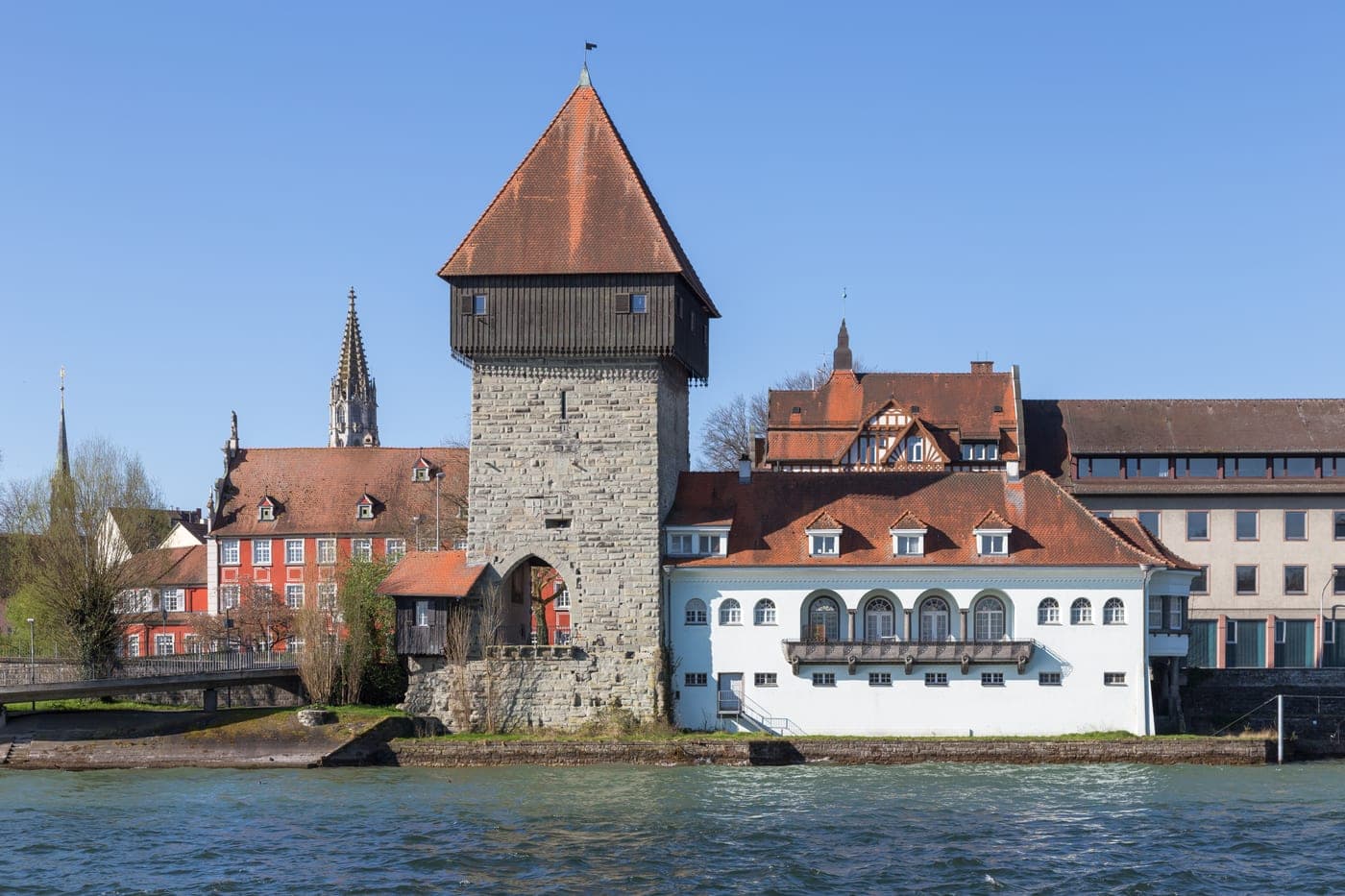
Baden-Württemberg fills Germany's southwest corner, from the Rhine plain in the west to the limestone plateau of the Swabian Jura in the east. The land moves in slow shifts here: vineyard slopes give way to dense forest, forest opens onto grassland and cave country, and everything eventually settles toward the wide, calm water of Lake Constance in the south. It is a region built for a wandering pace, town by town, valley by valley. Wine gives much of the region its rhythm. On the Upper Rhine, the volcanic hill of the Kaiserstuhl holds terraced vineyards that catch unusually strong sun for Germany, and small growers here work Spätburgunder and Grauburgunder grapes into wines poured in village Weinstuben. South of it, the Markgräflerland carries its own soft vineyard hills toward the Swiss border, linked by paths that wind through the vines from one wine village to the next. Near Stuttgart, the Neckar valley holds the Württemberg wine region, where Trollinger and Lemberger vines grow on steep terraces braced by dry stone walls that vintners still mend by hand. East of the Rhine, the Black Forest rises into ridges of spruce and fir, its valleys dotted with timber farmhouses under heavy, sloping roofs. Clockmaking has never quite left these villages, and workshops still turn out cuckoo clocks in the old way. Freiburg im Breisgau sits at the forest's western edge, its old town threaded by small open channels called Bächle that run past the cathedral square and into the surrounding lanes. Further into the hills, half-timbered towns such as Gengenbach keep market squares lined with houses that lean gently with age, and Fasnet carnival traditions bring out carved wooden masks each winter. Castles mark the region's high points. Heidelberg's red sandstone ruin looks down over the Neckar and the baroque rooftops of the old town below, its terraces a well-known spot for watching the river. Further south, Hohenzollern Castle sits on a steep, isolated hill at the edge of the Swabian Jura, its towers visible above the surrounding farmland long before the castle comes fully into view. Smaller fortress towns between the two hold quieter versions of the same story, with gatehouses and keeps built into hillsides above vineyards or forest. Tübingen keeps its own slow tradition on the Neckar, where flat-bottomed Stocherkahn boats are punted along the river below a row of tall, colourful houses. Students and residents share the same narrow lanes that have shaped the town for generations. South and east of Tübingen, the Swabian Jura opens into limestone grassland, sheep pasture, and juniper heath, cut through by dry valleys and cave systems that draw walkers onto marked trails. At the region's southern edge, Lake Constance spreads into a broad expanse of water shared with Switzerland and Austria. Orchards, vineyards, and small harbour towns line its shore, where fishing boats still go out early. Reed beds and level paths follow much of the water's edge, giving long, flat stretches for walking or cycling between towns without losing sight of the lake. Festivals mark the region's calendar as much as its landscape does. Wine villages hold harvest festivals in autumn, serving new wine alongside onion tart in courtyards strung with lights. Winter brings Fasnet, with its carved masks and processions through Black Forest towns. Spring and summer bring open-air concerts in castle courtyards and vineyard walks led by local growers. Bicycles and walking boots suit this region well. Marked cycling routes follow the Rhine plain past vineyards and orchards, climb gradually into Black Forest valleys beside running streams, and trace the Lake Constance shore through reed beds and harbour towns. Hiking paths cover the same ground more slowly, crossing vineyard terraces, forest ridges, and Jura grassland, and often link one small town to the next without a long detour. Each part of Baden-Württemberg keeps its own version of this slow character: a wine village square in the Kaiserstuhl, a castle terrace above the Neckar, a quiet stretch of Bodensee shore, a forest clearing where the only sound is water moving somewhere close by.
Camper Van RentalsBoat RentalsHikingCabins