Westfälischer Pumpernickel
Dark Westphalian rye bread steam-baked for 16 hours or more
- Vegetarian
- Local name
- Westfälischer Pumpernickel
- Served with
- Ham, cheese, butter
What it is
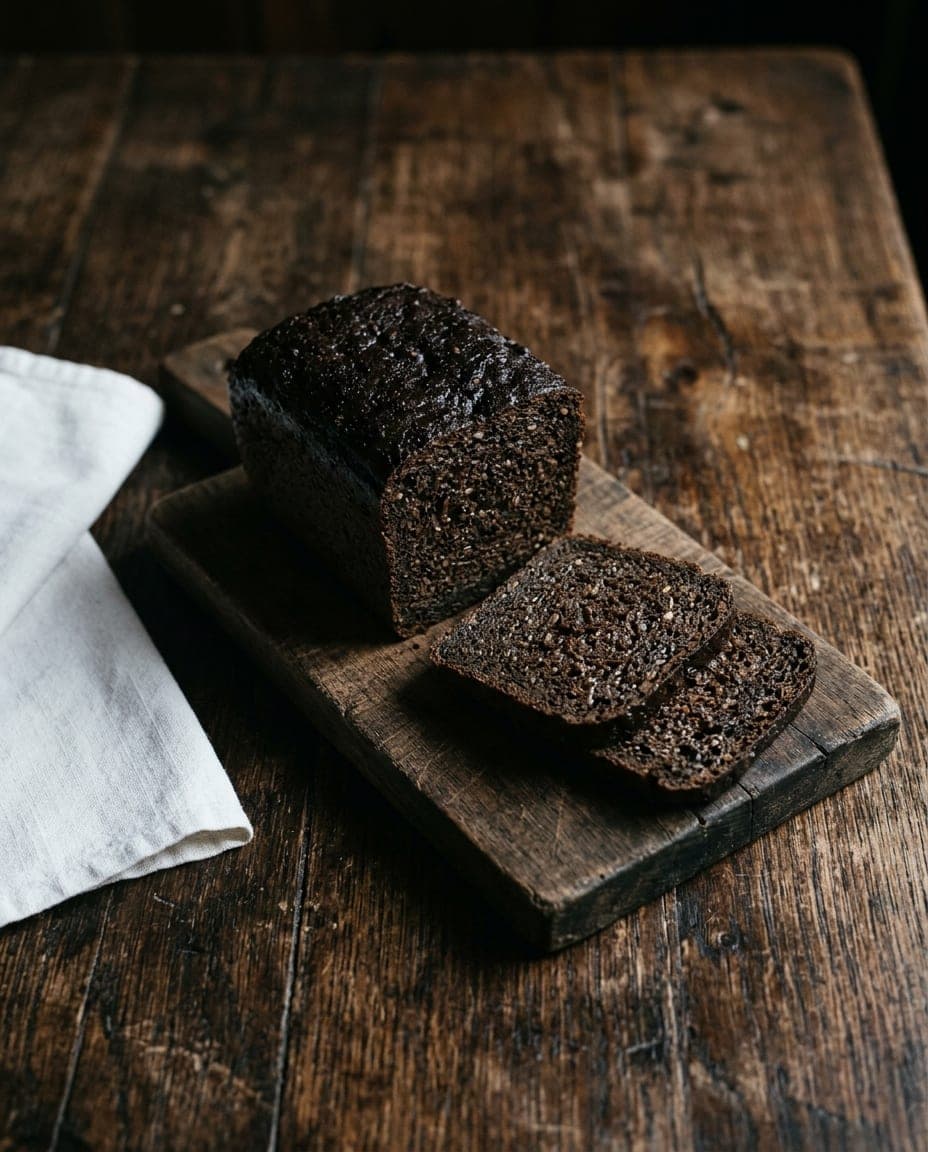
Westfälischer Pumpernickel is a bread defined by its depth rather than its volume. It comes from Westphalia, the historic region that today forms the north-eastern part of North Rhine-Westphalia, and is a dark, dense loaf made from coarsely ground whole rye and cracked rye grain. Traditional recipes contain no wheat flour and no colouring. Instead, its deep black hue and distinctive caramel sweetness are the result of a slow, steam-baking process that lasts for at least sixteen hours, sometimes longer.
The texture is heavy and moist with a fine, close grain. It does not crumble like a standard loaf but holds together firmly. Because it is so dense, it is sliced very thin, so that a slice can be eaten without being overwhelming. Sealed and packaged, the bread keeps for months, which made it a practical loaf for households where baking was labour-intensive and could not be repeated often.
How the steam makes the bread
The method of production sets this rye apart from almost all other European breads. The dough is placed into closed tins, which are then baked at relatively low temperatures in a steam-filled chamber. The environment inside the tin remains saturated with moisture throughout the baking cycle. This prevents a crust from forming in the conventional sense; instead, the outer layer of the dough softens and integrates with the rest of the loaf.
This slow, moist cooking allows the starches and sugars in the rye to caramelise and undergo a Maillard reaction over many hours. The result is a complex taste that is nutty, malty and faintly sweet. The deep, near-black colour and that hint of sweetness come from the length of the bake. Shorter baking times produce a lighter, less intense bread that does not carry the same character.
The Westphalian tradition
Westfälischer Pumpernickel belongs to the rural landscapes of Westphalia. In this region, rye was the dominant crop for centuries, growing well on poor, sandy soils where wheat struggled. Rye bread became a cornerstone of local life, and the long-baked Pumpernickel became the region's best-known loaf.
The process has always required careful attention: if the temperature rose too high, the bread would dry out and crack, and if it stayed too low, the bread might remain underbaked inside. Success relied on experience rather than precise measurement. Today, while industrial production exists, bakeries in Westphalia still make the bread in the traditional way, with long hours in closed tins.
What goes into it
The ingredients are limited to what the rye grain provides, the sourdough that leavens it and the water needed to bind it. There is no wheat flour to lighten the texture, and traditional recipes rely on the long bake rather than on added sweeteners for flavour.
- Whole rye meal, coarsely ground to provide body and a slightly gritty texture.
- Cracked rye grains, which absorb water slowly and contribute to the dense structure.
- Rye sourdough, which gives the bread its gentle acidity.
- Water, used to form the dough and create the steam inside the closed tins.
- Salt, added in small amounts for flavour balance.
The result is a bread that is almost black, heavy and moist. It does not rise significantly, so it remains compact. The sweetness perceived on the tongue is a byproduct of the long exposure to heat and steam.
How it is eaten
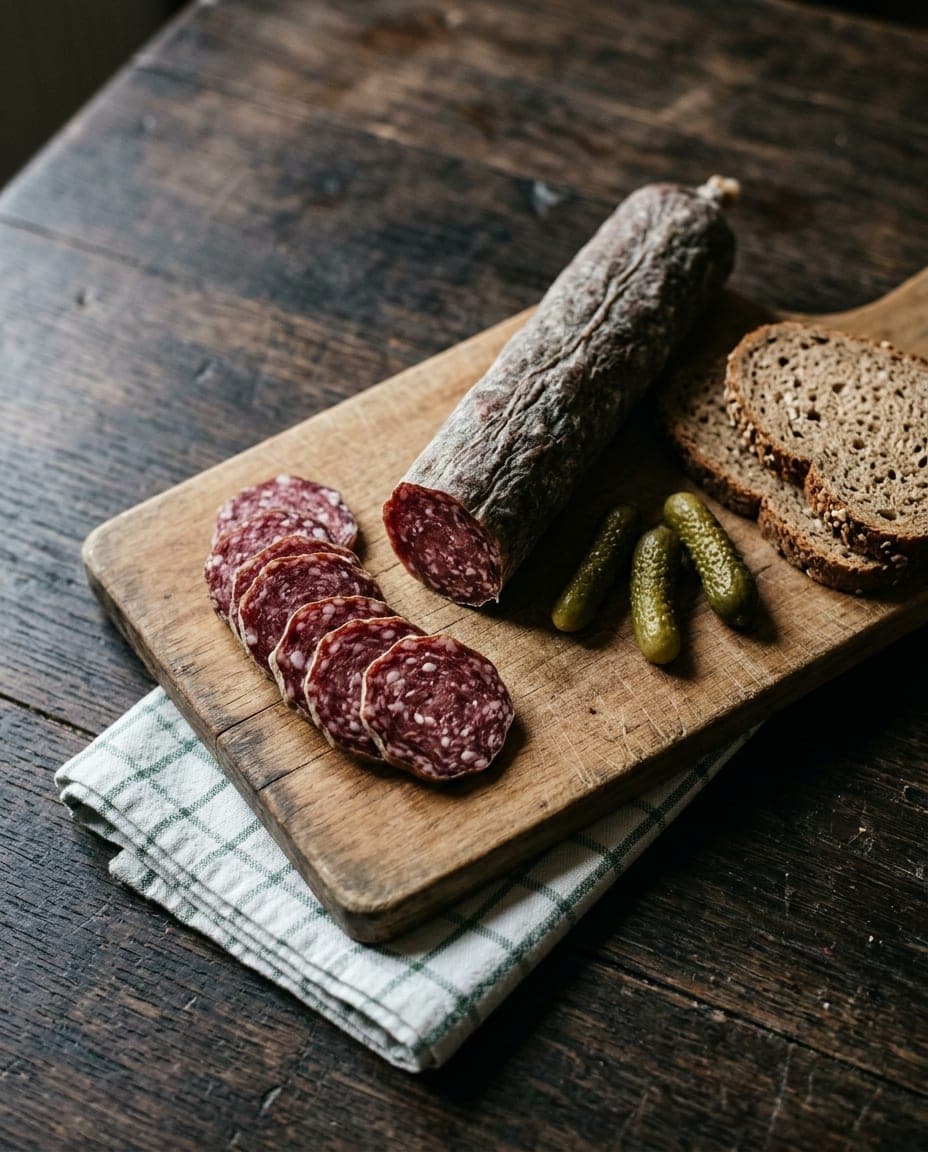
In Westphalia, the bread is rarely eaten on its own. Its density and intense flavour suggest that it is meant to be paired with other foods. The traditional serving style involves slicing the loaf thin and spreading it with butter, then topping it with cold cuts or cheese. Ham, particularly smoked Westphalian ham, is a classic accompaniment, along with cheese and smoked fish such as herring or salmon.
While savoury combinations are most common, some households serve it with sweet toppings. A thin layer of honey or jam highlights the natural caramel notes that develop during the bake. The bread is substantial enough to serve as a base for breakfast or a light lunch.
Curious facts
- The name origin is disputed. Many stories explain the word "Pumpernickel", but none is verified. A popular explanation links it to the dialect word pumpern, for a dull thud or breaking wind, and Nickel, a pet form of Nikolaus also used for a goblin or rascal, a joke about the bread's heaviness.
- No colouring agents. Unlike some commercial dark breads that use caramel colour or malt to look dark, traditional Westfälischer Pumpernickel gets its blackness from the long baking process.
- It keeps for months. The acidity of the sourdough and the sealed baking allow packaged loaves to stay edible for a long time without spoiling.
- The crust disappears. Because the tins are closed during baking, the outer layer of the dough softens and merges with the crumb, so there is no hard crust to break off.
- A regional identity. The bread is so tied to Westphalia that it is regarded as part of the region's culinary heritage, alongside Westphalian ham.
Where to try it
The best place to taste authentic Westfälischer Pumpernickel is Westphalia itself, particularly in small towns and rural villages where traditional bakeries still operate. In cities like Münster or Paderborn it is easy to find in supermarkets, but the true character is often best found in smaller neighbourhood bakeries.
A local Bäckerei that advertises the long baking time or its steam chambers is the best sign of the real thing.
Where to try it
1 region
 Cabins15 destinations
North Rhine-Westphalia
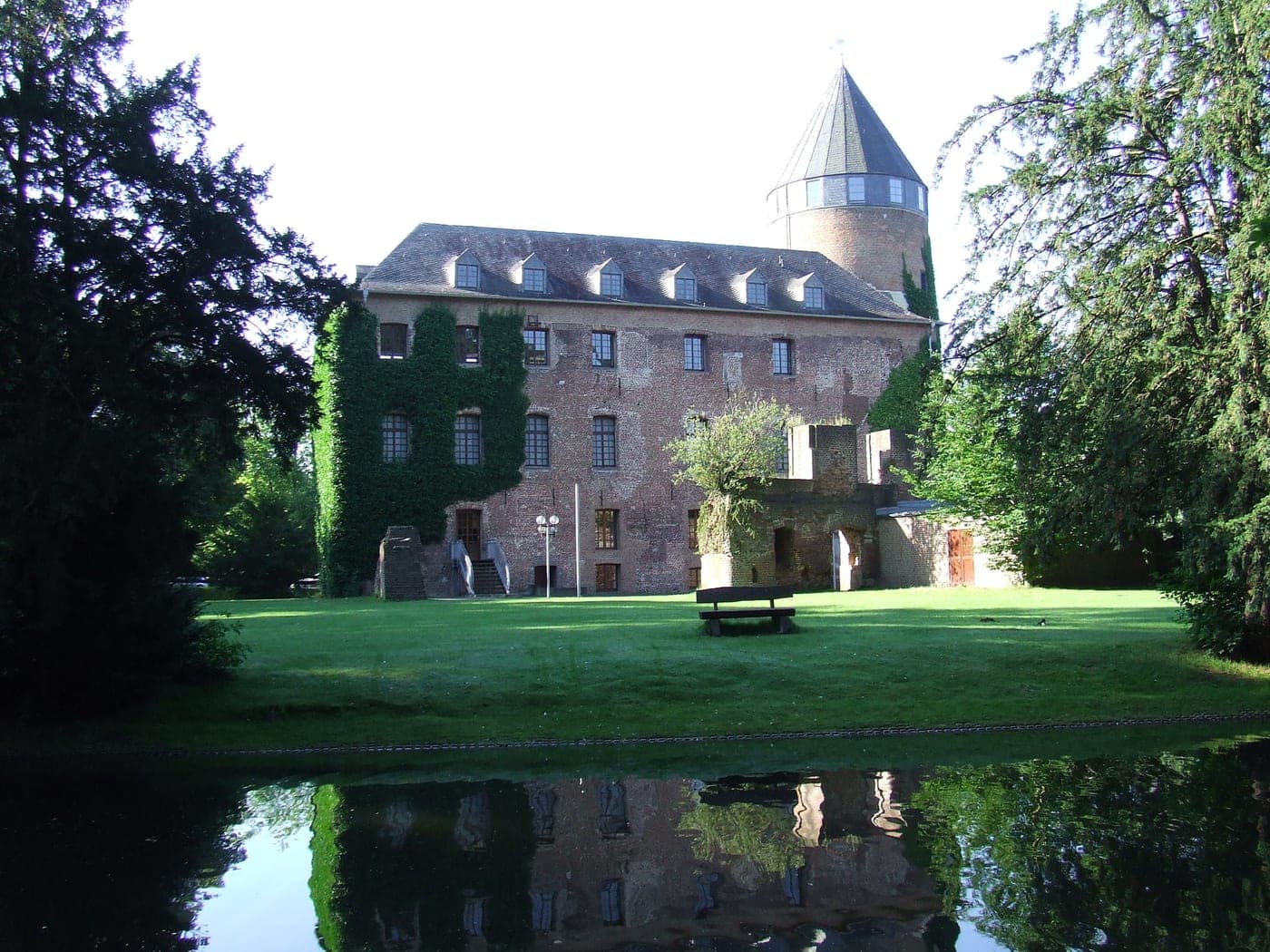
Located in western Germany, this region is the largest in the country and is known for its diverse landscapes, from the scenic Rhine River valleys to the lush hills of the Sauerland. The area is rich in industrial heritage, with cities like Dortmund and Essen showcasing their transformation from heavy industry to cultural hubs. Düsseldorf offers a vibrant arts scene and innovative fashion, while Cologne is famous for its stunning cathedral. The region also boasts picturesque towns such as Monschau, known for its half-timbered houses, and Bad Honnef, a charming spa town. Unique local dishes and breweries enhance the cultural experience, along with numerous hiking trails that connect visitors to its natural beauty.
CabinsHikingCastlesCamper Van Rentals