Schweinshaxe
Crisp-skinned roasted pork knuckle from Munich's beer halls
- Local name
- Schweinshaxe
- Served with
- Dumplings, sauerkraut
- Best eaten at
- A Munich beer hall
- Pairs with
- Helles or Dunkel
The heart of Bavarian meat
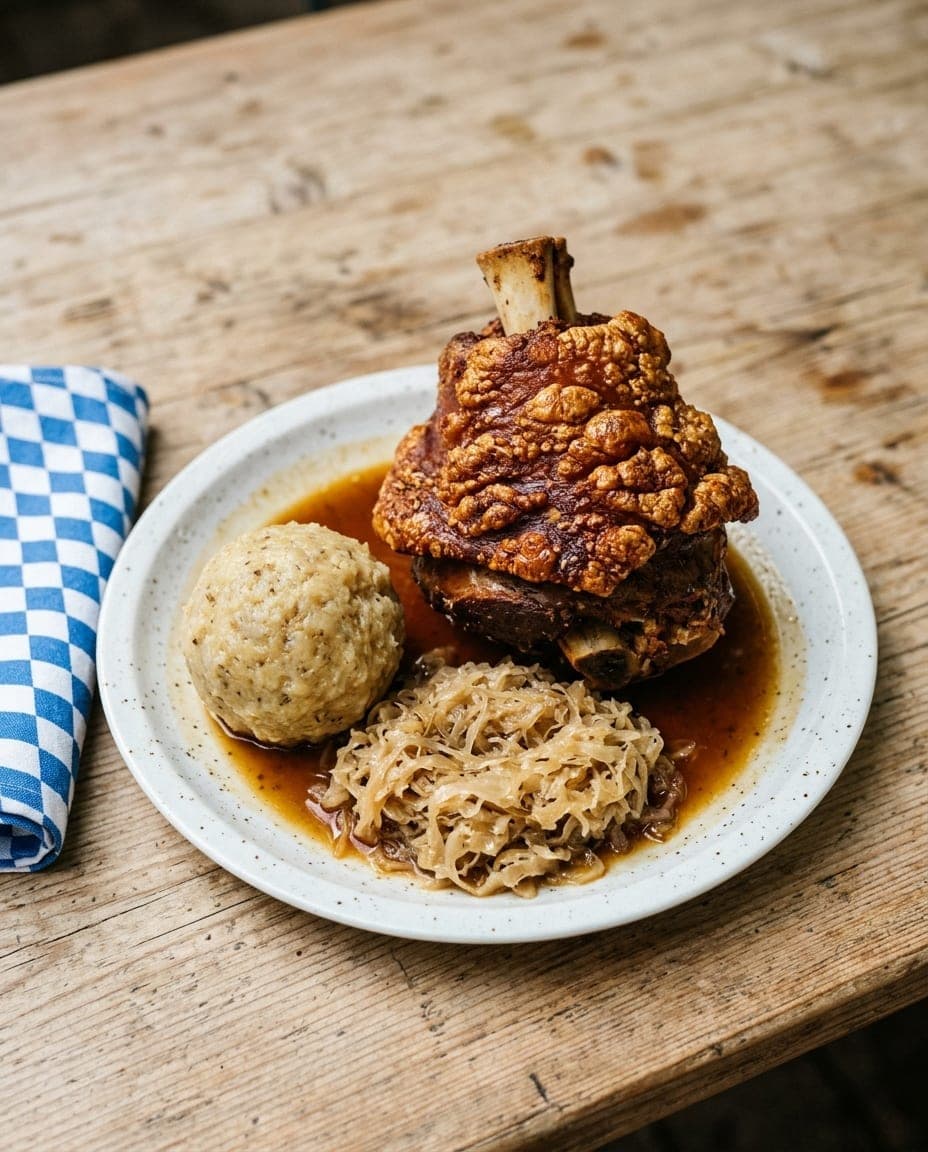
Schweinshaxe, or simply Haxn in Bavaria, is a roasted pork knuckle, usually the hind shank, that has become one of the defining dishes of Bavarian cuisine. It is not merely a meal but a substantial event, typically served whole with the bone still in place. The meat inside becomes soft and tender after hours of slow roasting, while the skin transforms into a hard, blistered shell of crackling that demands a knife to cut through. This contrast between the yielding flesh and the brittle rind is the central experience of the dish.
The dish is a staple of the Bavarian Wirtshaus, or country tavern, and is especially associated with Munich, the Bavarian capital, where large beer halls serve it as a main course. The portion is substantial, usually a full meal in itself for an adult. While similar cuts are eaten across Europe, the Bavarian version is distinct from the northern German Eisbein, which is cured and boiled rather than roasted, resulting in a pale, soft texture without the signature crackling.
The story of the roast
The history of the Schweinshaxe is less about a single inventor and more about the evolution of peasant cooking into a celebrated regional speciality. The shank is an inexpensive, tough cut that requires long, slow cooking to break down its connective tissue. Roasting it in a hot oven allows the fat to render slowly while the skin dries out and hardens.
Over time, the dish moved from the farm table to the public house. In the beer halls and taverns, hearty, filling food was needed to accompany the local brews, and the Schweinshaxe provided exactly that. It is now considered a classic of Bavarian hospitality, appearing on menus in Munich and throughout the region for lunch and dinner.
How it is prepared
The preparation relies on patience rather than complex technique. The skin of the knuckle is typically scored to help the heat penetrate and the fat render evenly. It is then roasted for several hours, often basted with its own juices or with beer to keep the meat moist while the skin crisps. Many cooks finish the dish with a blast of intense heat so that the crackling becomes shatteringly hard.
The result is a knuckle where the meat falls away from the bone with minimal effort, yet the skin remains hard enough to require cutting. The roasting juices are collected and reduced to form a dark, rich gravy that is served alongside or poured over the meat. When beer has been used for basting, it adds a subtle bitterness and depth to the sauce.
What goes into it
There is no single official recipe, but the components remain consistent across traditional kitchens in Bavaria:
- The pork knuckle: Usually a hind shank, bone in, roasted until the meat is tender and the skin is a hard crust.
- Dumplings: Bread dumplings (Semmelknödel) or potato dumplings (Kartoffelknödel), which absorb the gravy.
- Sauerkraut or cabbage salad: A sharp, acidic counterpoint to the fat of the pork and the heaviness of the dumplings.
- Gravy: A dark sauce made from the roasting juices, often with beer, served in a jug or poured over the plate.
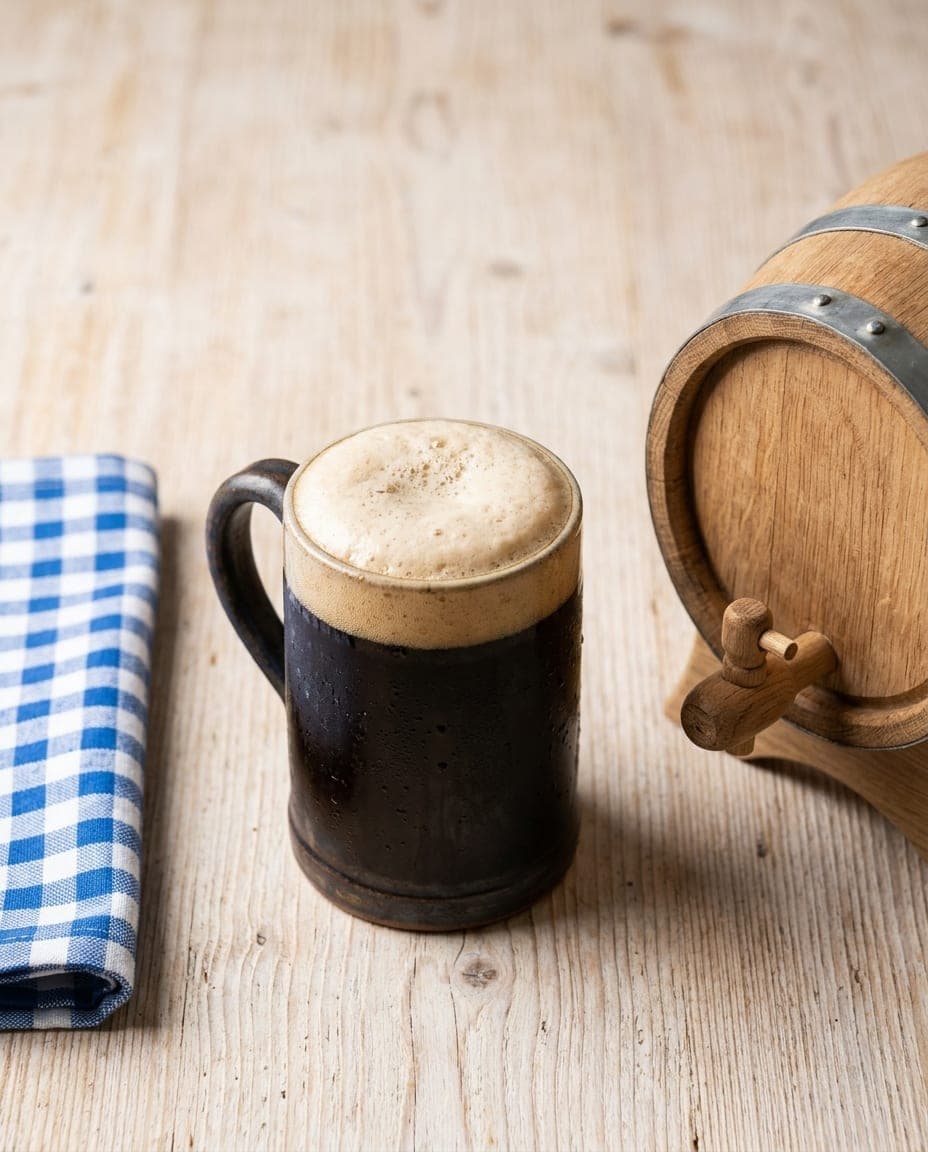
- Beer: Typically a local Helles or Dunkel, used for basting and as a drinking companion.
The combination creates a heavy, savoury plate where the salty, fatty meat is balanced by the tang of the cabbage and the neutral softness of the dumpling.
How it is eaten
Schweinshaxe is served as a main course, the portion large enough to be a meal in itself. It is usually presented whole on a large plate or platter, the bone standing out of the meat.
Diners use a knife and fork to separate the meat from the bone, sometimes steadying the knuckle by the bone while cutting. The crackling is broken or bitten through, offering a satisfying crunch before the soft interior gives way. A piece of dumpling is used to mop up the remaining gravy on the plate.
The dish is at its most atmospheric in a Munich beer hall. It pairs naturally with a Helles, a pale lager that refreshes the palate, or a Dunkel, a darker malty beer that complements the roasted notes of the pork.
Curious facts
- The bone remains. Unlike many roasts carved before serving, the Schweinshaxe arrives whole with the bone intact.
- A northern contrast. The dish is often confused with the northern German Eisbein, but that version is cured and boiled, resulting in a pale, soft texture without the crispy skin.
- A heavy lift. A hind shank can weigh well over a kilogram raw, which is why some diners share one or choose the smaller front shank.
- The gravy secret. The dark sauce is often enriched with the beer used to baste the meat, adding a subtle maltiness.
- A year-round staple. Schweinshaxe is served in Bavarian beer halls throughout the year, regardless of the weather.
- The crackling test. The skin should crack rather than bend; a chewy rind is the sign of a roast that was not finished properly.
Where to try it
The classic setting for Schweinshaxe is a traditional beer hall in Munich, or a Wirtshaus in the city's outskirts. These are not fine dining restaurants but places where long wooden tables, communal seating and loud conversation are the norm, with the focus on the quality of the roast rather than elaborate presentation.
While Munich is the most famous destination for the dish, it is also widely available across Bavaria, particularly in towns known for their beer gardens and taverns. Places that specialise in traditional Bavarian fare usually serve the best versions.
Where to try it
1 destination
 Camper Van Rentals
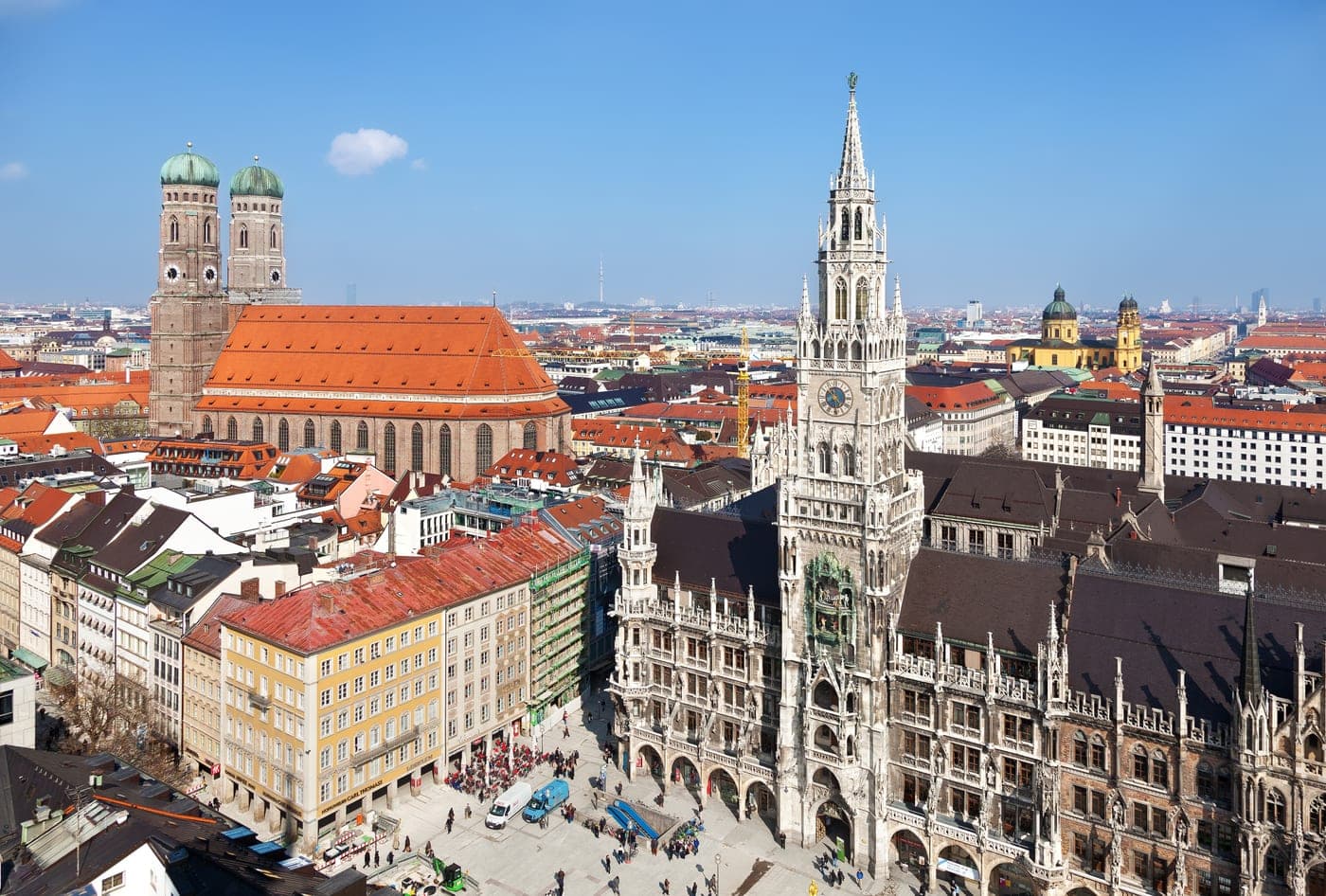
Munich
Bavaria's capital with beer gardens, baroque architecture, and Alpine access
Camper Van Rentals
1 region
 Cabins31 destinations
Bavaria
Bavaria is Germany's largest state, and one of its most varied. In the south, the land rises into the Alps, with peaks above Berchtesgaden and Garmisch-Partenkirchen, and lakes such as the Chiemsee and the Königssee nearby. Further north, the hills flatten into the Franconian wine country, where Silvaner and Müller-Thurgau vines cover slopes above the Main river. Between these two landscapes sit market towns, river cities, and castle villages that reward slow attention. Munich, the state capital, has its beer gardens, its baroque churches, and its markets selling Weißwurst in the morning. But much of Bavaria's character lives outside the capital, in places built for a quieter pace. Regensburg, on the Danube, keeps a medieval old town of narrow lanes, stone bridges, and merchant houses that once served river trade. Bamberg spreads across seven hills and several arms of the Regnitz river, and is known for its smoked Rauchbier, brewed in local taverns much as it always has been. Rothenburg ob der Tauber sits inside its own medieval walls, with half-timbered houses and a walkway along the ramparts that circles the whole old town. Franconia, in the north, is Bavaria's wine country. Vineyards climb the terraces above Würzburg and along the Main, and small wine villages sell their own vintages from cellar doors and courtyard taverns. The wine here is usually bottled in the round Bocksbeutel flask, a shape associated with the region. Cycling paths follow the river through the vines, linking one village to the next at an easy, level pace, past chapels, wine presses, and stone crosses set among the rows. In the Allgäu, close to the Austrian border, the town of Füssen sits below the castle hill of Neuschwanstein, built by King Ludwig II in the nineteenth century. The castle draws attention, but the surrounding countryside holds its own appeal: lakes, foothills, and villages where farming and dairy traditions continue much as before. Bavaria's lakes add another layer of slowness. The Chiemsee, the largest, can be crossed by boat to its island monasteries, where former royal buildings and quiet cloisters sit surrounded by water and reed beds. Smaller lakes near the Alpine foothills, such as the Staffelsee and the Ammersee, are ringed by paths used for walking and cycling rather than for speed. Food and drink run through the region's identity. Beer gardens, some centuries old, work on a simple principle: food brought from home, a beer ordered at the counter, a seat under chestnut trees for as long as the weather allows. Franconian taverns serve local wine alongside dishes built around potatoes, dumplings, and river fish. Bakeries sell pretzels still warm from the oven, and markets in towns like Nuremberg keep old traditions of spiced gingerbread and roasted sausages. A morning market in Regensburg, an afternoon among the Franconian vines, an evening in a Bamberg tavern: each has its own pace. Villages across Bavaria keep their own customs — wine festivals in Franconia, woodcarving and dairy traditions in the Alpine foothills. Mountains and vineyards, river cities and castle villages: Bavaria fits them into a single state, each within reach of the next.
CabinsCastlesHikingCamper Van Rentals