Schwarzwälder Kirschwasser
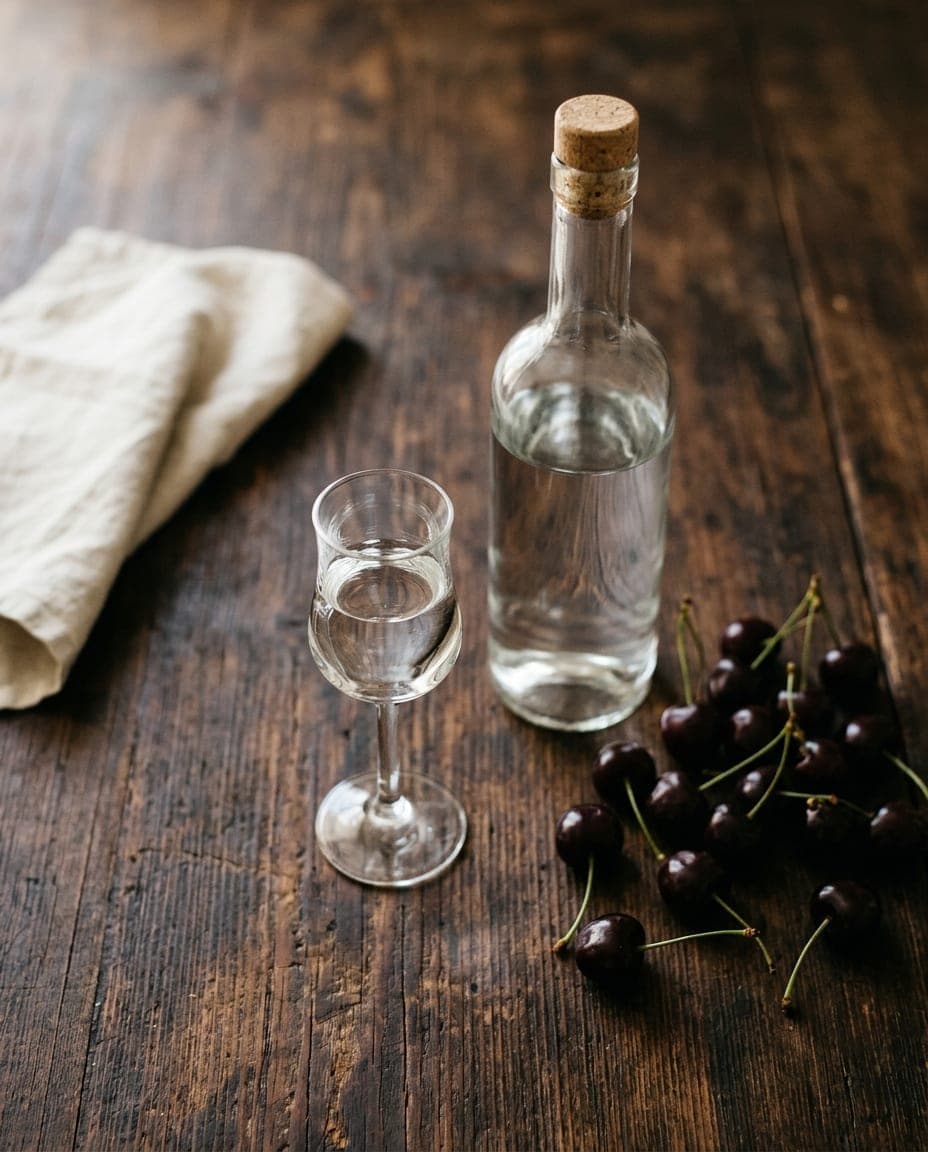
Clear cherry brandy from Black Forest cherries, served neat as a digestif
- Alcoholic
- Local name
- Schwarzwälder Kirschwasser
- Served
- Neat, small glass, as digestif
- Best eaten at
- A Black Forest Gasthaus
- Pairs with
- Black Forest cake
What it is
Schwarzwälder Kirschwasser, often shortened to Kirschwasser or Kirsch, is a clear fruit spirit distilled from fermented whole cherries grown in Germany's Black Forest region. Unlike many other fruit spirits that are sweetened or aged in wooden casks, this drink remains water-clear and unsweetened, with a bracing alcoholic strength. It is not a liqueur, nor is it a wine; it is a pure distillate of the cherry, including its stones, which impart a subtle bitter-almond note to the final liquid.
The spirit is one of the defining products of the Black Forest in Baden-Württemberg, where it has long been distilled. While fruit spirits exist throughout Germany, Schwarzwälder Kirschwasser is a registered geographical indication for spirit drinks in the EU. This means that only brandy distilled in the Black Forest from cherries grown there can bear the name. The result is a drink that tastes of the place it comes from: sharp, dry, and intensely aromatic without any added sugar or colouring.
The role of the cherry stone
The defining characteristic of Kirschwasser lies in what most people would consider waste: the cherry stones. The cherries are mashed whole, stones included, and left to ferment before distillation. Compounds within the stones contribute a faint trace of benzaldehyde, which provides a delicate hint of bitter almond. This nuance separates Schwarzwälder Kirschwasser from many fruit liqueurs made only from the fruit flesh.
The distillation takes place in copper pot stills, often at small farm distilleries. Many of these are family-run operations where the right to distil has been passed down through generations. The cherries used are mostly small, aromatic sweet varieties, including old distilling cherries such as the Schwarze Schüttler, harvested in early to mid summer. Once distilled, the spirit is traditionally rested in glass demijohns or tanks rather than wooden casks. If it were aged in oak barrels, the spirit would turn amber and take on a vanilla flavour, losing its signature clarity and sharp cherry character.
The link to Black Forest cake
No discussion of Schwarzwälder Kirschwasser is complete without mentioning its most famous culinary partner: Black Forest cake. The relationship between the drink and the dessert is not merely traditional. Germany's official guidelines for fine bakery products (the Leitsätze für Feine Backwaren) state that a cake sold as Schwarzwälder Kirschtorte must contain Kirschwasser, with its flavour clearly noticeable. The guidelines ask for genuine cherry spirit, though it does not strictly have to come from the Black Forest.
The spirit is used to soak the layers of sponge cake, adding moisture and a sharp, dry flavour that cuts through the sweetness of the whipped cream and the tartness of the cherries. Without the Kirschwasser, the cake loses its identity as the regional speciality it claims to be. This ensures that the spirit remains central to the local food culture, not just as a drink but as an essential ingredient in one of Germany's most famous cakes.
How it is served
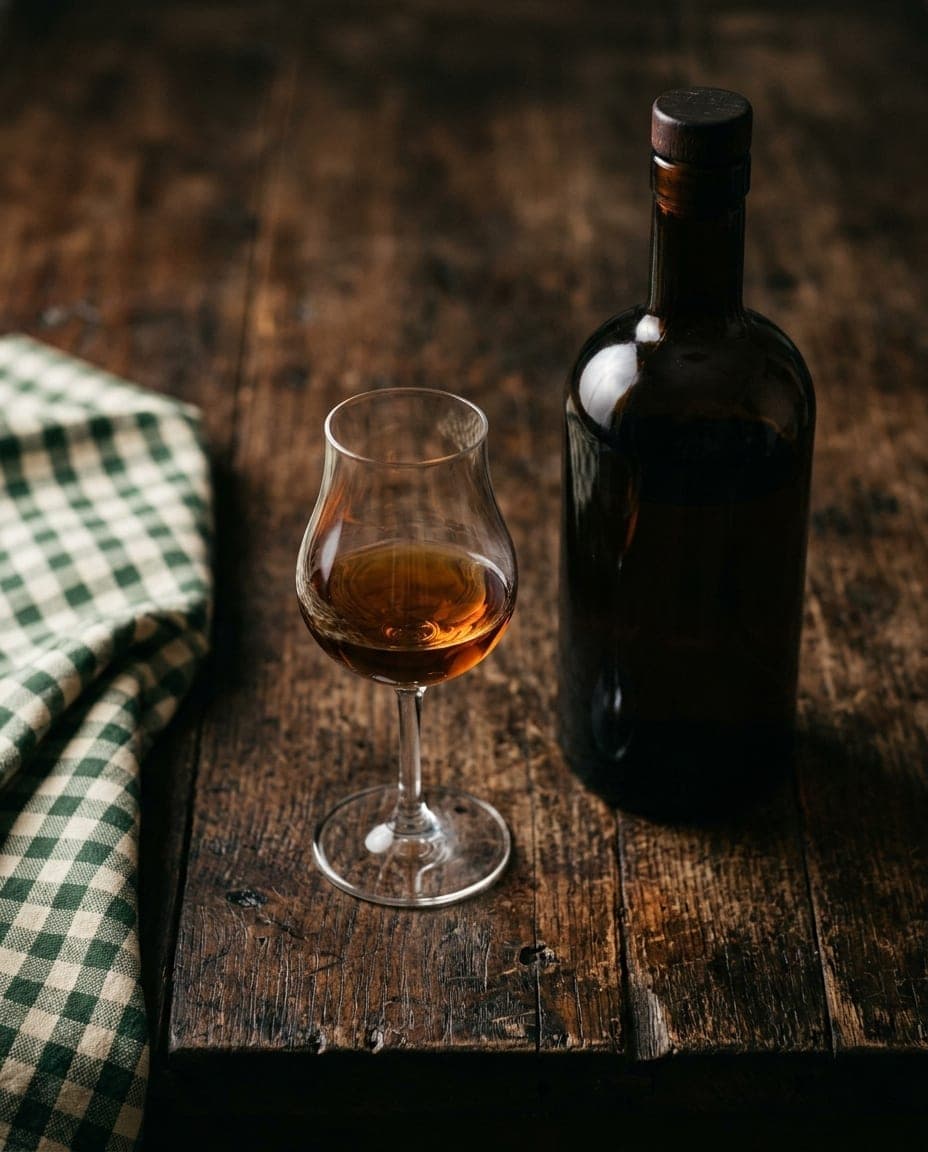
The standard way to enjoy Schwarzwälder Kirschwasser is neat, poured into a small tulip glass or a tiny shot glass. It is rarely mixed with other ingredients; the purity of the distillate is meant to be experienced directly. Serving temperature matters. Connoisseurs prefer it cool rather than ice-cold, with around 14–16 °C often recommended, so that the volatile aromas of cherry and almond can open up.
The drink is traditionally consumed as a digestif, served after a meal rather than during it. In a Black Forest Gasthaus, a traditional inn or tavern, it often arrives at the table once the main courses have been cleared. It is a pause, a moment to reflect on the food just eaten before moving on. The small glass size reflects its potency; a single pour is usually enough to finish the experience.
Where to taste it
The most rewarding place to taste Schwarzwälder Kirschwasser is within the Black Forest itself. While the spirit is available for purchase in many cities, its full character is best experienced at a local farm distillery or a traditional Gasthaus in the forest.
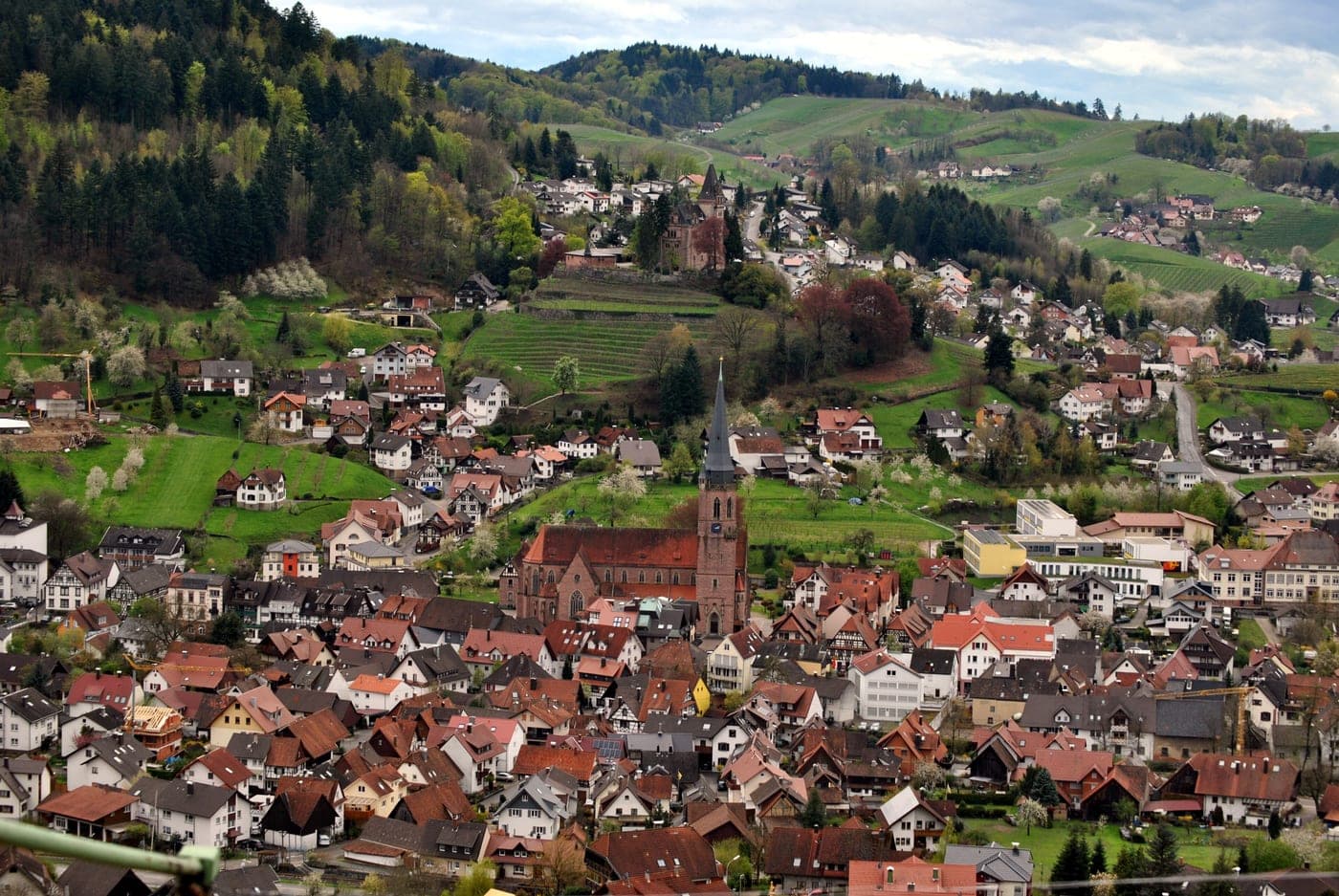
The Ortenau valleys on the western edge of the Black Forest offer a specific opportunity to understand the drink's origins. In the Renchtal, the town of Oberkirch alone counts several hundred registered small distilleries, and the neighbouring Achertal around Kappelrodeck is also dotted with orchards. Here, farm distilleries operate alongside the trees that produce the cherries, and one can see the connection between the soil, the fruit, and the final spirit. The Gasthäuser in this area often serve local versions, allowing visitors to taste a product that reflects the specific microclimate of the Black Forest.
Curious facts
- A protected name. Schwarzwälder Kirschwasser is a registered geographical indication, meaning it must be distilled in the Black Forest from cherries grown there.
- Stones give the flavour. The faint bitter-almond note comes from the cherry stones, which are fermented and distilled along with the fruit flesh.
- Required in the cake. German food guidelines require a cake sold as Schwarzwälder Kirschtorte to contain Kirschwasser with a clearly noticeable flavour.
- No wood ageing. Unlike many spirits, this brandy is traditionally not aged in wooden barrels, which preserves its water-clear colour and sharp taste.
- Cool, not frozen. It is best served cool rather than ice-cold, so the cherry and almond aromas are not muted.
Where to try it
1 destination
1 region
 Camper Van Rentals12 destinations
Baden-Württemberg
Baden-Württemberg fills Germany's southwest corner, from the Rhine plain in the west to the limestone plateau of the Swabian Jura in the east. The land moves in slow shifts here: vineyard slopes give way to dense forest, forest opens onto grassland and cave country, and everything eventually settles toward the wide, calm water of Lake Constance in the south. It is a region built for a wandering pace, town by town, valley by valley. Wine gives much of the region its rhythm. On the Upper Rhine, the volcanic hill of the Kaiserstuhl holds terraced vineyards that catch unusually strong sun for Germany, and small growers here work Spätburgunder and Grauburgunder grapes into wines poured in village Weinstuben. South of it, the Markgräflerland carries its own soft vineyard hills toward the Swiss border, linked by paths that wind through the vines from one wine village to the next. Near Stuttgart, the Neckar valley holds the Württemberg wine region, where Trollinger and Lemberger vines grow on steep terraces braced by dry stone walls that vintners still mend by hand. East of the Rhine, the Black Forest rises into ridges of spruce and fir, its valleys dotted with timber farmhouses under heavy, sloping roofs. Clockmaking has never quite left these villages, and workshops still turn out cuckoo clocks in the old way. Freiburg im Breisgau sits at the forest's western edge, its old town threaded by small open channels called Bächle that run past the cathedral square and into the surrounding lanes. Further into the hills, half-timbered towns such as Gengenbach keep market squares lined with houses that lean gently with age, and Fasnet carnival traditions bring out carved wooden masks each winter. Castles mark the region's high points. Heidelberg's red sandstone ruin looks down over the Neckar and the baroque rooftops of the old town below, its terraces a well-known spot for watching the river. Further south, Hohenzollern Castle sits on a steep, isolated hill at the edge of the Swabian Jura, its towers visible above the surrounding farmland long before the castle comes fully into view. Smaller fortress towns between the two hold quieter versions of the same story, with gatehouses and keeps built into hillsides above vineyards or forest. Tübingen keeps its own slow tradition on the Neckar, where flat-bottomed Stocherkahn boats are punted along the river below a row of tall, colourful houses. Students and residents share the same narrow lanes that have shaped the town for generations. South and east of Tübingen, the Swabian Jura opens into limestone grassland, sheep pasture, and juniper heath, cut through by dry valleys and cave systems that draw walkers onto marked trails. At the region's southern edge, Lake Constance spreads into a broad expanse of water shared with Switzerland and Austria. Orchards, vineyards, and small harbour towns line its shore, where fishing boats still go out early. Reed beds and level paths follow much of the water's edge, giving long, flat stretches for walking or cycling between towns without losing sight of the lake. Festivals mark the region's calendar as much as its landscape does. Wine villages hold harvest festivals in autumn, serving new wine alongside onion tart in courtyards strung with lights. Winter brings Fasnet, with its carved masks and processions through Black Forest towns. Spring and summer bring open-air concerts in castle courtyards and vineyard walks led by local growers. Bicycles and walking boots suit this region well. Marked cycling routes follow the Rhine plain past vineyards and orchards, climb gradually into Black Forest valleys beside running streams, and trace the Lake Constance shore through reed beds and harbour towns. Hiking paths cover the same ground more slowly, crossing vineyard terraces, forest ridges, and Jura grassland, and often link one small town to the next without a long detour. Each part of Baden-Württemberg keeps its own version of this slow character: a wine village square in the Kaiserstuhl, a castle terrace above the Neckar, a quiet stretch of Bodensee shore, a forest clearing where the only sound is water moving somewhere close by.
Camper Van RentalsBoat RentalsHikingCabins