Schwäbischer Rostbraten
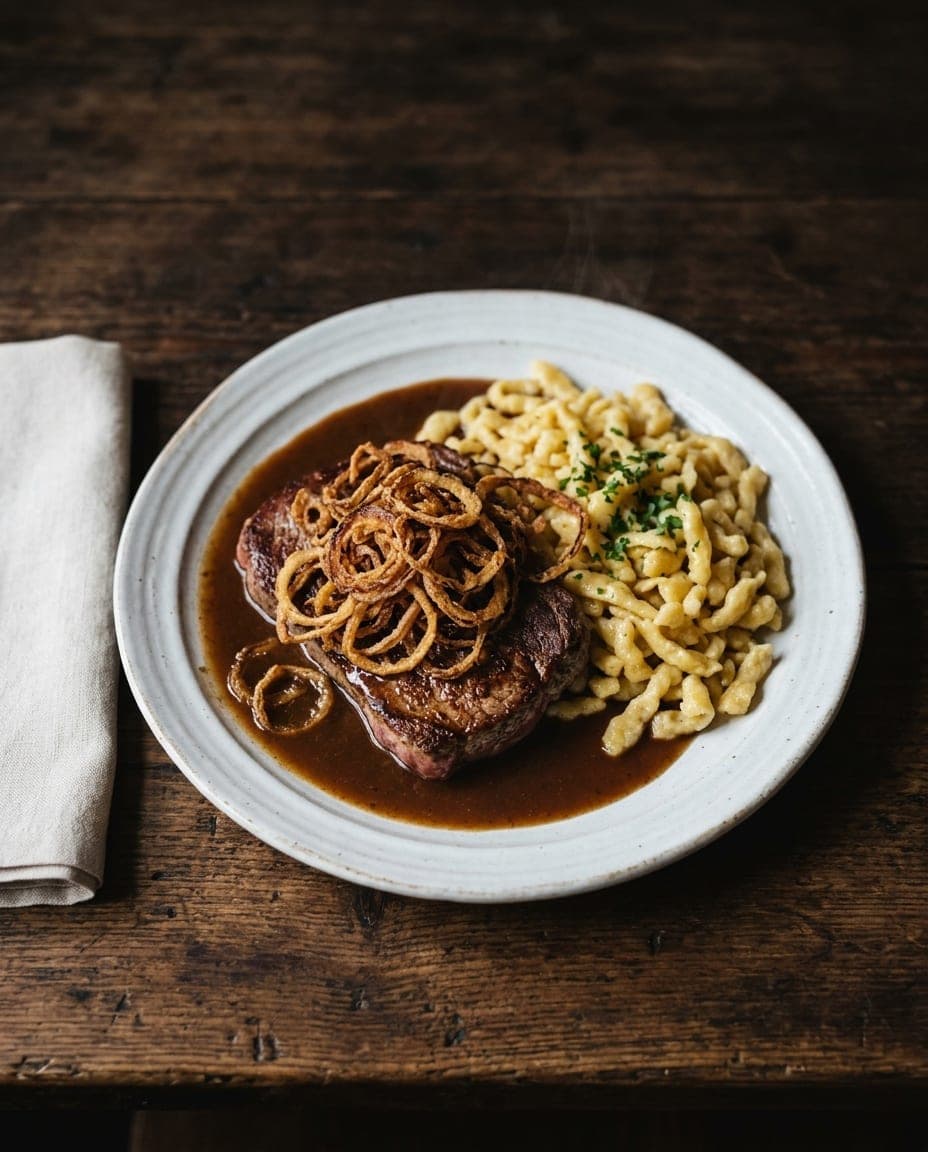
Pan-fried beef steak topped with crispy onions and served with spätzle in Swabia
- Local name
- Schwäbischer Rostbraten
- Served with
- Spätzle
- Best eaten at
- A Swabian Gasthaus
- Pairs with
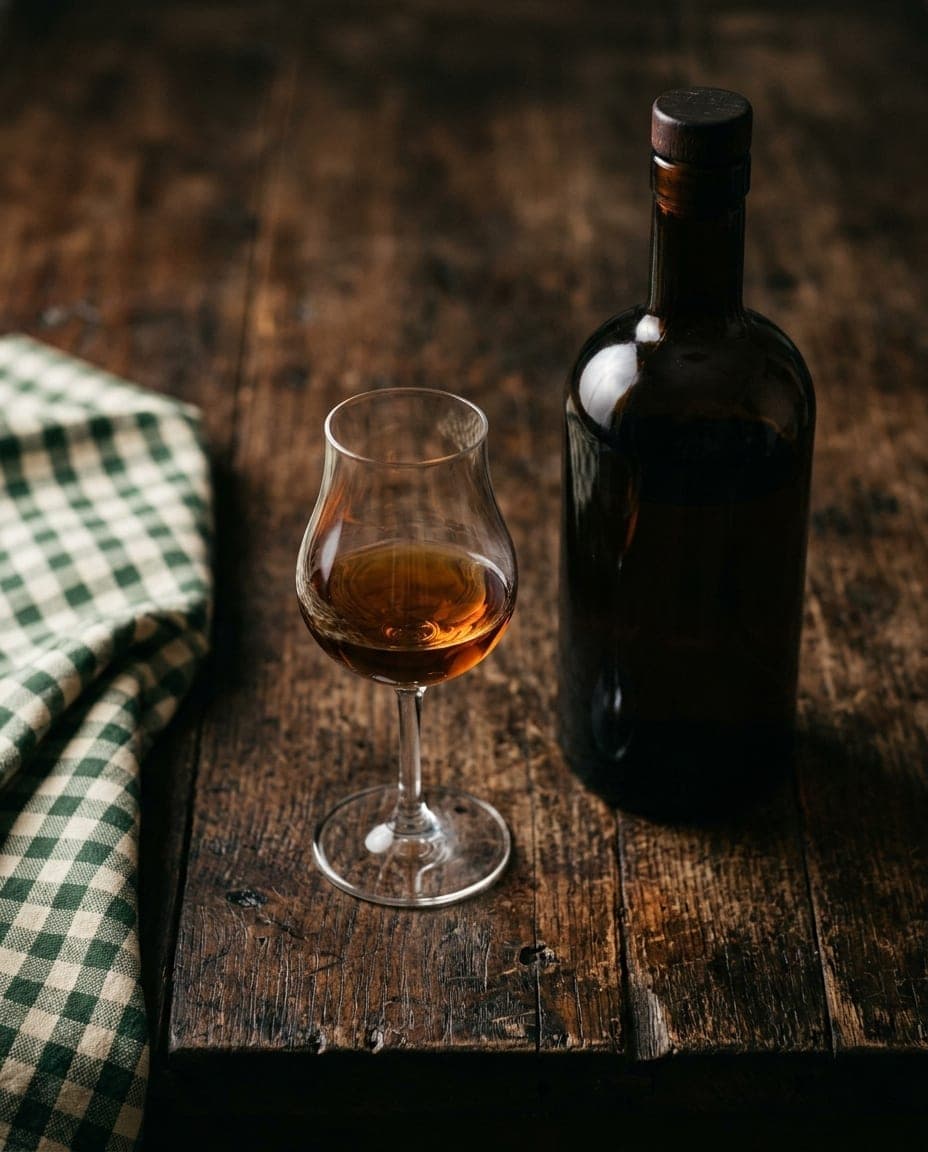
- Trollinger
What it is
Schwäbischer Rostbraten is a classic of Swabian celebration cooking, a dish that transforms a simple cut of beef into a festive occasion. It consists of a finger-thick slice of beef, commonly from the sirloin, though cuts vary, fried quickly in a very hot pan to keep the interior pink while developing a dark crust. This is not a lean cut; it relies on a rim of fat for flavour and tenderness.
The defining feature of the dish is the topping. A generous mound of onions is fried until they turn deep brown and crispy. These onions are not merely a garnish but an essential component that shares the plate with the meat, which is why the dish is also known as Zwiebelrostbraten. The beef arrives covered in this onion heap, drizzled with a dark gravy made from the pan juices, sometimes enriched with a splash of local red wine. It is served with spätzle, the Swabian egg noodles, which absorb the rich sauce.
In Baden-Württemberg, this dish occupies a specific place. While dishes like Maultaschen or lentils with spätzle and sausages are everyday fare for many households, the Rostbraten, from a time when meat was a rare luxury, has traditionally been a treat for special occasions. It is the kind of meal that signals a pause in the routine, a moment to sit at a wooden table and eat slowly.
The origin of the name
The word Rost refers to a grill or grate, the kind of iron rack once used to cook meat over hot coals, while Braten is the common German word for roast meat. Today the steak is fried in a heavy skillet rather than grilled over embers, but the name remained attached to the dish.
Rostbraten is also well known in Austria, where the Viennese version and many variants appear on menus. The Swabian version stands apart through its heap of crisp onions and its partnership with spätzle. It reflects the local preference for simple ingredients prepared with care, where the quality of the beef and the technique applied to the onions determine the success of the meal.
How it is made
The preparation relies on the contrast between the meat and the onions. The slice of beef is often lightly flattened, the fat rim nicked so it does not curl, and seasoned with salt and pepper. It is placed in a very hot, heavy pan and fried hard and fast, so that the inside remains pink even as the outside develops a dark crust.
The onions are treated with equal importance. Sliced into thin rings, sometimes dusted with flour, they are fried until they lose their moisture and turn a deep brown. This takes time and patience; if the onions are undercooked, they lack the necessary sweetness and crunch. The resulting heap is piled high on top of the steak.
The final element is the gravy. The pan in which the meat was fried is deglazed with stock, often with a splash of local red wine such as Trollinger or Lemberger, and reduced to a dark, glossy sauce that coats the beef. Some kitchens add mushrooms, but the core of beef, onions, gravy and spätzle remains constant.
What goes into it
There is no single official recipe, yet the building blocks are always recognisable:
- Beef, usually sirloin, cut about a finger thick for a pink centre and a substantial bite.
- Onions, fried until dark brown and crispy, forming the dominant topping.
- Spätzle, the soft Swabian egg noodles that serve as the base for the sauce.
- Dark gravy, made from pan juices and often finished with a splash of local red wine.
The dish is rich and savoury, relying on the fat in the beef and the frying for its character. It is a substantial portion, and the combination of soft noodles, tender meat and crunchy onions creates an interplay of textures in every bite.
How it is eaten
Schwäbischer Rostbraten is traditionally eaten as a main course at lunch or early dinner, with the spätzle alongside or beneath the beef and onions and the gravy poured over so the noodles soak up the flavour. Diners cut through the steak so that each piece includes some of the crispy onions and sauce.
The most authentic setting is a Swabian Gasthaus, a traditional inn or tavern where the atmosphere is warm and the service unpretentious. The Rostbraten is a staple on many such menus, often accompanied by a glass of Trollinger, a light red wine from Württemberg that complements the beef without overpowering it. A cold beer is also a common choice, particularly in warmer months.
The experience is communal and unhurried; the generous portion takes time to finish and is meant to be enjoyed in good company.
Curious facts
- A celebration staple. While everyday Swabian meals often feature Maultaschen, lentils or simple stews, the Rostbraten has long been a special-occasion dish.
- The onions are key. The dish is sometimes described as being as much about the onions as the meat, which is why it is often called Zwiebelrostbraten.
- A regional wine pairing. Württemberg red wines such as Trollinger are used in the gravy or served alongside.
- An Austrian cousin. Rostbraten is also a classic in Austria, but the Swabian version is defined by its crisp onions and spätzle.
Where to try it
The best place to find Schwäbischer Rostbraten is in Baden-Württemberg, particularly around Stuttgart and its surrounding countryside. Here, traditional Gasthäuser serve the dish regularly. A good version has pink beef, dark, crisp onions, and soft, warm spätzle.
Where to try it
1 destination
 Camper Van Rentals
Stuttgart
Dynamic city known for its automotive history, lush parks, and cultural venues.
Camper Van RentalsHiking