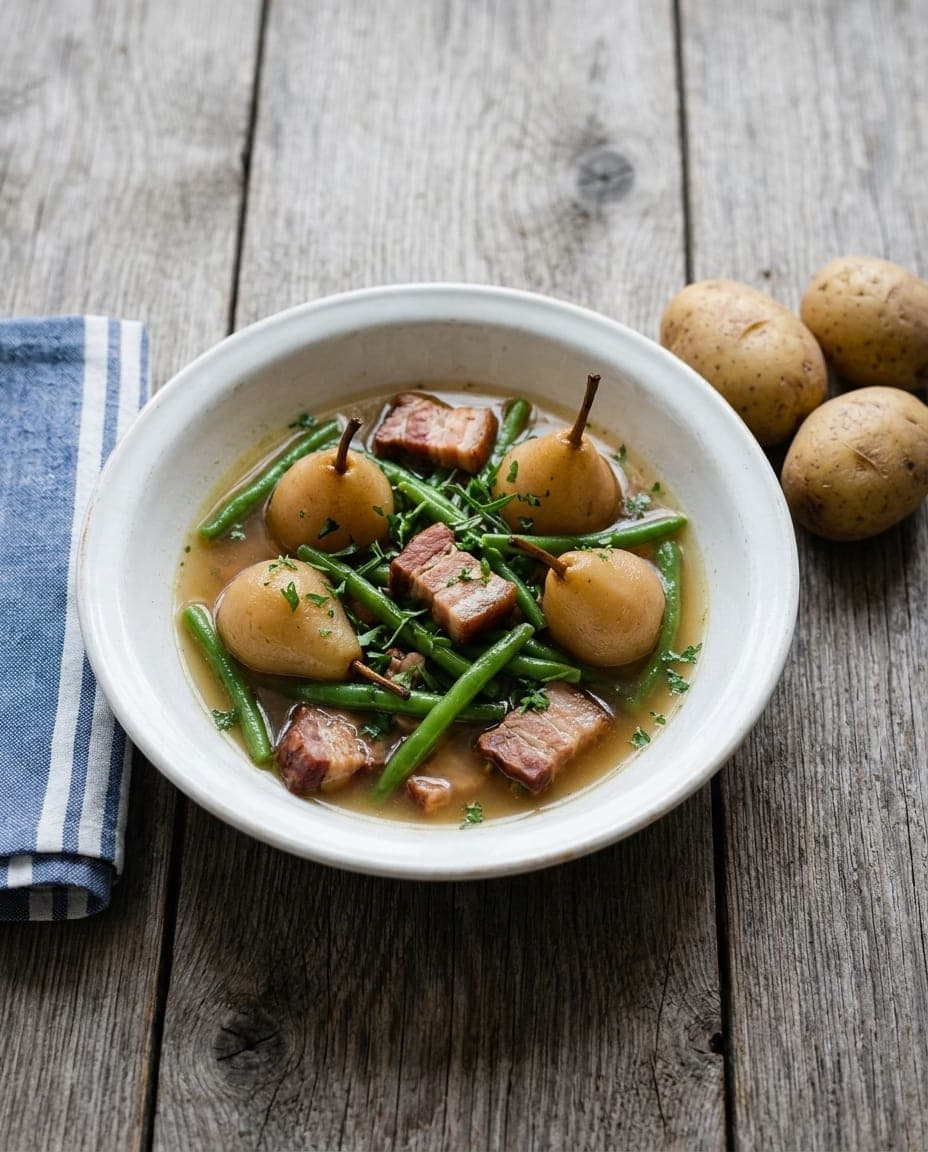
Schwäbische Maultaschen
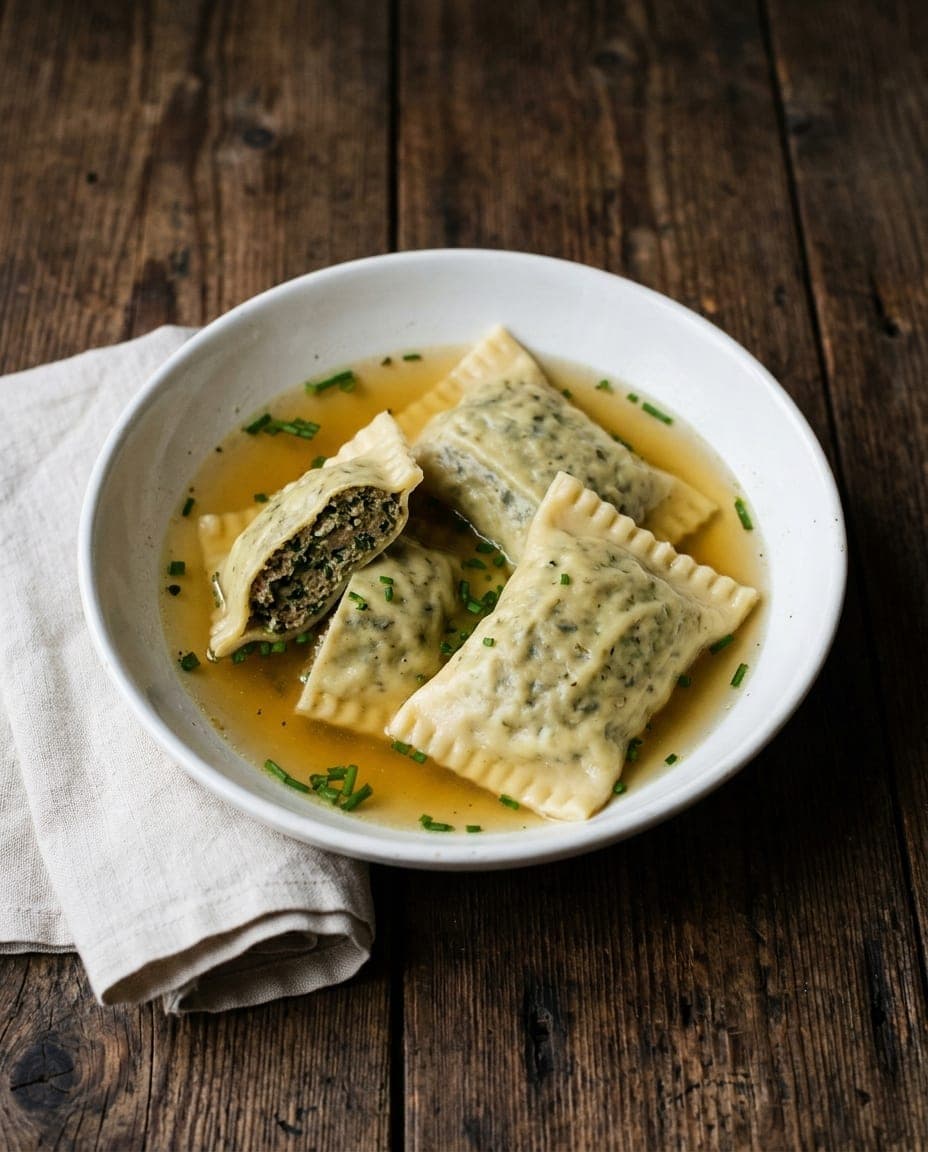
Swabian pasta pockets filled with meat, spinach and herbs in broth or salad
- Local name
- Maultaschen
- Served with
- Broth or potato salad
- Best eaten at
- A Swabian Gasthaus
- Pairs with
- Württemberg Trollinger
What it is
Schwäbische Maultaschen are among the best-loved dishes of Baden-Württemberg, a large state in south-west Germany where the landscape shifts from vineyards to forests and lakes. They are not merely pasta; they are substantial pockets of dough filled with a mixture of minced meat, spinach, herbs and soaked bread rolls. A single Maultasche can be the size of a palm, and a few make a complete meal for an adult.
The dish is a regional speciality rather than a nationwide German favourite. While ravioli and tortellini appear on menus across the country, Maultaschen belong firmly to Swabia. The dough is thick enough to hold a generous filling without breaking, yet tender when boiled. They are versatile: they float in clear beef broth, they are sliced and fried with browned onions, or they are cut into strips and fried with egg. Each method changes the texture, but the core identity remains the same.
The word Maultaschen is usually translated as "mouth pockets" or "mouth bags", although the origin of the name is not settled; one popular explanation links it to Maulbronn. In Swabia they are also jokingly called Herrgottsb'scheißerle, a nickname that carries a story of its own.
The legend of the monks and Lent
The most famous story about Maultaschen involves monks hiding meat inside dough during Lent. According to the tale, a lay brother at the Cistercian monastery of Maulbronn came by a piece of meat during the fasting season, at the time of the Thirty Years' War. Rather than let it go to waste, he chopped it, mixed it with spinach and herbs, and enclosed it in pasta dough, so that the meat was hidden from the eyes of God.
This tale is told as tradition rather than as documented history; there are no written records to confirm it. Whether true or simply a colourful piece of folklore, it has become inseparable from the identity of Maultaschen. The nickname Herrgottsb'scheißerle, roughly "little cheaters of the Lord God", reflects this playful subversion of religious rules and is still widely used.
How Swabia made it its own
Swabian cooking is known for being hearty and practical, designed to feed families and workers on long days. Maultaschen fit this ethos perfectly. They are easy to make in large batches and make good use of leftovers. In the past, they were often prepared at home in great numbers, filled and sealed by hand before boiling or frying.
Since 2009, Schwäbische Maultaschen has been a protected geographical indication (PGI) in the European Union. This means that only Maultaschen made in Baden-Württemberg or Bavarian Swabia according to the registered specification can carry the name. The specification also covers Schwäbische Suppenmaultaschen, the smaller version for soup.
In Stuttgart, the capital of Baden-Württemberg, Maultaschen are a staple of local life. They appear on the menus of Swabian Gasthäuser, traditional neighbourhood taverns focused on regional cuisine. They are especially associated with Holy Week: many families still eat them on Maundy Thursday, near the end of Lent, often in broth, followed by other versions on Good Friday and Holy Saturday.
What goes into it
There is no single exact recipe, but the filling typically consists of minced meat or sausage meat, often a mix of pork and beef, sometimes with smoked bacon for depth. Spinach is the other essential component, adding colour and earthiness. Soaked bread rolls and egg bind the mixture, giving the filling a soft texture that holds together during cooking. Onion, leek and parsley provide the final savoury and herbaceous notes.
The dough is made from flour, eggs, salt and water, rolled out thinly before being filled, folded and cut. The edges are pressed firmly to prevent the filling from leaking while boiling. Some versions include a little nutmeg or other spices.
- Minced meat: Usually pork and beef, providing a substantial base.
- Smoked bacon: Often added for a smoky saltiness.
- Spinach: Cooked down and mixed into the filling.
- Soaked bread rolls and egg: Bind the meat and vegetables together.
- Onion and parsley: Essential aromatics that define the savoury profile.
How it is eaten
There are three standard ways to serve Maultaschen. The most traditional is to simmer them and serve them in clear beef broth, in der Brüh, as a comforting starter or light main course, often scattered with chives or browned onions.
The second method involves slicing the boiled Maultaschen and frying them in butter with onions until golden. This version, often called geschmälzt when topped with butter-browned onions, is heartier and is commonly served with Swabian potato salad. A third variation cuts them into strips and fries them with beaten egg, creating a dish similar to a thick omelette, usually served with a green salad.
A glass of Württemberg Trollinger, a light red wine from the region, is a traditional companion, though beer or mineral water are equally common choices.
Curious facts
- A disputed name. Maultaschen is usually translated as "mouth pockets", but the origin of the word is not certain.
- A protected regional title. Since 2009 Schwäbische Maultaschen have been a PGI, meaning only those made in Baden-Württemberg or Bavarian Swabia to the registered specification can carry the name.
- The Lenten story is folklore. The tale of the Maulbronn monk hiding meat from God is widely told but not documented.
- A Holy Week tradition. Many Swabian families eat Maultaschen on Maundy Thursday, keeping a long-standing custom alive.
- Three distinct serving styles. They can be served in broth, fried with onions and potato salad, or cut into strips with egg.
Where to try it
The best place to eat Maultaschen is a Swabian Gasthaus, the traditional taverns found throughout the Swabian part of Baden-Württemberg. In Stuttgart, establishments specialising in regional cuisine list them as Maultaschen in der Brüh or geschmälzt, depending on how they are prepared.
Beyond the capital, villages and towns in the Swabian Jura (Schwäbische Alb) also serve excellent versions, and Maulbronn, with its monastery, is a natural stop for anyone curious about the legend. A plate with potato salad and a glass of Trollinger offers a genuine taste of Swabian life, where food is practical, generous and bound up with local history.
Where to try it
1 destination
 Camper Van Rentals
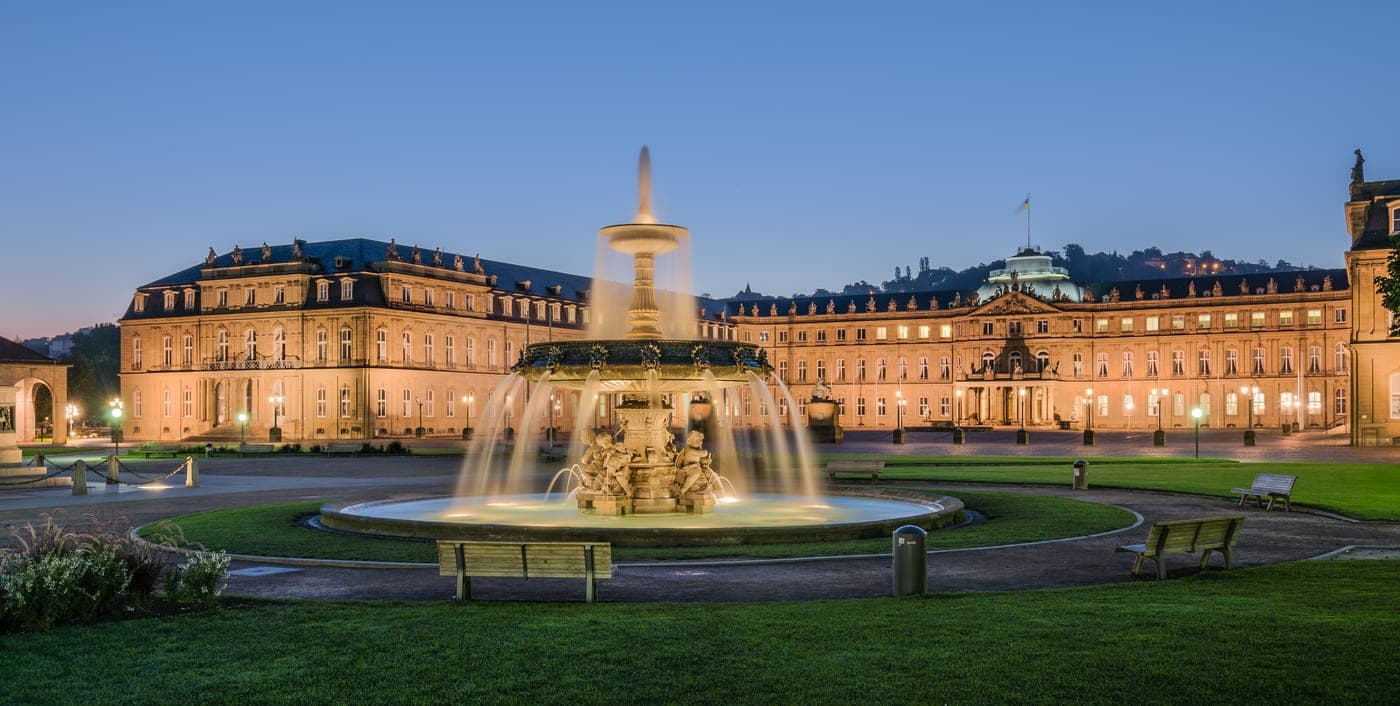
Stuttgart
Dynamic city known for its automotive history, lush parks, and cultural venues.
Camper Van RentalsHiking
1 region
 Camper Van Rentals12 destinations
Baden-Württemberg
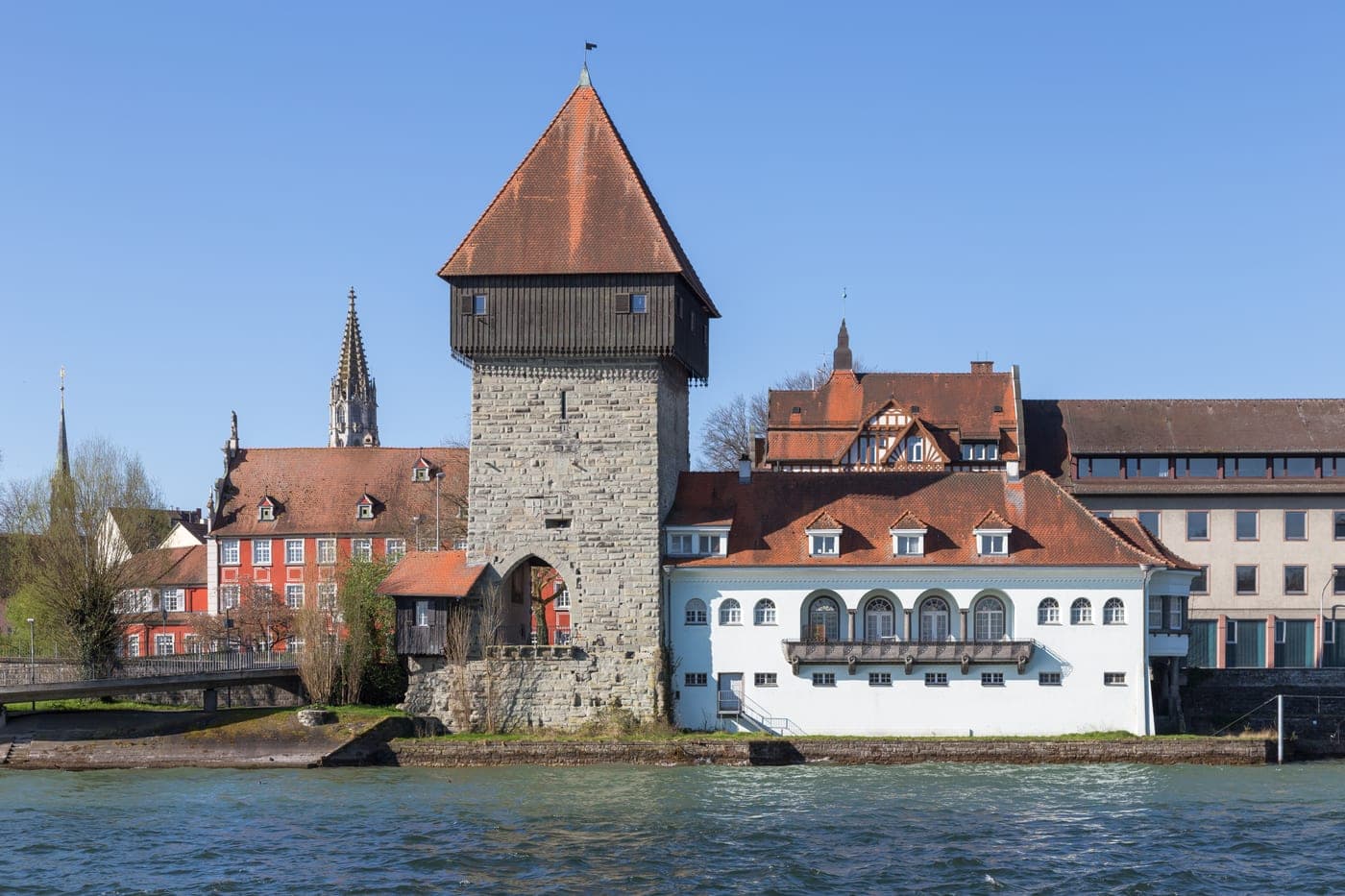
Baden-Württemberg fills Germany's southwest corner, from the Rhine plain in the west to the limestone plateau of the Swabian Jura in the east. The land moves in slow shifts here: vineyard slopes give way to dense forest, forest opens onto grassland and cave country, and everything eventually settles toward the wide, calm water of Lake Constance in the south. It is a region built for a wandering pace, town by town, valley by valley. Wine gives much of the region its rhythm. On the Upper Rhine, the volcanic hill of the Kaiserstuhl holds terraced vineyards that catch unusually strong sun for Germany, and small growers here work Spätburgunder and Grauburgunder grapes into wines poured in village Weinstuben. South of it, the Markgräflerland carries its own soft vineyard hills toward the Swiss border, linked by paths that wind through the vines from one wine village to the next. Near Stuttgart, the Neckar valley holds the Württemberg wine region, where Trollinger and Lemberger vines grow on steep terraces braced by dry stone walls that vintners still mend by hand. East of the Rhine, the Black Forest rises into ridges of spruce and fir, its valleys dotted with timber farmhouses under heavy, sloping roofs. Clockmaking has never quite left these villages, and workshops still turn out cuckoo clocks in the old way. Freiburg im Breisgau sits at the forest's western edge, its old town threaded by small open channels called Bächle that run past the cathedral square and into the surrounding lanes. Further into the hills, half-timbered towns such as Gengenbach keep market squares lined with houses that lean gently with age, and Fasnet carnival traditions bring out carved wooden masks each winter. Castles mark the region's high points. Heidelberg's red sandstone ruin looks down over the Neckar and the baroque rooftops of the old town below, its terraces a well-known spot for watching the river. Further south, Hohenzollern Castle sits on a steep, isolated hill at the edge of the Swabian Jura, its towers visible above the surrounding farmland long before the castle comes fully into view. Smaller fortress towns between the two hold quieter versions of the same story, with gatehouses and keeps built into hillsides above vineyards or forest. Tübingen keeps its own slow tradition on the Neckar, where flat-bottomed Stocherkahn boats are punted along the river below a row of tall, colourful houses. Students and residents share the same narrow lanes that have shaped the town for generations. South and east of Tübingen, the Swabian Jura opens into limestone grassland, sheep pasture, and juniper heath, cut through by dry valleys and cave systems that draw walkers onto marked trails. At the region's southern edge, Lake Constance spreads into a broad expanse of water shared with Switzerland and Austria. Orchards, vineyards, and small harbour towns line its shore, where fishing boats still go out early. Reed beds and level paths follow much of the water's edge, giving long, flat stretches for walking or cycling between towns without losing sight of the lake. Festivals mark the region's calendar as much as its landscape does. Wine villages hold harvest festivals in autumn, serving new wine alongside onion tart in courtyards strung with lights. Winter brings Fasnet, with its carved masks and processions through Black Forest towns. Spring and summer bring open-air concerts in castle courtyards and vineyard walks led by local growers. Bicycles and walking boots suit this region well. Marked cycling routes follow the Rhine plain past vineyards and orchards, climb gradually into Black Forest valleys beside running streams, and trace the Lake Constance shore through reed beds and harbour towns. Hiking paths cover the same ground more slowly, crossing vineyard terraces, forest ridges, and Jura grassland, and often link one small town to the next without a long detour. Each part of Baden-Württemberg keeps its own version of this slow character: a wine village square in the Kaiserstuhl, a castle terrace above the Neckar, a quiet stretch of Bodensee shore, a forest clearing where the only sound is water moving somewhere close by.
Camper Van RentalsBoat RentalsHikingCabins