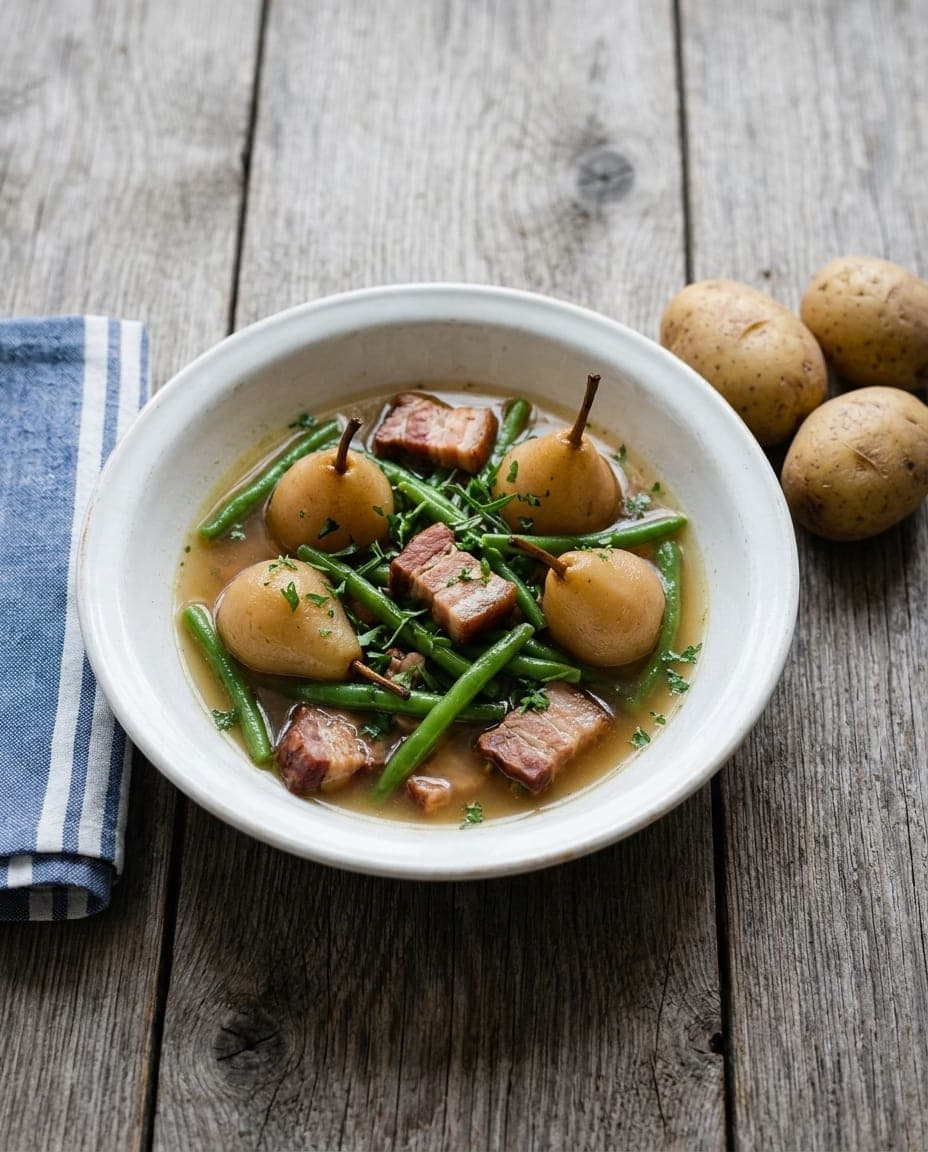
Pfälzer Saumagen
A pig's stomach stuffed with pork, potato and spices from the Palatinate
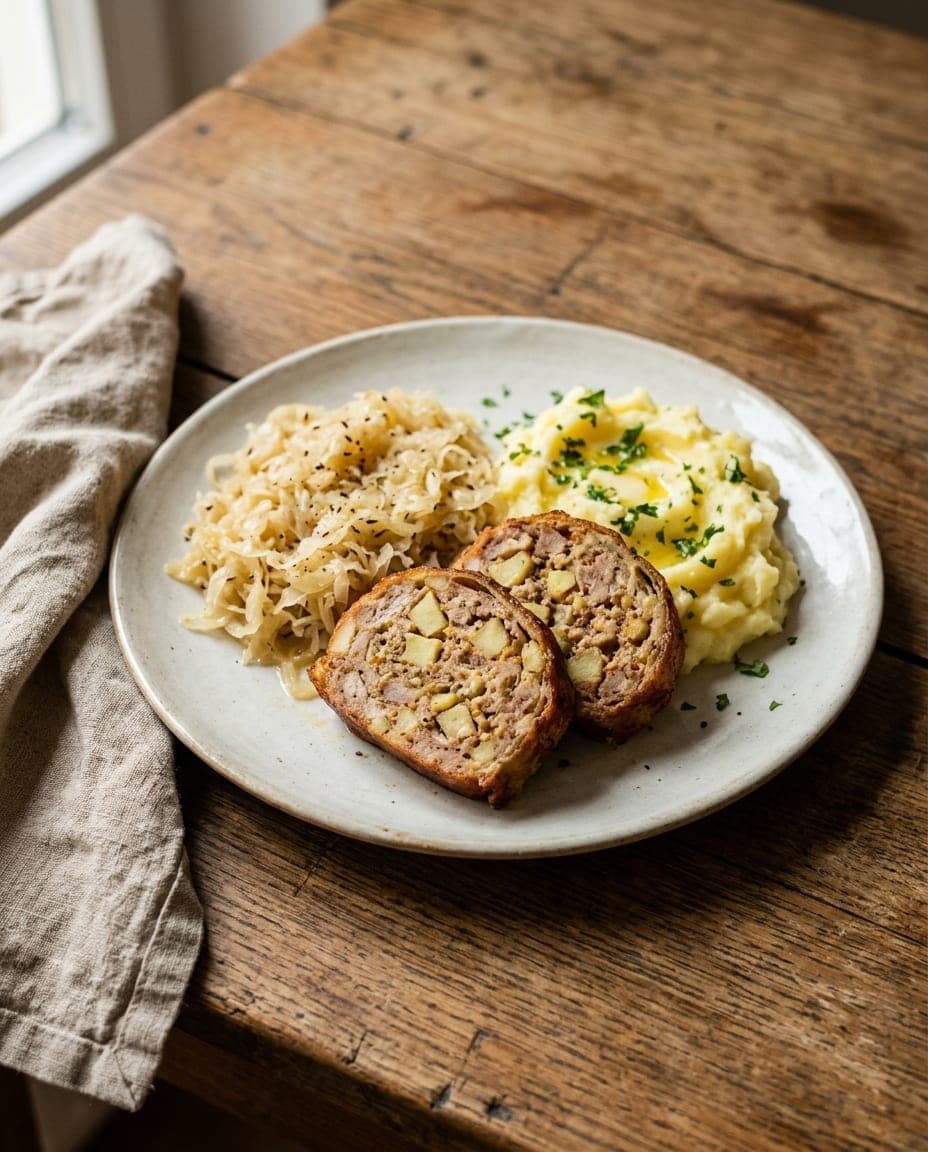
- Local name
- Pfälzer Saumagen
- Served with
- Sauerkraut, mashed potatoes
- Best eaten at
- A Palatinate wine tavern
- Pairs with
- Pfalz Riesling or Schorle
What it is
Pfälzer Saumagen is one of the most distinctive dishes of the German state of Rhineland-Palatinate, specifically the region known as the Pfalz or Palatinate. The name translates directly as "sow's stomach", a description that can make first-time visitors pause before ordering. The dish is not a stew or a roast in the conventional sense. It consists of a pig's stomach used as a casing, filled with a dense mixture of diced pork, sausage meat, potatoes, onions and seasonings such as marjoram, nutmeg and pepper.
The cleaned stomach is stuffed with this potato-and-pork blend, tied shut, and cooked for several hours in water kept just below the boil until the contents are set and the casing is tender. It can be served straight away in thick slices, or cooled, sliced and pan-fried until the edges turn golden and crisp while the centre remains moist. The result resembles a coarse, savoury terrine or a large sausage.
The stomach acts as the cooking vessel, and the thin casing is generally eaten along with the slices, turning crisp when fried. The name may sound austere, yet the flavour is mild and comforting, bound up with the rural traditions of the region. It is a dish that makes practical use of the whole animal, turning a humble offal item into a celebratory meal.
The political history of a regional speciality
While the dish has deep roots in the farming communities of the Palatinate, it gained international fame through one political figure: Helmut Kohl. Kohl was born in Ludwigshafen in the Palatinate and served as Chancellor of Germany from 1982 to 1998. He was known for his love of regional cuisine and served Saumagen to visiting leaders, among them Margaret Thatcher, Mikhail Gorbachev, Ronald Reagan and Bill Clinton, often during visits to the wine town of Deidesheim.
Kohl presented the meal as a symbol of his connection to his home region, and his enthusiasm brought the dish a level of recognition that extended far beyond Rhineland-Palatinate.
This association did not turn the dish into a national German staple; it remains a regional speciality found primarily in the Palatinate and neighbouring areas. The dish also existed long before his chancellorship, as a filling, economical meal in farming households, closely linked to the tradition of home slaughtering.
How it is made
The preparation follows a traditional method that has changed little over the decades. The pig's stomach is thoroughly cleaned and stuffed with diced lean pork or pork belly, sausage meat, diced potatoes (raw or briefly par-boiled, depending on the cook), onions and spices. Some recipes add soaked bread rolls, eggs or carrots, and an autumn variant replaces some of the potato with chestnuts. Marjoram is essential, providing the earthy aroma that defines the dish, while nutmeg and pepper add warmth.
Once stuffed, the stomach is tied securely so the filling cannot escape. It is then cooked gently for around three hours in hot water that must not boil hard, or the casing may burst.
For frying, the cooled Saumagen is cut into thick slices, typically two centimetres or more, and fried in butter or lard until a crisp, golden crust forms while the interior stays soft. The frying transforms the texture into something with a satisfying bite.
- The casing: a cleaned pig's stomach that holds the filling during cooking.
- The filling: pork, sausage meat, potatoes, onions and spices.
- The spices: marjoram is the dominant herb, accompanied by nutmeg and pepper.
- The texture: soft inside, with a crisp exterior when sliced and pan-fried.
How to eat it
Pfälzer Saumagen is often eaten in a Palatinate wine tavern, known locally as a Weinstube, where the focus is on regional wines and simple, hearty food rather than fine dining.
The most common accompaniments are sauerkraut and mashed potatoes. The tangy fermented cabbage cuts through the rich pork and potato mixture, while the creamy potatoes provide a neutral base. Some taverns serve it as part of the Pfälzer Dreifaltigkeit ("Palatinate trinity"), alongside a liver dumpling and a Pfälzer Bratwurst.
The dish pairs naturally with a glass of Riesling from the Palatinate. The dry or off-dry styles of this white wine suit the salty, rich profile of the Saumagen. Alternatively, a Schorle, a mix of wine and sparkling water, offers a refreshing contrast to the heavy meal.
Diners typically take a forkful of Saumagen with some sauerkraut, sometimes with a little mustard for extra tang. The combination of textures, crisp meat, soft potato and sour cabbage, is both simple and satisfying.
Curious facts
- A regional identity. While Germany has many famous dishes like Sauerbraten or Weißwurst, Saumagen remains closely associated with the Palatinate and is uncommon elsewhere.
- The political connection. Helmut Kohl's fondness for the dish is well documented, and he served it to foreign leaders as a gesture of regional pride.
- Gentle cooking. The stuffed stomach is cooked below the boil, since vigorous boiling could split the casing.
- A chestnut variant. In autumn, some cooks replace part of the potato with sweet chestnuts, which grow widely in the Palatinate.
- A culinary puzzle. The name can be off-putting to visitors unfamiliar with German cuisine, yet the flavour is mild and comforting rather than gamey or strong.
Where to try it
The best place to eat Pfälzer Saumagen is a traditional Weinstube in the Palatinate, especially in the wine villages along the German Wine Route, where it is a staple on many menus. These taverns are often family-run and serve local wine alongside simple, hearty food.
Visitors can look for Saumagen on the menu or on chalkboards outside taverns. Local butchers also sell it ready-cooked to slice and fry at home.
Where to try it
1 destination
1 region
 Cabins10 destinations
Rhineland-Palatinate
Rhineland-Palatinate is Germany's largest wine-producing region, renowned for its diverse vineyards and picturesque landscapes along the Rhine and Moselle rivers. The region features historic cities like Mainz, famous for its Gutenberg Museum, and Trier, home to well-preserved Roman ruins, including the Porta Nigra. Koblenz marks the confluence of the Rhine and Moselle and is known for its Ehrenbreitstein Fortress. The region is also celebrated for its rich culinary traditions, including hearty dishes and fine Riesling wines. Unique villages such as Cochem and Rüdesheim invite exploration of local culture and festivals, offering a glimpse into traditional German life amidst stunning natural beauty.
CabinsHikingCastlesCamper Van Rentals