Pfälzer Leberknödel
Pfälzer Leberknödel: large liver dumplings from Germany's Palatinate
- Local name
- Pfälzer Leberknödel (Lewwerknepp)
- Served with
- Sauerkraut, mashed potatoes
- Best eaten at
- A Palatinate wine tavern
- Pairs with
- Pfalz Riesling Schorle
What it is
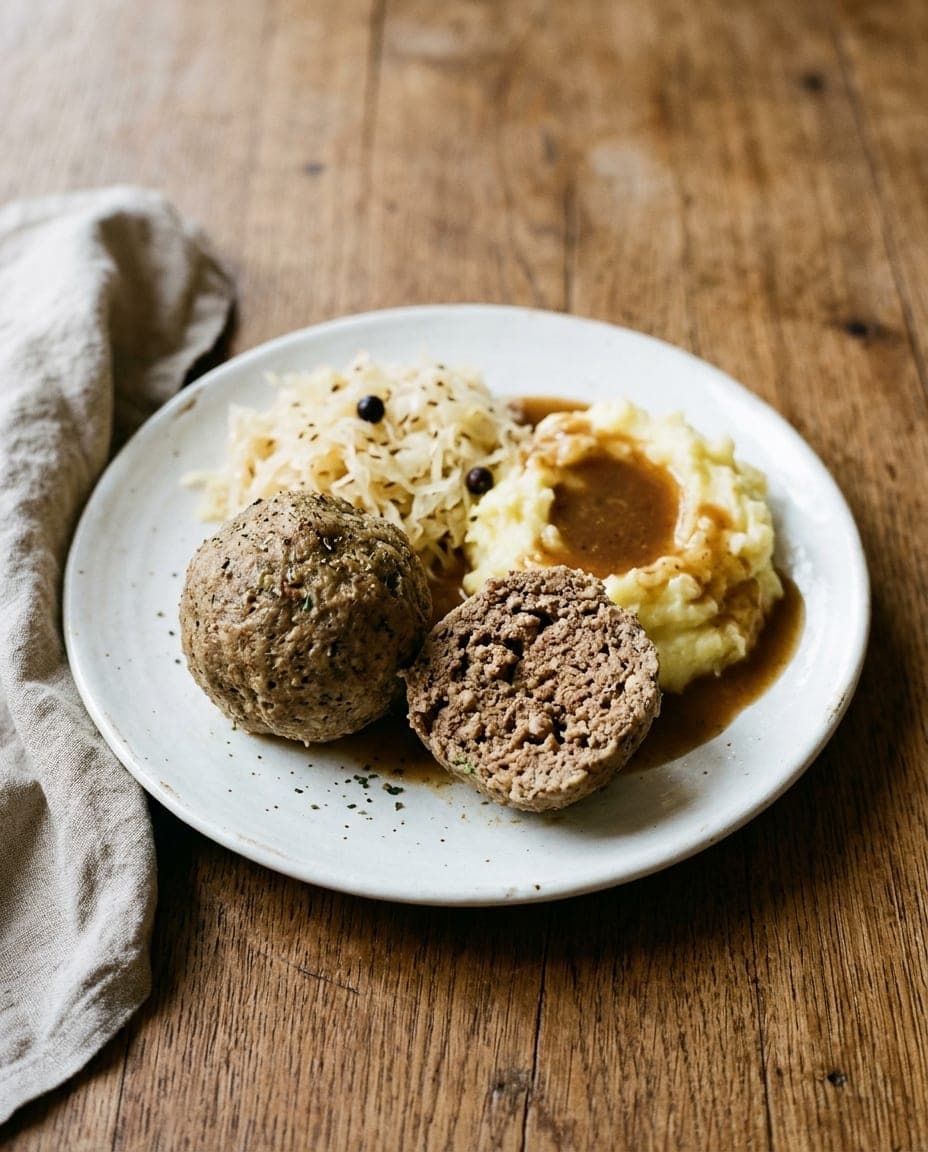
Pfälzer Leberknödel, known in the local dialect as Lewwerknepp, are large liver dumplings that form a core part of the culinary identity of the Palatinate region in south-western Germany. They are not a nationwide speciality but a distinct regional signature of this part of Rhineland-Palatinate. The dish consists of dense, savoury spheres made from minced liver, usually pig's liver, and pork, bound with egg and soaked bread rolls, then gently simmered until cooked through.
These dumplings are substantial, often reaching the size of a fist. A single plate typically holds one or two, serving as a hearty main course rather than a light starter. The texture is soft yet firm, holding its shape on the plate while offering a deep, earthy flavour that stands out against simpler accompaniments. While liver dumplings appear in various forms across southern Germany and Austria, where they are often served in soup, the Palatinate version is eaten as a main course with sides.
The thrift of the pig
The history of Pfälzer Leberknödel lies in the rural tradition of using every part of the animal, particularly at the home slaughtering that once took place in many villages each winter. In the Palatinate, this meant that offal like liver was not discarded but transformed into something substantial and satisfying. This approach mirrors other regional dishes such as Saumagen, which also makes thrifty use of the pig.
The dish belongs to a category of food that is affordable and filling, designed to fuel long days in the vineyards or fields. It is not fancy cuisine, but rather a staple of the local table where simple ingredients are treated with respect. This focus on value and substance remains central to how the dish is perceived today.
What goes into it
The base of the dumpling is simple but requires careful handling to achieve the right consistency. The primary ingredients are fresh liver and minced pork, which are combined with soaked bread rolls to provide a light yet sturdy texture. Onion and parsley add freshness, while marjoram and a pinch of nutmeg provide the aromatic note typical of the dish.
- Liver: usually pig's liver, giving the dish its deep colour and flavour; some recipes use beef liver.
- Minced pork: added to balance the intensity of the liver.
- Soaked bread rolls: used as a filler to create a soft interior.
- Marjoram: the classic herb, as in many German liver dishes.
- Egg: acts as the binding agent to hold the dumpling together during simmering.
The mixture is formed into large balls and cooked gently in barely simmering water or stock, as boiling would make them fall apart. The result is a tender, savoury sphere that holds its shape. No single recipe exists for the proportions, as each cook adjusts the mix to taste.
How it is eaten
Pfälzer Leberknödel are often enjoyed in a Weinstube, a Palatinate wine tavern, where the atmosphere matches the rustic nature of the food. The dumplings are traditionally served with sauerkraut and mashed potatoes, a combination that balances earthy, tangy and creamy flavours. Leftover dumplings are sometimes sliced and fried in butter with onions.
They also form part of the so-called Pfälzer Dreifaltigkeit ("Palatinate trinity"), a platter combining a Leberknödel, a slice of Saumagen and a Pfälzer Bratwurst, again with sauerkraut and mashed potatoes.
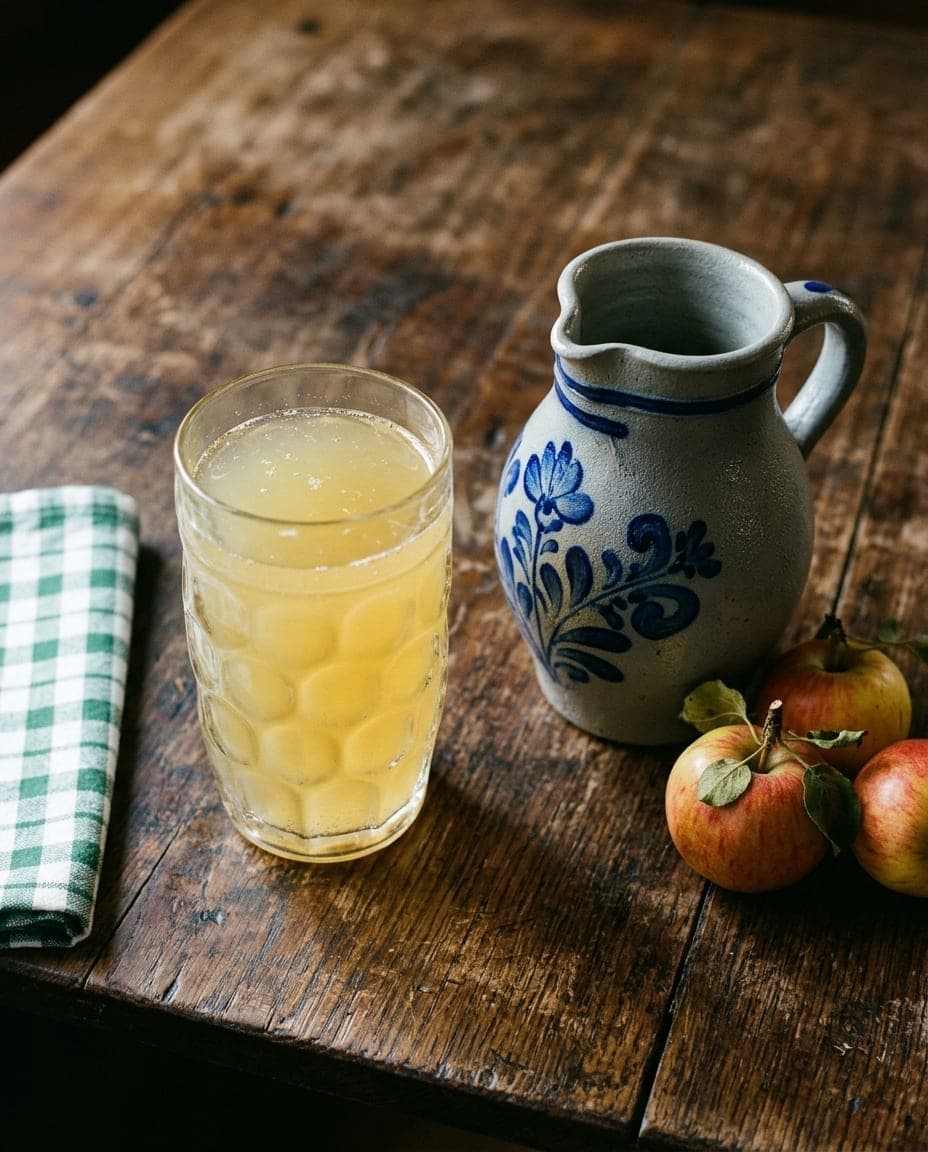
The pairing is regional. A glass of Riesling from the Palatinate vineyards complements the dish well, cutting through its richness with its acidity. Many locals prefer a Riesling Schorle, a mix of wine and sparkling water, which refreshes the palate between bites. The meal is rarely rushed; it is meant to be savoured slowly, often accompanied by conversation and the clinking of glasses.
Curious facts
- A dialect name. In the Palatinate they are often called Lewwerknepp, the local form of "liver dumplings".
- A fist-sized portion. The dumplings are notably large, often serving as a main course rather than a soup garnish.
- Part of a trinity. Together with Saumagen and Bratwurst, they make up the Pfälzer Dreifaltigkeit platter.
- Thrift on a plate. The dish reflects a long history of using every part of the pig.
- Wine tavern tradition. They belong firmly to the culture of the Weinstube, where local wines are served alongside hearty food.
Where to try it
The most traditional setting is a wine tavern within the Palatinate, particularly in the wine villages along the German Wine Route. These establishments often serve the dumplings as a regular menu item or as part of a Palatinate platter. A visit during the grape harvest in autumn adds the chance to taste young wine from the nearby slopes alongside the dish.
Where to try it
1 region
 Cabins10 destinations
Rhineland-Palatinate
Rhineland-Palatinate is Germany's largest wine-producing region, renowned for its diverse vineyards and picturesque landscapes along the Rhine and Moselle rivers. The region features historic cities like Mainz, famous for its Gutenberg Museum, and Trier, home to well-preserved Roman ruins, including the Porta Nigra. Koblenz marks the confluence of the Rhine and Moselle and is known for its Ehrenbreitstein Fortress. The region is also celebrated for its rich culinary traditions, including hearty dishes and fine Riesling wines. Unique villages such as Cochem and Rüdesheim invite exploration of local culture and festivals, offering a glimpse into traditional German life amidst stunning natural beauty.
CabinsHikingCastlesCamper Van Rentals