Ostfriesentee (East Frisian tea)
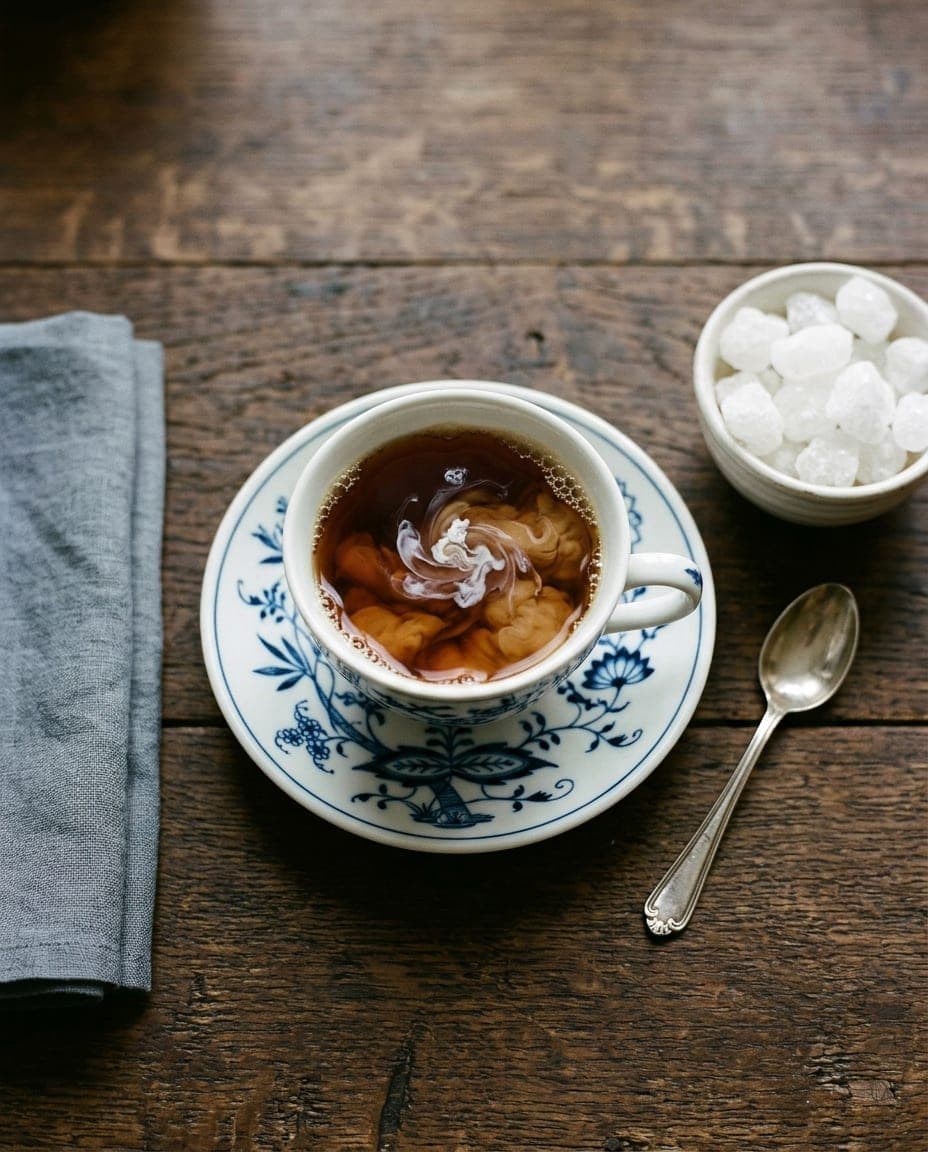
Strong black tea poured over rock sugar with cream in East Frisia
- Non-alcoholic
- Local name
- Ostfriesentee
- Served
- Kluntje sugar, cream, unstirred
- Best eaten at
- An East Frisian home or tea room
- Pairs with
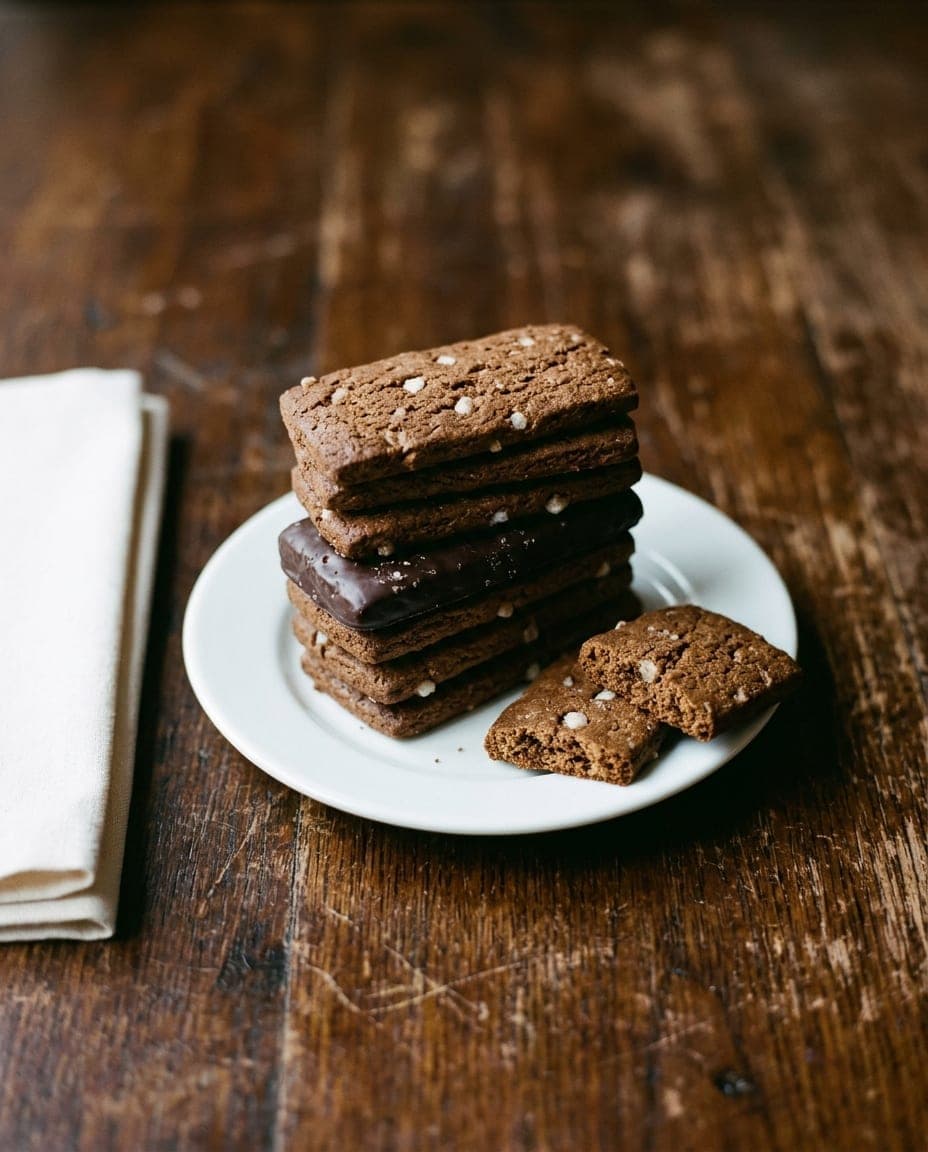
- Butter biscuits
What it is
Ostfriesentee is the daily ritual of East Frisia, a coastal region in the north-west of Germany. It is not merely a beverage but a structured ceremony woven into social life in the area. The drink consists of strong black tea, typically a blend dominated by Assam, poured over a lump of white rock sugar known as Kluntje, and finished with a spoonful of cream.
The preparation follows a fixed order. The Kluntje is placed in the cup first. When the hot tea is poured over it, the sugar often crackles audibly. The cream is then added with a small spoon and sinks slowly through the dark liquid before rising again in a cloud-like swirl called the Wulkje (little cloud). The drinker never stirs. Each sip tastes slightly different: the mild cream and strong tea first, and finally the sweetness of the dissolving sugar at the bottom.
The tradition is so deeply embedded in local culture that East Frisians are among the heaviest tea drinkers in the world, with around 300 litres per person per year cited by the German Tea Association, many times the German average. It is a regional speciality, distinct from the rest of the country, where coffee usually dominates. The ritual serves as a marker of hospitality and community.
A short history
Tea reached Europe through Dutch traders in the early 17th century, and East Frisia's proximity to the Netherlands brought it to the region early. For a long time it was an expensive luxury before becoming an everyday drink for ordinary households, a process generally dated to the 18th century. Over time the population refined how it was prepared and served, and the region developed its own strong blends.
Tea became a fixture of daily life, with fixed tea times (Teetied) in the morning and afternoon. Its strength and the added sugar and cream made it a warming drink in a damp, windy coastal climate, and the habit has survived robustly even as coffee culture spread across the rest of Germany.
In recent decades, the significance of this custom has been recognised beyond the local community. In December 2016, East Frisian tea culture (Ostfriesische Teekultur) was added to Germany's national inventory of intangible cultural heritage. This recognition did not invent the tradition but acknowledged its role in regional identity and social life.
The rules of the pour
The preparation is governed by a set of unwritten rules. First, the Kluntje goes into the cup. Second, the tea is poured over the sugar. Third, the cream is added with a small cream spoon, allowing it to sink and rise again to form the Wulkje.
Stirring the drink would destroy the layers that define the experience, so the teaspoon on the saucer is not used for that purpose. The drinker sips through the layers, tasting the bitterness, richness and sweetness in turn.
The social rules are equally clear. A host keeps refilling a guest's cup until the guest signals they have had enough by placing the spoon in the cup. Three cups are considered the polite minimum, summed up in the Low German saying Dree is Oostfreesenrecht ("three is the East Frisian's right"). The rhythm of pouring and sipping sets the pace for conversation, encouraging a slow, unhurried atmosphere.
What goes into it
The ingredients are simple but specific, each playing a vital role in the final character of the drink.
- Black tea, usually a strong East Frisian blend based largely on Assam. The brew is dark and robust, capable of standing up to the sugar and cream without losing its body.
- Kluntje, a large lump of white rock candy sugar. It dissolves slowly in the hot tea, so a single piece can sweeten several cups.
- Cream, added as a small spoonful rather than a splash. It must be rich enough to form the characteristic cloud.
The combination creates a drink that is neither purely bitter nor entirely sweet. It is usually served in thin porcelain cups, often accompanied by small biscuits or a slice of cake.
How it is drunk
The ritual is mostly practised at home, at the kitchen table or in the parlour, though cafés and tea rooms across the region serve it in the traditional way, and some museums and tea houses offer demonstrations of the ceremony.
The host brings the teapot, often kept warm on a small stove called a Stövchen, and a cup containing the Kluntje. The host pours the tea, then adds the cream. The guest receives the drink without stirring it and takes the first sip carefully.
The pace is deliberate. The host may refill the cup several times during a visit, and each refill is an invitation to stay longer. The conversation flows with the pouring, creating a rhythm that discourages rushing.
Curious facts
- The crackle. The sound of the Kluntje cracking as hot tea meets it is part of the experience for many drinkers.
- National heritage. Since 2016, East Frisian tea culture has been listed in Germany's national inventory of intangible cultural heritage.
- The spoon signal. Placing the spoon in the cup is the accepted sign for "no more", stopping the host from refilling the cup.
- Three cups. Dree is Oostfreesenrecht: at least three cups are poured as a matter of course.
- Regional loyalty. While tea is drunk across Germany, East Frisia is the region where this specific ritual with Kluntje and cream is everyday practice.
Where to try it
The best place to experience Ostfriesentee is in East Frisia itself, in towns such as Leer, Emden, Aurich and Norden, where cafés and tea rooms serve it with Kluntje and cream. Tea museums in the region also explain the history of the blend and the etiquette of the ceremony.
A traditional serving invites a guest to stay for several refills, often an hour or more, ideally with a plate of butter biscuits. In winter, the warmth of the tea is particularly welcome against the coastal chill.
Where to try it
1 destination

1 region
 Cabins5 destinations
Lower Saxony
Lower Saxony is Germany's second-largest state, featuring a mix of landscapes from the North Sea coast to the Harz mountains. The historic city of Hanover offers a vibrant arts scene and beautiful gardens, while Göttingen is renowned for its university atmosphere and literary history. The coastal region features the Wadden Sea, a UNESCO World Heritage site known for its unique tidal flats and diverse wildlife. Off the beaten path, towns like Celle showcase well-preserved half-timbered houses. The region is also famous for its traditional horse breeding and local specialties like Braunschweiger sausage and East Frisian tea culture, inviting exploration beyond typical tourist routes.
CabinsCamper Van RentalsHikingCastles