Nürnberger Rostbratwürstchen
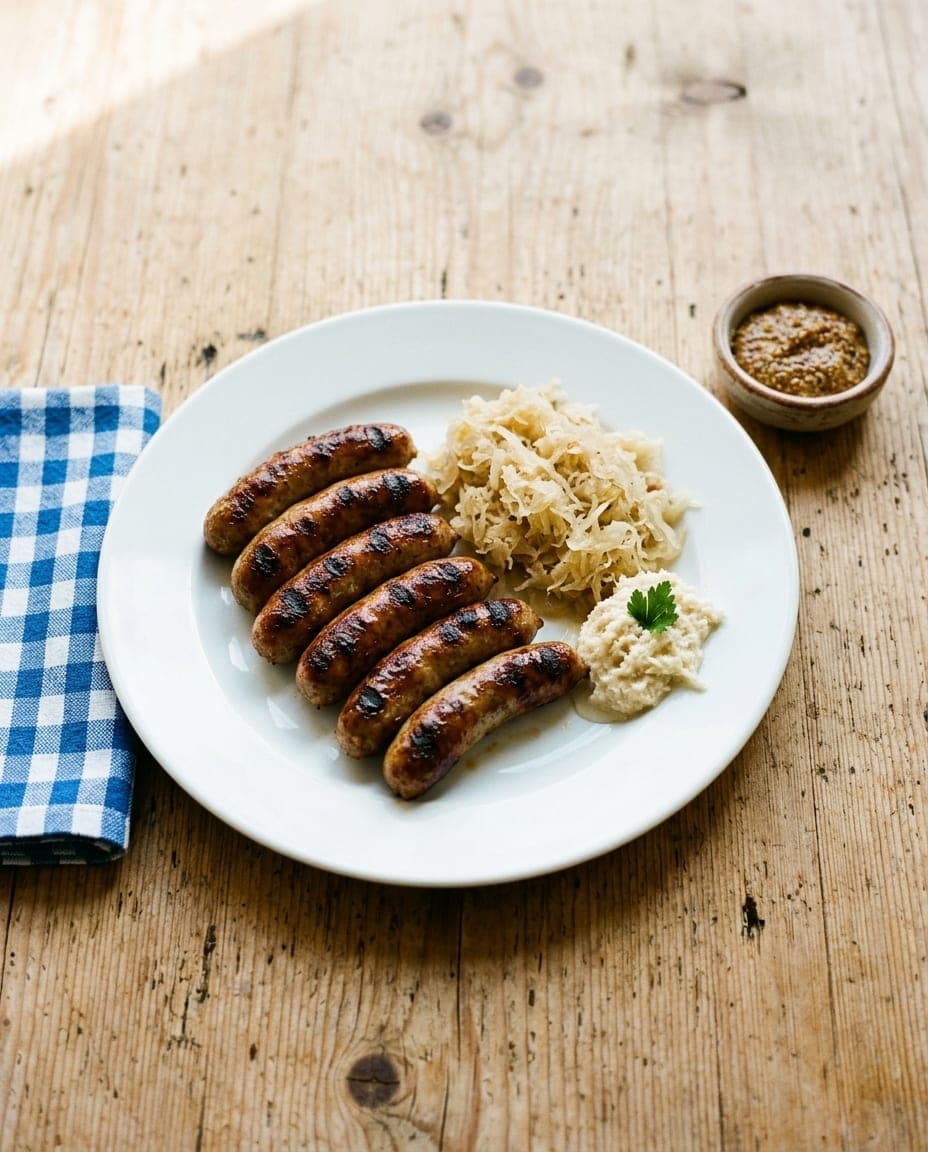
Nürnberger Rostbratwürstchen: small marjoram sausages grilled over beechwood
- Local name
- Nürnberger Rostbratwürstchen
- Served with
- Sauerkraut, potato salad, horseradish
- Best eaten at
- A Nuremberg Bratwurstküche
- Pairs with
- Franconian lager
What it is
The Nürnberger Rostbratwürstchen are small, fresh pork sausages from the Franconian city of Nuremberg in Bavaria. They are distinct for their size, being roughly the length of a finger at seven to nine centimetres, and for their weight, with each sausage weighing only twenty to twenty-five grams. Because they are so small, they are not sold by weight but are counted out in sets of six, eight, ten or twelve.
These sausages carry a protected geographical indication (PGI), granted by the EU in 2003, which means only sausages made within the city of Nuremberg according to the agreed specification can bear the name. The defining characteristic is the seasoning, which relies heavily on marjoram to give the meat its signature aromatic quality. They are grilled over an open beechwood fire, a method that imparts a subtle smoky flavour without overwhelming the delicate taste of the pork and herbs.
The dish is a regional speciality rather than a nationwide German staple. While similar sausages exist elsewhere in Bavaria, the Nuremberg version is unique in its combination of small size, specific spice blend and the traditional method of serving.
The history of the protected sausage
The origins of the Nürnberger Rostbratwürstchen are bound up with the history of Nuremberg as a trading city. The small size of the sausages is often explained by colourful stories, such as sausages being passed through keyholes after the city gates and taverns had closed. These tales are widely repeated but are probably later inventions; a more prosaic explanation is that butchers made the sausages smaller to keep their price affordable.
What is certain is that bratwurst has been made in Nuremberg for centuries, with the city dating its first documentary mention to 1313. The tradition was formalised over time, eventually leading to the protected status that governs production today.
The focus on marjoram as the primary herb sets them apart from the larger, coarser bratwurst varieties found in other parts of Franconia and Thuringia.
How they are made and served
The pork is finely ground and mixed with marjoram, salt, pepper and other permitted seasonings before being stuffed into narrow natural casings. The sausages are sold raw and are not smoked or cured; their smoky note comes entirely from the beechwood fire on which they are grilled to order.
When served in their traditional form, the sausages arrive on a pewter plate, often a heart-shaped one, rather than a ceramic one. They are presented in even numbers and accompanied by sides that balance their richness. The standard accompaniments include sauerkraut, which provides a sharp, fermented contrast to the smoky meat, and a Franconian potato salad dressed with stock, vinegar and oil rather than mayonnaise. A dollop of horseradish is often offered on the side to cut through the fat.
The small size means that the sausages are designed for eating in quantity. A plate of six or eight with potato salad and sauerkraut makes a full meal.
The street food version: Drei im Weggla
A popular variation transforms the sausages into a handheld street food known as Drei im Weggla. Three small sausages are placed inside a crusty bread roll, called a Weggla in the Franconian dialect, usually with a line of mustard. This version is widely available from stalls in the city centre and is particularly common during the Christmas season, when the Nuremberg Christkindlesmarkt draws large crowds.
The roll serves as a convenient vessel, allowing diners to eat while walking through the old town or waiting at a market stall. It is less formal than the pewter plate arrangement but remains an essential part of the culinary landscape in Nuremberg, and its simplicity highlights the quality of the sausages themselves.
How to eat it
The traditional way to enjoy Nürnberger Rostbratwürstchen is at a Bratwurstküche, a grilled sausage house of the kind found throughout Nuremberg's old town. Many of these establishments have an open beechwood grill where the sausages are cooked in view of the guests.
At a Bratwurstküche, the sausages are served on a pewter plate with sauerkraut, potato salad or horseradish. It is common to eat them with a fork, dipping them into mustard or combining them with the potato salad. The small size encourages eating several in succession.
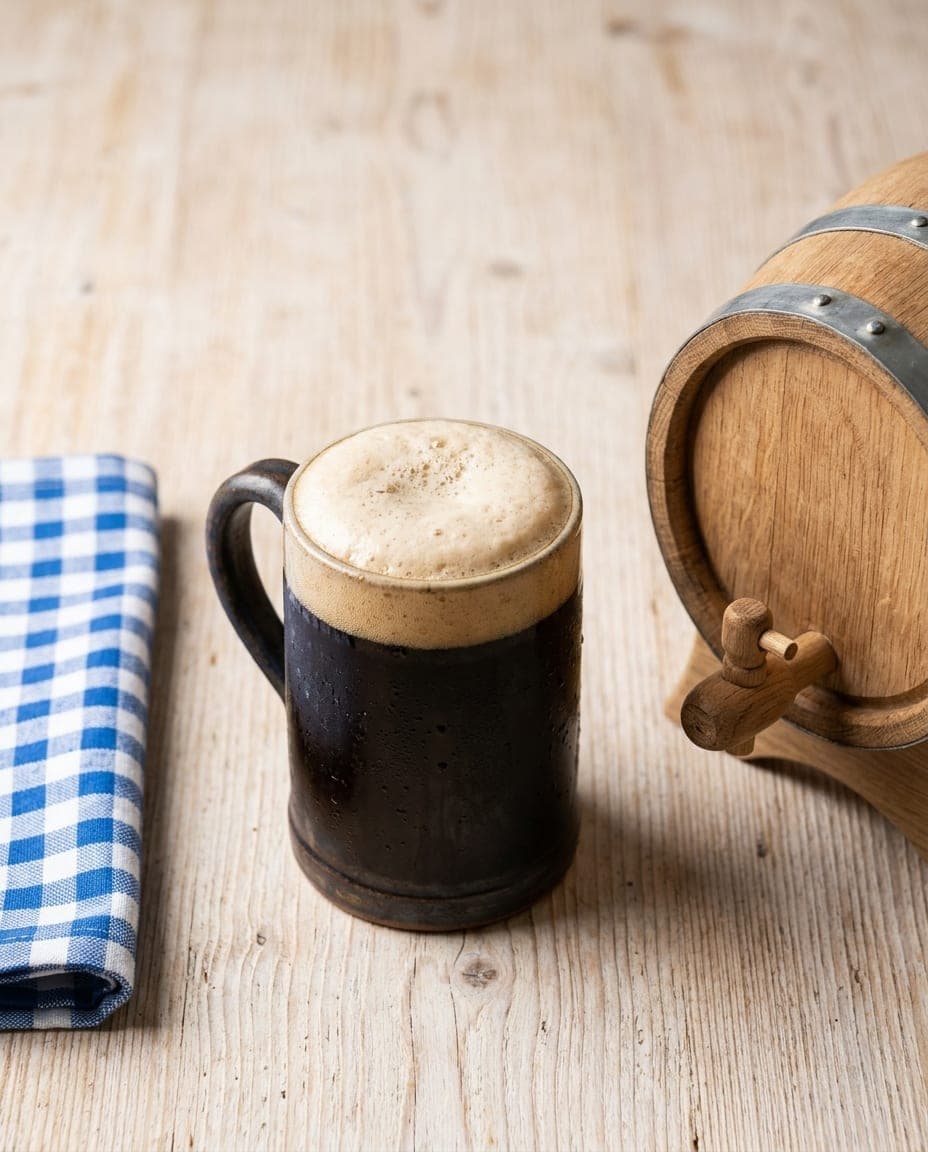
Pairing the dish with a glass of Franconian lager is the usual recommendation. The crisp, malty local beer cuts the fat of the pork and complements the marjoram seasoning.
Curious facts
- The protected status. The Nürnberger Rostbratwürstchen hold a protected geographical indication, granted in 2003, meaning only sausages made in Nuremberg according to the specification can carry the name.
- Counted not weighed. Menus list the sausages by number rather than weight; orders are for six, eight, ten or twelve pieces, never grams.
- Beechwood fire. Grilling over beechwood rather than gas is a hallmark of the traditional flavour.
- A small size with big impact. Each sausage weighs no more than twenty-five grams, yet the combination of marjoram and smoke creates a distinctive taste in just a few bites.
- Marjoram defines the taste. While other spices may be used in small amounts, marjoram is the dominant herb.
Where to try it
The best place to experience the dish is at a traditional Bratwurstküche in the historic centre of Nuremberg, where several long-established sausage houses still cook over beechwood fires. Some have served locals for generations, while newer spots maintain the same standards.
For a quick bite, Drei im Weggla stalls can be found around the main market square and in the streets of the old town. They offer a convenient way to sample the sausages while walking through the city.
Where to try it
1 destination
 Camper Van Rentals
Nuremberg
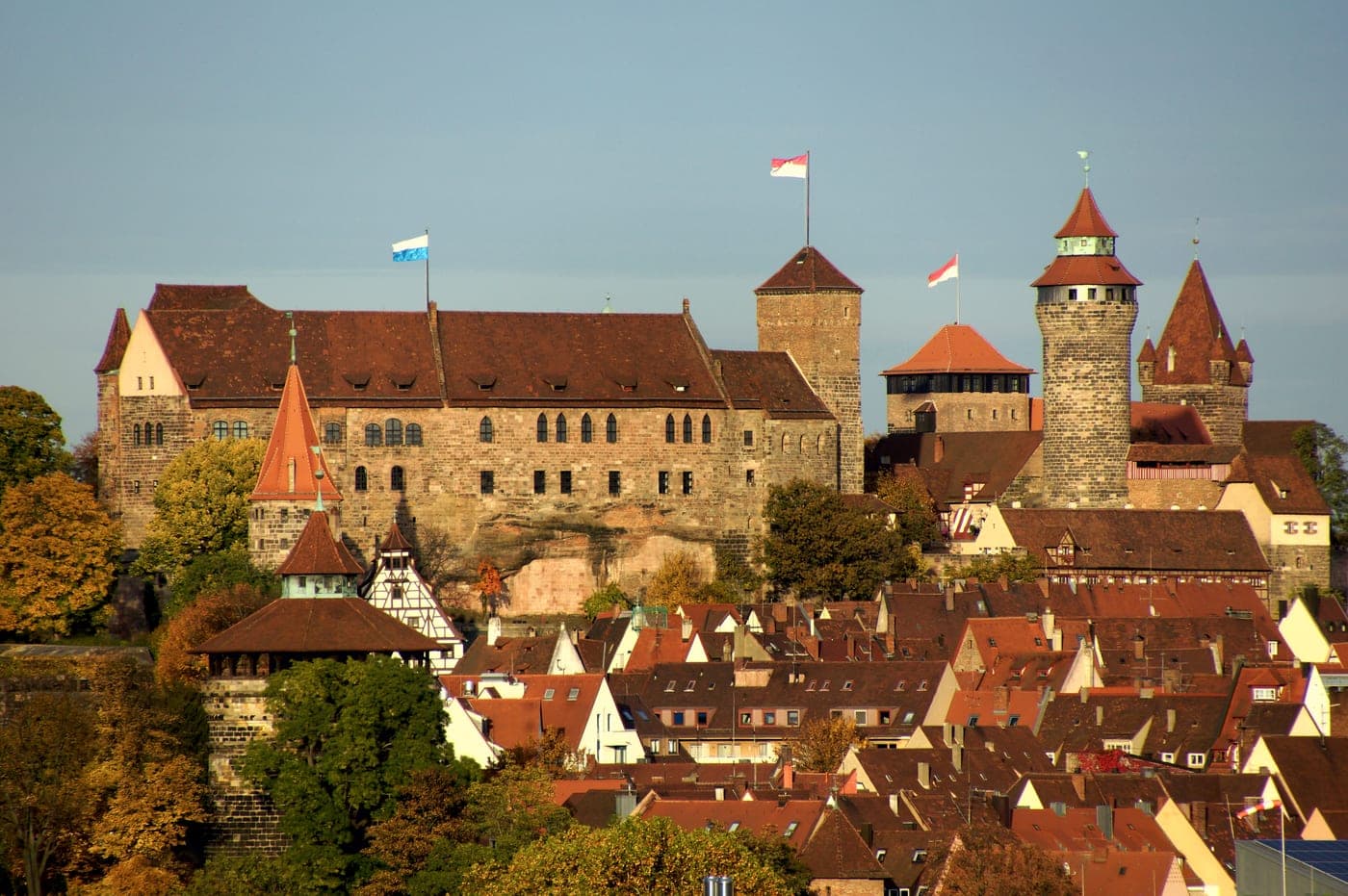
Medieval Franconian city with imperial castle and history museums.
Camper Van Rentals
1 region
 Cabins31 destinations
Bavaria
Bavaria is Germany's largest state, and one of its most varied. In the south, the land rises into the Alps, with peaks above Berchtesgaden and Garmisch-Partenkirchen, and lakes such as the Chiemsee and the Königssee nearby. Further north, the hills flatten into the Franconian wine country, where Silvaner and Müller-Thurgau vines cover slopes above the Main river. Between these two landscapes sit market towns, river cities, and castle villages that reward slow attention. Munich, the state capital, has its beer gardens, its baroque churches, and its markets selling Weißwurst in the morning. But much of Bavaria's character lives outside the capital, in places built for a quieter pace. Regensburg, on the Danube, keeps a medieval old town of narrow lanes, stone bridges, and merchant houses that once served river trade. Bamberg spreads across seven hills and several arms of the Regnitz river, and is known for its smoked Rauchbier, brewed in local taverns much as it always has been. Rothenburg ob der Tauber sits inside its own medieval walls, with half-timbered houses and a walkway along the ramparts that circles the whole old town. Franconia, in the north, is Bavaria's wine country. Vineyards climb the terraces above Würzburg and along the Main, and small wine villages sell their own vintages from cellar doors and courtyard taverns. The wine here is usually bottled in the round Bocksbeutel flask, a shape associated with the region. Cycling paths follow the river through the vines, linking one village to the next at an easy, level pace, past chapels, wine presses, and stone crosses set among the rows. In the Allgäu, close to the Austrian border, the town of Füssen sits below the castle hill of Neuschwanstein, built by King Ludwig II in the nineteenth century. The castle draws attention, but the surrounding countryside holds its own appeal: lakes, foothills, and villages where farming and dairy traditions continue much as before. Bavaria's lakes add another layer of slowness. The Chiemsee, the largest, can be crossed by boat to its island monasteries, where former royal buildings and quiet cloisters sit surrounded by water and reed beds. Smaller lakes near the Alpine foothills, such as the Staffelsee and the Ammersee, are ringed by paths used for walking and cycling rather than for speed. Food and drink run through the region's identity. Beer gardens, some centuries old, work on a simple principle: food brought from home, a beer ordered at the counter, a seat under chestnut trees for as long as the weather allows. Franconian taverns serve local wine alongside dishes built around potatoes, dumplings, and river fish. Bakeries sell pretzels still warm from the oven, and markets in towns like Nuremberg keep old traditions of spiced gingerbread and roasted sausages. A morning market in Regensburg, an afternoon among the Franconian vines, an evening in a Bamberg tavern: each has its own pace. Villages across Bavaria keep their own customs — wine festivals in Franconia, woodcarving and dairy traditions in the Alpine foothills. Mountains and vineyards, river cities and castle villages: Bavaria fits them into a single state, each within reach of the next.
CabinsCastlesHikingCamper Van Rentals