Nürnberger Lebkuchen
Nuremberg's spiced honey cake on wafer, protected by EU law
- Vegetarian
- Local name
- Nürnberger Lebkuchen
- Best eaten at
- Nuremberg's Christkindlesmarkt
- Pairs with
- Glühwein
What it is
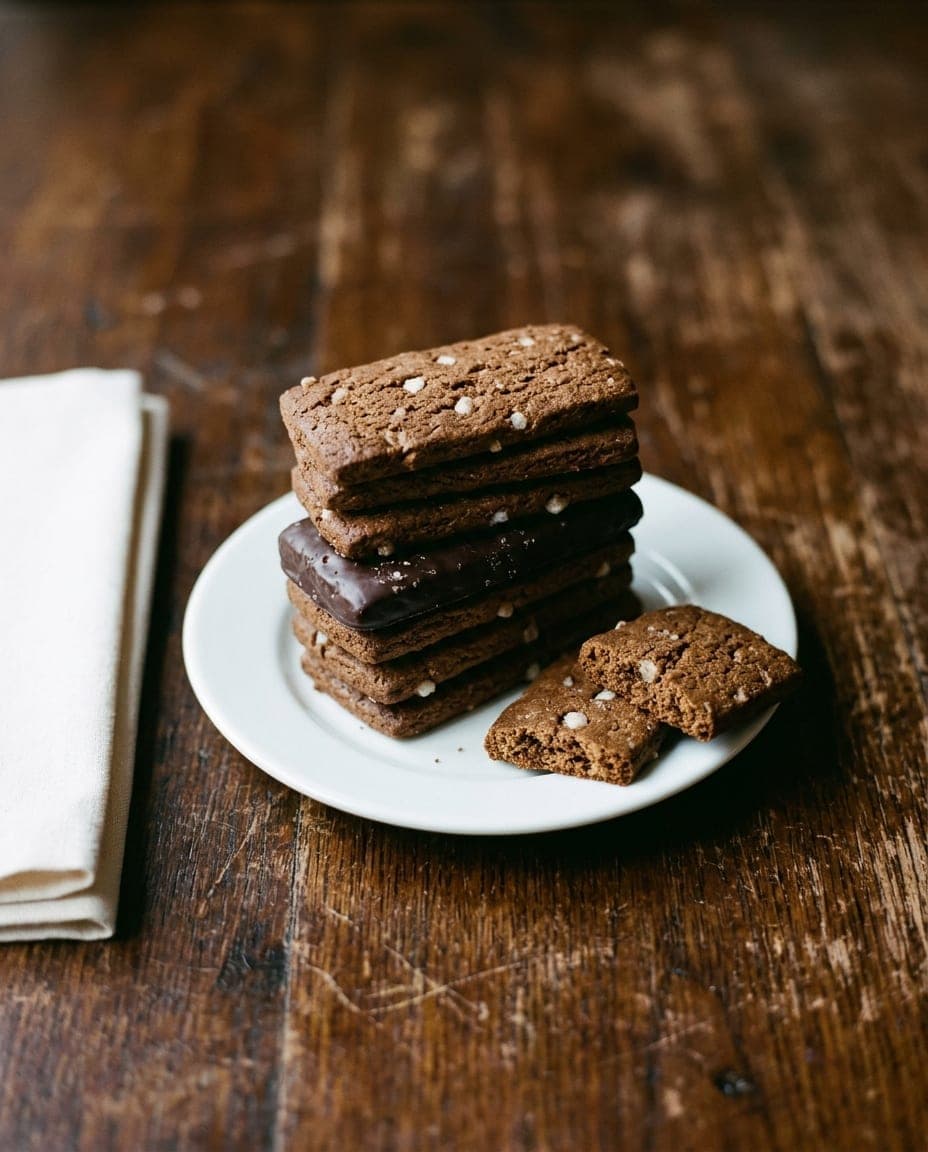
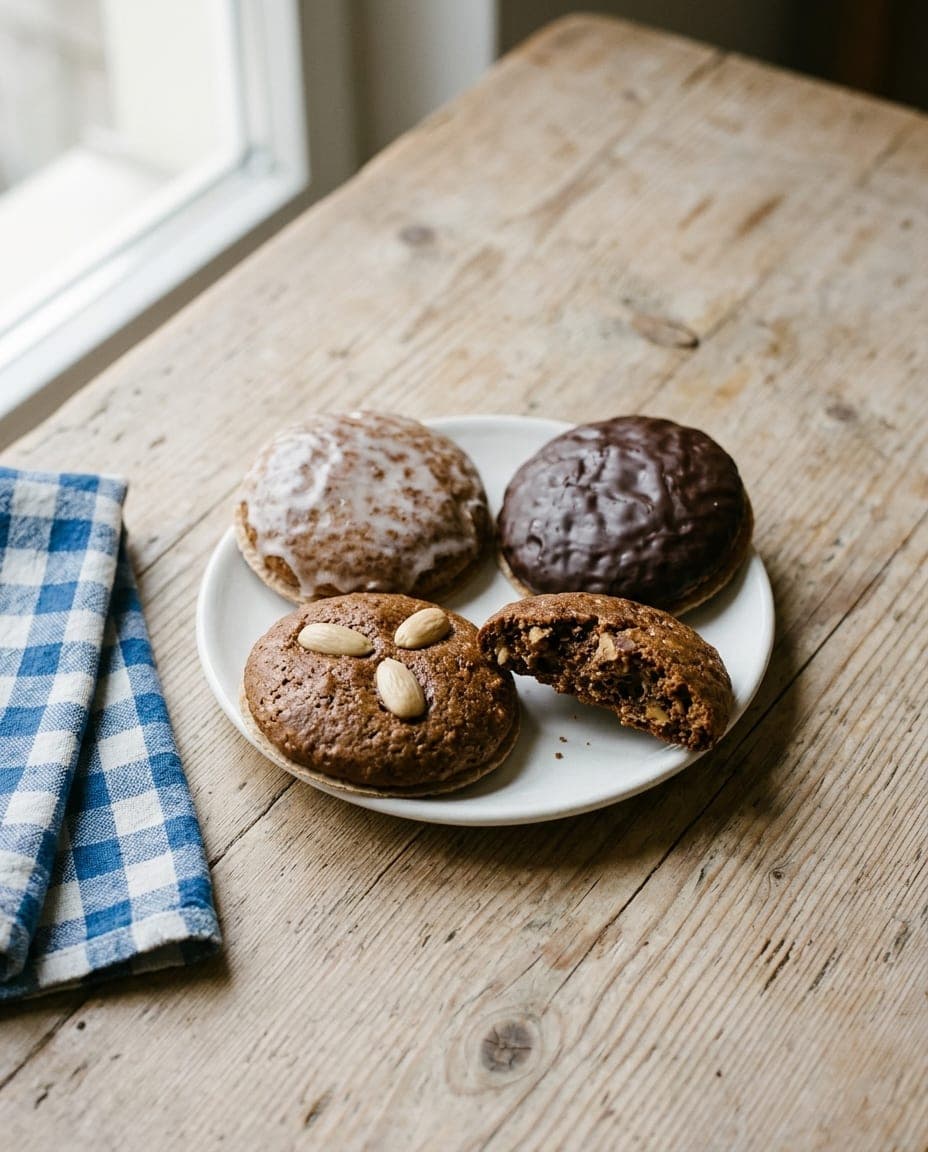
Nürnberger Lebkuchen is a soft, dark spiced cake that sits on a thin wafer base, known locally as an Oblate. It is one of Germany's most distinctive sweet treats, made in the city of Nuremberg in Bavaria and tied closely to the winter season. Unlike gingerbread biscuits that are hard and brittle, this pastry remains soft and moist, with a texture that yields easily to the bite. The taste is deep and complex, driven by a heavy hand of spices, nuts and the sweetness of honey and sugar.
The cake is not merely a snack; it is a protected product. Since 1996, Nürnberger Lebkuchen has been registered as an EU Protected Geographical Indication, which means that only Lebkuchen baked within the city of Nuremberg may bear the name, although the ingredients themselves may come from elsewhere. The result is a confection firmly tied to the place where it is made, carrying the history of Nuremberg's medieval trade routes in every bite.
Why Nuremberg became the home of spice cake
The history of Nürnberger Lebkuchen is rooted in the city's position as a major hub on medieval trade routes. Lebküchner, or Lebkuchen bakers, are recorded in the city from the late Middle Ages, and Nuremberg's merchants handled exotic spices such as cinnamon, cloves and ginger. These ingredients were valuable commodities that marked the city's wealth and connection to the wider world.
Local bakers combined these imported spices with honey from the nearby Reichswald forest, long known for its forest beekeepers. Over centuries, the craft evolved from simple spiced loaves into the refined confection known today. In 1643 the city approved the first sworn guild of Lebküchner, with 14 members; its recipes were guarded so closely that the bakers were forbidden to leave the town. Today, two associations represent the city's industrial and craft Lebkuchen makers.
The grades of Lebkuchen
The definition of what constitutes a fine Lebkuchen is strict, particularly regarding the use of flour. The finest version, known as Elisenlebkuchen, must under German food guidelines contain at least 25 per cent almonds, hazelnuts or walnuts and no more than 10 per cent flour. This high nut content gives the cake its characteristic softness and rich mouthfeel. Other grades allow more flour, but the Elisenlebkuchen remains the gold standard, often given as a gift.
The cakes are baked on thin, edible wafers called Oblaten, which prevent the soft dough from sticking to the baking tray and add a subtle crispness to the bottom of each piece. Once baked, the cakes may be left bare to show off their dark, spiced surface, or finished with a sugar glaze or a coating of dark chocolate. The variety in texture ranges from the melt-in-the-mouth softness of the Elisenlebkuchen to the slightly firmer bite of the lower grades.
How it is eaten and when it appears
The season for Nürnberger Lebkuchen runs mainly from September through December, building towards the Christkindlesmarkt in Nuremberg, one of Germany's best-known Christmas markets. During these weeks, the scent of cinnamon and honey fills the old town, and the variety on display is at its most extensive.
Traditionally, these cakes are eaten with a glass of warm spiced wine, Glühwein, which complements the intense spices of the pastry. The combination is a staple of the winter market experience, often enjoyed while standing in the cold or walking through the crowded squares. The soft texture of the cake makes it easy to eat by hand. In Nuremberg, the cakes are also sold in decorative tins, which are often kept and reused as storage containers long after the holiday season has ended.
Curious facts
- The wafer base is edible. The Oblate on which the cake rests is a thin wafer of flour, starch and water, eaten along with the cake.
- A guild of bakers. Nuremberg's Lebkuchen bakers formed their own sworn guild in 1643.
- Honey from the forest. The Reichswald forest near Nuremberg was historically famous for its beekeepers, whose honey helped make the city a centre of Lebkuchen baking.
- Protected by law. The name Nürnberger Lebkuchen has been protected by the European Union since 1996, and only cakes baked in Nuremberg can use it.
- Decorative tins are part of the tradition. Many bakers sell their cakes in painted metal tins featuring traditional motifs or city scenes, which have become collectible.
- A strict recipe for Elisen. The top grade must contain at least a quarter nuts and no more than a tenth flour.
Where to try it
Authentic Nürnberger Lebkuchen is baked only in Nuremberg itself, within the city limits where the protected designation applies. While similar spiced cakes can be found elsewhere in Germany, they cannot legally carry the name. The best place to sample the variety is at the Christkindlesmarkt, where stalls offer different grades and finishes from local bakers.
Beyond the market, traditional confectioners throughout the old town sell the cakes, often offering samples to those who wish to taste the difference between the grades. The best time to visit is during the market season, when the air is filled with the scent of spices and the tins are fresh from the ovens.
Where to try it
1 destination
 Camper Van Rentals
Nuremberg
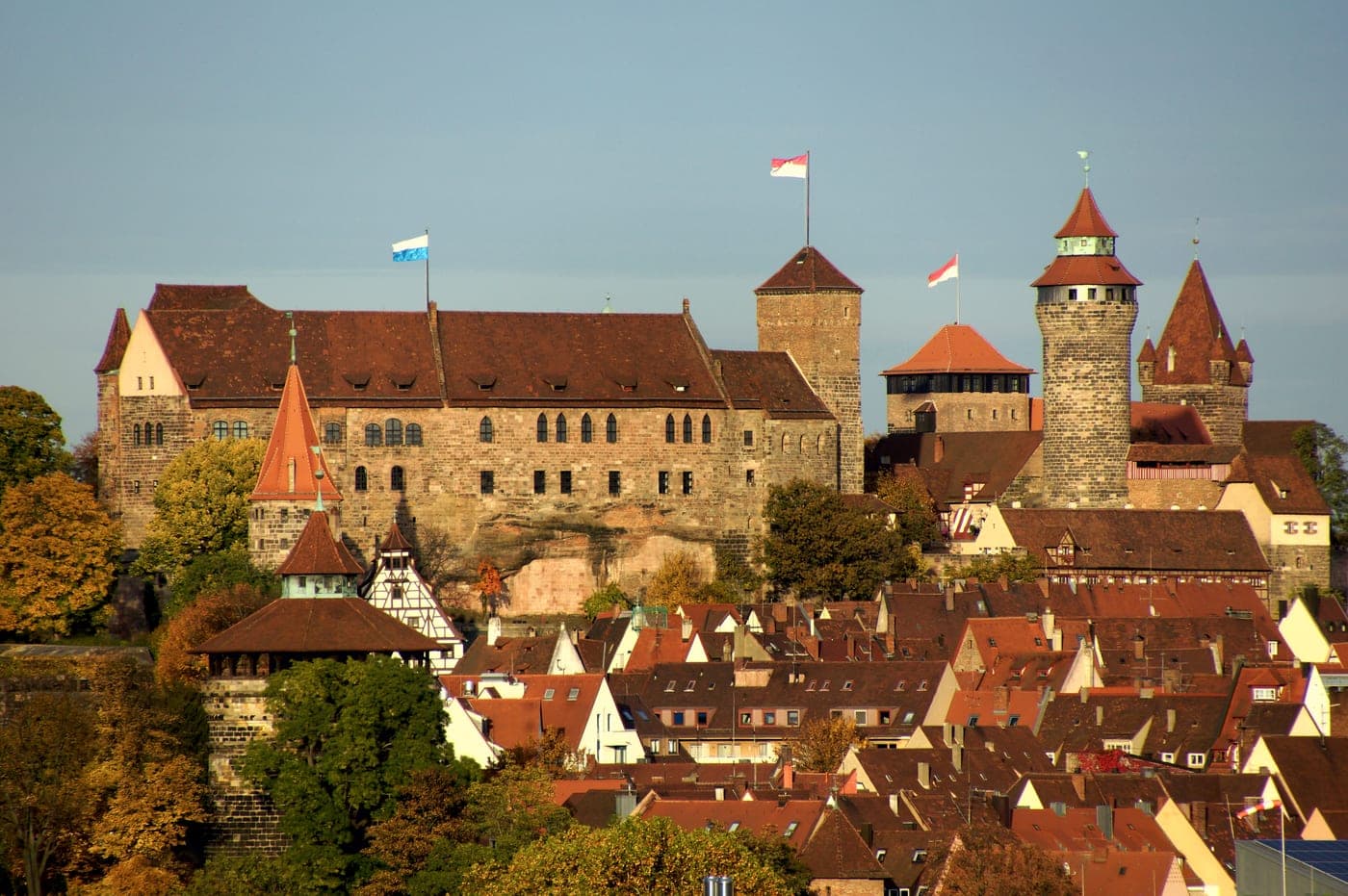
Medieval Franconian city with imperial castle and history museums.
Camper Van Rentals
1 region
 Cabins31 destinations
Bavaria
Bavaria is Germany's largest state, and one of its most varied. In the south, the land rises into the Alps, with peaks above Berchtesgaden and Garmisch-Partenkirchen, and lakes such as the Chiemsee and the Königssee nearby. Further north, the hills flatten into the Franconian wine country, where Silvaner and Müller-Thurgau vines cover slopes above the Main river. Between these two landscapes sit market towns, river cities, and castle villages that reward slow attention. Munich, the state capital, has its beer gardens, its baroque churches, and its markets selling Weißwurst in the morning. But much of Bavaria's character lives outside the capital, in places built for a quieter pace. Regensburg, on the Danube, keeps a medieval old town of narrow lanes, stone bridges, and merchant houses that once served river trade. Bamberg spreads across seven hills and several arms of the Regnitz river, and is known for its smoked Rauchbier, brewed in local taverns much as it always has been. Rothenburg ob der Tauber sits inside its own medieval walls, with half-timbered houses and a walkway along the ramparts that circles the whole old town. Franconia, in the north, is Bavaria's wine country. Vineyards climb the terraces above Würzburg and along the Main, and small wine villages sell their own vintages from cellar doors and courtyard taverns. The wine here is usually bottled in the round Bocksbeutel flask, a shape associated with the region. Cycling paths follow the river through the vines, linking one village to the next at an easy, level pace, past chapels, wine presses, and stone crosses set among the rows. In the Allgäu, close to the Austrian border, the town of Füssen sits below the castle hill of Neuschwanstein, built by King Ludwig II in the nineteenth century. The castle draws attention, but the surrounding countryside holds its own appeal: lakes, foothills, and villages where farming and dairy traditions continue much as before. Bavaria's lakes add another layer of slowness. The Chiemsee, the largest, can be crossed by boat to its island monasteries, where former royal buildings and quiet cloisters sit surrounded by water and reed beds. Smaller lakes near the Alpine foothills, such as the Staffelsee and the Ammersee, are ringed by paths used for walking and cycling rather than for speed. Food and drink run through the region's identity. Beer gardens, some centuries old, work on a simple principle: food brought from home, a beer ordered at the counter, a seat under chestnut trees for as long as the weather allows. Franconian taverns serve local wine alongside dishes built around potatoes, dumplings, and river fish. Bakeries sell pretzels still warm from the oven, and markets in towns like Nuremberg keep old traditions of spiced gingerbread and roasted sausages. A morning market in Regensburg, an afternoon among the Franconian vines, an evening in a Bamberg tavern: each has its own pace. Villages across Bavaria keep their own customs — wine festivals in Franconia, woodcarving and dairy traditions in the Alpine foothills. Mountains and vineyards, river cities and castle villages: Bavaria fits them into a single state, each within reach of the next.
CabinsCastlesHikingCamper Van Rentals