Münchner Helles
Munich's golden lager, brewed for drinking by the litre in beer gardens
- Alcoholic
- Local name
- Münchner Helles
- Served
- Chilled, by the litre Maß
- Best eaten at
- A Munich beer garden
- Pairs with
- Pretzel, Obatzda
The golden standard of Munich
Münchner Helles is the everyday beer of Munich, a pale, bottom-fermented lager that defines the city's drinking culture. It emerged in the 1890s as the city's answer to the rising popularity of pale lagers such as the Bohemian pilsner, which were beginning to take trade from the traditional dark lagers of Bavaria. Where a pilsner leads with a sharp, hoppy bite, the Helles leads with soft notes of bread and honey, keeping the hops to a gentle, restraining presence. It is deliberately undemanding, designed to be drunk by the litre without tiring the drinker or overwhelming the palate.
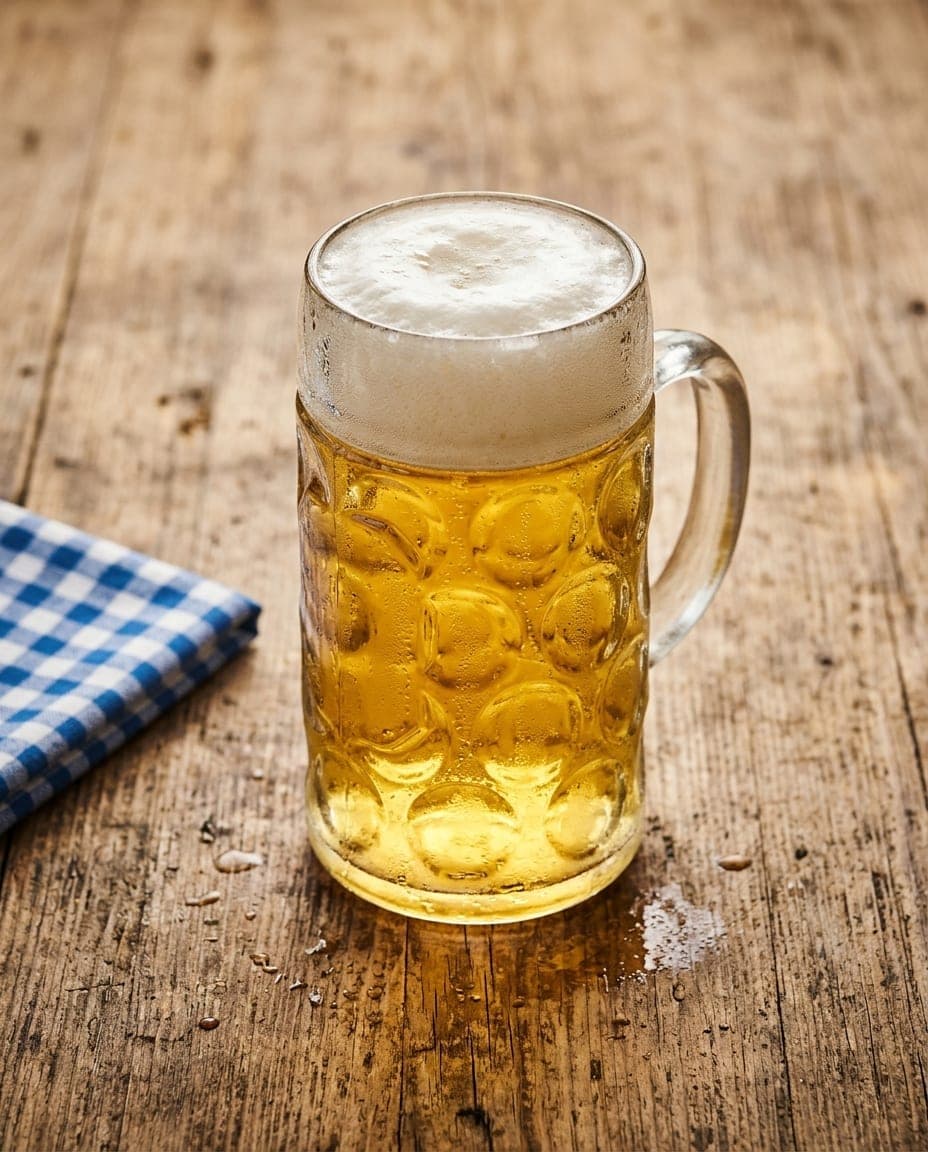
The beer is golden in colour, clear and bright, with a frothy white head. Its flavour is clean and malty, offering a sense of warmth and comfort rather than the aggressive bitterness found in many other lagers. This approachability has made it the standard choice for long afternoons in the beer gardens. It remains the most widely drunk beer style in Munich itself, even as the city's breweries have grown famous around the world.
The rivalry with the pilsner
The history of Münchner Helles is rooted in a specific moment of economic competition. In the late 19th century, the pale lager from Bohemia, known as Pilsner, became fashionable across Europe for its bright colour and crisp finish. Munich's traditional dark lagers, which were heavier and sweeter, began to lose ground as drinkers sought something lighter and more refreshing.
In 1894 the Spaten brewery brewed the first Munich Helles, drawing on malting methods its owner Gabriel Sedlmayr had studied decades earlier, and put it on sale in Munich in 1895. Other Munich brewers were at first reluctant to brew a pale beer but gradually followed. Rather than copying the pilsner, they kept the malt as the star and the hops in a supporting role. The result was a pale lager that felt distinctly Bavarian despite its colour. This decision to prioritise malt over hops has defined the style for more than a century.
The ritual of the Maß
Drinking Münchner Helles is part of a ritual that belongs to Munich and its surrounding regions. It is served well chilled, often in a Maß, a one-litre glass mug with a handle, which is the standard vessel in beer gardens. Indoors or at smaller tables, it may appear in a half-litre glass, but the litre remains the icon of the experience. The glass is heavy and thick, designed to keep the cold in.
In the beer gardens, the ritual extends beyond the glass itself. Since a royal decree of 1812, Munich's brewers have been allowed to serve beer above their cellars, where chestnut trees were planted to keep the cellars cool, and the Bavarian beer garden ordinance still defines a beer garden as a place where guests may eat their own food free of charge. Patrons often arrive with bread, radishes and strong cheeses, buying only the beer. It is common to see groups settling on wooden benches under the chestnut trees, unpacking their own provisions to go with the litre of golden lager.
What goes into it
The character of Münchner Helles comes from its ingredients and the brewing methods used to achieve its gentle profile. While every brewery has its own variation, the core components remain consistent across the style:
- Pale malt, mostly pilsner-type barley malt, which provides the golden colour and the soft, bread-like sweetness.
- Lager yeast, a bottom-fermenting strain that works at cooler temperatures to create a clean, crisp finish.
- Noble hops, typically Hallertau varieties, used sparingly to add a subtle bitterness and aroma without dominating the malt.
- Water, which Munich's breweries draw from their own wells.
How it is drunk
Drinking Münchner Helles is less about tasting and more about presence. In the beer garden, the drinker holds the Maß by its handle, raising it in toasts or resting it on the table between sips. The size of the glass encourages a leisurely pace; finishing a litre takes time.
The ritual extends to the food as well. Those who bring their own provisions slice radishes thinly to eat with a pretzel, or spread Obatzda generously on bread. The beer washes down the salty cheese and the crisp vegetables with its clean finish. It is a social drink, designed to be shared among friends while the afternoon stretches on under the trees.
Curious facts
- A local standard. While Munich has many famous export brands, Helles remains the most popular choice for locals drinking in the city's beer gardens.
- The right to bring food. Bringing a picnic to a Bavarian beer garden is a protected tradition, anchored in the state's beer garden ordinance.
- A specific glass. The Maß mug holds one litre and is a symbol of Bavarian drinking culture.
- Born in 1894. The first Munich Helles was brewed by Spaten in 1894, more than half a century after Pilsner Urquell's first pale lager of 1842.
Where to try it
The best place to drink Münchner Helles is in a traditional beer garden in Munich itself, where the tradition of bringing food remains alive. Places like the Hirschgarten, the Chinesischer Turm in the English Garden and the Augustiner-Keller are known for serving this lager alongside the classic accompaniments.
It pairs naturally with simple Bavarian fare that does not compete with the beer's subtle maltiness. A large pretzel, or Brezn, is a standard choice, its salty crust complementing the soft sweetness of the brew. Obatzda, a spread made from Camembert-style cheese, butter, onions and paprika, is another classic pairing, offering a deeply savoury contrast.
Where to try it
1 destination
 Camper Van Rentals
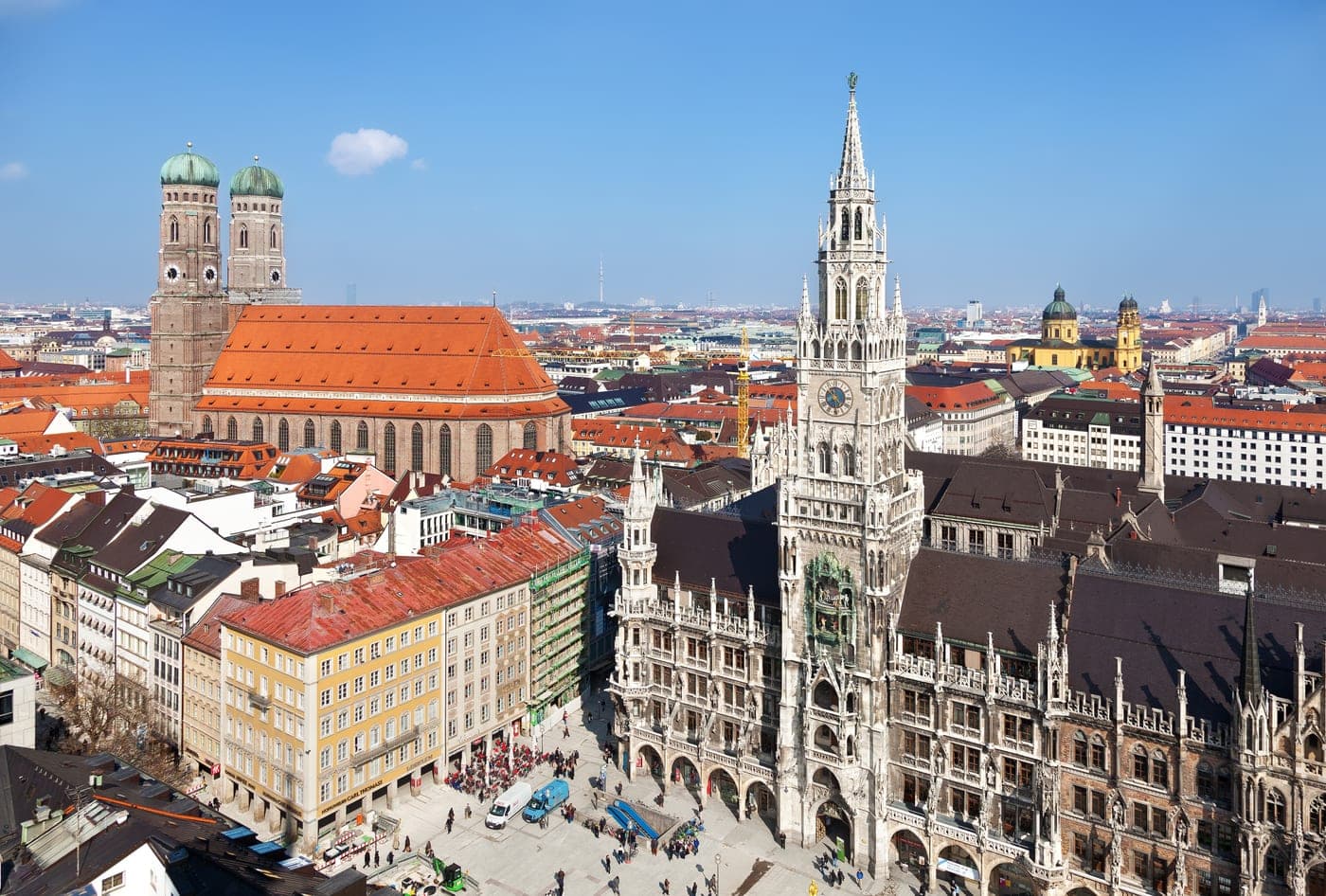
Munich
Bavaria's capital with beer gardens, baroque architecture, and Alpine access
Camper Van Rentals