Kölsch
A pale, dry ale served in narrow glasses by blunt waiters in Cologne
- Alcoholic
- Local name
- Kölsch
- Served
- In a small Stange glass
- Best eaten at
- A Cologne Brauhaus
- Pairs with
- Halve Hahn or Himmel un Ääd
What it is
Kölsch is the beer of Cologne, a pale, bright and delicate top-fermented ale that defines the city's drinking culture. It is not a national German staple but a regional speciality with strict rules governing who may call their brew Kölsch. Only breweries in Cologne, plus a handful of older breweries nearby that were already brewing it, are permitted to use the name, under an agreement signed by the region's brewers in 1986.
The beer itself is pale gold, clear and sparkling with a fine head. It tastes dry and crisp, with a subtle fruitiness from the top-fermenting yeast and a clean finish. This character comes from its production method: it is fermented like an ale at warmer temperatures but then cold-conditioned like a lager. The result is a beer that is smoother and cleaner than most ales, yet retains a gentle complexity.
The protected name and the city limits
The identity of Kölsch is tightly bound to its place of origin. The Kölsch-Konvention, signed in March 1986 by 24 breweries, defines the beer as a pale, highly attenuated, hop-accented, bright top-fermented beer and restricts the name to Cologne. Exceptions were made for a few breweries outside the city that already made Kölsch, such as those in Brühl and Wiehl. In 1997 Kölsch also became an EU protected geographical indication. Brewers elsewhere must label similar beers differently, typically as Kölsch-style ales.
The name itself is relatively young: it was first used in 1918 for a pale beer from the Sünner brewery, which had evolved from the cloudier, older Wieß. Each Cologne brand maintains its own subtle variation in hop character and yeast profile, but all genuine Kölsch must meet the convention's standards for colour, clarity and fermentation. The agreement ensures that the name remains a mark of geographical origin rather than a generic style descriptor.
How it is served
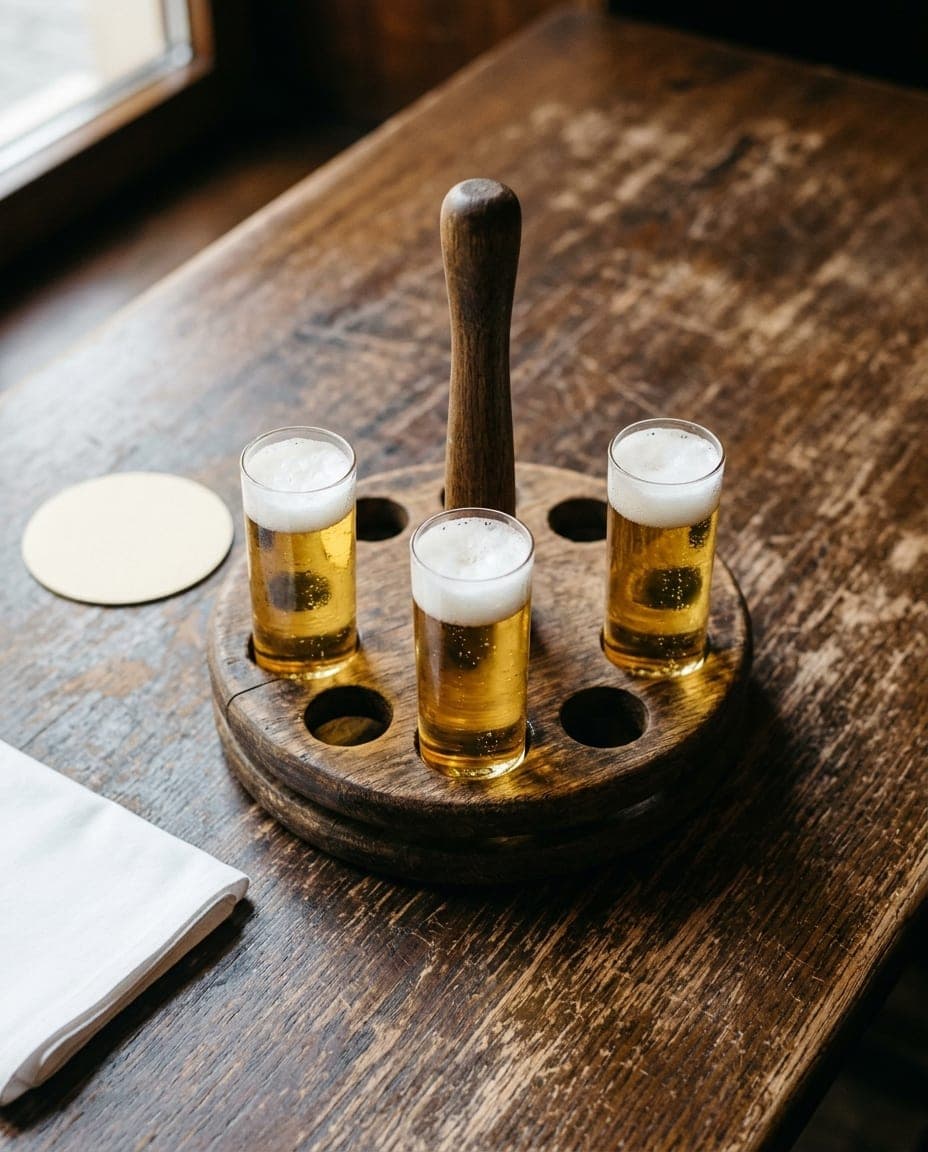
The way Kölsch arrives at the table is as important as the beer itself. It is poured into a Stange, a tall, straight cylindrical glass holding 0.2 litres. The narrow shape shows off the beer's pale colour and fine carbonation, and the small measure means each glass is drunk while still cold and fresh.
The service is handled by a Köbes, an aproned waiter who carries a round tray called a Kranz, holding a dozen or so full Stangen. The Köbes moves through the hall at a brisk pace, often speaking directly and without much ceremony. When a glass is empty, the Köbes does not wait for a new order but simply places a fresh one on the table.
The only way for a guest to signal that they have finished is to place the beer mat, or Bierdeckel, over the top of the empty glass. Until then, the glass is replaced automatically. Each new Stange is recorded with a pencil mark on the mat, creating a running tally that is settled at the end.
The culture of the Brauhaus
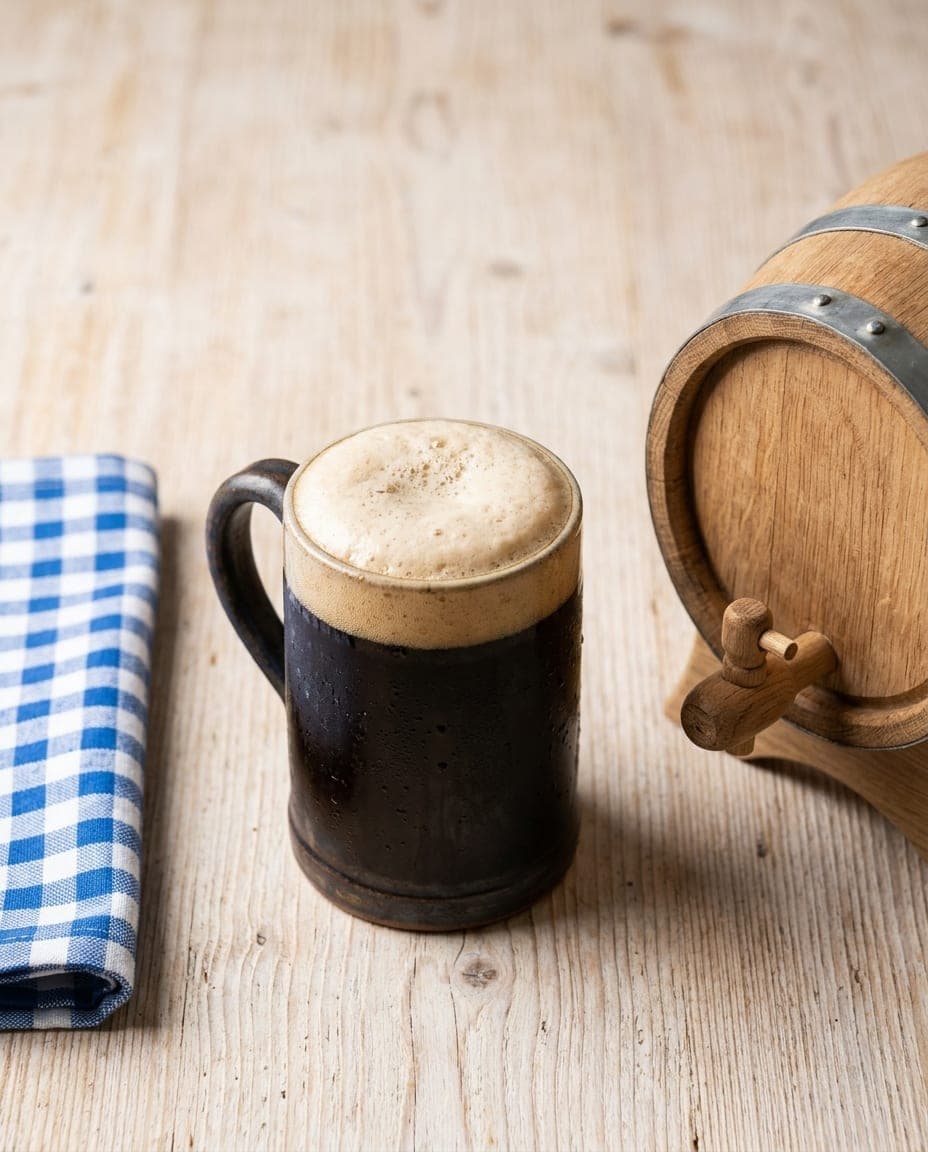
Kölsch is inextricably linked to the Brauhaus, a traditional brewery tavern serving its own house beer, in some cases still brewed on the premises and often poured from wooden casks. These establishments are the heart of Cologne social life, filling with locals and visitors alike throughout the day and into the evening.
Inside a Brauhaus, seating is usually communal, with long wooden tables and benches. The food is hearty and designed to accompany the beer rather than compete with it. Diners gather for long lunches or late dinners, spending hours at the same table while the Köbes moves between them, replacing glasses and taking orders for simple dishes.
What goes into it
The ingredients are those of any beer brewed under the German purity law: water, malted barley (sometimes with a little wheat malt), hops and yeast. The hops are used with restraint, giving a gentle bitterness rather than an intense floral note.
The yeast plays a crucial role in defining the style. A top-fermenting strain works at warmer temperatures to create the ale character, and the beer is then cooled and stored for conditioning. This allows the yeast to settle out while the beer matures, resulting in a clean, dry finish with very little residual sweetness and a pale, refreshing drink that is easy to drink over a long evening.
Curious facts
- A standard measure. The 0.2-litre Stange is by far the most common serving in Cologne, accounting for the great majority of beers sold in the city's pubs.
- The Köbes has no smile. Traditional waiters are known for their blunt, direct manner. They may appear stern or even rude to outsiders, but this is part of the local tradition and not personal.
- A rivalry with Düsseldorf. Cologne's neighbour Düsseldorf drinks Altbier, a darker, copper-coloured top-fermented beer, and the two cities keep up a long-standing, good-humoured rivalry over which is superior.
- The mat tells the story. The beer mat serves as a receipt, with the number of glasses pencilled on it by the Köbes.
- Local food pairings. The beer is traditionally served alongside Halve Hahn, a rye roll with Gouda, mustard and onions, or Himmel un Ääd, mashed potatoes and apple sauce with fried black pudding.
Where to try it
The best place to experience Kölsch as intended is a Cologne Brauhaus. While the beer is exported to other cities and countries, the full experience requires the Köbes, the Stange and the lively atmosphere of a local brewery tavern. Cologne has numerous historic Brauhäuser open to visitors, from large, well-known houses near the cathedral to smaller traditional taverns in the city centre and the old town.
A meal here typically involves several Stangen alongside a shared plate of Halve Hahn or a portion of Himmel un Ääd, in a setting that has changed little in generations.
Where to try it
1 destination
 Camper Van Rentals
Cologne
Rhine River city with Gothic cathedral, Carnival culture, and Kölsch beer.
Camper Van Rentals
1 region
 Cabins15 destinations
North Rhine-Westphalia
Located in western Germany, this region is the largest in the country and is known for its diverse landscapes, from the scenic Rhine River valleys to the lush hills of the Sauerland. The area is rich in industrial heritage, with cities like Dortmund and Essen showcasing their transformation from heavy industry to cultural hubs. Düsseldorf offers a vibrant arts scene and innovative fashion, while Cologne is famous for its stunning cathedral. The region also boasts picturesque towns such as Monschau, known for its half-timbered houses, and Bad Honnef, a charming spa town. Unique local dishes and breweries enhance the cultural experience, along with numerous hiking trails that connect visitors to its natural beauty.
CabinsHikingCastlesCamper Van Rentals