Kieler Sprotten
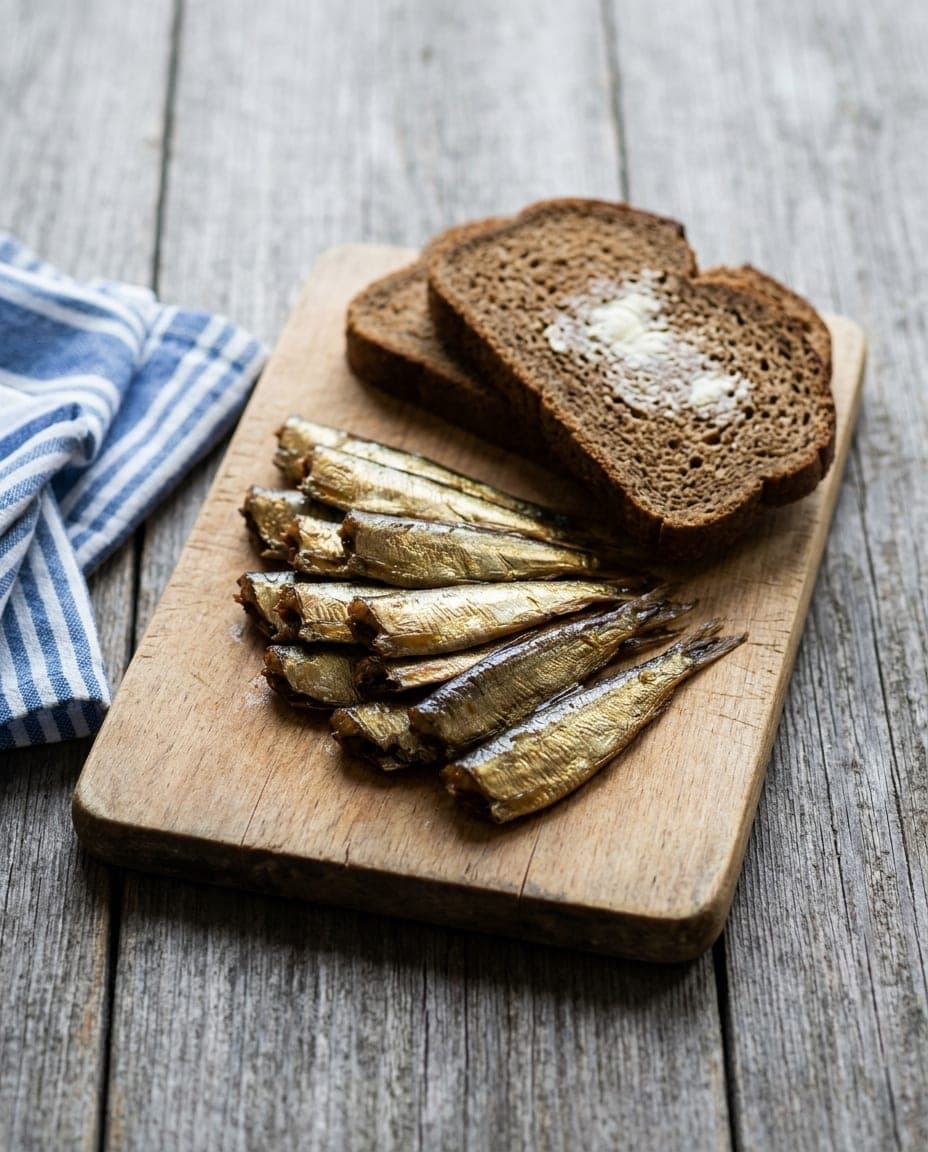
Golden hot-smoked sprats from Schleswig-Holstein, served on dark bread
- Local name
- Kieler Sprotten
- Served with
- Dark bread and butter
- Best eaten at
- An Eckernförde harbour smokehouse
- Pairs with
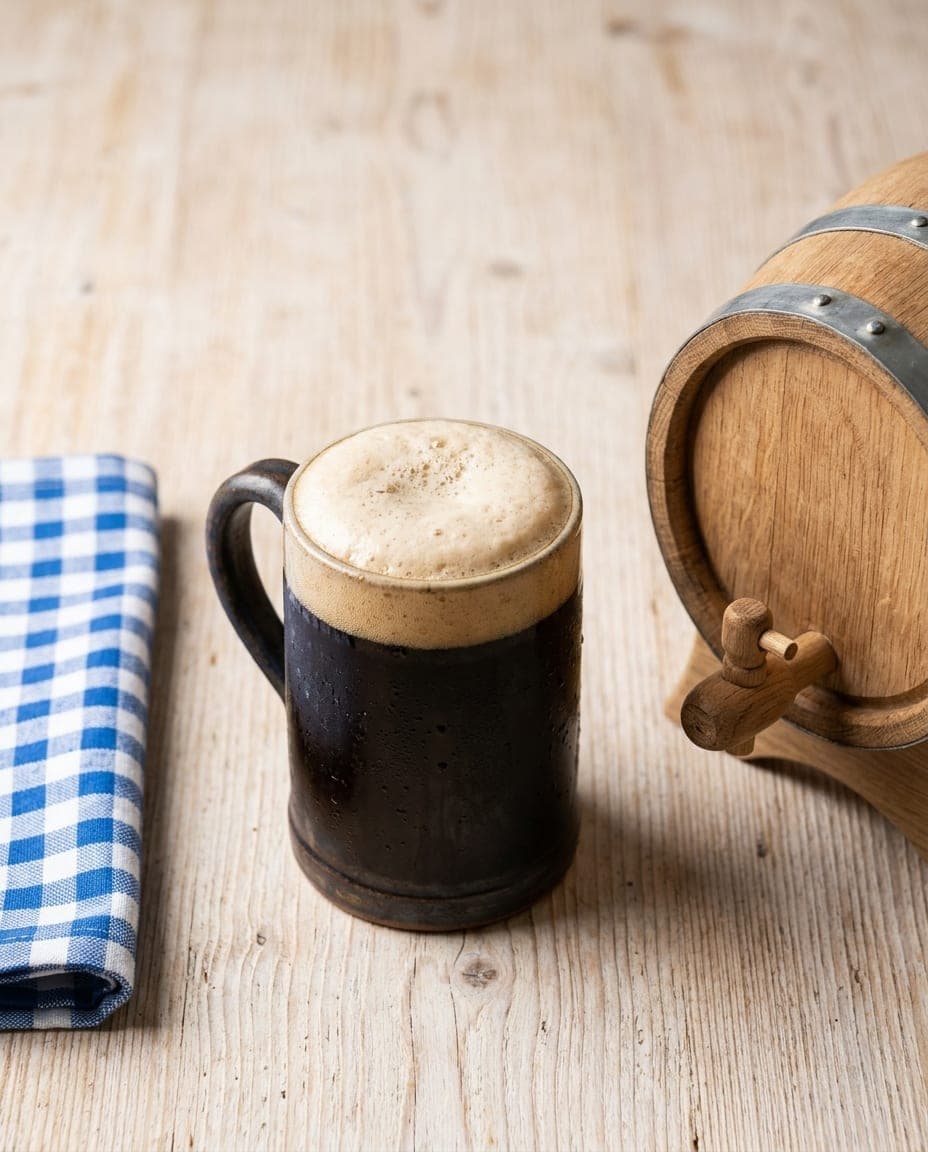
- Pilsner
What it is
Kieler Sprotten are small, golden hot-smoked sprats. The fish is the European sprat, Sprattus sprattus, a small relative of the herring that was once caught in great numbers in the Baltic around Kiel and Eckernförde; today most of the catch comes from the North Sea and the north-east Atlantic. The fish are smoked over beech and alder wood until they turn a deep golden-amber colour. They are sold whole, heads and tails included.
The dish is a regional speciality of Schleswig-Holstein, not a national staple found in every city across Germany. The sprats are traditionally packed in flat boxes of raw wood, a packaging that has become part of their identity. The texture is soft and flaky, with a smoky flavour that is distinct but not overpowering. It is a food meant to be eaten slowly, often as a simple snack or part of a light meal rather than a heavy course.
Why they are called Kieler Sprotten
The name carries a geographical history that is often debated. A popular story holds that the sprats were smoked in Eckernförde, a small harbour town up the coast, and only got their name because the boxes were stamped at Kiel's railway station on their way to customers across Germany.
The written record suggests otherwise. "Kieler Sprott" already appears in a poem by Matthias Claudius from 1786, and Kiel sprats are mentioned in the early 19th century, decades before the railway from Altona to Kiel opened in 1844. The more likely explanation is that sprats were originally a Kiel speciality that was later also produced, in large quantities, in Eckernförde, which kept the established name. Eckernförde remains the town most closely associated with the smoking today.
What goes into it
There are no complex recipes or hidden spices involved in the preparation of authentic Kieler Sprotten. The process relies on the quality of the raw material and the traditional method of smoking.
- Sprats: Small fish, ideally about 10 cm long, so that the flesh is tender and the bones soft.
- Salt brine: A simple brine used to season the fish before they enter the smokehouse.
- Beech and alder wood: The traditional fuel for the fire, which gives the characteristic golden colour and mild smokiness. Many producers now use gas-fired smokers instead.
The result is a fish that retains its natural oils and flavour. The bones are soft enough to eat, so the whole fish can be eaten "mit Kopp un Steert" – with head and tail – though many people remove the head, tail and backbone first.
How it is eaten
The traditional way to enjoy Kieler Sprotten is on dark rye bread spread with a generous layer of butter. The fish are placed on top, either whole or filleted, sometimes arranged in a neat row, sometimes just piled casually.
The oily richness of the smoked fish works well with the dense rye, while the butter softens the saltiness. A glass of Pilsner is a common drink to accompany this snack, as the crisp carbonation cleanses the palate between bites.
Small harbourside smokehouses along the Schleswig-Holstein coast still sell them, and in places like Eckernförde the fish can be bought fresh from the smoker.
Curious facts
- A disputed name: A popular story says Eckernförde sprats were named after Kiel because they were shipped via its railway station, but the name is recorded long before the railway arrived.
- In a poem: Matthias Claudius mentioned "Kieler Sprott" in a poem as early as 1786.
- Eaten whole: The bones are soft and edible, allowing the entire fish to be eaten, though many people fillet them first.
- Wooden packaging: Authentic versions are sold in flat boxes of raw wood rather than metal tins.
- Regional focus: This is a local speciality of Schleswig-Holstein, closely tied to Kiel Bay and Eckernförde.
Where to try it
The most authentic experience comes from the small harbours along the coast of Schleswig-Holstein, particularly in Eckernförde or in the city of Kiel itself. These are often simple establishments with wooden counters and little more than a few tables inside.
A visit to an Eckernförde harbour smokehouse offers the chance to see the smoking process and taste the fish while it is still warm.
Where to try it
2 destinations
 Camper Van Rentals
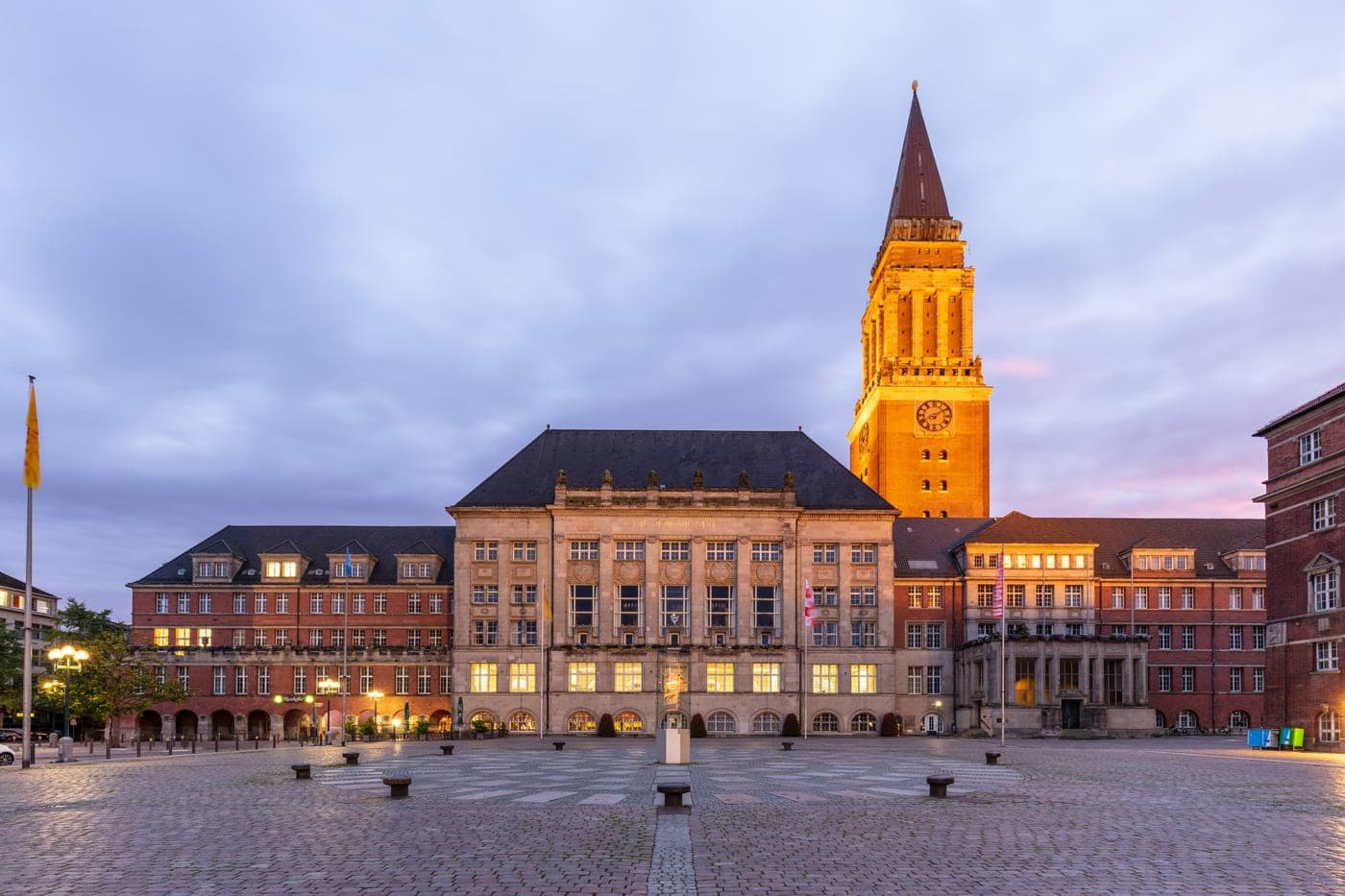
Kiel
Baltic Sea port capital with sailing tradition and Scandinavia ferries
Camper Van RentalsHiking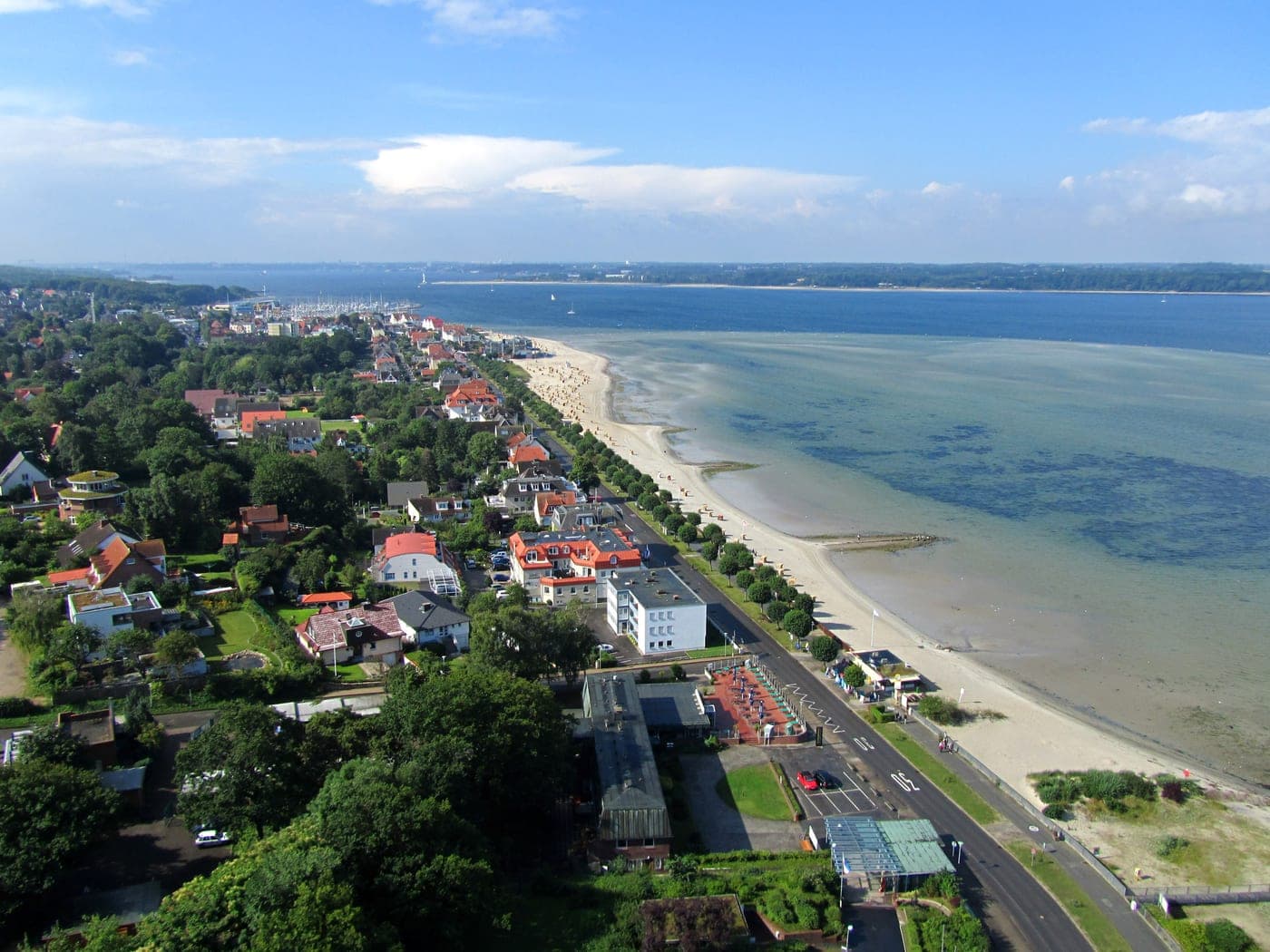 Boat Rentals
Laboe
Coastal town with sandy beaches and maritime history, featuring a naval memorial.
Boat RentalsHiking
1 region
- Boat Rentals6 destinations
Schleswig-Holstein
Schleswig-Holstein sits between two seas, and that fact shapes everything about its pace. On the west side, the Wadden Sea pulls back twice a day, leaving wide flats of mud and sand where oystercatchers and seals gather. On the east, the Baltic keeps a calmer shoreline, cut by narrow fjords called Förden that reach inland past reed beds and small fishing harbors. Between the two coasts lies a quieter inland belt of moraine hills, beech woods and lakes known as Holsteinische Schweiz, where the land rolls gently toward small lakes rather than open sea. Lübeck is the region's best-known town, its old core built by Hanseatic merchants and still arranged around brick gabled houses, a river harbor and the twin towers of the Holstentor gate. Marzipan making has been a local craft here for generations, and the smell of almond paste still drifts from shopfronts near the market square. A short distance north, Flensburg carries a different character: its harbor front and old rum warehouses point to centuries of trade with Norway and Denmark, and Danish is still spoken by a minority in town. Schleswig, at the head of the Schlei fjord, keeps an old layer of the region's history, with Gottorf Castle, now home to the state museums, facing the cathedral across the water. Villages in Schleswig-Holstein tend to sit low against the horizon, red brick and thatched roofs blending into flat fields or dike grass. Along the North Sea coast, dikes double as footpaths and cycling routes, running for long stretches with the sea on one side and grazing sheep on the other. The flatness of the land makes cycling an easy way to move between villages, small harbors and the ferry piers that link the mainland to the islands. Sylt, Föhr and Amrum lie offshore within the Wadden Sea National Park, each with its own character: Sylt is known for its dune landscape and thatched Frisian houses, Föhr keeps a quiet, agricultural feel around village greens and old churches, and Amrum holds an extensive dune area. Inland, the lake district around Plön and Eutin offers a different kind of water travel. Small passenger boats cross the lakes between beech forests, and Plön sits below its own castle, overlooking the water from a wooded hill. Eutin keeps a baroque palace and gardens open for slow walking. Further west, the town of Husum sits by its own tidal harbor, and each spring the palace garden there fills with crocus blooms. Kiel, the state capital, faces the Baltic directly and turns into a sailing city every summer during Kieler Woche. Things to do in Schleswig-Holstein tend to build from the coastline itself: watching the tide uncover the Wadden Sea flats, following a dike path between two fishing harbors, crossing an inland lake by small boat, or walking a fjord town's quay while gulls work the fish stalls. Herring and eel appear often on menus near the coast, and Labskaus, a hearty dish of corned beef, potato and beetroot, remains a Baltic port staple. The region rewards attention to weather and tide as much as to any single sight — mudflats change completely between low and high water, and light on the Baltic coast shifts quickly with the wind. Markets, harbor cafés and small guesthouses set the rhythm here more than any schedule does. Whether the starting point is Lübeck's brick lanes, Flensburg's Danish-flavored harbor, or a quiet island church on Föhr, Schleswig-Holstein holds together as one landscape of tide, wind and water, best taken in a village or a shoreline at a time.
Boat RentalsHikingCamper Van RentalsLocal Cuisine