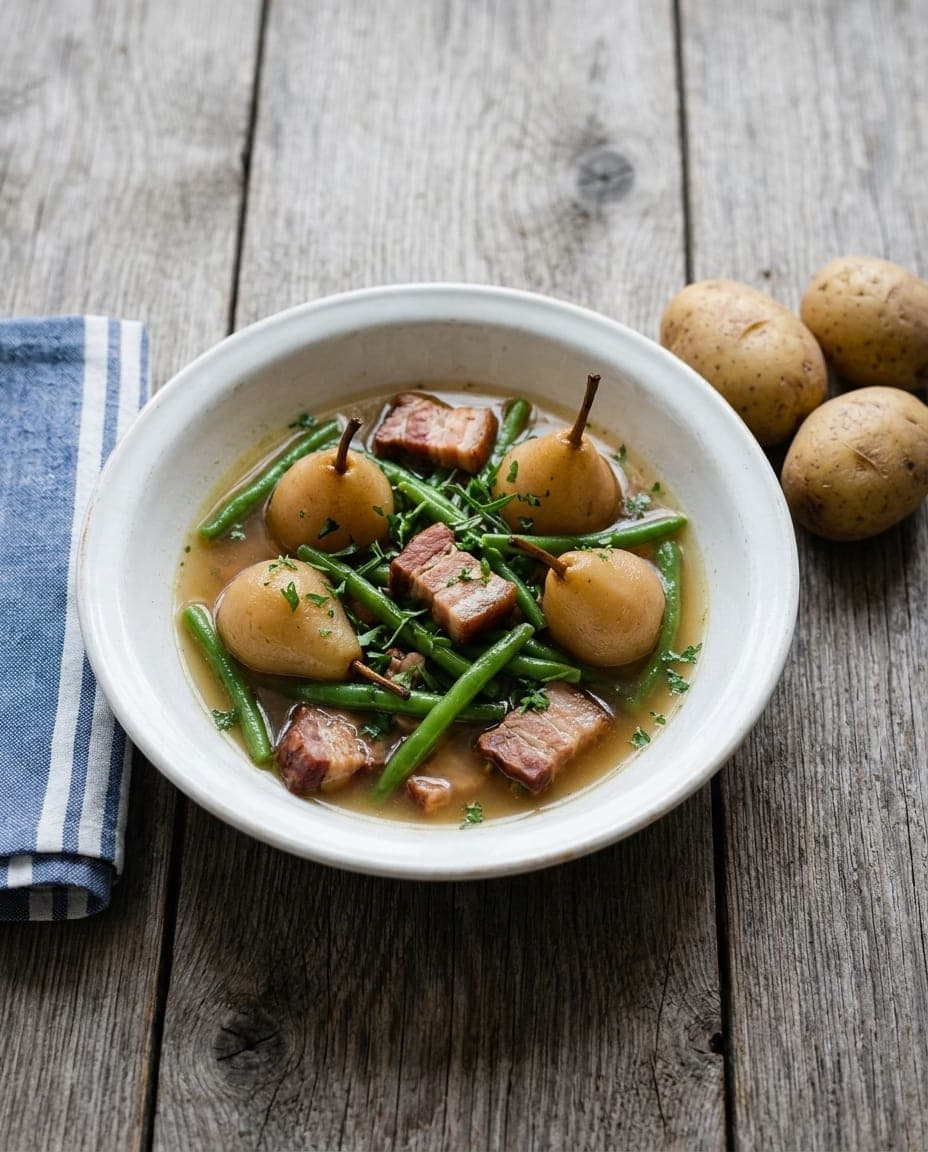
Käsespätzle (Kässpatzen)
Soft egg noodles layered with melted mountain cheese and browned onions in Swabia and the Allgäu
- Vegetarian
- Local name
- Käsespätzle (Swabia), Kässpatzen (Allgäu)
- Served with
- Fried onions, green salad
- Best eaten at
- A Swabian Gasthaus or an Allgäu alpine hut
- Pairs with
- German lager such as Bavarian Helles
What it is
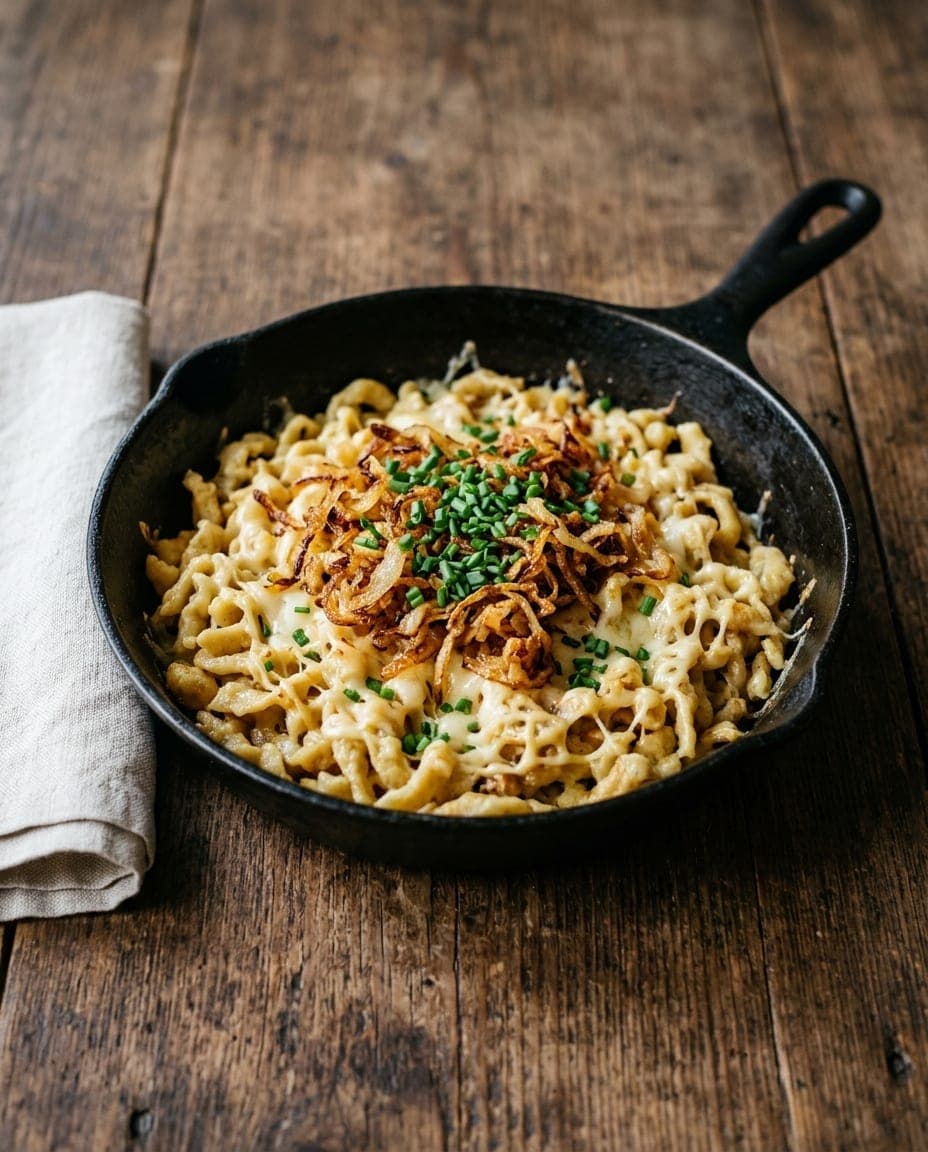
Käsespätzle is a simple yet substantial meal built from three humble elements: soft egg noodles, melted mountain cheese and deeply browned onions. It is at home in Swabia, in the state of Baden-Württemberg in south-west Germany, and in the neighbouring Allgäu, the hilly, dairy-rich region that straddles Bavaria and Baden-Württemberg. Related versions are eaten across the border in Vorarlberg, Tyrol, Liechtenstein and Switzerland.
The dish is rarely a light starter. It is a meal in its own right, dense and comforting, with the cheese acting as a binding agent that turns the noodles into a cohesive, savoury mass. Fried onions are piled on top, and a fresh green salad is served on the side to cut the richness.
One dish, two names
In Württemberg the dish is called Käsespätzle; in the Allgäu it is Kässpatzen, and in Vorarlberg Kässpätzle. The difference is a matter of dialect and local cheese rather than method: both layer hot noodles with grated cheese and top them with onions. The name serves as a marker of regional pride.
Spätzle belong to the Swabian-Alemannic kitchen of south-west Germany, Vorarlberg and Switzerland, where soft egg noodles scraped into boiling water have long been everyday food. In the Allgäu, the cheese version grew up alongside the region's dairy traditions. Farming communities that moved their cattle to high summer pastures needed food that was easy to prepare in simple huts yet substantial enough to sustain heavy physical labour. Allgäu versions are often especially generous with the cheese, making a dish that sits closer to a fondue than a pasta side.
How Spätzle are made
The dough, made from flour, eggs, salt and water, is beaten until it is thick, sticky, elastic and slightly bubbly. In traditional kitchens, the cook spreads some dough on a wet wooden board, the Spätzlebrett, and scrapes thin strands off its edge with a knife or scraper directly into a large pot of simmering salted water.
This method creates noodles of varying lengths and widths, and their slightly uneven surface allows the cheese to cling to them. Once the noodles float to the surface, they are lifted out with a slotted spoon and drained.
Many cooks now use a Spätzlepresse, which presses the dough through holes, or a Spätzlehobel, a grater-like device. These give more uniform results, which some purists see as lacking the character of the hand-scraped version.
What goes into it
There is no official recipe, but the core components remain consistent across traditional kitchens:
- Spätzle dough: Flour, eggs, salt and a little water or sparkling water to lighten the texture.
- Mountain cheese: Typically grated Emmentaler or Bergkäse, sometimes with a sharper cheese mixed in. In the Allgäu the blend leans on Allgäuer Bergkäse, made from the milk of cows that graze on high pastures and prized for its nutty depth, often combined with Allgäuer Emmentaler and Weißlacker, a pungent local cheese named for its white, lacquer-like rind, which brings a tangy edge.
- Onions: Sliced thinly and cooked in butter, oil or lard until deep golden brown and sweet, or fried crisp.
- Green salad: A simple leaf salad dressed with vinegar and oil.
The dish is assembled while hot. Layers of freshly boiled noodles are alternated with a generous amount of grated cheese, and the dish is usually kept in a warm oven between layers so that everything fuses into a gooey, cohesive whole. A splash of the noodle cooking water is often added between layers to keep it moist, and chives and black pepper are a common finish.
The dish is not strictly vegetarian: the traditional hard cheeses are made with animal rennet, and the onions are sometimes fried in lard.
How it is eaten
Käsespätzle is served as a main course, at lunch or dinner. It often arrives in the pan it was cooked in, or in a deep or shallow earthenware dish, keeping the cheese hot and molten, with the onions scattered over the top. Diners mix the noodles and melted cheese together, then fold in the onions or eat them as they sit on the surface.
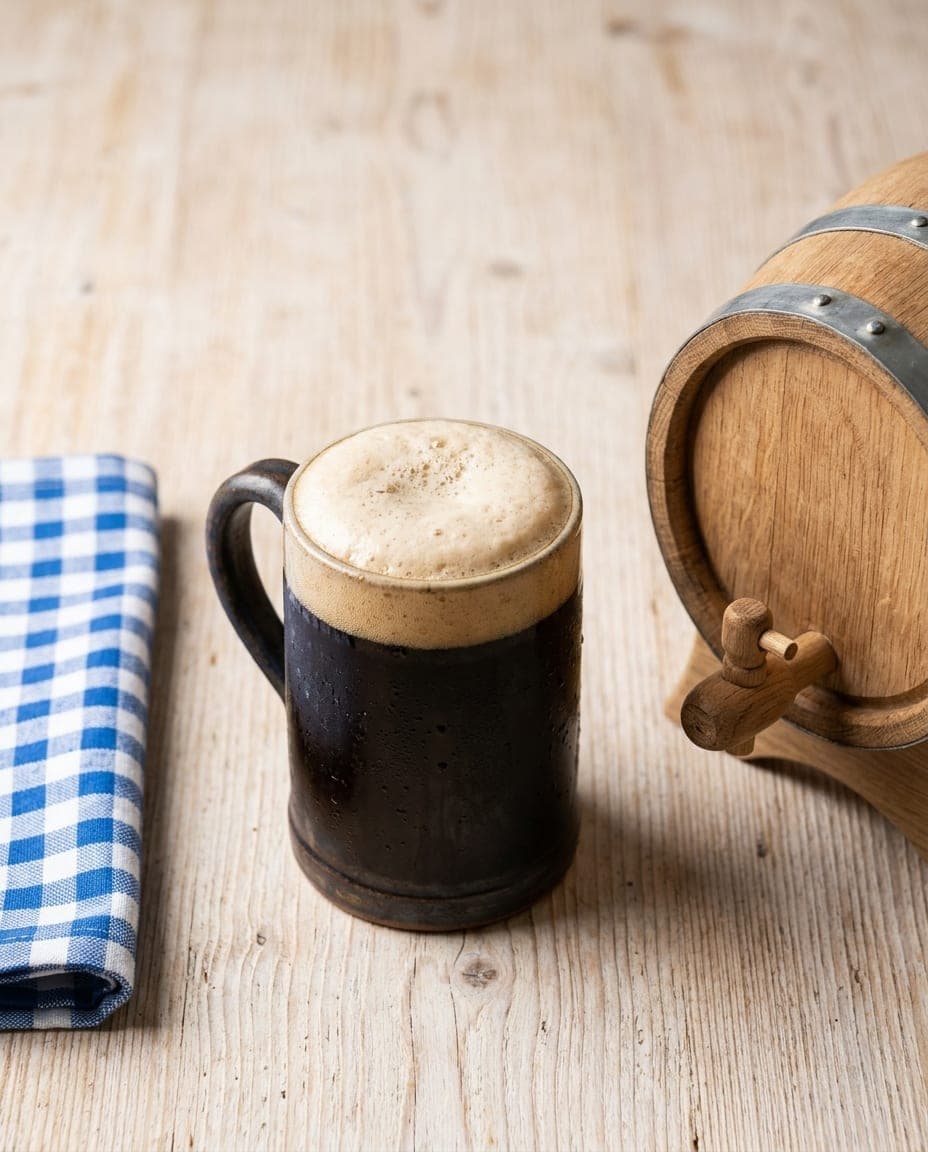
The salad is eaten alongside, so that each bite of rich, cheesy noodles can be followed by something crisp and fresh. A glass of German lager pairs well: in the Allgäu that usually means Bavarian Helles, a pale lager light and crisp enough to cut through the cheese without overpowering it.
Portions are typically generous, reflecting the dish's origins as fuel for long days of work in the fields or mountains.
Curious facts
- Protected noodles. Schwäbische Spätzle and Schwäbische Knöpfle were registered as an EU protected geographical indication in 2012.
- The cheese must melt properly. If the noodles are too cool the cheese stays separate; if it is overheated, it turns greasy.
- The onion's role. The fried onions are not merely a garnish; their sweetness balances the saltiness of the cheese.
- Protected cheeses too. The Allgäu is one of Germany's most important dairy regions, and Allgäuer Bergkäse, Allgäuer Emmentaler and Weißlacker all carry EU protected status.
- Cheese from the alp. On the alpine pastures, Kässpatzen are often made with Sennalpkäse, cheese produced on the alp itself during the summer grazing season.
Where to try it
The classic settings are a traditional Gasthaus in Swabia or the Allgäu, where many inns use cheese from nearby dairies, and an Allgäu alpine hut. These huts are simple places run by families or local cooperatives, often reached only on foot or by cable car, and on some of them the cheese itself is made on the spot during the summer. In Kempten, freshly made Kässpatzen are sold at the weekly market.
The dish is available year-round but is particularly popular in autumn and winter, when the weather turns cooler.
Where to try it
4 destinations
 Cabins
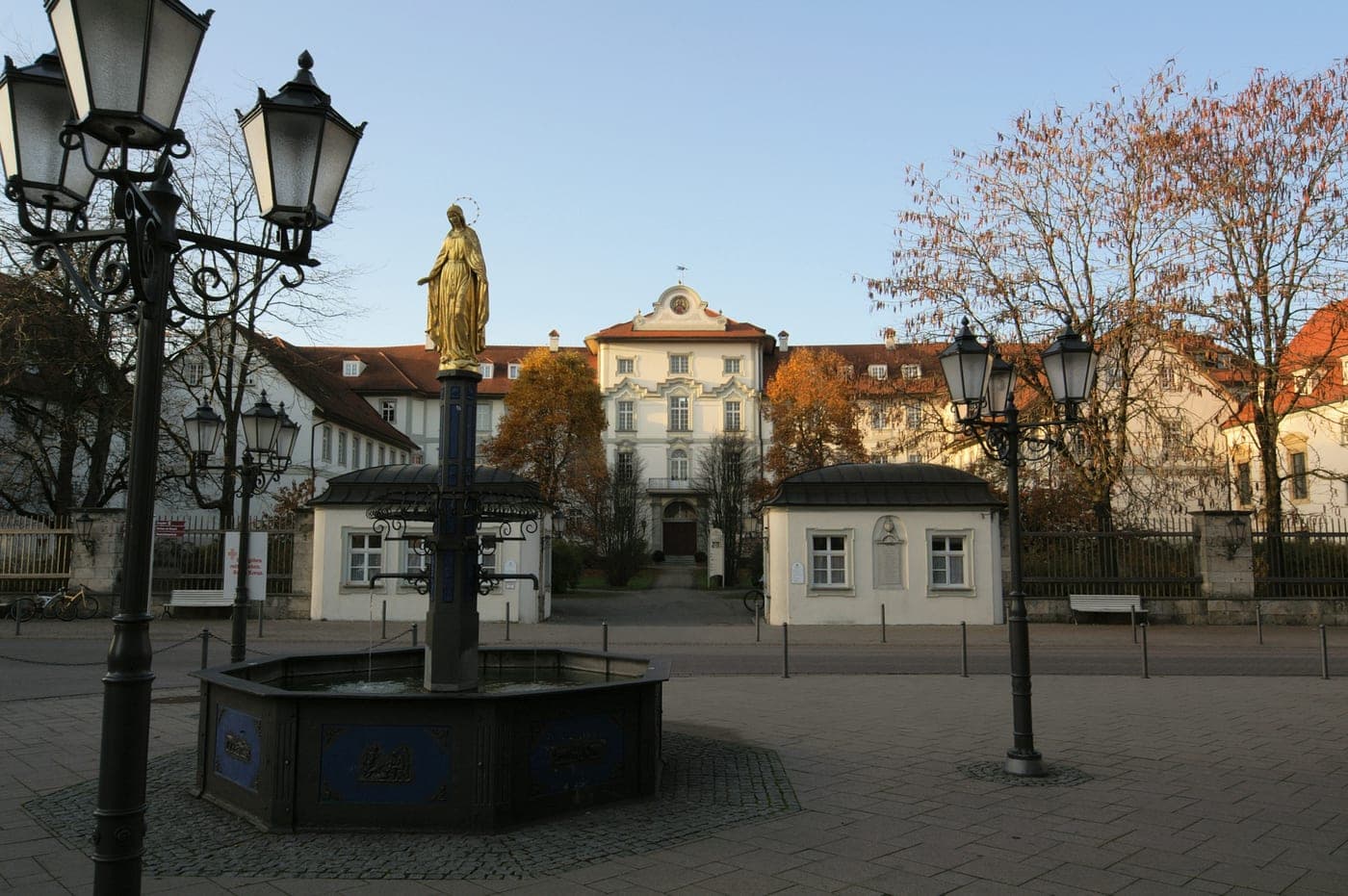
Bad Wurzach
Upper Swabian spa town with moorland nature reserve and wellness tradition
CabinsHiking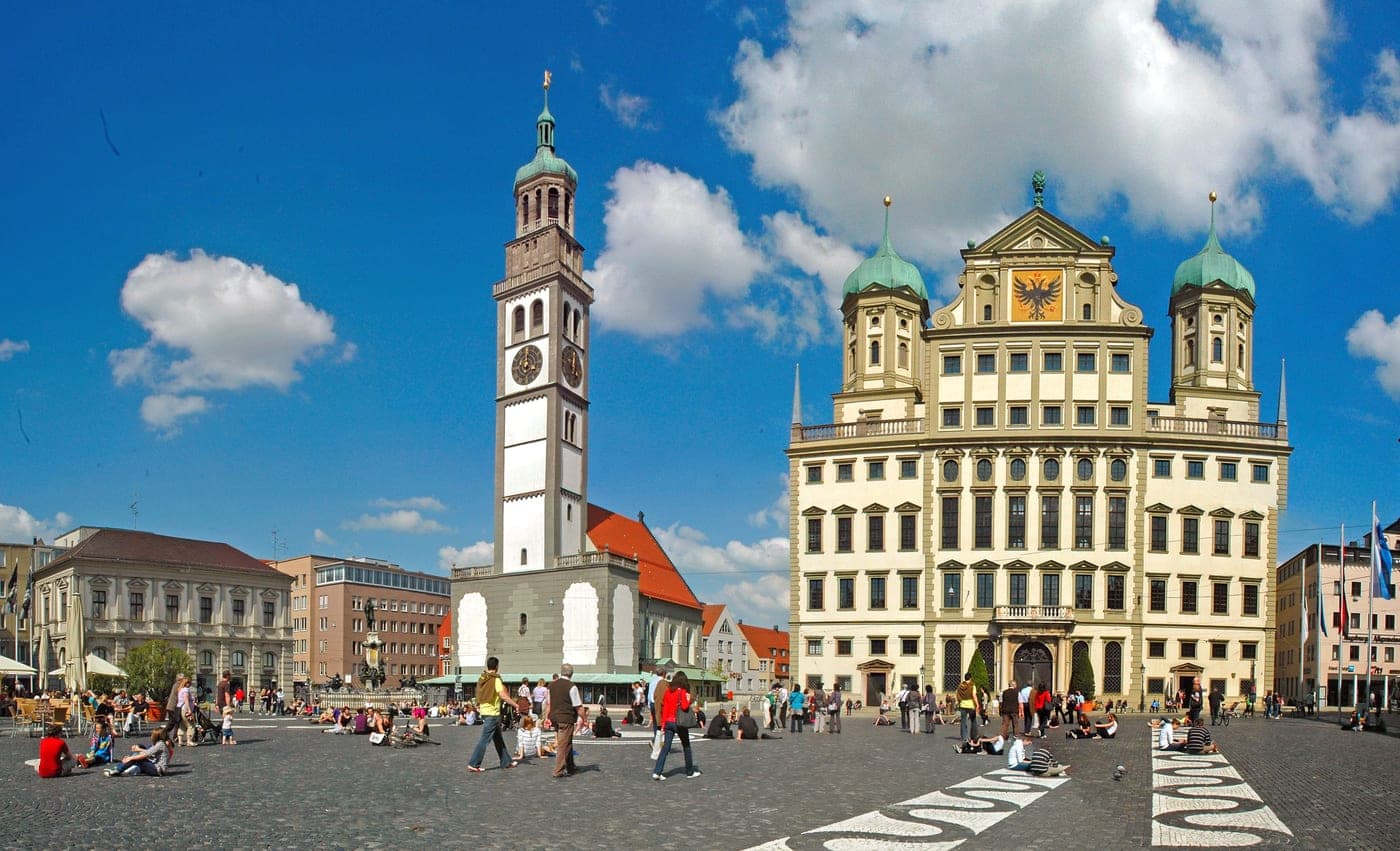 Camper Van Rentals
Augsburg
Ancient Roman city with Renaissance heritage and Fuggerei social housing
Camper Van RentalsHiking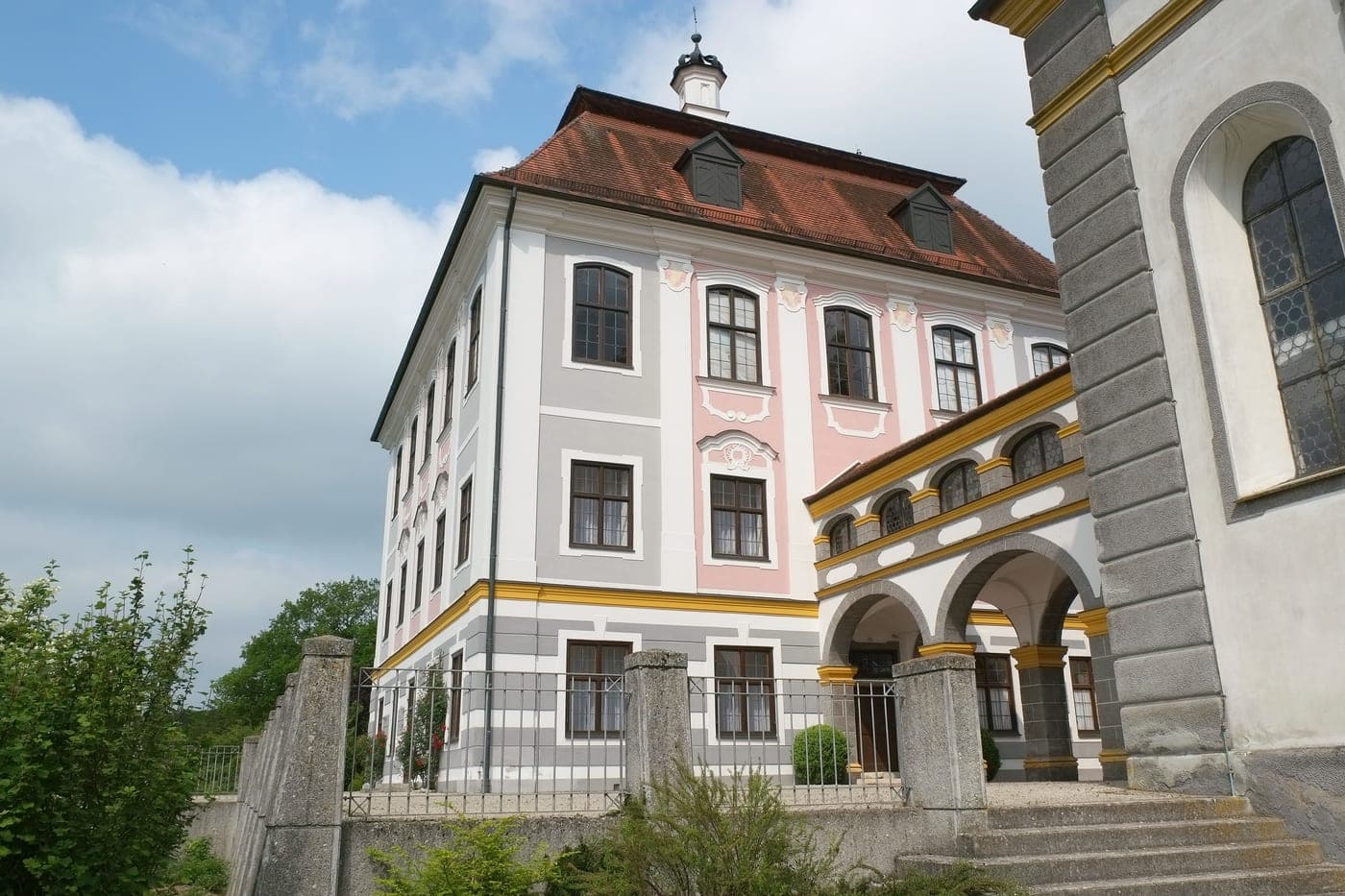 Castles
Leitheim
Tiny Danube hamlet in Bavarian Swabia with a superb Baroque castle directly above the river, now a spa hotel on the Romantic Road and gateway to the Altmühl Nature Park.
Castles
1 region
 Camper Van Rentals12 destinations
Baden-Württemberg
Baden-Württemberg fills Germany's southwest corner, from the Rhine plain in the west to the limestone plateau of the Swabian Jura in the east. The land moves in slow shifts here: vineyard slopes give way to dense forest, forest opens onto grassland and cave country, and everything eventually settles toward the wide, calm water of Lake Constance in the south. It is a region built for a wandering pace, town by town, valley by valley. Wine gives much of the region its rhythm. On the Upper Rhine, the volcanic hill of the Kaiserstuhl holds terraced vineyards that catch unusually strong sun for Germany, and small growers here work Spätburgunder and Grauburgunder grapes into wines poured in village Weinstuben. South of it, the Markgräflerland carries its own soft vineyard hills toward the Swiss border, linked by paths that wind through the vines from one wine village to the next. Near Stuttgart, the Neckar valley holds the Württemberg wine region, where Trollinger and Lemberger vines grow on steep terraces braced by dry stone walls that vintners still mend by hand. East of the Rhine, the Black Forest rises into ridges of spruce and fir, its valleys dotted with timber farmhouses under heavy, sloping roofs. Clockmaking has never quite left these villages, and workshops still turn out cuckoo clocks in the old way. Freiburg im Breisgau sits at the forest's western edge, its old town threaded by small open channels called Bächle that run past the cathedral square and into the surrounding lanes. Further into the hills, half-timbered towns such as Gengenbach keep market squares lined with houses that lean gently with age, and Fasnet carnival traditions bring out carved wooden masks each winter. Castles mark the region's high points. Heidelberg's red sandstone ruin looks down over the Neckar and the baroque rooftops of the old town below, its terraces a well-known spot for watching the river. Further south, Hohenzollern Castle sits on a steep, isolated hill at the edge of the Swabian Jura, its towers visible above the surrounding farmland long before the castle comes fully into view. Smaller fortress towns between the two hold quieter versions of the same story, with gatehouses and keeps built into hillsides above vineyards or forest. Tübingen keeps its own slow tradition on the Neckar, where flat-bottomed Stocherkahn boats are punted along the river below a row of tall, colourful houses. Students and residents share the same narrow lanes that have shaped the town for generations. South and east of Tübingen, the Swabian Jura opens into limestone grassland, sheep pasture, and juniper heath, cut through by dry valleys and cave systems that draw walkers onto marked trails. At the region's southern edge, Lake Constance spreads into a broad expanse of water shared with Switzerland and Austria. Orchards, vineyards, and small harbour towns line its shore, where fishing boats still go out early. Reed beds and level paths follow much of the water's edge, giving long, flat stretches for walking or cycling between towns without losing sight of the lake. Festivals mark the region's calendar as much as its landscape does. Wine villages hold harvest festivals in autumn, serving new wine alongside onion tart in courtyards strung with lights. Winter brings Fasnet, with its carved masks and processions through Black Forest towns. Spring and summer bring open-air concerts in castle courtyards and vineyard walks led by local growers. Bicycles and walking boots suit this region well. Marked cycling routes follow the Rhine plain past vineyards and orchards, climb gradually into Black Forest valleys beside running streams, and trace the Lake Constance shore through reed beds and harbour towns. Hiking paths cover the same ground more slowly, crossing vineyard terraces, forest ridges, and Jura grassland, and often link one small town to the next without a long detour. Each part of Baden-Württemberg keeps its own version of this slow character: a wine village square in the Kaiserstuhl, a castle terrace above the Neckar, a quiet stretch of Bodensee shore, a forest clearing where the only sound is water moving somewhere close by.
Camper Van RentalsBoat RentalsHikingCabins