Heidelberger Studentenkuss
A chocolate-coated nougat praline on wafer from Heidelberg's university town, dating from 1863
- Vegetarian
- Local name
- Heidelberger Studentenkuss
- Best eaten at
- Heidelberg's Altstadt
- Pairs with
- Coffee
What it is
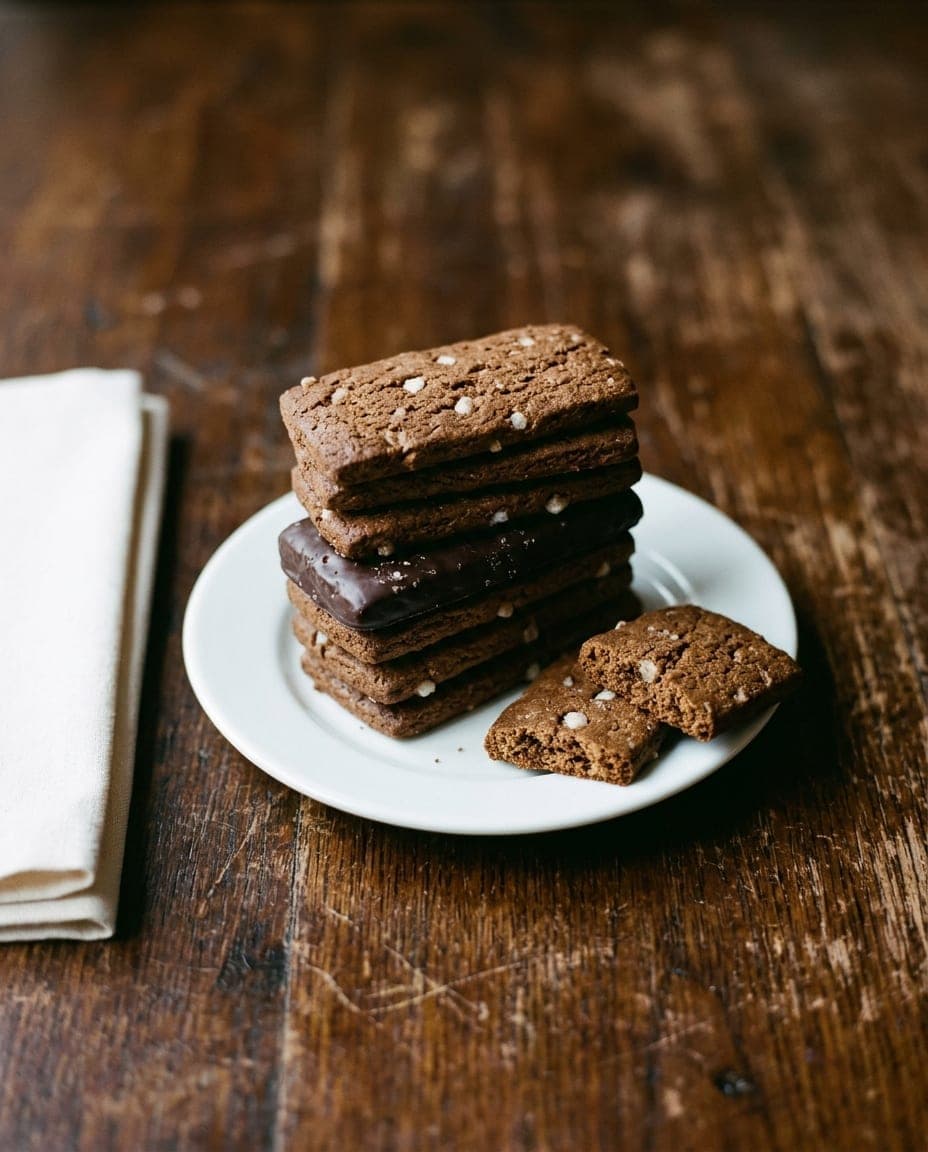
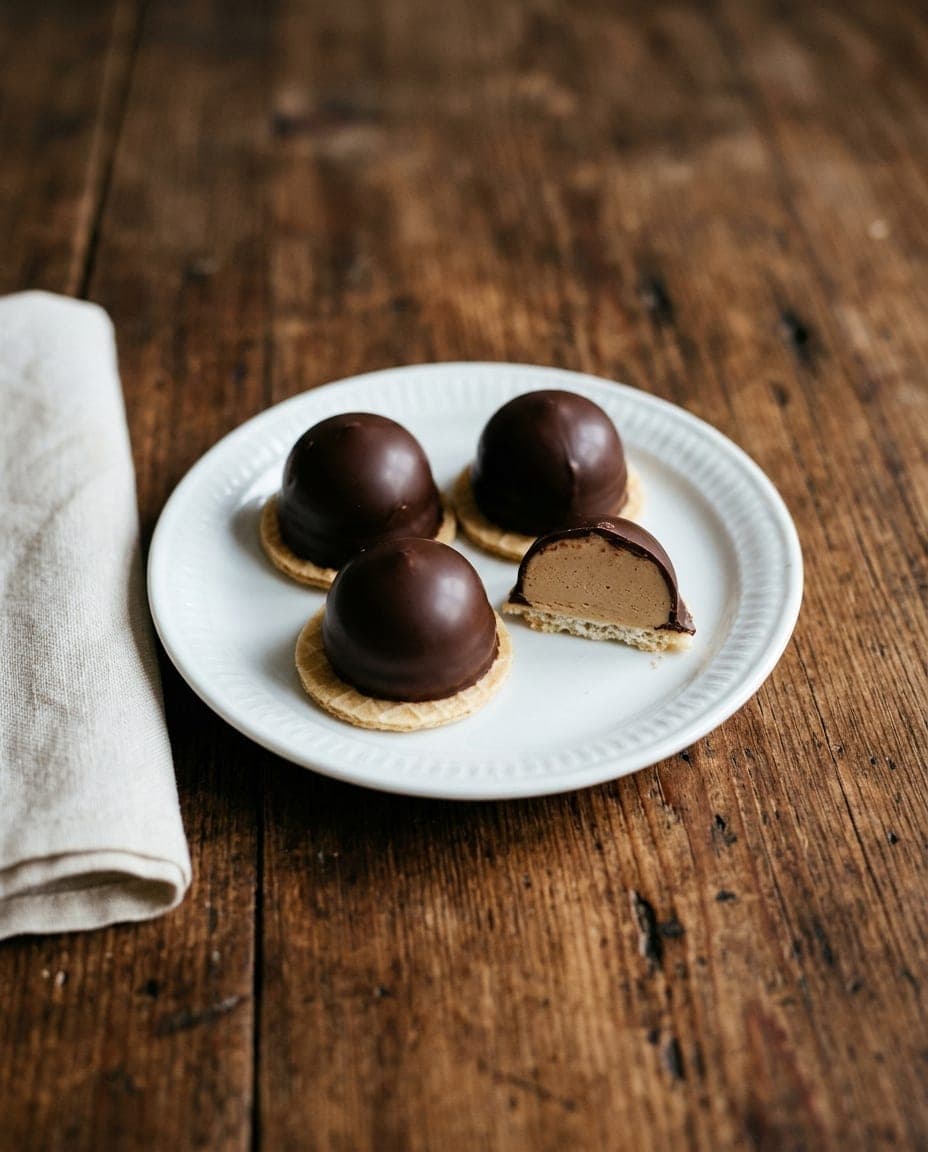
The Heidelberger Studentenkuss, or "Heidelberg Student Kiss", is a small confection that remains one of the most recognisable sweet treats from the university city of Heidelberg in Baden-Württemberg. It consists of a nougat praline filling set on a thin wafer and coated in dark chocolate, sold in packaging decorated with the silhouette of a student.
The shape is simple: a small, round chocolate, roughly the size of a peanut-butter cup. The texture contrasts the crisp snap of the wafer and chocolate shell with the smooth, melt-in-the-mouth centre. It is sold in boxes of various sizes, making it a popular item to carry home as a gift from the city.
The name refers directly to the sweet's history. In the mid-19th century, Heidelberg was a hub for university students, while the young women of the city's girls' boarding schools were closely chaperoned by governesses and could not meet male admirers openly. The confection became linked with discreet tokens of affection between these two groups.
The legend of the silent message
The sweet goes back to the confectioner Fridolin Knösel, whose café in Heidelberg's old town opened in 1863. According to the story told today, Knösel noticed the longing glances exchanged between students and chaperoned young women and turned this into a chocolate that symbolised secret love.
The usual account says that a student could pass a Studentenkuss to a young woman, even under her governess's eye, and a "kiss" in chocolate form was considered an acceptable gift. Some versions add that students folded a note with their name and details behind the chocolate, so that the young woman found the message only once she was home.
How much of this is history and how much later storytelling is hard to say: one account notes that the chocolate was already on the café's menu before it became a love token. Either way, the name "Studentenkuss" stuck, and the story is printed on the packaging to this day.
What goes into it
The recipe belongs to the Knösel family's confectionery, which still makes the Studentenkuss in Heidelberg. Its structure is built for texture and balance rather than extreme sweetness.
- A thin wafer layer, which provides a light, crisp base that does not overpower the filling.
- Nougat praline, a soft, creamy filling of nougat and hazelnut that forms the heart of the sweet.
- Dark chocolate, used to coat the exterior, giving the treat its signature sheen and deep flavour.
- The packaging, which features a student silhouette and tells the story of the sweet in German and English.
The result is a sweet that feels substantial yet delicate. The chocolate shell melts quickly, releasing the nutty nougat and the crisp wafer beneath. It is designed to be eaten by hand, often in just a few bites.
How it is eaten
The Studentenkuss is best enjoyed with a cup of black coffee or an espresso. The bitterness of the coffee balances the sweetness of the nougat and chocolate, allowing the nutty notes to come forward. It is rarely eaten as a dessert; instead, it serves as a companion to a morning break or an afternoon pause.
In Heidelberg, the boxes of Studentenkuss are sold in the old town, where they are bought both as a treat and as a souvenir. The packaging is practical: the box protects the chocolate and keeps the sweets from sticking together, while also displaying the famous silhouette.
Curious facts
- A silent language. The chocolate was a discreet token in an era when students and chaperoned young women could not court openly.
- The year 1863. The story begins in this year, when Fridolin Knösel's café opened in Heidelberg.
- A regional speciality. While chocolate pralines exist everywhere, the Studentenkuss belongs to Heidelberg and is not found widely outside the city.
- The story is on the box. The packaging carries the legend in German and English, making it part of the sweet's identity.
- A classic souvenir. It remains one of the best-known edible souvenirs of Heidelberg.
Where to try it
The place to buy the Studentenkuss is Heidelberg itself, in the Altstadt near the Church of the Holy Spirit, a short walk from the castle and the university.
The sweet is sold in boxes, making it easy to carry as a souvenir from Baden-Württemberg. It is not something cooked at home; it is a treat bought fresh and eaten slowly, perhaps while watching the Neckar flow past the Old Bridge.
Where to try it
1 destination
 Camper Van Rentals
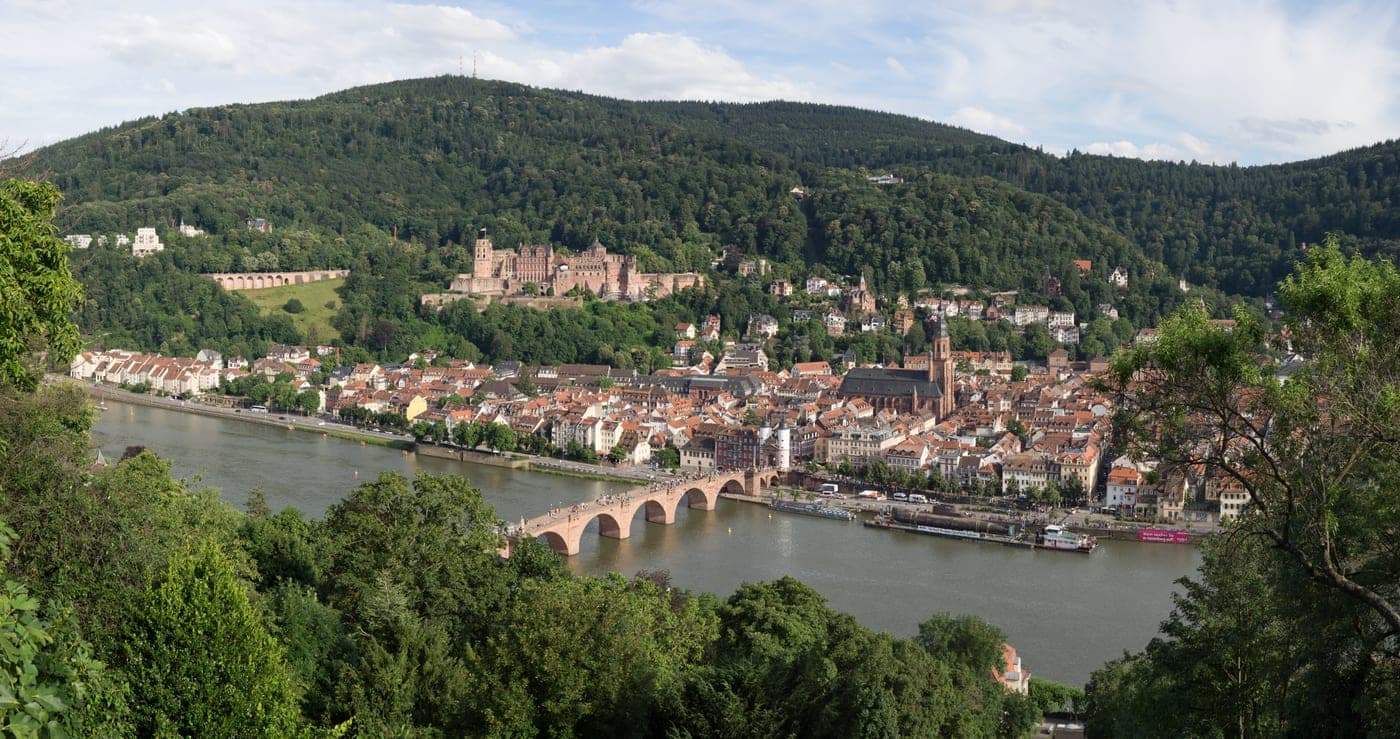
Heidelberg
Historic university town with a stunning castle and beautiful river views.
Camper Van RentalsHiking
1 region
 Camper Van Rentals12 destinations
Baden-Württemberg
Baden-Württemberg fills Germany's southwest corner, from the Rhine plain in the west to the limestone plateau of the Swabian Jura in the east. The land moves in slow shifts here: vineyard slopes give way to dense forest, forest opens onto grassland and cave country, and everything eventually settles toward the wide, calm water of Lake Constance in the south. It is a region built for a wandering pace, town by town, valley by valley. Wine gives much of the region its rhythm. On the Upper Rhine, the volcanic hill of the Kaiserstuhl holds terraced vineyards that catch unusually strong sun for Germany, and small growers here work Spätburgunder and Grauburgunder grapes into wines poured in village Weinstuben. South of it, the Markgräflerland carries its own soft vineyard hills toward the Swiss border, linked by paths that wind through the vines from one wine village to the next. Near Stuttgart, the Neckar valley holds the Württemberg wine region, where Trollinger and Lemberger vines grow on steep terraces braced by dry stone walls that vintners still mend by hand. East of the Rhine, the Black Forest rises into ridges of spruce and fir, its valleys dotted with timber farmhouses under heavy, sloping roofs. Clockmaking has never quite left these villages, and workshops still turn out cuckoo clocks in the old way. Freiburg im Breisgau sits at the forest's western edge, its old town threaded by small open channels called Bächle that run past the cathedral square and into the surrounding lanes. Further into the hills, half-timbered towns such as Gengenbach keep market squares lined with houses that lean gently with age, and Fasnet carnival traditions bring out carved wooden masks each winter. Castles mark the region's high points. Heidelberg's red sandstone ruin looks down over the Neckar and the baroque rooftops of the old town below, its terraces a well-known spot for watching the river. Further south, Hohenzollern Castle sits on a steep, isolated hill at the edge of the Swabian Jura, its towers visible above the surrounding farmland long before the castle comes fully into view. Smaller fortress towns between the two hold quieter versions of the same story, with gatehouses and keeps built into hillsides above vineyards or forest. Tübingen keeps its own slow tradition on the Neckar, where flat-bottomed Stocherkahn boats are punted along the river below a row of tall, colourful houses. Students and residents share the same narrow lanes that have shaped the town for generations. South and east of Tübingen, the Swabian Jura opens into limestone grassland, sheep pasture, and juniper heath, cut through by dry valleys and cave systems that draw walkers onto marked trails. At the region's southern edge, Lake Constance spreads into a broad expanse of water shared with Switzerland and Austria. Orchards, vineyards, and small harbour towns line its shore, where fishing boats still go out early. Reed beds and level paths follow much of the water's edge, giving long, flat stretches for walking or cycling between towns without losing sight of the lake. Festivals mark the region's calendar as much as its landscape does. Wine villages hold harvest festivals in autumn, serving new wine alongside onion tart in courtyards strung with lights. Winter brings Fasnet, with its carved masks and processions through Black Forest towns. Spring and summer bring open-air concerts in castle courtyards and vineyard walks led by local growers. Bicycles and walking boots suit this region well. Marked cycling routes follow the Rhine plain past vineyards and orchards, climb gradually into Black Forest valleys beside running streams, and trace the Lake Constance shore through reed beds and harbour towns. Hiking paths cover the same ground more slowly, crossing vineyard terraces, forest ridges, and Jura grassland, and often link one small town to the next without a long detour. Each part of Baden-Württemberg keeps its own version of this slow character: a wine village square in the Kaiserstuhl, a castle terrace above the Neckar, a quiet stretch of Bodensee shore, a forest clearing where the only sound is water moving somewhere close by.
Camper Van RentalsBoat RentalsHikingCabins