Halve Hahn
A rye roll with medium-aged Gouda, mustard and onions in Cologne pubs
- Vegetarian
- Local name
- Halve Hahn
- Served with
- Butter, mustard, onions
- Best eaten at
- A Cologne brewhouse
- Pairs with
- Kölsch
What it is
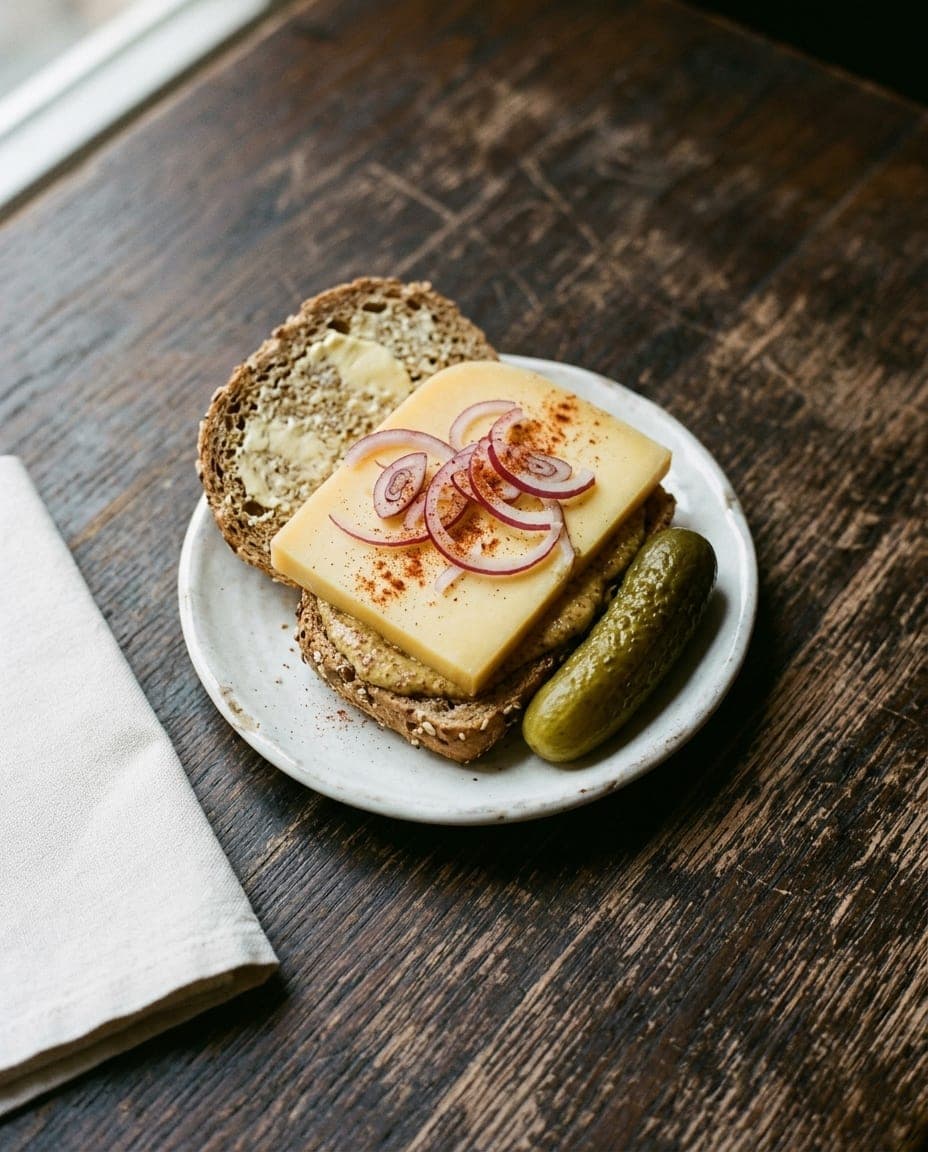
The Halve Hahn is a staple of the Cologne drinking culture, a dish that exists in the gap between a snack and a proper meal. The name translates literally to "half chicken", yet no bird ever appears on the plate. Instead, the eater receives a Röggelchen, a small, firm roll made with rye, spread with butter and served with a thick slab of medium-aged Gouda cheese, rings of raw onion, and a generous dab of mustard.
It is a dish built on humour rather than culinary necessity. The joke lies in the deception: a guest who orders a "half chicken" in a traditional Cologne brewhouse, or Brauhaus, is served this sturdy bread-and-cheese combination. Despite the absence of poultry, the name has stuck for generations. It is one of the most recognisable symbols of the city's identity, appearing on menus alongside other regional classics like Himmel un Ääd and Flönz.
The dish relies on the contrast between its components. The rye roll is dark and chewy, providing a solid base that holds up against the cheese. The cheese is not melted but served in a thick slice, allowing it to soften slightly in the warmth of the hall. The raw onion rings add a pungent crunch, while the mustard adds sharpness. It is a savoury, salty and sharp experience designed to accompany a drink rather than replace one.
The story behind the name
The origin of the Halve Hahn is a matter of local legend rather than historical record, and several versions circulate. The most familiar tale tells of a guest who ordered "a halve Hahn" in a Cologne inn and, depending on the telling, either meant half a rye roll all along or was jokingly served cheese and bread instead of chicken. The guest accepted the substitute, and the name stuck as a running joke among the locals.
Other accounts point out that Röggelchen are traditionally baked as double rolls, so a "halve" is simply one half of the pair, and that the cheese on it was once a different, stronger variety before Gouda became standard. Whatever the true beginning, the story has become an integral part of the experience. Ordering the Halve Hahn is a way of participating in a long-standing Cologne tradition where wit is served alongside food.
There is no single date when the dish was invented, nor a specific founder credited with its creation. The name simply appears on menus across the city's brewhouses and has been maintained by the patrons who keep the custom alive. It is a dish that thrives on repetition and shared understanding rather than documented history.
What goes into it
The composition of the Halve Hahn is fairly fixed, though minor variations exist between kitchens. The foundation is always a fresh Röggelchen, a small roll with a dark crust, baked from a mix of rye and wheat flour.
- Medium-aged Gouda: One or two thick slices of Dutch Gouda, aged long enough to develop a fuller, slightly salty taste.
- Butter: Spread on the halved roll.
- Mustard: Usually a strong local mustard that complements the cheese.
- Raw onion rings: Sliced onions, providing a sharp, pungent crunch.
- Gherkins and paprika: Often included on some plates for an extra acidic bite or a dash of colour.
The result is a dish that is salty, sharp and filling enough to sustain a drinker through several rounds of beer. It contains no meat, but because aged Gouda is usually made with animal rennet it is not considered strictly vegetarian.
How it is eaten
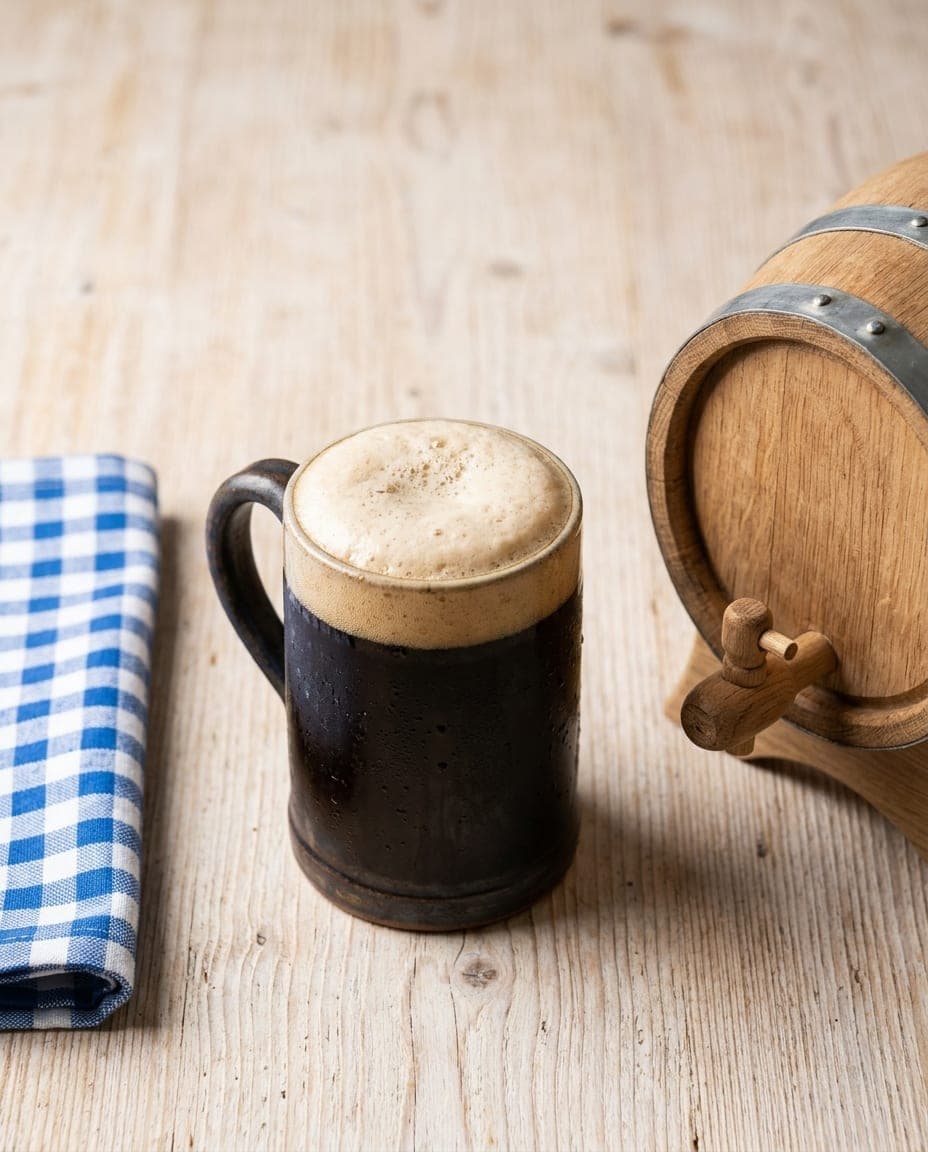
The Halve Hahn is at its best at a long wooden table or a standing counter in a traditional Cologne brewhouse. It is not a dish for quiet dining; it belongs in the noisy, convivial atmosphere where people gather to drink Kölsch, the local pale top-fermented beer served in slender glasses.
The roll is typically eaten by hand or with a knife and fork, with the diner topping each piece with cheese, onion and mustard. It is meant to be shared among friends or eaten while waiting for the next round of drinks. A glass of Kölsch is the standard companion, its light carbonation balancing the heaviness of the rye and the salt of the cheese.
Curious facts
- No chicken involved. The "half" most likely refers to half of a double rye roll, while the "chicken" is part of the joke.
- A local speciality. While the name is known elsewhere in Germany, the Gouda version is specific to Cologne and its surrounding area; Düsseldorf serves its own Halve Hahn with a different cheese.
- A drinking companion. It is designed to be eaten alongside beer, serving as a bridge between rounds rather than a full meal.
- The bread matters. The firm rye roll is essential; a soft white roll would not hold up to the thick cheese and onions.
- A local tradition. The name has survived through oral history and the persistence of Brauhaus culture.
Where to try it
The best place to eat a Halve Hahn is inside a traditional Cologne brewhouse, known locally as a Brauhaus. These are large halls where Kölsch is served straight from the barrel, in some cases brewed on site. The dish appears on the menu of almost every traditional establishment in the city centre, particularly in the old town around the Alter Markt. It is best enjoyed in a group, with a few rounds of Kölsch on the table.
Where to try it
1 destination
 Camper Van Rentals
Cologne
Rhine River city with Gothic cathedral, Carnival culture, and Kölsch beer.
Camper Van Rentals