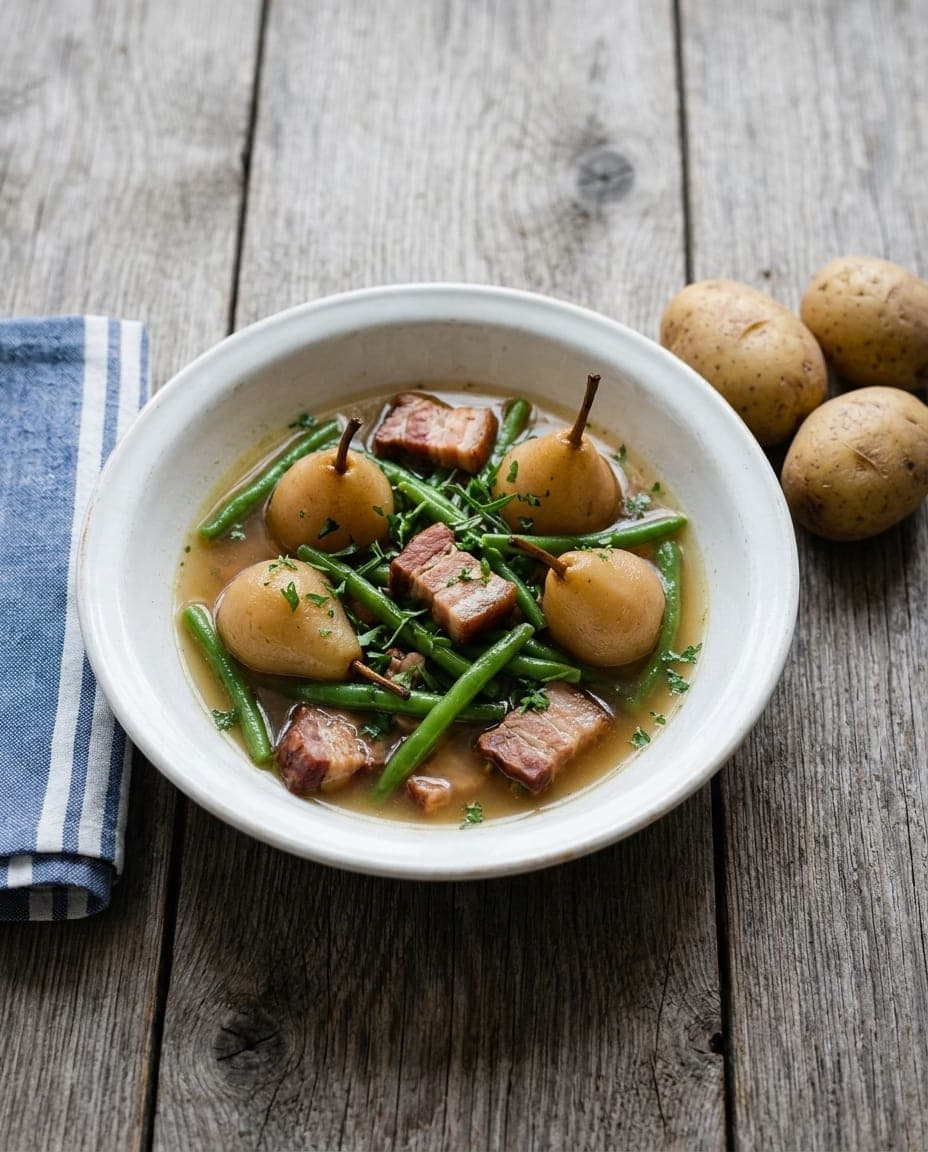
Fränkische Klöße (potato dumplings)
Raw-and-cooked potato dumplings served with roast pork in Franconia
- Vegetarian
- Local name
- Fränkische Klöße
- Served with
- Roast pork, gravy, red cabbage
- Best eaten at
- A Franconian Gasthaus on Sunday
- Pairs with
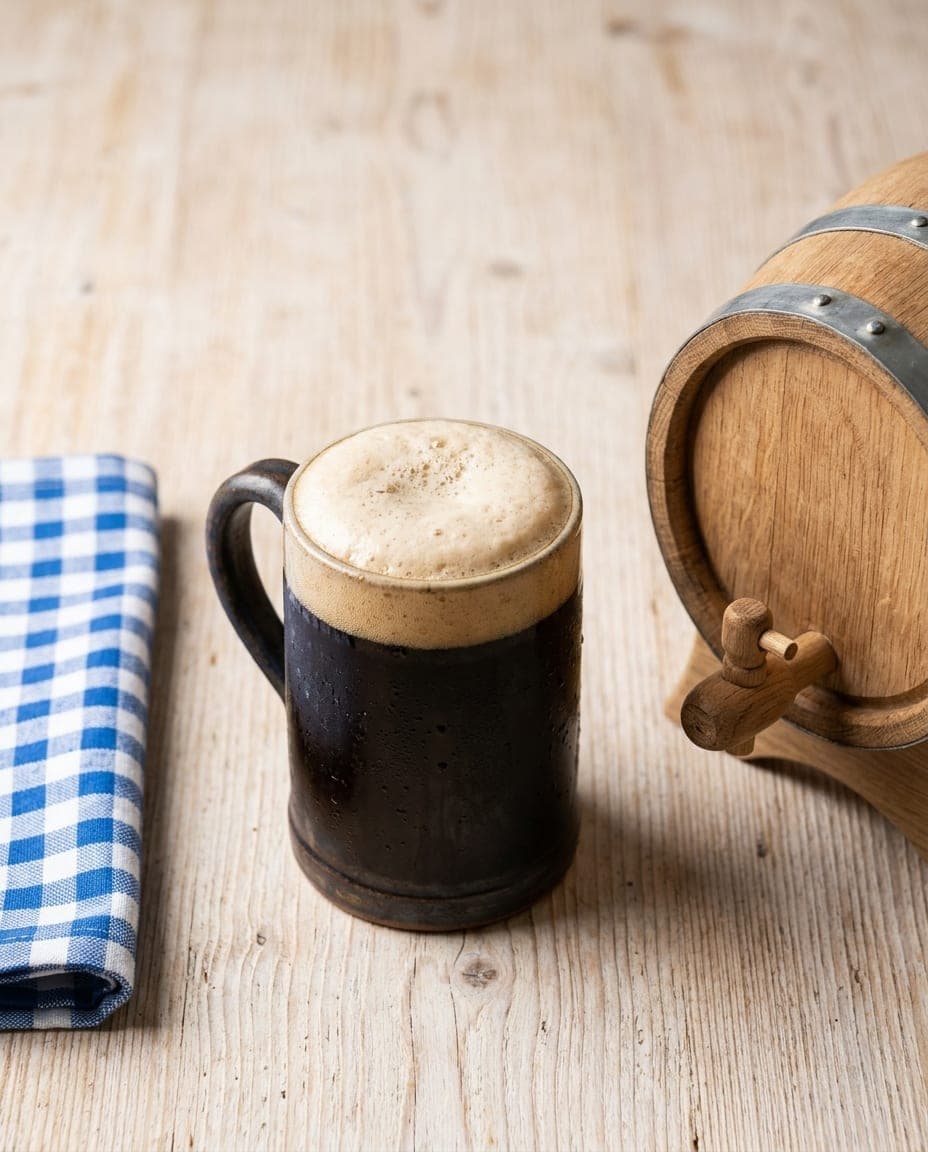
- Franconian dark lager
What it is
Fränkische Klöße are the heavy, pale potato dumplings that anchor the Sunday meal across Bavaria's Franconia region. They are not the light, fluffy bread dumplings found in parts of Germany, nor are they the stiff, flour-heavy versions common elsewhere. These are distinctively firm spheres, made from a mixture of raw grated potato and cooked potato. The result is a dumpling with a slightly translucent sheen that holds its shape well against the weight of a dark gravy.
In Franconia, the word Kloß is preferred over the term Knödel used in the rest of Bavaria, though both refer to the same category of food. The dish is a regional speciality rather than a national one, bound up with the farming traditions of the Franconian countryside. It is a dish associated with winter and late autumn, yet it remains available year-round in traditional kitchens.
The texture is the defining feature. Because the raw potato is grated and squeezed, then its extracted starch is stirred back into the mix, the dumpling becomes dense and substantial. It does not dissolve in the pot. Instead, it offers a satisfying resistance when bitten, absorbing the flavour of the sauce without losing its structure.
The half-and-half method
The preparation relies on a balance known as halb und halb, meaning "half and half". This is not a precise measurement but a traditional ratio, and many cooks use rather more raw than cooked potato; it ensures the dumpling is neither too soft nor too dry. The cook takes fresh potatoes, grates them raw, and squeezes the liquid out through a cloth. That starchy water is allowed to settle, then the starch is mixed back into the grated potato. This starch acts as the binding agent for the dish.
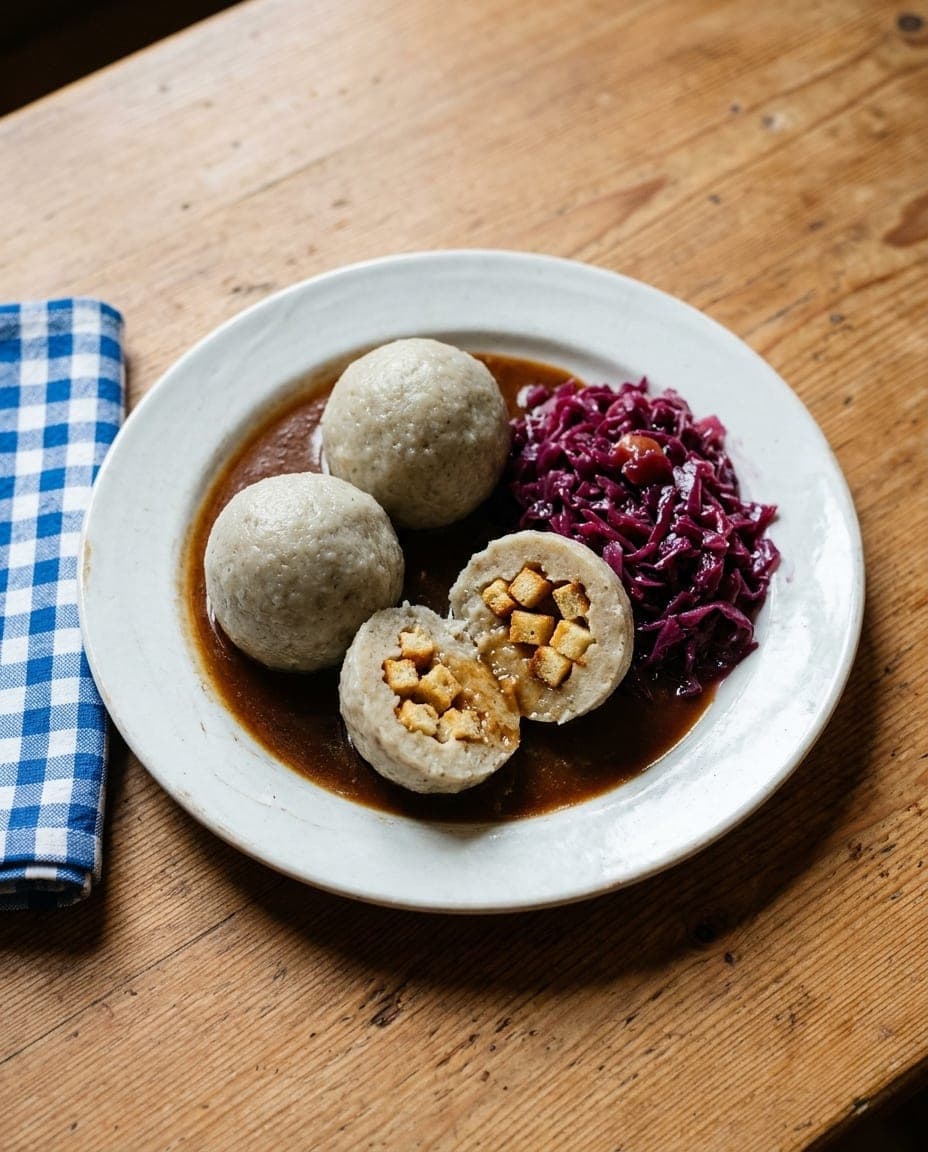
To this mixture, the cook adds cooked potatoes, usually as a hot mash or porridge, which provide bulk and softness. The dough is then shaped by hand into balls. A detail that distinguishes many of these from other dumplings: a few small croutons fried in butter are pressed into the centre of each one before it is dropped into the hot water. This gives the dumpling a centre of savoury, toasted bread.
The dumplings are left to cook gently in water just below the boil rather than boiled hard. Aggressive boiling would break the delicate structure of the raw potato mixture. Once cooked, they are drained and served immediately while still warm. The process requires attention but no precise quantities; the cook judges the consistency by hand.
How it is eaten
Fränkische Klöße are almost never a starter. They appear alongside the main course, typically at Sunday lunch. The dish is built around the interaction between the dumpling and the roast. A large piece of roast pork, often the Schäufele with its crackling skin, sits alongside a mound of red cabbage (Rotkohl). The potato dumplings are placed beside them, ready to be cut into and soaked in the dark, rich gravy; locals say "der Kloß braucht Soß'" – the dumpling needs sauce.
The experience is one of heaviness and comfort. A diner cuts into the dumpling, revealing the buttery croutons inside, then uses it to take up the meat, cabbage and sauce. The firm texture of the Kloß allows it to carry the gravy without disintegrating, making it an essential vehicle for the flavour of the meal.
A glass of Franconian dark lager is a common companion. The bitterness of the beer cuts the fat of the pork and the density of the potato. In a regional Gasthaus, this combination is standard. The meal is substantial enough to last through the afternoon, often followed by a rest or a walk.
Where it belongs
The dish is at home throughout the Franconian districts of northern Bavaria, from the hills of Upper Franconia to the villages around Nuremberg and Bamberg. Here, the Gasthaus — a traditional inn or tavern — is the natural home for the meal. These establishments serve the dumplings with roast pork as a staple of their Sunday menu, often alongside other regional specialities.
The region's farming history provided the potatoes that became the foundation of this dish. While similar potato dumplings exist in Thuringia, where they are made mostly from raw potato, and elsewhere in Germany, the Franconian mix of raw and cooked potato and the emphasis on the raw potato starch give the local version its character. Local variants exist too, from the very soft Coburger Rutscher to Bamberg dumplings made mostly from cooked potato. A visitor seeking the true flavour should look for a local tavern rather than a city restaurant that might simplify the recipe.
Curious facts
- The pale hue. The raw grated potato can oxidise and take on a greyish tinge, which is why the dumplings look less bright than flour-based ones.
- A hidden treasure. Many cooks place a few croutons fried in butter at the centre of each dumpling, adding a savoury burst to the otherwise uniform texture.
- Regional naming. In Franconia and Thuringia, the dish is called Kloß, while the rest of Bavaria often uses the term Knödel, though they refer to the same category of food.
- Not boiled hard. The dumplings are cooked gently to preserve their structure; boiling them vigorously would cause the raw potato mixture to fall apart.
- A Sunday staple. The combination of roast pork, red cabbage and potato dumplings is traditionally served on Sundays in Franconian households and taverns.
Where to try it
2 destinations
 Cabins
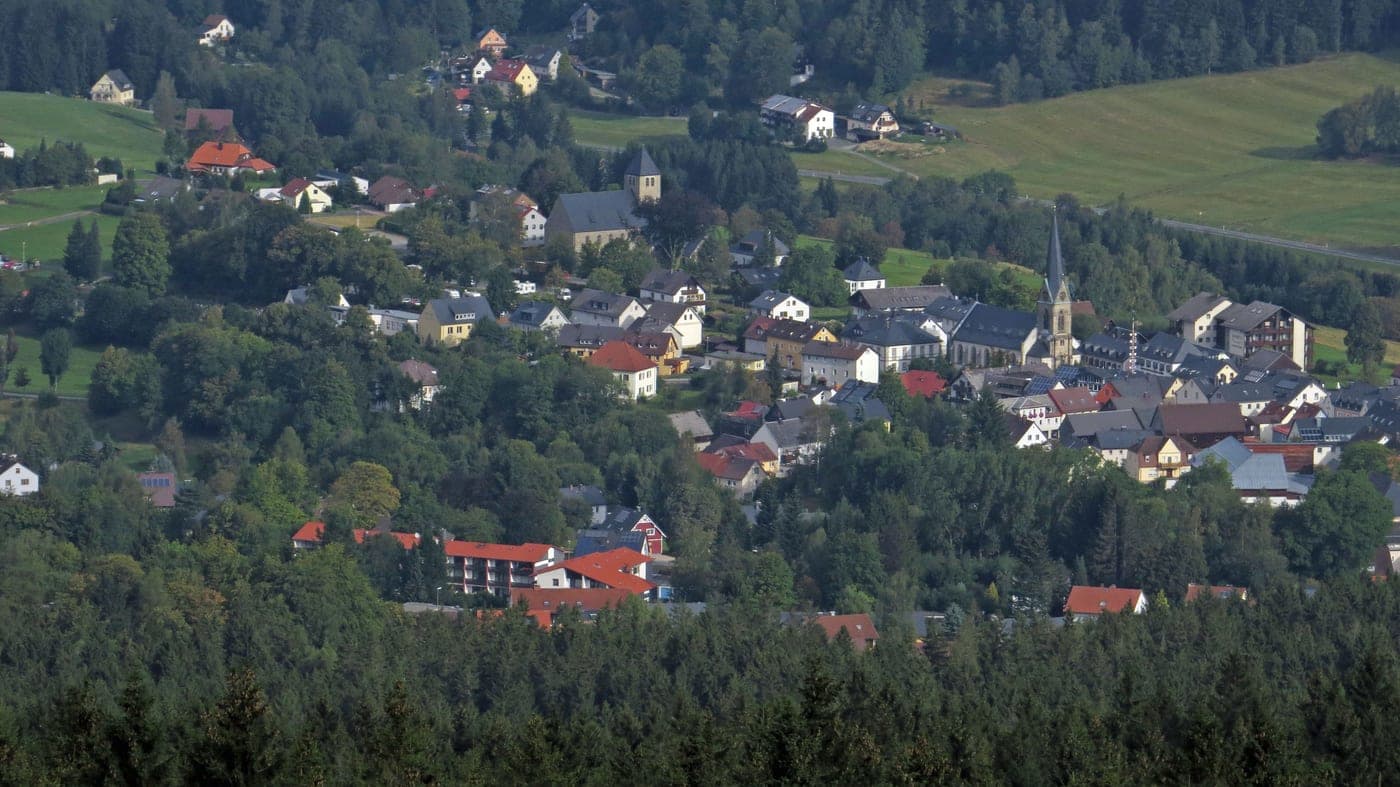
Bischofsgrün
Fichtelgebirge mountain resort with alpine cabins for skiing and hiking.
CabinsHiking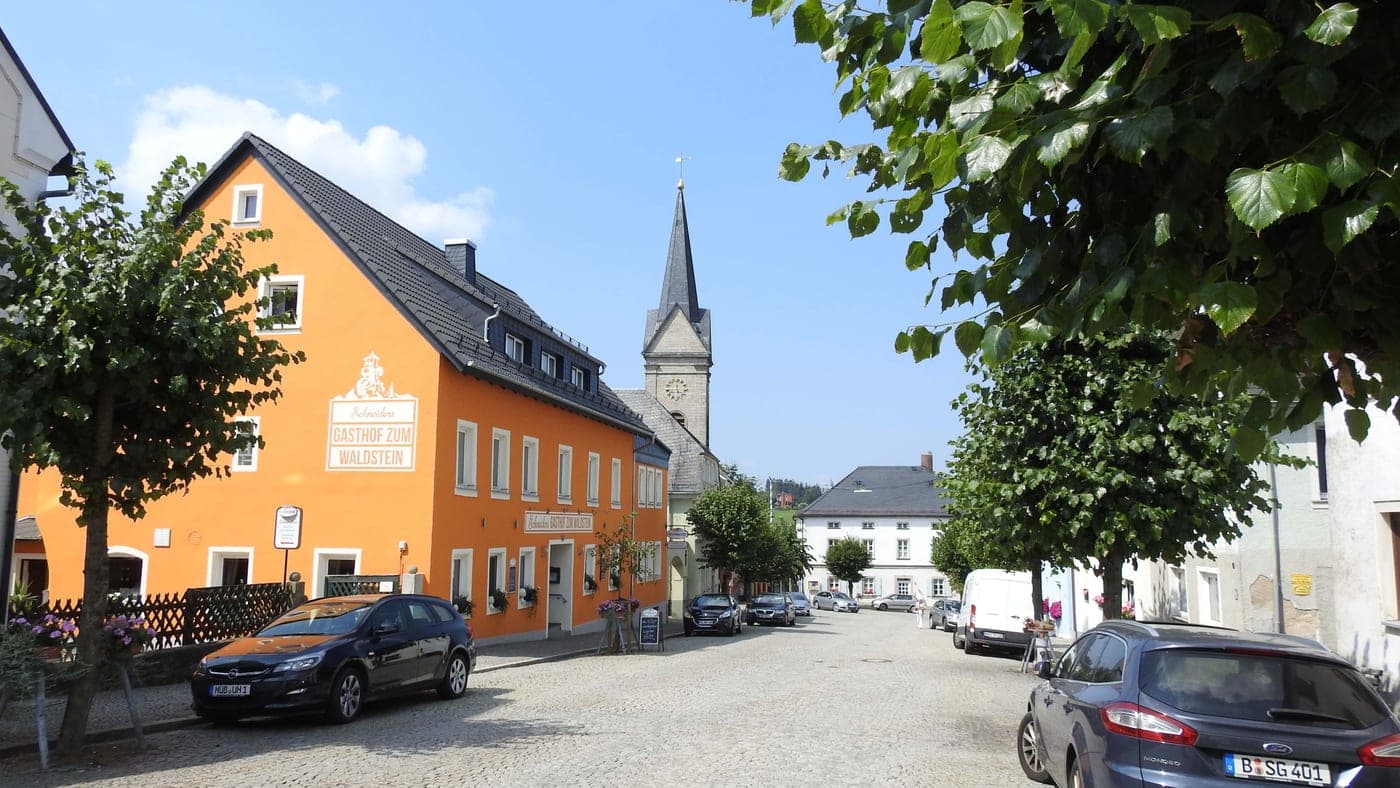 Cabins
Zell im Fichtelgebirge
Fichtelgebirge mountain village with traditional cabins and forest trails.
CabinsHiking