Frankfurter Würstchen
A thin smoked pork sausage from Frankfurt, served with apple wine and mustard
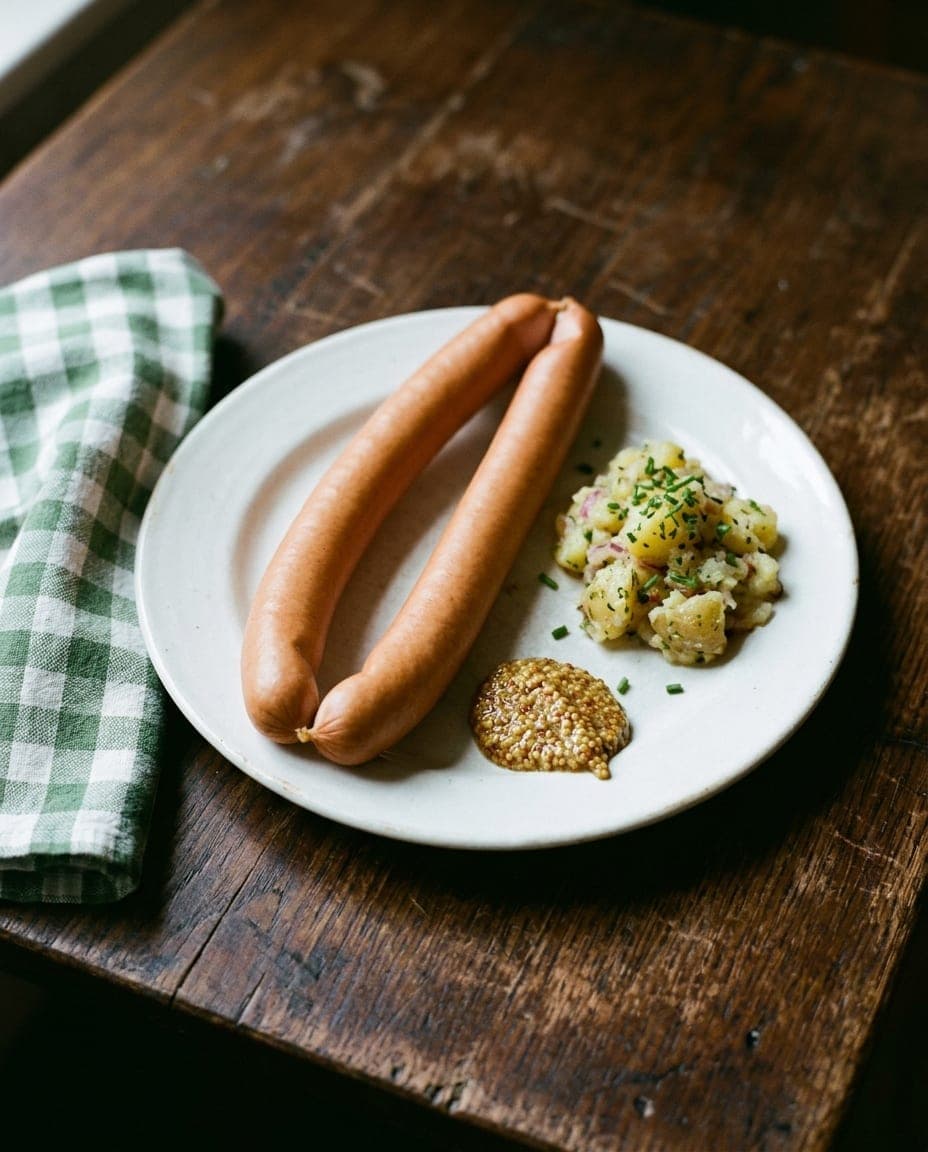
- Local name
- Frankfurter Würstchen
- Served with
- Mustard, bread or potato salad
- Best eaten at
- A Frankfurt apple-wine tavern
- Pairs with
- Apfelwein
What it is
The Frankfurter Würstchen, literally "little Frankfurt sausage", is a thin, smoked pork sausage that originates from Frankfurt am Main in the state of Hesse. It is not merely a snack but a regional speciality with a protected name: in Germany, only sausages produced in the Frankfurt area may legally carry the title. The sausage is long and slender, golden from the smoke, filled into a natural sheep casing and traditionally served in pairs.
There is a specific method to its preparation. It is not boiled, as high heat will split the delicate skin. Instead, the sausages are warmed gently in hot water held below the simmering point for several minutes. This preserves the texture of the meat and keeps the casing intact, resulting in a crisp bite with a subtle smoky aroma.
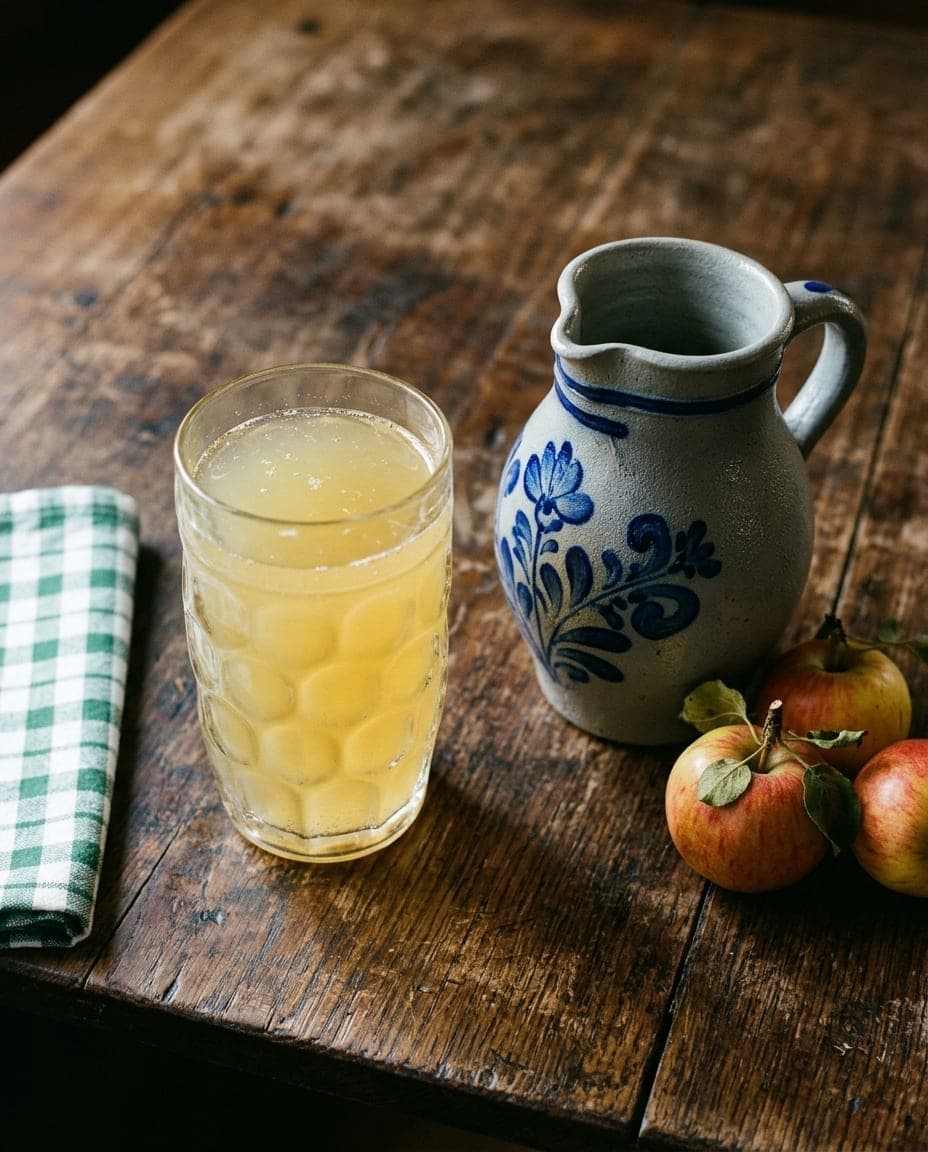
The sausage is often confused with the American hot dog or the generic "frankfurter" found in supermarkets around the world. While those are cousins, they are distinct. The Frankfurter Würstchen is made purely from pork and remains finer and more delicate than its global imitators. It is a natural companion to the tart apple wine known as Apfelwein, a combination that defines Frankfurt's tavern food.
The name and the border
Sausages have been recorded as a Frankfurt speciality since the Middle Ages, when they were served at the festivities around imperial elections and coronations. Legal protection of the name came much later: since 1929, Frankfurter Würstchen may only be used in Germany for sausages made in the Frankfurt economic area, and today much of the production is based in neighbouring towns such as Neu-Isenburg and Dreieich.
The naming runs differently in Austria. There, the thin smoked sausage is called a Frankfurter, while in Germany a similar sausage made from pork and beef is called a Wiener. The Viennese version is credited to Johann Georg Lahner, a butcher who had trained in Frankfurt and began making his sausages in Vienna in 1805, mixing beef into the pork. In Vienna, the name still honours Frankfurt; in Germany, the Viennese variant carries Vienna's name.
This cross-border naming has led to generic usage in many parts of the world. In North America, "frankfurter" refers to almost any hot-dog sausage, regardless of origin. The German original remains a regional product tied to Frankfurt, a local speciality that has gained international fame while retaining its strict rules at home.
What goes into it
The composition of the sausage is simple, relying on the quality of the meat and the smoking rather than a complex list of spices. The only meat is pork, finely ground to a smooth emulsion and lightly seasoned. The fat content is balanced to keep the sausage moist without being greasy.
The casing is natural sheep intestine, which gives the sausage its characteristic thinness and its snap. The smoking is done at a low temperature over hardwood, imparting a subtle aroma that does not overpower the delicate flavour of the pork.
The result is a clean taste in which smoke and meat dominate. This simplicity makes it an ideal partner for strong flavours, particularly sharp mustard and sour apple wine.
How it is eaten
A traditional place to eat the sausage is an Apfelweinlokal, a tavern specialising in apple wine. These establishments are common in Frankfurt and the surrounding area, often simple neighbourhood places with wooden tables and rustic decor.
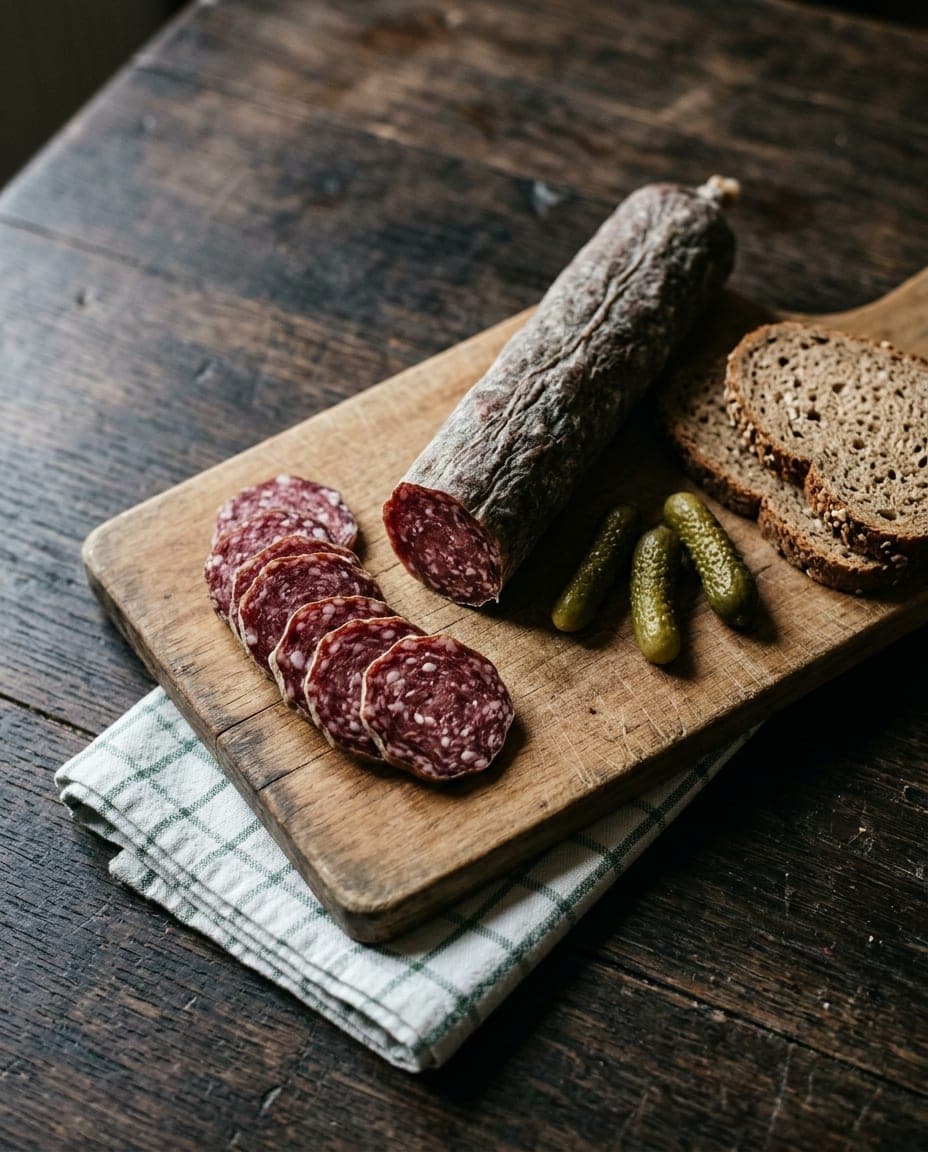
The usual order is a pair of sausages, served warm on a plate. They come with mustard, which cuts through the richness of the meat, and sometimes horseradish.
Bread or potato salad often accompanies the meal. A slice of bread or a crusty roll is the simplest companion, while potato salad dressed with vinegar and oil is a classic side dish, adding a cool, tangy element to the warm sausage.
A regional speciality
The Frankfurter Würstchen remains a local pride of Frankfurt rather than a dish that defines all of Germany. While it has achieved fame worldwide, its true home is the city and its surroundings. It reflects the butchery traditions of a city where pork was a staple and smoking was a practical way to preserve meat.
Its legal protection ensures that the name remains tied to its place of origin, preserving the tradition for those who seek it out in Frankfurt.
Curious facts
- A protected name. In Germany, only sausages produced in the Frankfurt area may be sold as Frankfurter Würstchen; the name has been restricted to the region since 1929.
- The Vienna connection. In Austria the thin smoked sausage is called a Frankfurter, while Germans call the pork-and-beef version a Wiener.
- Pure pork. The Frankfurt original is made only from pork, while the Viennese version mixes pork and beef.
- Not boiled. The sausage is warmed gently in water below the boil, because boiling causes the thin sheep casing to split.
- Sold in pairs. The sausages are traditionally sold and served two at a time.
Where to try it
The best place to eat a Frankfurter Würstchen is in Frankfurt am Main, in an Apfelweinlokal. These taverns are not fancy restaurants but lively neighbourhood spots where locals gather for conversation and food, often at long communal tables in a relaxed atmosphere.
The taverns in the Sachsenhausen district, just south of the river Main, are particularly well known. Here, the connection between the sausage and the apple wine is strongest, and the focus remains on simple food and good company rather than on decor or service.
Where to try it
1 destination
 Camper Van Rentals
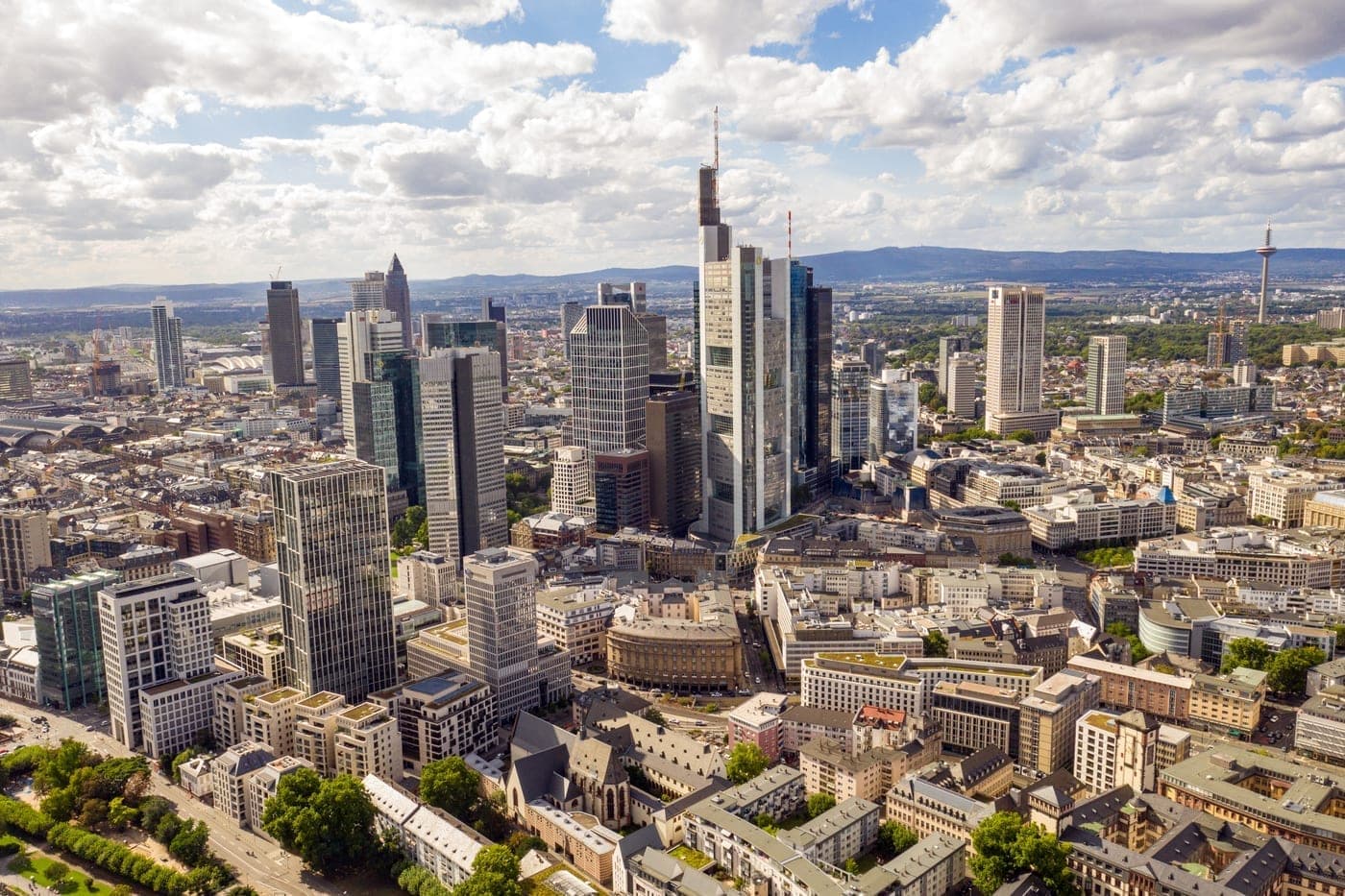
Frankfurt am Main
Financial hub with reconstructed old town, museums, and apple wine taverns
Camper Van RentalsHiking
1 region
 Castles5 destinations
Hesse
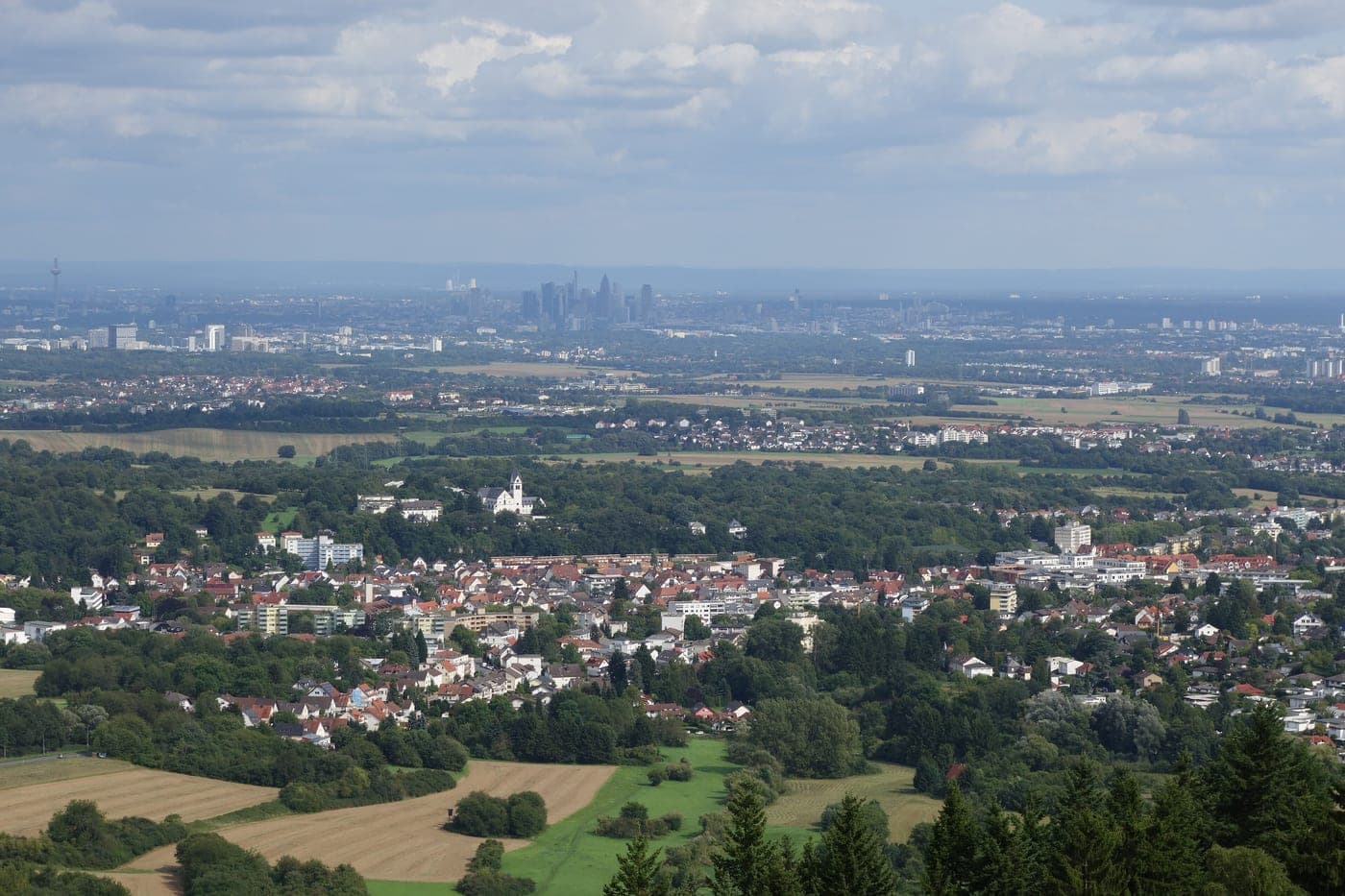
Hesse sits at the middle of Germany, and its landscape shows that in-between position clearly: river valleys lined with vineyards, forested hills that rise into proper mountain trails, and old market towns that never grew into cities. The pace here is set by the land itself. Along the Rhine, in the district known as the Rheingau, steep slopes have carried vines for centuries. Riesling is the grape that defines the area, grown on terraces above towns such as Rüdesheim, Eltville, and Geisenheim, where the river bends and the hills catch the afternoon sun. Marked cycling paths follow the water through the vine rows, past wine presses and small cellar doors that open onto the lane in season. Wiesbaden, the state capital, grew up around its hot springs. The Romans built baths here, and the town's spa culture never really stopped afterward — the same warm mineral water still rises through the ground and feeds the fountains and bathhouses that give the old streets their elegant, slightly formal air. Wide boulevards, stucco façades, and a domed casino all belong to that same spa-town character. Darmstadt, not far south, took a different path. At the start of the twentieth century, a group of artists and architects built the Mathildenhöhe colony there, a hillside cluster of houses, studios, and a wedding tower designed as a single artistic statement. The result is unlike anything else nearby: Jugendstil curves, mosaic tiles, and gardens laid out to match the buildings around them. To the north, the Taunus range folds into wooded ridges and open summits, with the Feldberg as its high point. Paths climb through beech forest and break out onto grassy tops with views back down toward the Rhine and Main valleys. At the foot of the range, Bad Homburg keeps its own spa tradition, with a park landscaped around mineral springs and a Kurhaus at its centre. Marburg lies along the Lahn river, its old town built up a steep hillside beneath a castle that has watched over the crossing for centuries. Narrow lanes climb between half-timbered houses toward the Elisabethkirche, one of the earliest Gothic churches built in Germany, and the university that has shaped the town since the sixteenth century sits woven right through the streets rather than set apart from them. Hesse also carries a strong thread of fairy tale history. The Brothers Grimm worked in Kassel for much of their lives, gathering and editing the folk tales that later spread around the world, and the town where they grew up, Steinau an der Straße, still keeps their family home. Kassel itself holds the Bergpark Wilhelmshöhe, a hillside park built around water cascades and crowned by a huge statue of Hercules, with fountains set running on fixed days through the warmer months. Further east, Bad Hersfeld grew around a Benedictine abbey whose church was left roofless after a fire centuries ago. The ruined nave now hosts an open-air theatre festival each summer, with the half-timbered old town filling up around performance nights. Fulda, close by, keeps its baroque cathedral quarter and a web of quiet lanes built for walking rather than traffic. Wine, water, and woodland repeat across Hesse in different combinations. The Rhine and Lahn valleys both carry cycling routes built along old towpaths, with easy gradients that pass through vineyard villages and under castle ruins. Autumn brings the grape harvest to the Rheingau, with presses running and new wine, still cloudy and sweet, sold by the glass in village squares. Spring and early summer suit the Taunus trails, when the beech woods are freshly green and the ridge paths stay cool. Spa towns like Wiesbaden and Bad Homburg keep their bathhouses open through the year, giving the region a rhythm that does not depend on any single season. What holds Hesse together is this mix of built and grown landscape: castle hills standing over vine terraces, spa parks laid out beside forest ridges, and small towns where the half-timbered centre and the surrounding countryside read as one continuous place rather than a destination and its outskirts.
CastlesCamper Van RentalsHiking