Eisbein mit Erbspüree
Boiled cured pork knuckle with pea purée in Berlin
- Local name
- Eisbein mit Erbspüree
- Served with
- Sauerkraut, mustard, potatoes
- Best eaten at
- An Altberliner Gaststätte
- Pairs with
- Pils and Korn
What it is
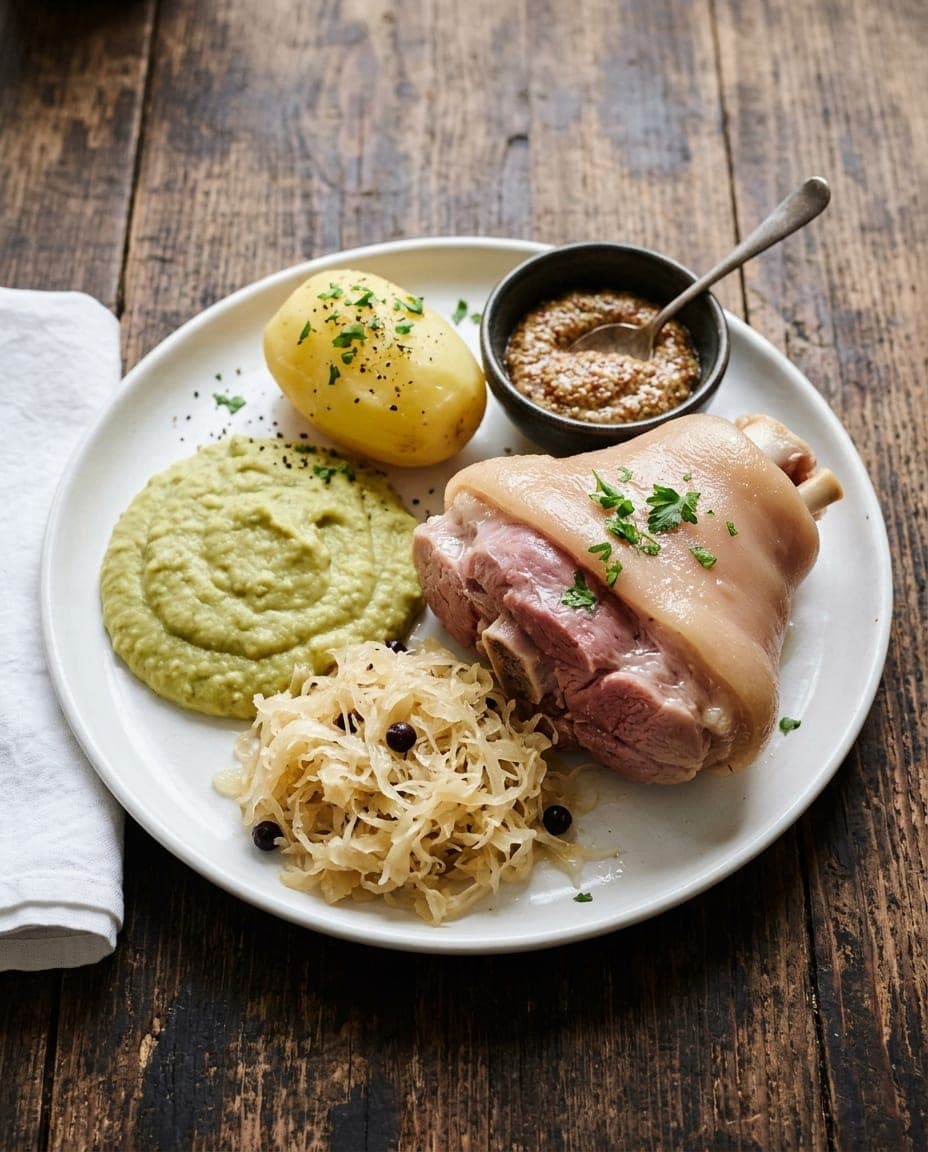
Eisbein mit Erbspüree, literally "ice leg with pea purée", is the definitive heavy meal of Berlin. It consists of a cured pork knuckle that has been simmered until the meat falls from the bone, served alongside a thick purée made from split peas, tangy sauerkraut and boiled potatoes. The dish suits the winter months, when the cold weather calls for something substantial and warming, yet it remains a staple in the city's traditional taverns throughout the year.
Unlike the roasted pork knuckle of southern Germany, known as Schweinshaxe, the Berlin version is pale and soft. Instead of being roasted to a crisp, crackling skin, the meat is cured in brine and then slowly boiled until the collagen in the skin turns soft and gelatinous. The result is a dish defined by texture: the yielding meat, the smooth pea purée, the sharp sauerkraut and the soft potato. It is a main course intended to sustain a worker through a long day.
The name itself invites curiosity. A popular explanation, repeated in German etymological dictionaries, connects "Eisbein" to the use of the pig's shinbone as a runner for ice skates in earlier centuries. Another traces the word to the Old and Middle High German īsbēn, a term for the hip bone, which may derive ultimately from the Greek ischion. Either way, the term is mainly used in northern Germany, while the south speaks of Haxe.
The history of the tavern table
Eisbein mit Erbspüree is not a dish of royal courts or fine dining. It is closely associated with the everyday cooking of Berlin, a city that grew rapidly with industrial workers and labourers. The meal was cheap, filling and easy to prepare in large batches, and cured pork knuckles were an affordable cut that could be kept for long periods.
The dish found its permanent home in the Gaststätte, the traditional Berlin tavern that serves as the social heart of a neighbourhood. In these establishments, the pork knuckle became a symbol of the city's appetite for hearty food. The combination of cured meat with the acidic bite of sauerkraut and the earthy sweetness of peas created a balance that suited the heavy diet of the era.
Over time, the dish evolved from a simple everyday meal into a recognised regional speciality. Boiling the knuckle rather than roasting it is what distinguishes the Berlin tradition from the Bavarian one, where the Schweinshaxe is roasted in the oven until the skin turns golden and crisp. In Berlin, the goal is softness and flavour from the brine and the long simmer, and Eisbein on a Berlin menu means the boiled version.
What goes into it
The components are simple but require careful preparation. The star is the cured pork knuckle, which has been soaked in brine before being simmered until tender. The skin becomes soft and gelatinous, while the meat separates easily from the bone.
Accompanying the meat is a thick purée of yellow split peas. This is not a light garnish but a substantial side dish. The peas are often cooked with bacon and onions, which give the purée a smoky depth and a rich counterpoint to the salty pork.
The other essential elements are sauerkraut, boiled potatoes and strong mustard. The sauerkraut offers a sharp, fermented acidity that cuts the fat of the meat and the heavy pea purée. Boiled potatoes serve as an additional base for the meal. A dollop of pungent mustard completes the plate.
How it is eaten
The dish is traditionally served on a large plate. The pork knuckle is placed at the centre, still on the bone, with the pea purée mounded beside it. Sauerkraut and potatoes are arranged around the meat, and mustard is offered in a small pot or added directly to the plate.
Diners use a knife and fork to separate the meat from the bone, often taking it with a little mustard. Some leave the fatty skin aside, while others consider it the best part. The pea purée is eaten with the meat or separately to balance the flavours.
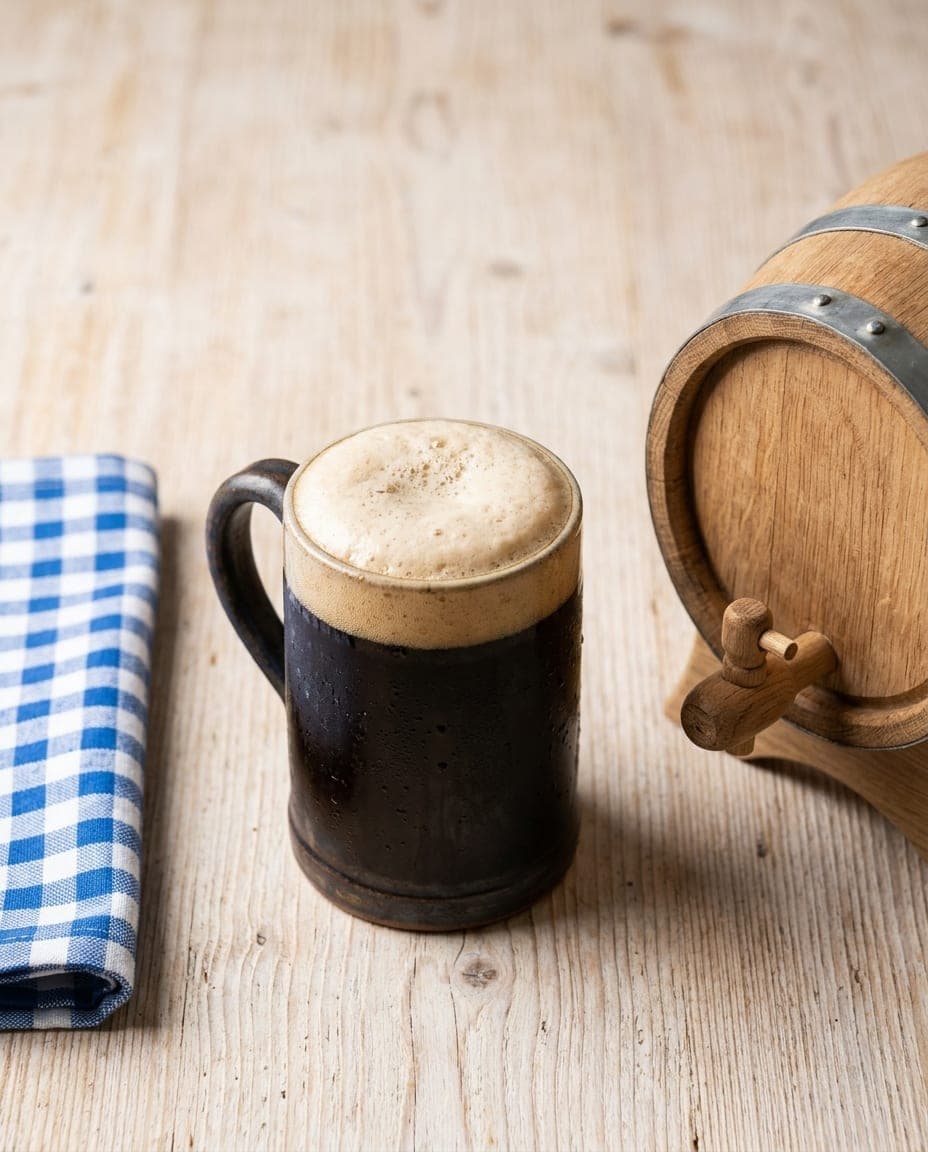
The meal pairs naturally with a Pils, a light and crisp lager that refreshes the palate. A shot of Korn, a clear German grain spirit, is also a traditional companion. It is a meal for slow eating, often enjoyed with friends in a warm, crowded tavern.
Curious facts
- The name's origin. "Eisbein" is often linked to the use of the shinbone as an ice-skate runner, though linguists also trace it to an old word for the hip bone.
- A regional distinction. While Bavarians roast their pork knuckles to achieve a crisp skin, Berliners boil theirs until the meat falls off the bone and the skin becomes gelatinous.
- A northern word. Eisbein is the northern German name for the cut; in the south, it is called Haxe.
- The pea purée is heavy. The yellow split peas are cooked until thick, often with bacon and onions, creating a mash far more substantial than a simple side dish.
- The mustard matters. A sharp German mustard is the standard partner for the salty, fatty meat.
Where to try it
The best place to experience this dish is an Altberliner Gaststätte, a traditional Berlin tavern that has served locals for decades. These establishments are found in many districts of the city, from the historic centre to the outer neighbourhoods. They are often simple rooms with wooden tables and a focus on food rather than decor.
Eisbein mit Erbspüree is a regular fixture on their menus, and one portion is usually more than enough for an adult with a healthy appetite.
Where to try it
1 region
 Boat Rentals2 destinations
Berlin
Germany's capital is a vibrant hub blending history, culture, and innovation. It is renowned for its diverse neighborhoods, each offering unique experiences. Kreuzberg, once a border district, showcases multicultural influences and street art. The historic Mitte area houses Museum Island, a UNESCO World Heritage site with five museums featuring art and antiquities. Berlin's rich history is palpable in sites like the Berlin Wall and Brandenburg Gate. The city is also known for its dynamic culinary scene, from traditional currywurst to avant-garde dining. Parks like Tiergarten provide urban green spaces, while the Spree River offers a chance to explore by boat. Art and music thrive in venues across the city, making it a dynamic destination for culture enthusiasts.
Boat RentalsCamper Van RentalsHiking