Düsseldorfer Altbier
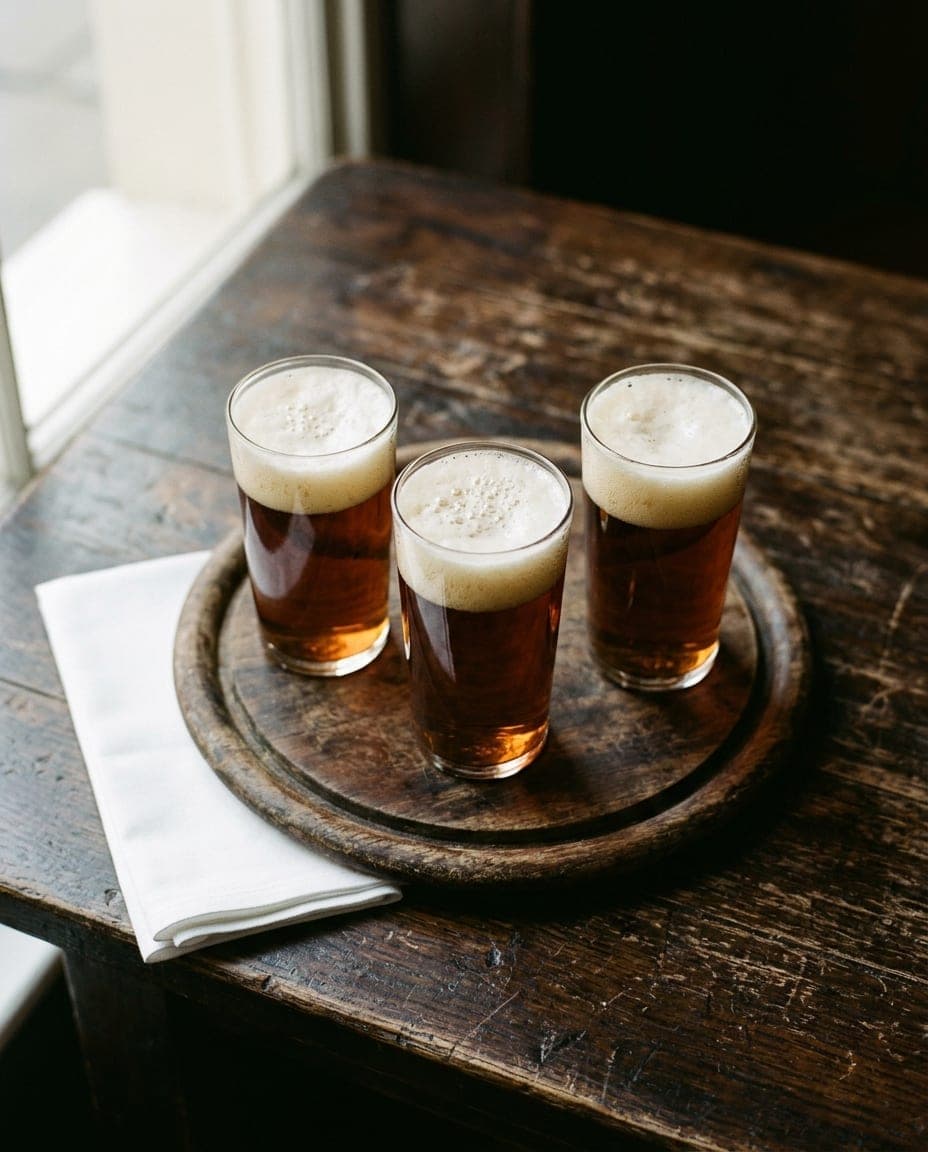
The copper-coloured, top-fermented beer served in small glasses by a Köbes
- Alcoholic
- Local name
- Düsseldorfer Altbier
- Served
- In a small 0.2–0.25 l Becher
- Best eaten at
- An Altstadt house brewery
- Pairs with
- Halve Hahn, Mettbrötchen
What it is
Düsseldorfer Altbier is the defining drink of Düsseldorf's Altstadt, the historic old town on the right bank of the Rhine. It is a dark copper beer, top-fermented and then cold-matured to achieve a clean, firm finish rather than the fruity notes of many ales. The word Alt means old, referring to the traditional method of brewing before bottom-fermenting lagers became dominant.
Unlike the pale, crisp Kölsch from neighbouring Cologne, Altbier is noticeably maltier and more bitter. It has a deep amber hue that can look almost brown in low light, yet it remains clear and bright. This is a substantial, flavourful beverage with a distinct character. In the Altstadt, where the streets are narrow and lined with taverns, the beer flows constantly, serving as the liquid backbone of local life.
The house brewery tradition
The heart of the Altbier experience lies in the Hausbrauereien, or house breweries, of Düsseldorf. Several of them stand in or near the old quarter, each brewing its own version of the beer and serving it on tap in its own rooms. Unlike larger commercial breweries whose beer flows through many bars, these houses pour their own Alt, and ordering a Kölsch in one is considered a faux pas.
Some of these taverns have been in the same hands for generations. Their Altbier varies from house to house depending on the malt bill, the hops and subtle differences in the brewing process. This creates a friendly rivalry between the establishments, each claiming its version is the truest representation of the style.
How it is served
The ritual of drinking Altbier is as specific as the recipe itself. The beer arrives in a Becher, a short, straight-sided glass, usually holding 0.2 to 0.25 litres. The small size keeps the beer cold and fresh from the barrel to the table. Ordering is simple: a request for ein Alt is enough.
The service is handled by the Köbes, the traditional waiter of the Rhineland brewery taverns, typically dressed in a blue apron and known for quick, blunt humour. He carries trays of full glasses through the room and watches the tables closely. As soon as a glass is empty, a fresh one appears. Only when a guest places the beer mat on top of the glass does the Köbes stop bringing refills. Each beer is marked on the mat as a running tally, so the bill can be settled at the end of the evening.
Where it is drunk
The beer belongs to the Altstadt, a district locally known as "the longest bar in the world" (die längste Theke der Welt) for its more than 260 bars, pubs and restaurants packed into a small area. Many are intimate, bustling rooms where locals gather after work or at weekends.
While the Altstadt is the primary destination, Altbier is also available in other parts of Düsseldorf and the surrounding Lower Rhine region. Outside the house breweries, however, the beer may come in larger glasses and without the traditional mat system. The true character of the drink is best appreciated where it is brewed and poured under the same roof.
What goes into it
The ingredients are simple but chosen with care. Altbier is a top-fermented beer, meaning its yeast works at warmer temperatures before the beer is cooled for maturation. This process contributes to its malt character and firm bitterness.
The base consists of pale and darker malts, which give the beer its copper colour and a hint of caramel sweetness. Hops provide a sharp bitterness that distinguishes it from sweeter German lagers. Water and yeast complete the mix. There are no fruits or spices; the flavour comes from the malts and the brewer's skill in managing fermentation and cold maturation.
Curious facts
- The old way. The term Alt refers to the traditional top-fermenting method used before bottom-fermenting lagers took over in the 19th century.
- The small glass. Beer is served in a small Becher of around 0.2–0.25 litres, so it stays cold and fresh.
- The mat system. A beer mat placed on the glass signals the Köbes to stop; leaving the glass uncovered means more beer is coming.
- House pride. Each house brewery serves its own Alt, fuelling a friendly rivalry between them.
- Bitter edge. The style is notably more bitter and maltier than the pale Kölsch from neighbouring Cologne.
- The longest bar. The Altstadt is nicknamed the longest bar in the world for the density of its pubs and taverns.
Where to try it
Altbier is best experienced in one of Düsseldorf's house breweries, where the beer is brewed on site and served by a Köbes in the traditional manner. The Altstadt offers several, each with a slightly different take on the style. The beer pairs well with local savoury snacks, particularly Halve Hahn (a rye roll with a thick slice of mature Gouda, mustard and onion) or Mettbrötchen (a bread roll topped with seasoned raw minced pork).
The narrow streets of the Altstadt invite wandering from one brewery to the next, sitting down at a table where the beer arrives without asking. The rhythm of the mat system sets the pace, and the warmth of the room makes the evening feel complete.
Where to try it
1 destination
 Camper Van Rentals
Düsseldorf
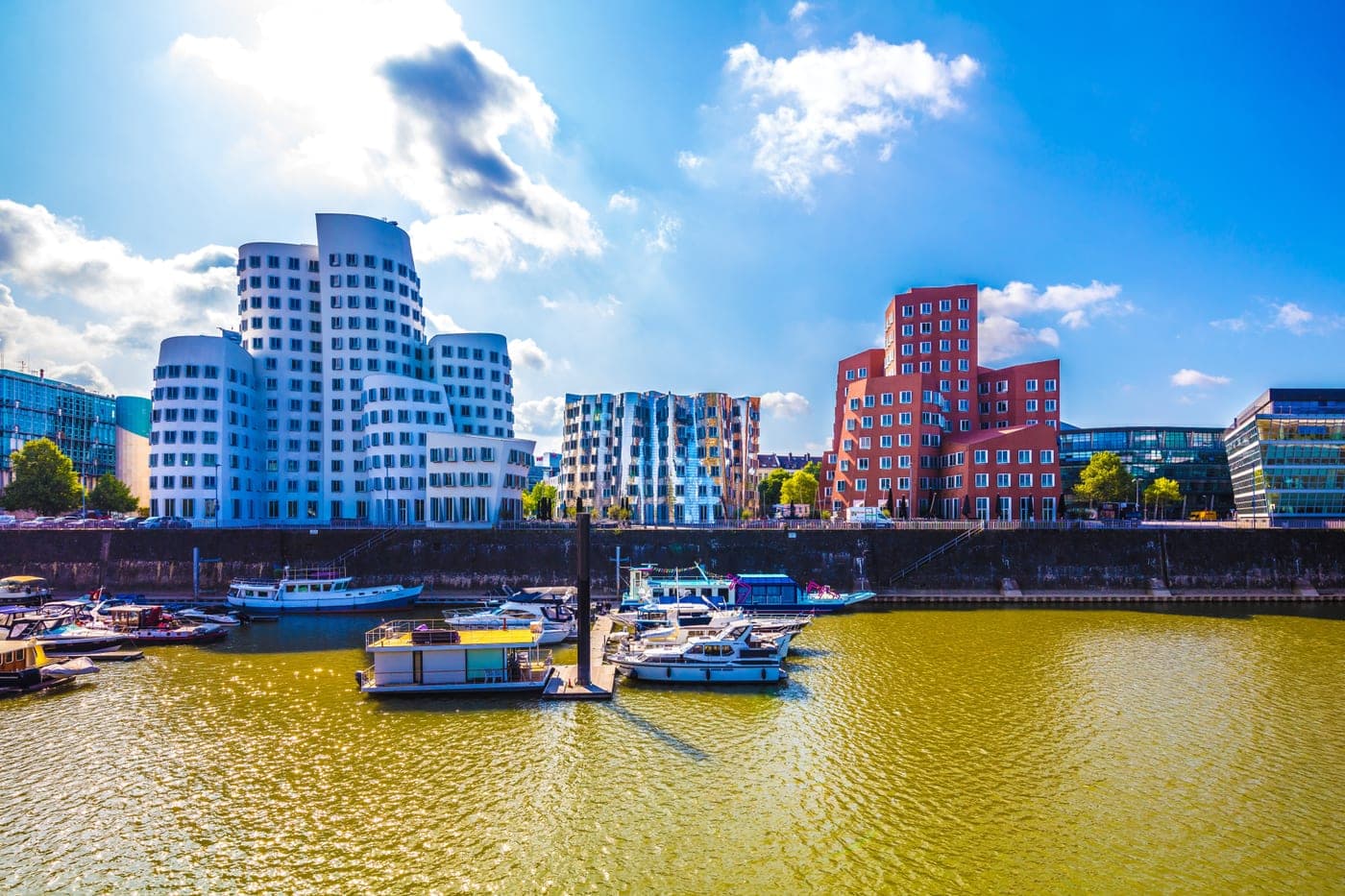
Rhine metropolis with art scene, riverside promenade, and Altstadt bars.
Camper Van RentalsHiking
1 region
 Cabins15 destinations
North Rhine-Westphalia
Located in western Germany, this region is the largest in the country and is known for its diverse landscapes, from the scenic Rhine River valleys to the lush hills of the Sauerland. The area is rich in industrial heritage, with cities like Dortmund and Essen showcasing their transformation from heavy industry to cultural hubs. Düsseldorf offers a vibrant arts scene and innovative fashion, while Cologne is famous for its stunning cathedral. The region also boasts picturesque towns such as Monschau, known for its half-timbered houses, and Bad Honnef, a charming spa town. Unique local dishes and breweries enhance the cultural experience, along with numerous hiking trails that connect visitors to its natural beauty.
CabinsHikingCastlesCamper Van Rentals