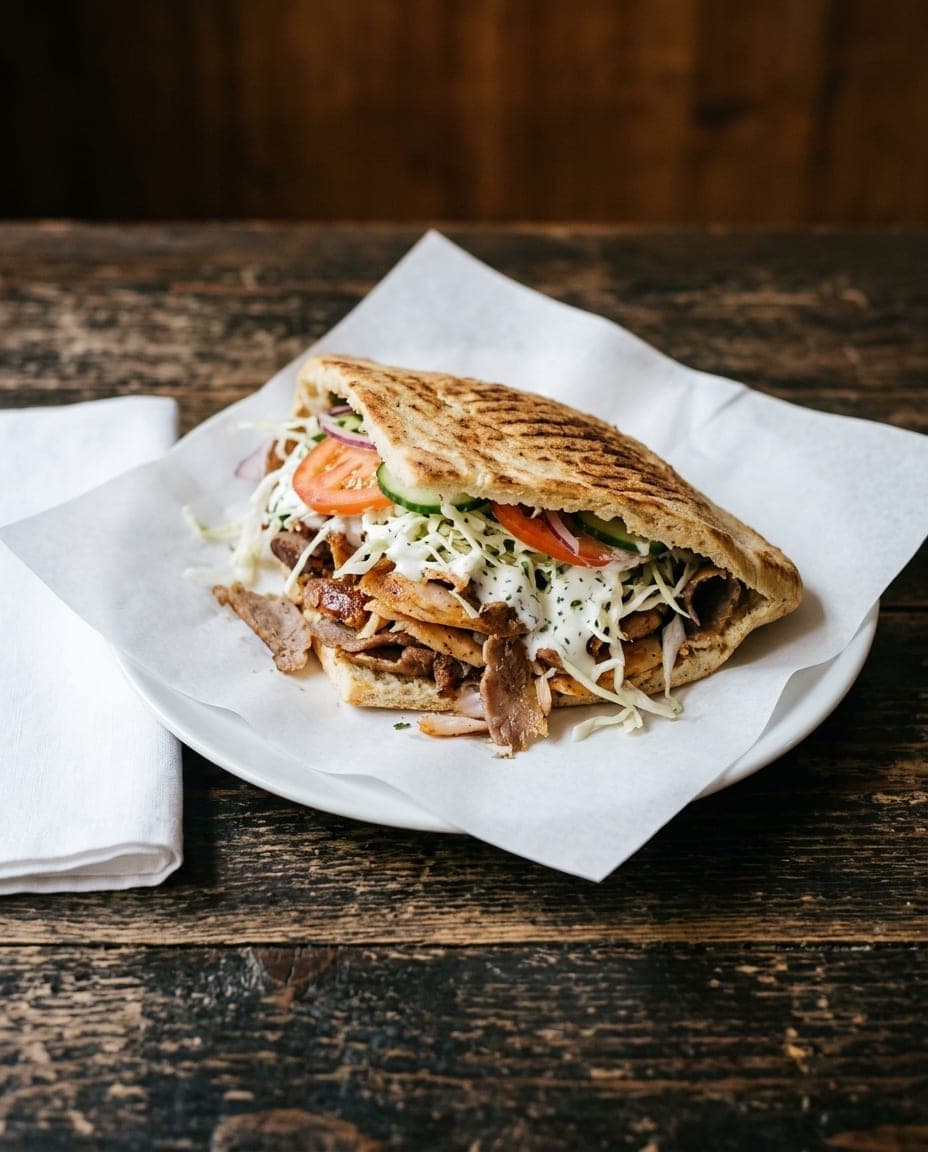
Döner Kebab (Berlin-style)
Berlin's late-night Döner Kebab in flatbread with salad and garlic sauce
- Local name
- Döner Kebab
- Served with
- Salad, garlic sauce
- Best eaten at
- A Berlin late-night Imbiss
- Pairs with
- Ayran
What it is
Döner Kebab, often shortened to Döner, is the defining street food of Berlin. It consists of meat shaved from a vertical rotating spit and served in a wedge of flatbread known as Fladenbrot. The bread is toasted until crisp, then filled with the warm meat, a generous portion of fresh salad, and a choice of sauces.
The Berlin version differs significantly from its Turkish origins. In Turkey, döner is commonly served on a plate, for example with rice, or in bread with comparatively few additions. The Berlin iteration is known for its load of raw lettuce, tomato, onion and cabbage. This turns the meal into a substantial sandwich that can be eaten standing up or while walking through the city streets. It is designed for speed and portability, yet it has become a staple of the local diet at any time of day.
The dish took shape in West Berlin in the early 1970s among Turkish immigrants who had come to Germany as guest workers. Over the decades, it evolved from a niche offering into a city-wide institution. Today, the sight of a vertical spit turning in a shop window is as common on Berlin's high streets as the U-Bahn stations themselves.
The history of the spit in West Berlin
The story is tied to the post-war era, when West Germany recruited labourers from Turkey in the 1960s to fill gaps in its workforce. These workers brought their culinary traditions with them, and the format changed to suit a busy city where people wanted something quick and portable. The vertical rotisserie, from which döner takes its name (from the Turkish for "turning"), was adapted to the local palate and the constraints of street vending.
Several individuals are credited with creating the first German-style Döner Kebab, and no single name is universally accepted. Kadir Nurman said he began selling meat in flatbread at Berlin's Bahnhof Zoo in 1972, and is often called the "father of the döner". Berlin restaurateur Mehmet Aygün says he sold döner from 1971, while Nevzat Salim claims to have sold one in Reutlingen as early as 1969. No official record confirms who was first.
What is clear is that the dish emerged in the early 1970s as a hot, savoury meal that could be held in one hand. The vertical spit allowed for efficient service, with meat shaved directly into the bread as the customer waited. This method became standard across Berlin and spread to other German cities.
Vendors adjusted the recipe to suit German tastes, increasing the portion of vegetables and the variety of sauces. The thick, round Turkish Fladenbrot, cut into wedges, became the preferred vessel over thinner breads. This adaptation marked the birth of the Berlin Döner as something distinct from its ancestor.
What goes into it
The core components remain consistent across most shops, though each vendor adds their own touch.
- Meat on the spit: Usually veal, beef or chicken, sometimes lamb, stacked in layers on a vertical spit, pressed together and shaved off in thin slices as the outer layer cooks.
- Fladenbrot: A toasted wedge of flatbread, crisp on the outside and soft inside, sturdy enough to hold the moisture of the filling.
- Fresh salad: Lettuce, tomatoes, onions and red or white cabbage added in generous amounts, sometimes with cucumber.
- Sauce: Garlic yoghurt is the most common choice, alongside herb sauces and a spicy red sauce for those who prefer heat.
The combination of hot meat, crisp vegetables and creamy or sharp sauces creates a balance that defines the dish. The simplicity of the ingredients allows the quality of the meat and the freshness of the vegetables to shine through.
How it is eaten
The Berlin Döner Kebab is designed to be eaten on the move. It is common to see people standing on the pavement, holding the wrapped bread with both hands. The toasted bread holds the filling together while the meat and salad remain inside.
It is ordered from an Imbiss, a small shop or stand serving quick snacks and fast food. These are found across Berlin, particularly near transport hubs and in residential areas. The service is fast, with the vendor assembling the order in a minute or two. Customers choose their meat, salad and sauce before paying at the counter.
The dish is popular at any time of day, but it has a particular role as a late-night meal. After a night out or a late shift, the Döner is a warm and filling stop, and many shops stay open into the early hours.
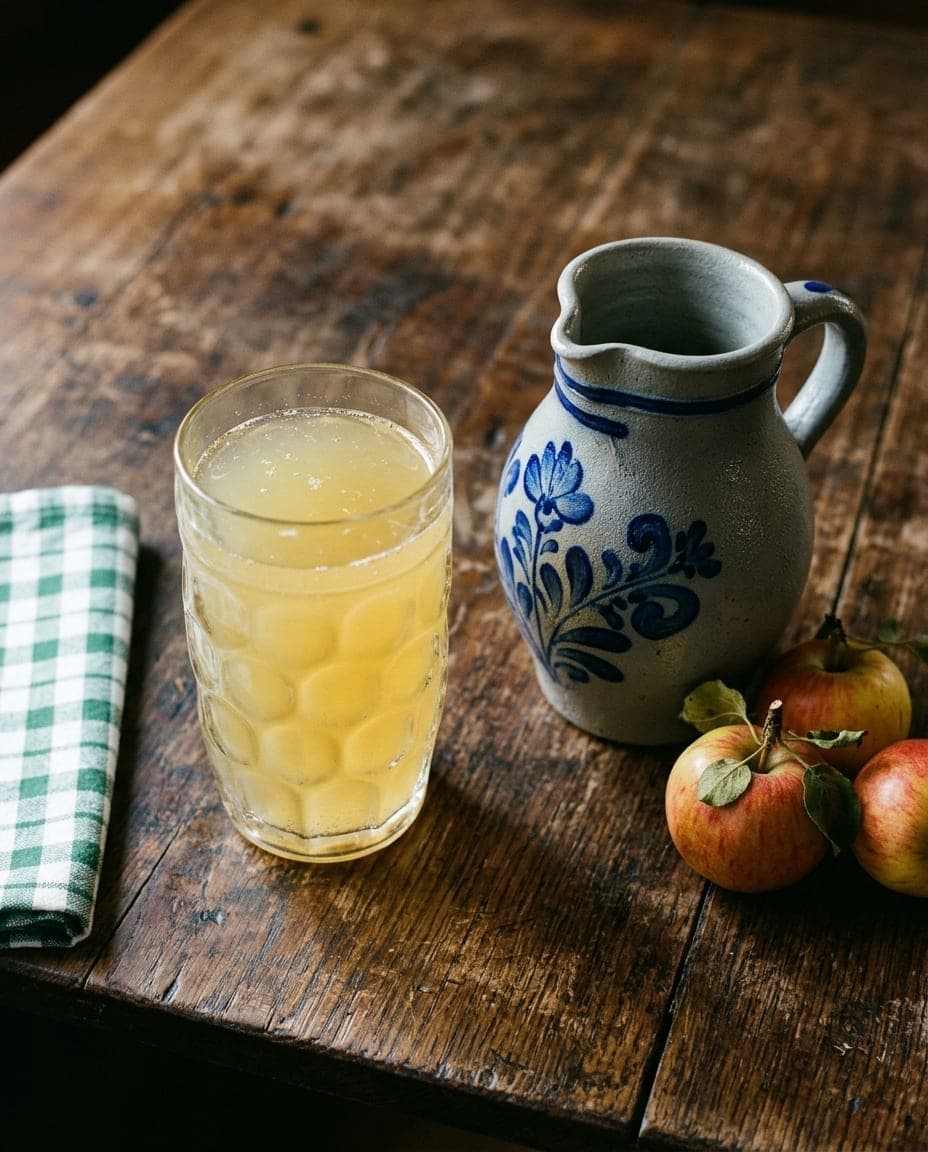
Ayran, a drink made from yoghurt, water and salt, is a traditional pairing. The cool, salty beverage complements the savoury meat and sauces. Beer and soft drinks are just as common.
Where it began in Berlin
The Döner Kebab took root in West Berlin, in districts where Turkish communities settled, such as Kreuzberg. As its popularity grew, it spread far beyond those neighbourhoods and became a staple across the whole city and the rest of Germany. It is now so integrated into Berlin life that it is widely considered a local speciality rather than a foreign import.
The evolution of the dish reflects the broader history of Berlin itself: a city of arrivals, where different cultures mix and adapt to new circumstances. The Döner Kebab took a Turkish tradition and reshaped it into something recognisably Berlin, a meal that belongs to the streets, the late nights and the busy days of the capital.
Curious facts
- The salad is a German addition. The generous load of fresh vegetables is characteristic of the German-style döner rather than the Turkish original.
- The name means turning. Döner comes from the Turkish for "rotating", after the vertical spit.
- Late-night institution. Many shops stay open until the early hours, making the Döner a popular choice after a night out.
- One-hand meal. The wedge of bread allows it to be eaten while walking or standing.
- A contested origin. Kadir Nurman (1972, Bahnhof Zoo) and Mehmet Aygün (1971) are both credited with creating the Berlin version, and Reutlingen has its own claim from 1969.
Where to try it
1 destination
 Camper Van Rentals
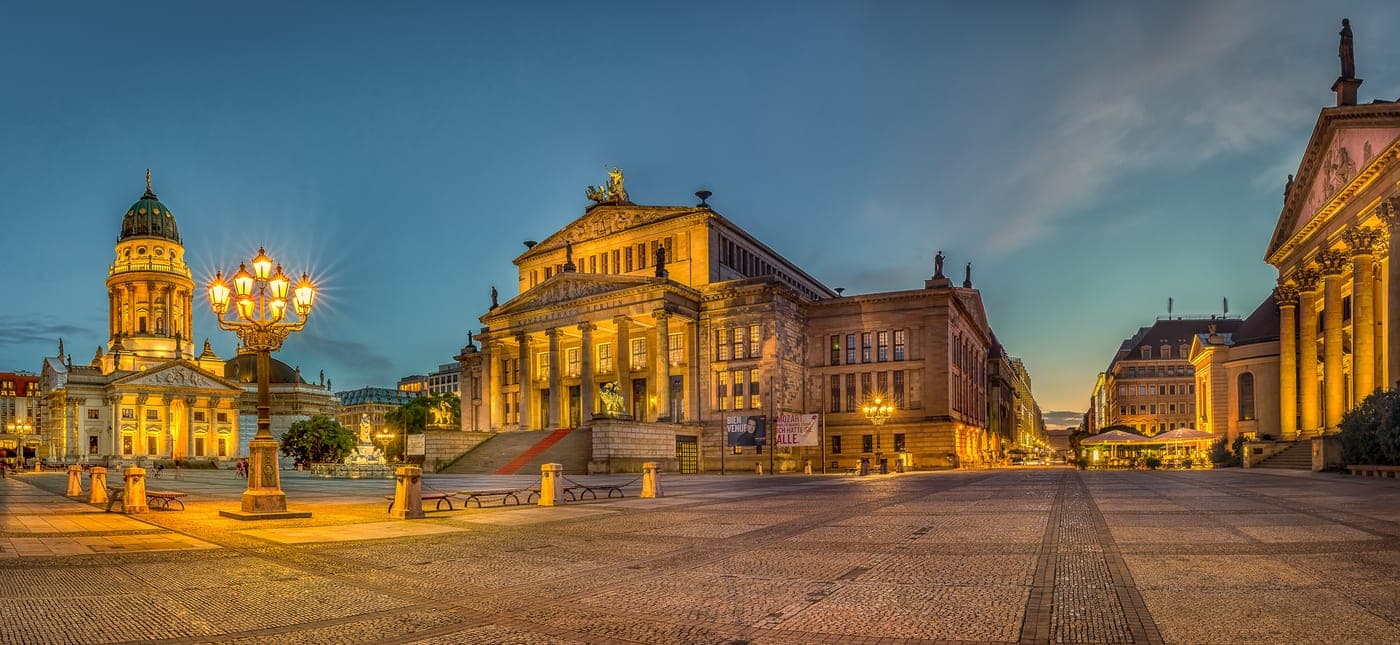
Berlin
Germany's vibrant capital with wall history, museums, and creative culture.
Camper Van RentalsHiking
1 region
 Boat Rentals2 destinations
Berlin
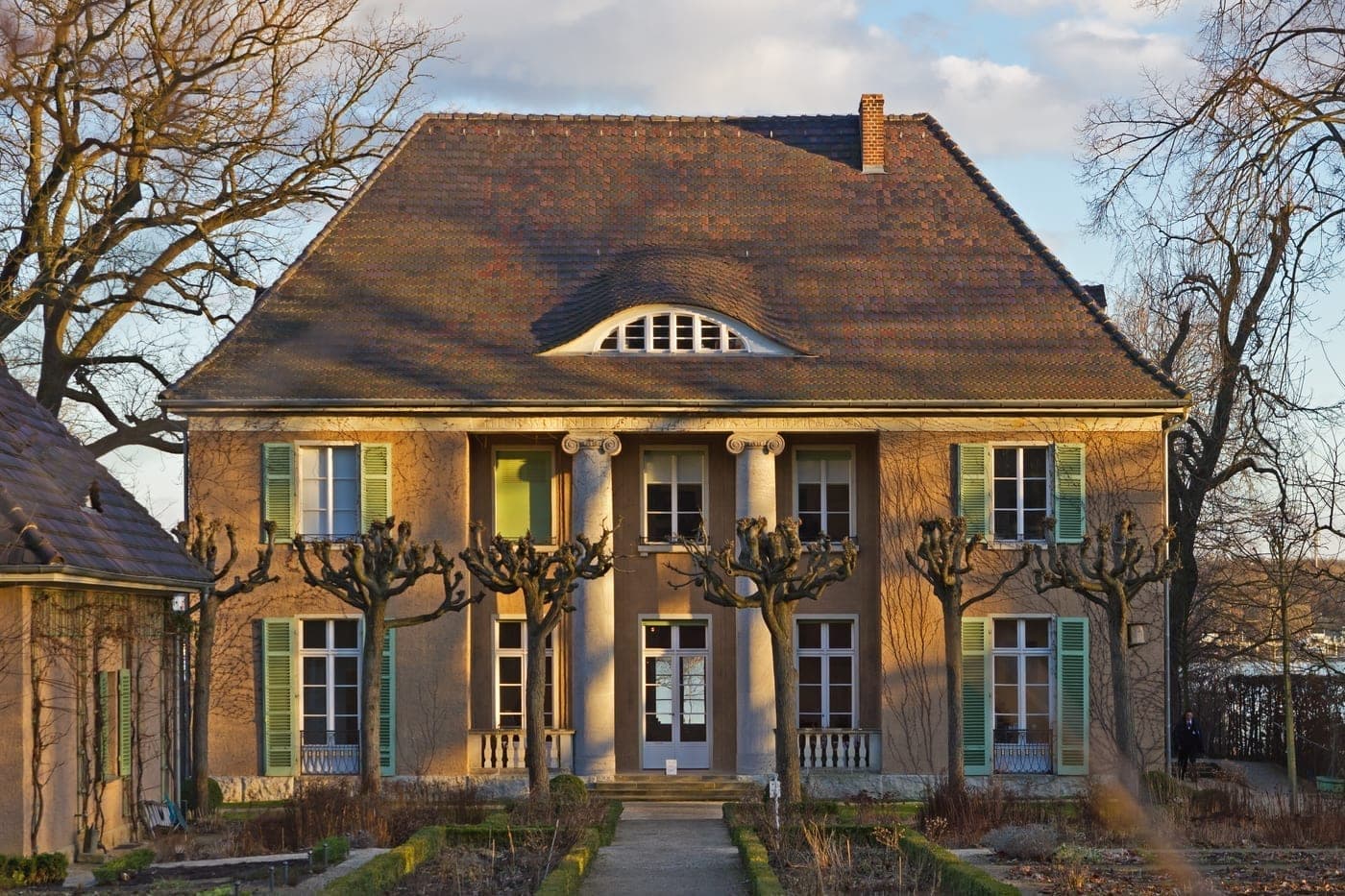
Germany's capital is a vibrant hub blending history, culture, and innovation. It is renowned for its diverse neighborhoods, each offering unique experiences. Kreuzberg, once a border district, showcases multicultural influences and street art. The historic Mitte area houses Museum Island, a UNESCO World Heritage site with five museums featuring art and antiquities. Berlin's rich history is palpable in sites like the Berlin Wall and Brandenburg Gate. The city is also known for its dynamic culinary scene, from traditional currywurst to avant-garde dining. Parks like Tiergarten provide urban green spaces, while the Spree River offers a chance to explore by boat. Art and music thrive in venues across the city, making it a dynamic destination for culture enthusiasts.
Boat RentalsCamper Van RentalsHiking