Dampfnudeln
Steamed yeast dumplings with a caramelised crust from the Palatinate
- Vegetarian
- Local name
- Dampfnudeln
- Served with
- Potato soup, wine sauce or vanilla sauce
- Best eaten at
- A Palatinate Weinstube
- Pairs with
- Palatinate Riesling
What they are
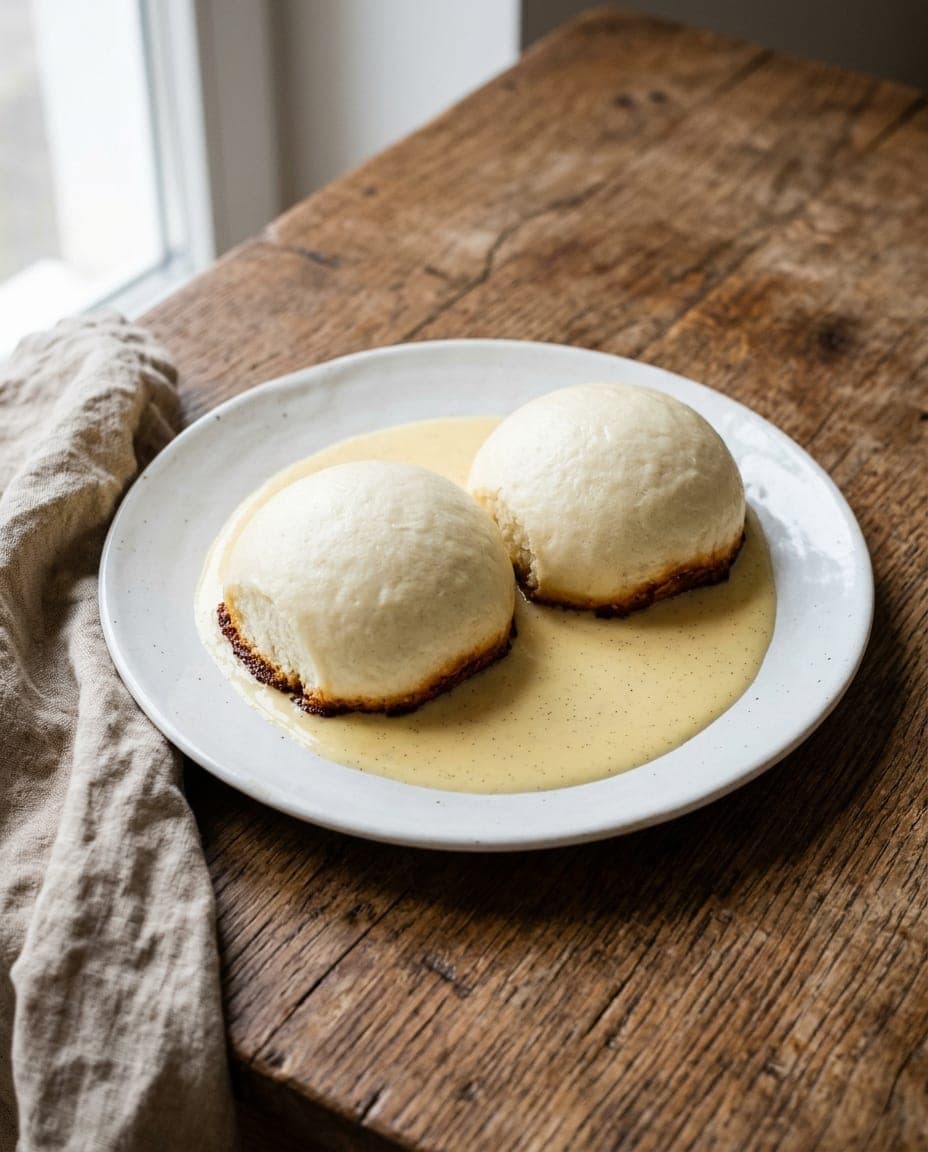
Dampfnudeln are large, soft yeast dumplings that belong firmly to the Palatinate region of Germany's Rhineland-Palatinate state, and to much of southern Germany. They are not quite bread, nor exactly pastry, but a distinct category of dough cooked in a covered pan with a small amount of liquid. The result is a texture that defies simple description: the tops remain pale, soft and pillowy, while the bottoms fry in the fat to form a hard, golden-brown crust.
The name itself offers a clue to the method. Dampf means steam, and Nudeln here refers to dumplings of dough rather than pasta. The dish is defined by the contrast between the two textures. The dumplings are cooked side by side in one pan and pulled apart at the table, which fits their history as village food and inn fare, shared among family after a day's work.
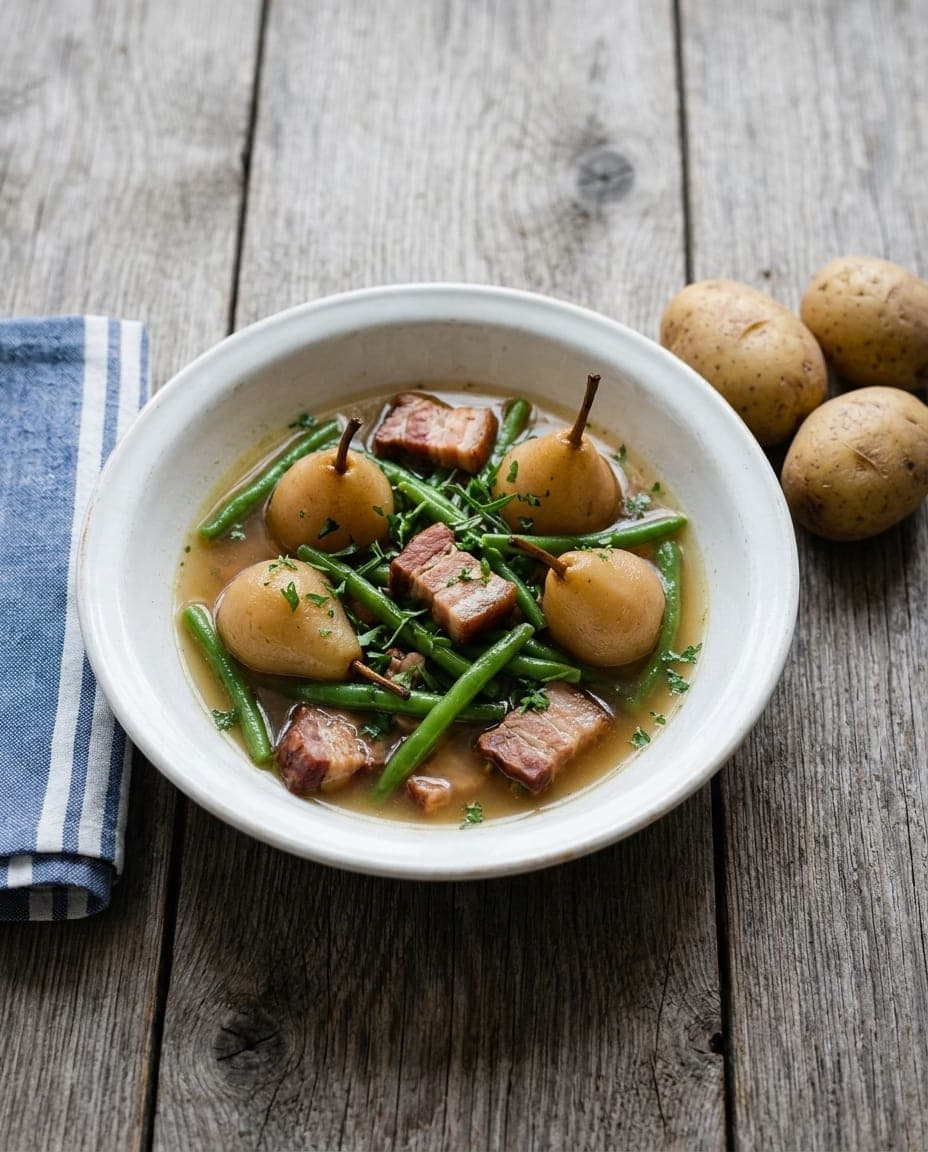
In the Palatinate, Dampfnudeln are a main dish with a salty crust, often served alongside potato soup or wine soup, though sweet sauces such as wine sauce or vanilla sauce are just as traditional. In Bavaria and other parts of southern Germany, they are usually cooked in milk and butter and served sweet, with vanilla sauce or stewed fruit. The technique is much the same across the regions.
How they are made
The preparation relies on a specific technique that requires patience. The dough is kneaded until smooth, then left to rise in a warm place until it has doubled in size. Once risen, it is shaped into large, round balls and placed closely together in a heavy-bottomed pan with a tight-fitting lid.
The secret lies in the cooking liquid. For the Palatinate style, the pan contains salted water and fat, usually butter or oil. For the sweet version, milk, sugar and butter are used. The liquid is brought to the boil, the heat lowered, and the pan covered. Once the cooking begins, the lid must not be lifted: peeking releases the steam needed to cook the tops of the dumplings and spoils the texture.
The steam cooks the upper surfaces until they are soft and cooked through. Meanwhile, as the liquid evaporates, the bottom layer fries in the remaining fat, browning deeply and forming a crisp crust. In the Palatinate this crust is salty; in the milk-and-sugar version it caramelises. The process takes roughly twenty to thirty minutes, depending on the size of the dumplings and the heat of the stove.
Where they come from
Dampfnudeln are a regional speciality rather than a nationwide German standard. They are most strongly associated with the Palatinate, Bavaria and Baden-Württemberg, and similar dumplings are known in Austria, Switzerland and Alsace. In the Palatinate, they are a staple of local cuisine, often found in traditional inns and wine taverns. The dish likely evolved from simple country cooking, using yeast, flour, milk or water, and fat to stretch a little dough into a filling meal.
The exact origin of the dish is unrecorded. No single inventor is known, and no specific date marks its arrival in the region. It simply exists as part of the culinary fabric of these areas, passed down through generations of home cooks and innkeepers.
What goes into them
The ingredients are simple pantry staples. The dough consists of flour, yeast, a liquid (water or milk), salt, a little sugar and fat. Butter or oil is added to the cooking liquid to create the crust. For the sweet version, vanilla sugar or vanilla pods may be added to the milk.
The dish is defined by its serving style rather than complex components. In the Palatinate, a bowl of potato soup is a classic partner: the dumpling absorbs the broth, while the crispy bottom provides a textural counterpoint. Wine sauce, vanilla sauce, stewed plums or other cooked fruit are equally common.
How they are eaten
Dampfnudeln are a fixture of the Palatinate Weinstube, a traditional wine tavern serving local wines and regional food, where they appear as a main course. They are pulled apart at the table so that each piece combines the soft top with the crispy bottom.
For the savoury pairing, a bowl of hot potato soup is placed alongside, and pieces of dumpling are dipped into it. A glass of local Riesling is a natural companion, its crisp acidity cutting through the buttery dough.
In the sweet variation, the dumplings are served hot with a ladle of vanilla sauce or wine sauce. The contrast between the warm, soft dough and the creamy sauce is central to the experience, and stewed plums add another layer of flavour. The dish is substantial enough to serve as a meal on its own.
Curious facts
- The lid rule. The lid stays on for the entire cooking time. Lifting it releases the steam and prevents the tops from cooking properly.
- A shared pan. The dumplings are cooked close together in one pan and pulled apart by hand at the table.
- Two distinct styles. The Palatinate cooks them in salted water and fat for a salty crust, while Bavarian cooks typically use milk and butter for a sweet one.
- A main course. In the Palatinate, Dampfnudeln are eaten as a main dish rather than a dessert, even when served with a sweet sauce.
- A wine-country dish. In the Palatinate, they are commonly enjoyed with a glass of local wine, often Riesling.
Where to try them
The traditional wine taverns of the Palatinate serve local wines alongside regional specialities, in an atmosphere that reflects the area's agricultural roots. In villages along the German Wine Route, Dampfnudeln often appear as part of a larger meal, accompanied by potato soup or wine sauce.
Outside the Palatinate, Bavaria and Baden-Württemberg also offer good versions in traditional inns and rural restaurants, usually in the sweet style. The dumplings are available year-round, making them a reliable choice in any season.
Where to try it
1 region
 Cabins10 destinations
Rhineland-Palatinate
Rhineland-Palatinate is Germany's largest wine-producing region, renowned for its diverse vineyards and picturesque landscapes along the Rhine and Moselle rivers. The region features historic cities like Mainz, famous for its Gutenberg Museum, and Trier, home to well-preserved Roman ruins, including the Porta Nigra. Koblenz marks the confluence of the Rhine and Moselle and is known for its Ehrenbreitstein Fortress. The region is also celebrated for its rich culinary traditions, including hearty dishes and fine Riesling wines. Unique villages such as Cochem and Rüdesheim invite exploration of local culture and festivals, offering a glimpse into traditional German life amidst stunning natural beauty.
CabinsHikingCastlesCamper Van Rentals