Currywurst
Sliced fried sausage in spiced tomato sauce from Berlin's snack stands
- Local name
- Currywurst
- Served with
- Fries or a bread roll
- Best eaten at
- A Berlin Imbiss stand
- Pairs with
- Pils beer
What it is
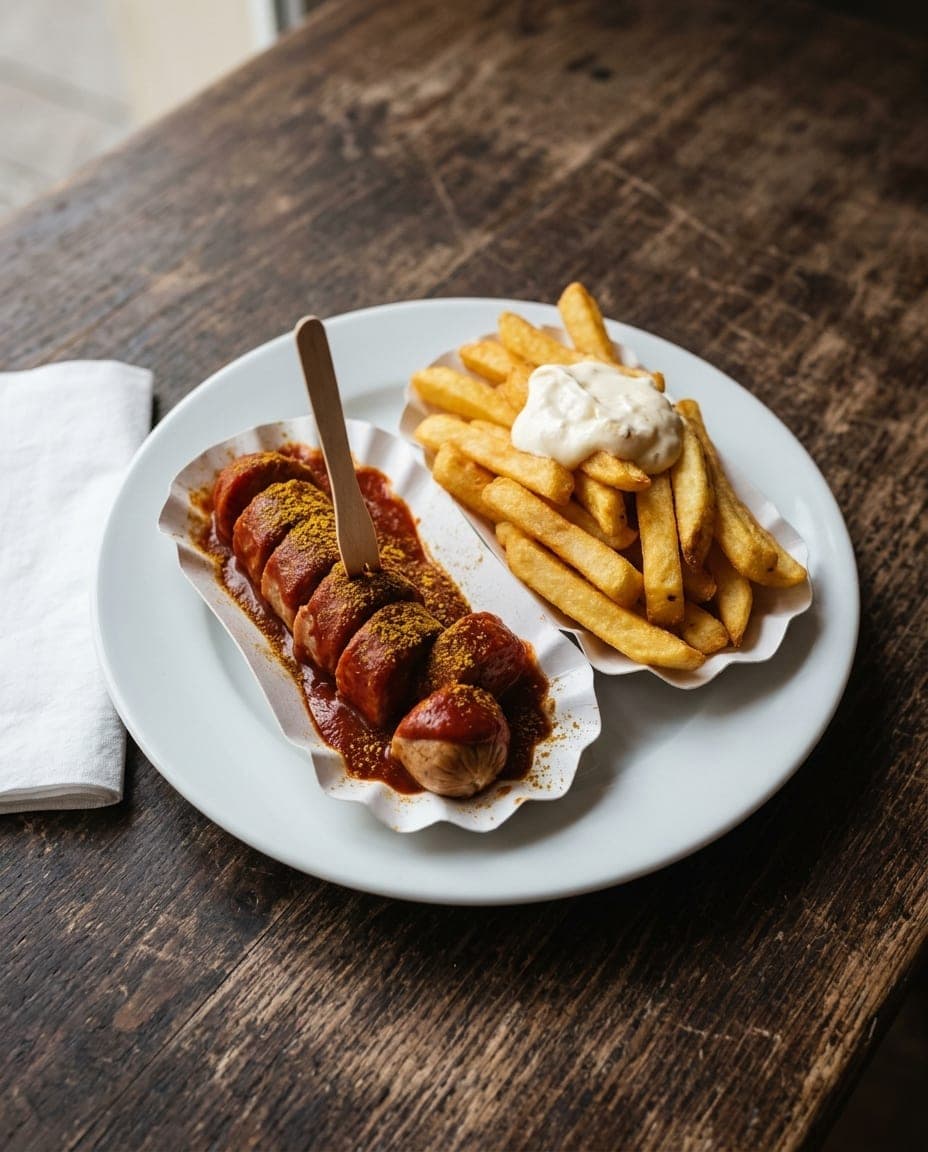
Currywurst is a dish closely tied to Berlin and to the industrial Ruhr area of western Germany. It consists of a grilled or fried pork sausage, sliced into bite-sized coins and smothered in a warm sauce made from tomato purée or ketchup, curry powder, paprika, and often a touch of sweetness. The dish arrives on a disposable paper tray with a small wooden fork, accompanied by either french fries (Pommes) or a soft white bread roll (Brötchen).
It is a street food that has moved from the margins of post-war Berlin to become a national icon, eaten from Hamburg to Munich. The sauce is the heart of the dish, balancing tomato acidity, spicy heat and aromatic warmth.
The name describes the components simply: Curry for the spice and Wurst for the sausage. The specific combination of a sliced pork sausage with this tomato-curry sauce is a German invention, born from necessity and the ingredients available after the war, and now a symbol of Berlin's appetite for quick, hearty food.
The legend of the 1949 invention
The story most commonly told about currywurst begins on 4 September 1949 in the Charlottenburg district of West Berlin. It centres on Herta Heuwer, who ran a snack stand on the corner of Kantstraße and Kaiser-Friedrich-Straße. The city was still recovering from the war, food was scarce, and British soldiers were stationed in the sector with access to goods that locals could not easily find.
According to the usual account, Heuwer obtained ketchup or Worcestershire sauce and curry powder from British soldiers. She mixed them with tomato paste, creating a new sauce that she poured over fried pork sausages. Construction workers rebuilding the city became regular customers, and the dish proved so popular that she registered her sauce as a trademark, Chillup, in 1959. She later ran a small restaurant, which closed in 1974, and kept her recipe secret until her death in 1999.
This origin story is widely accepted in Berlin, yet it remains a subject of some debate. Hamburg has its own claim, popularised by Uwe Timm's novella Die Entdeckung der Currywurst, which sets the invention at the Großneumarkt in 1947 with a fictional vendor, Lena Brücker. The Ruhr area also regards the dish as its own, and currywurst is especially popular there.
Whether Heuwer was the sole inventor or simply the most successful promoter of a concept already in the air, she cemented the combination of sliced sausage and tomato-curry sauce in the German culinary landscape.
How it is made and served
There is no single official recipe, and many vendors guard their own method for the sauce, so spice levels and sweetness can differ noticeably from one stand to the next.
The sausage itself is typically a pork variety, often a Bratwurst or a similar fine-ground sausage. Berlin has two classic forms, mit Darm (with casing) and ohne Darm (skinless), both registered as collective marks; the skinless version lets the sauce coat the meat directly. Elsewhere, and particularly in the Ruhr, a sausage with a casing is common. The sausage is fried in fat or grilled until it develops a golden-brown crust before being sliced into rounds.
The sauce is prepared by heating tomato purée or ketchup with curry powder, paprika, and sometimes onions, garlic or Worcestershire sauce. A sweetener such as sugar or honey is frequently added to balance the acidity of the tomatoes and the heat of the spices. The mixture is simmered until it reaches a thick, pourable consistency that clings to the sausage. Some vendors add a dash of vinegar for extra tang.
Currywurst is almost always served on a paper tray with a small wooden fork, reflecting its origins as a quick, on-the-go meal. It comes with either french fries, known locally as Pommes, or a soft white bread roll (Brötchen); the choice is largely personal.
The culture of the Imbiss
Currywurst belongs to the Imbiss, a standing snack stand that has become a fixture of German urban life. These small kiosks are found across Berlin, offering quick meals to workers, commuters and late-night revellers. They are places of simple comfort, where people eat standing up at a counter or at a small table nearby.
The Imbiss culture is particularly strong in Berlin, where some stands have served as neighbourhood hubs for decades. They are not destinations for fine dining but part of the city's daily rhythm. In the Ruhr region, the tradition is equally robust, with stands near factories, bus stops and train stations catering to workers needing a quick lunch or dinner after a shift.
How to eat it
The sausage slices are best eaten hot, before the bread or fries turn soggy. The bread roll is traditionally used to wipe up the remaining sauce on the tray, and fries are dipped directly into it. A cold Pils is the classic companion. The crispness of the lager cuts the fat of the fried sausage and the heaviness of the sauce, refreshing the palate between bites.
Curious facts
- A post-war creation. The best-known account dates the dish to September 1949, when curry powder and sauces obtained from British soldiers were rare luxuries in Berlin.
- With or without skin. Berlin serves both mit Darm and ohne Darm; both names are registered collective marks.
- A trademarked sauce. Herta Heuwer's sauce was registered as Chillup in 1959, and she took the recipe to her grave.
- National icon status. Roughly 800 million currywursts are eaten in Germany each year, according to commonly cited estimates.
- A museum of its own. Berlin had a Deutsches Currywurst Museum from 2009 until it closed at the end of 2018.
Where to try it
The most authentic experience of currywurst is found at a traditional Imbiss stand in Berlin. The city is home to hundreds of them, some operating for decades, including in Charlottenburg, where Heuwer's stand once stood.
In the Ruhr region, particularly in cities such as Bochum, currywurst is equally part of everyday life, served at stands that cater to workers and commuters with a focus on hearty, quick meals.
Whether in Berlin or the Ruhr, the best currywurst is usually found where locals gather rather than at places designed solely for tourists, where the queues are long and the conversation is casual.
Where to try it
2 destinations
 Camper Van Rentals
Berlin
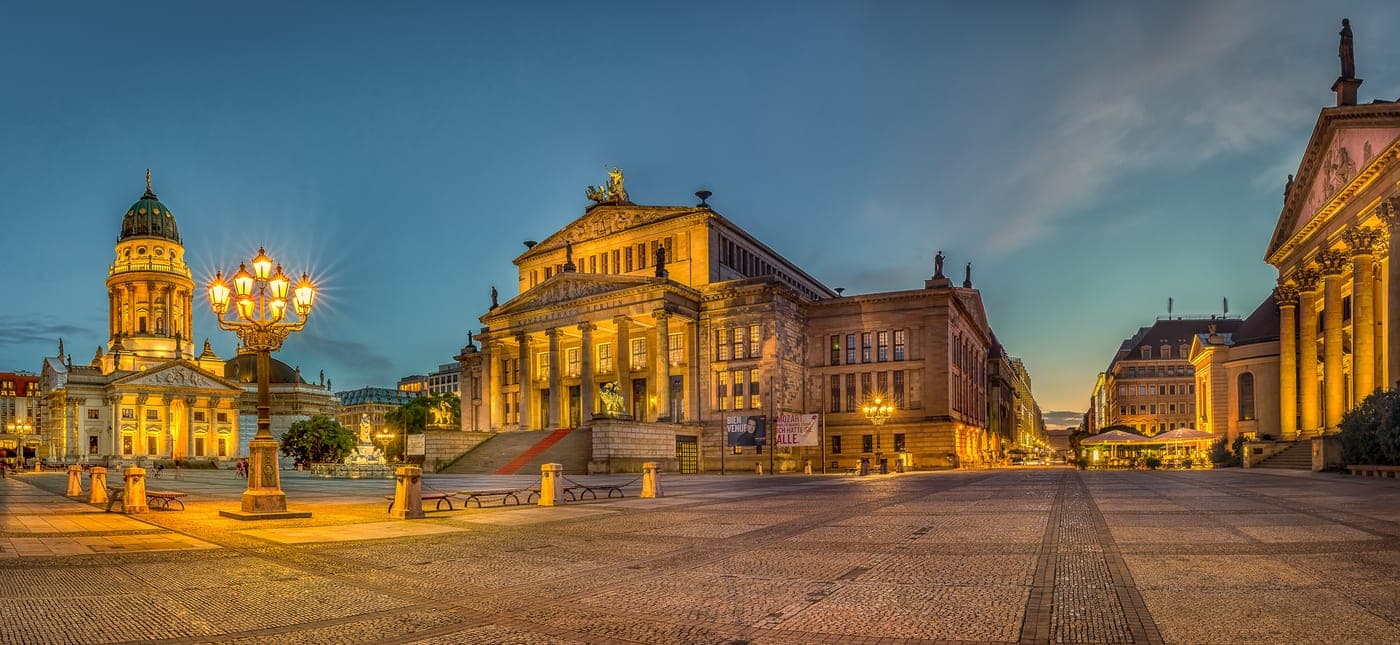
Germany's vibrant capital with wall history, museums, and creative culture.
Camper Van RentalsHiking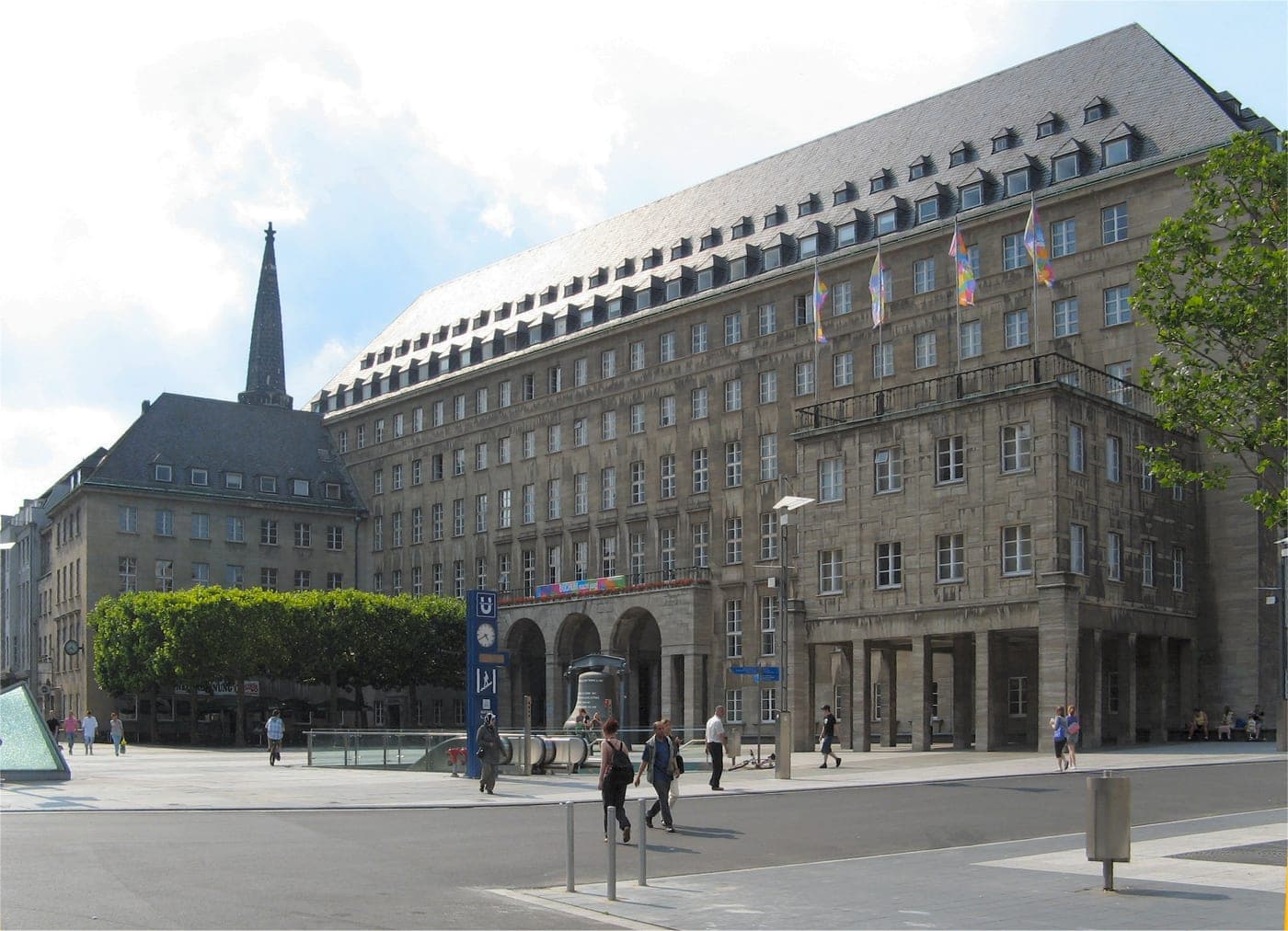 Camper Van Rentals
Bochum
Former coal mining city with cultural venues and urban parks.
Camper Van RentalsHiking
1 region
 Boat Rentals2 destinations
Berlin
Germany's capital is a vibrant hub blending history, culture, and innovation. It is renowned for its diverse neighborhoods, each offering unique experiences. Kreuzberg, once a border district, showcases multicultural influences and street art. The historic Mitte area houses Museum Island, a UNESCO World Heritage site with five museums featuring art and antiquities. Berlin's rich history is palpable in sites like the Berlin Wall and Brandenburg Gate. The city is also known for its dynamic culinary scene, from traditional currywurst to avant-garde dining. Parks like Tiergarten provide urban green spaces, while the Spree River offers a chance to explore by boat. Art and music thrive in venues across the city, making it a dynamic destination for culture enthusiasts.
Boat RentalsCamper Van RentalsHiking