Braunschweiger Mettwurst
A soft, spreadable smoked pork sausage from Braunschweig in Lower Saxony
- Local name
- Braunschweiger Mettwurst
- Served with
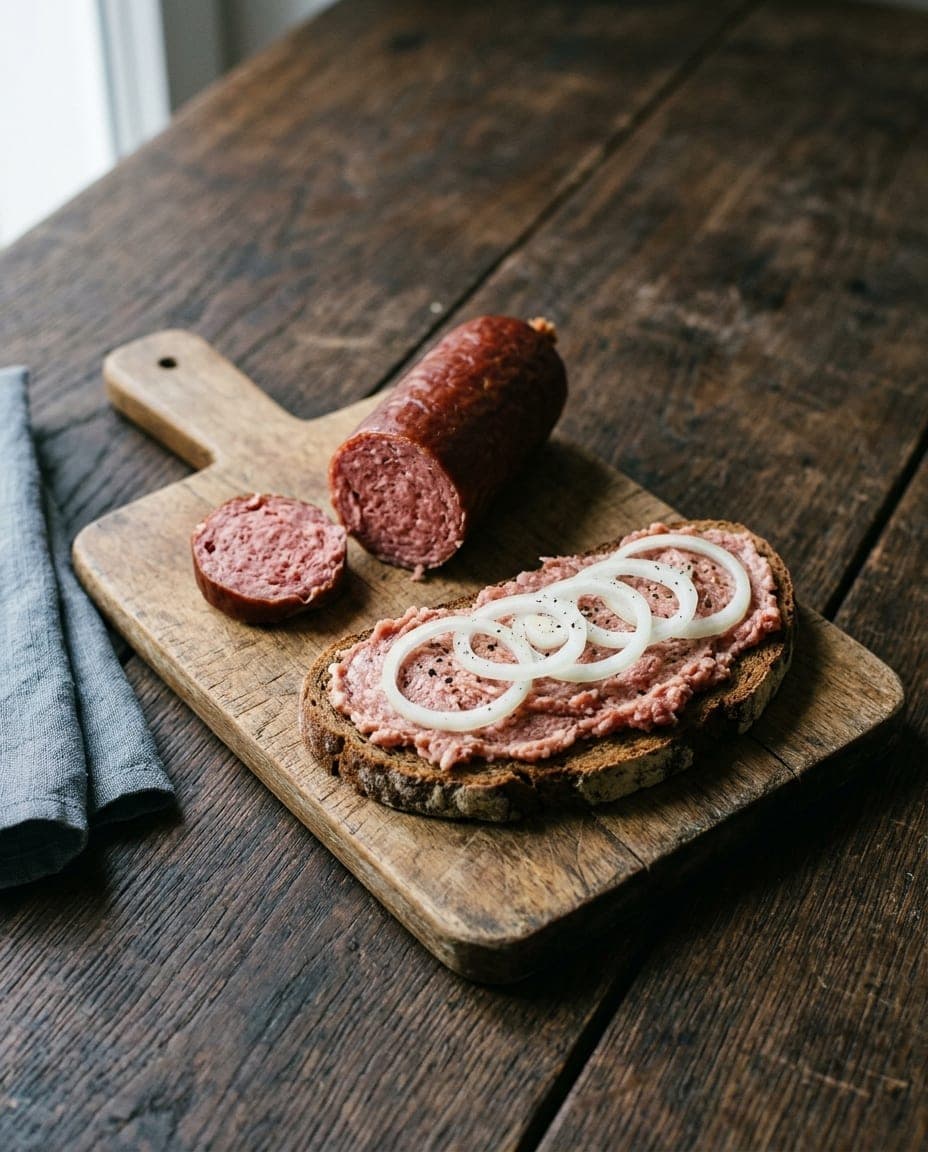
- Rye bread, onions
- Best eaten at
- A Lower Saxony bakery or butcher
- Pairs with
- German pilsner
What it is
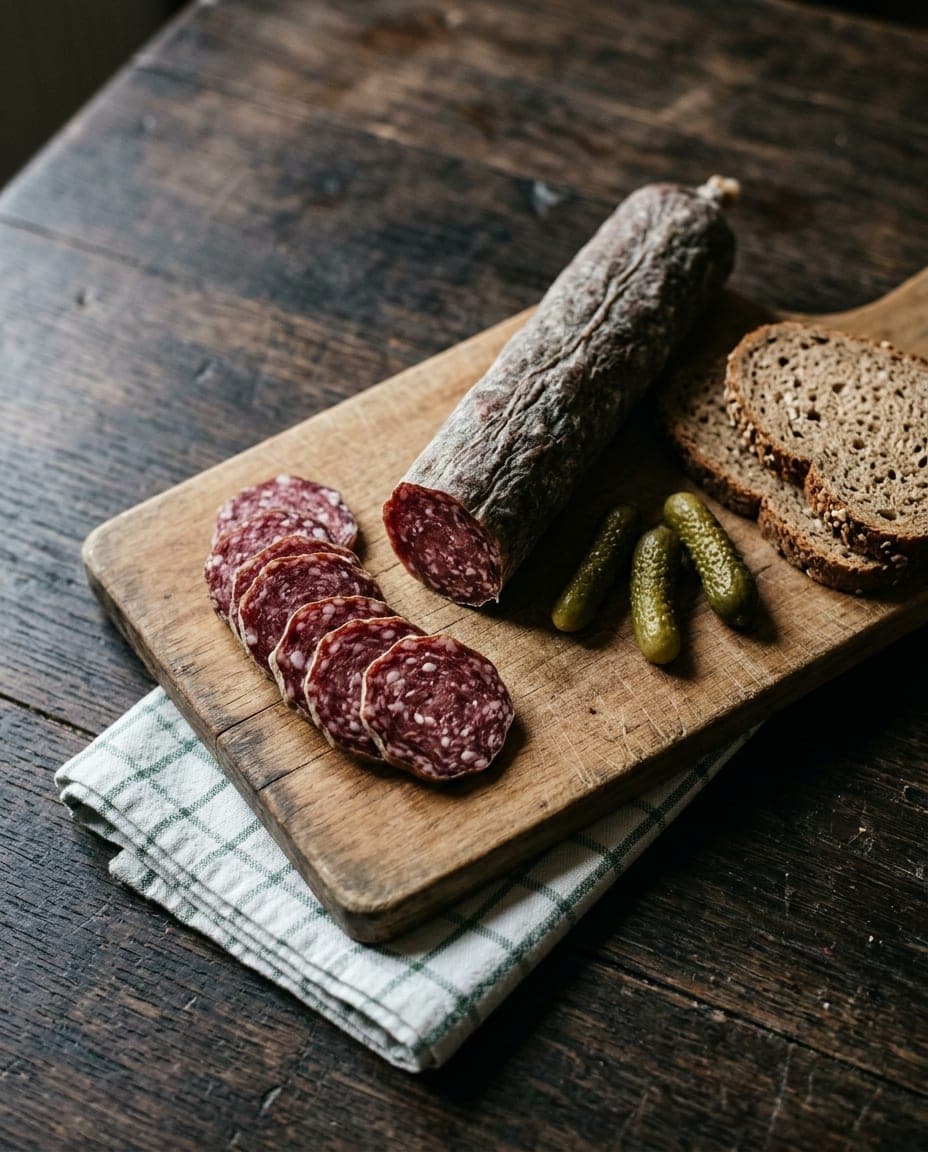
Braunschweiger Mettwurst is a soft, spreadable sausage that comes from the city of Braunschweig in Lower Saxony. It is not a cooked sausage meant to be sliced and grilled like a bratwurst. Instead, it is a raw-cured meat product made from coarsely minced pork, salted, seasoned and then cold-smoked, often over beech wood, until it turns a deep red and develops a distinct smoky flavour. The texture is so soft that the casing can be squeezed to spread the meat directly onto bread without cutting.
The name Mettwurst refers to Mett, which is minced raw pork, while Braunschweiger simply identifies the city of origin where the style was perfected. It is a regional speciality of Lower Saxony rather than a dish found everywhere in Germany. In the United States and elsewhere abroad, the word "Braunschweiger" on a menu or package refers to a smoked liver sausage, which is a completely different product. The German Braunschweiger Mettwurst contains no liver; it is pure minced pork that has been cured and smoked to a spreadable consistency.
The history of the city's speciality
The exact origin of the dish is not recorded in a single document, but its development is tied closely to the trading and butchering history of Braunschweig, once a member of the Hanseatic League. The technique of making a raw, spreadable sausage likely evolved from the need to preserve pork in an era before refrigeration.
Sausage manufacturing in Braunschweig took off in the 1830s, when the first specialised pig butchers appeared, and the canning industry of the following decades carried the city's sausages far beyond the region. By the late 19th century, sausage had become a defining feature of the city's food culture. While other regions in Germany produce various types of Mettwurst, the Braunschweig version is distinct for its intensity and texture. It remains a point of local pride, with butchers in the area keeping their own methods of curing and smoking.
What goes into it
The ingredients are simple and few, relying on the quality of the meat and the process rather than complex spices. A traditional Braunschweiger Mettwurst is made from:
- Minced raw pork, usually a mix of lean meat and fat to achieve the necessary spreadable texture.
- Salt, used in significant quantities to cure the meat and draw out moisture.
- Spices, typically including black pepper, with or without garlic, though the exact blend varies by maker.
- Nitrites or nitrates, which help preserve the deep red colour and prevent bacterial growth in the raw product.
- Wood smoke, often from beech, which imparts the characteristic aroma without cooking the meat.
The mixture is stuffed into natural casings, which are then lightly smoked at low temperatures. This cold-smoking process ensures the fat does not melt, preserving the soft, creamy consistency that defines the sausage. The result is a deep red, smoky spread that is rich but not greasy.
How it is eaten
In Braunschweig and across Lower Saxony, the sausage is rarely served as part of a hot meal. It is a staple of the cold bread meal, whether as a mid-morning snack or at the evening Abendbrot. The traditional way to eat it is to spread a thick layer of the Mettwurst onto a slice of dark rye bread (Roggenbrot) or a bread roll.
The contrast between the cold, soft meat and the chewy, slightly sour rye bread is essential to the experience. It is almost always accompanied by raw onion rings or sliced onions, which provide a sharp, crunchy counterpoint to the smoky richness of the sausage. Some versions include a little mustard on the side, though the onion alone is often considered sufficient.
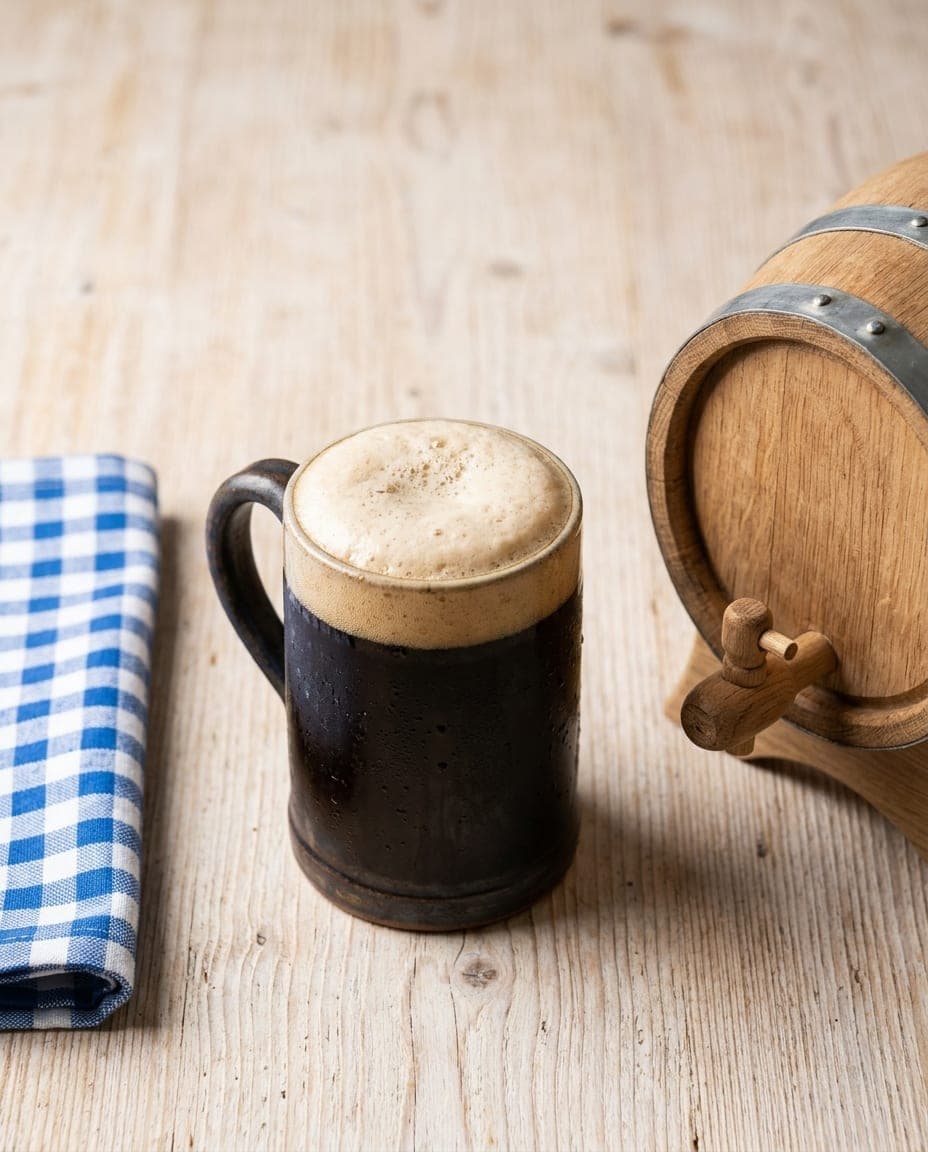
This combination makes it an ideal accompaniment to a cold German pilsner. The crisp, hoppy bitterness of the beer cuts through the fat and smoke. It is common to see locals enjoying this snack from a bakery or butcher's counter, or in a casual pub.
Curious facts
- A different product abroad. In the United States, "Braunschweiger" usually refers to a smoked liver sausage, and in Austria to a cooked sausage, whereas the German Braunschweiger Mettwurst is a raw pork sausage with no liver.
- Raw but safe. The meat is never cooked in the traditional sense. It relies on the curing process and the smoking to make it safe to eat, requiring specific temperature controls during production.
- The casing matters. While the sausage is spreadable, the natural casing remains intact until serving. Some butchers offer it ready-to-spread, while others sell it whole for customers to squeeze out themselves.
- A naming rule. According to the city, Germany's food guidelines allow the name Braunschweiger only together with Mettwurst.
- No single recipe. Nobody holds a patent on the name, and there is no single official recipe, but the method remains consistent across traditional producers.
Where to try it
The most authentic experience of Braunschweiger Mettwurst is found in the city of Braunschweig itself. Butchers sell the sausage by the piece or by weight.
Outside the city, it is sold in other parts of Lower Saxony, particularly in rural areas where traditional butchery remains strong, and it appears on the menus of regional taverns serving local specialities. It is best eaten fresh with dark rye bread and raw onions.
Where to try it
1 destination
 Camper Van Rentals
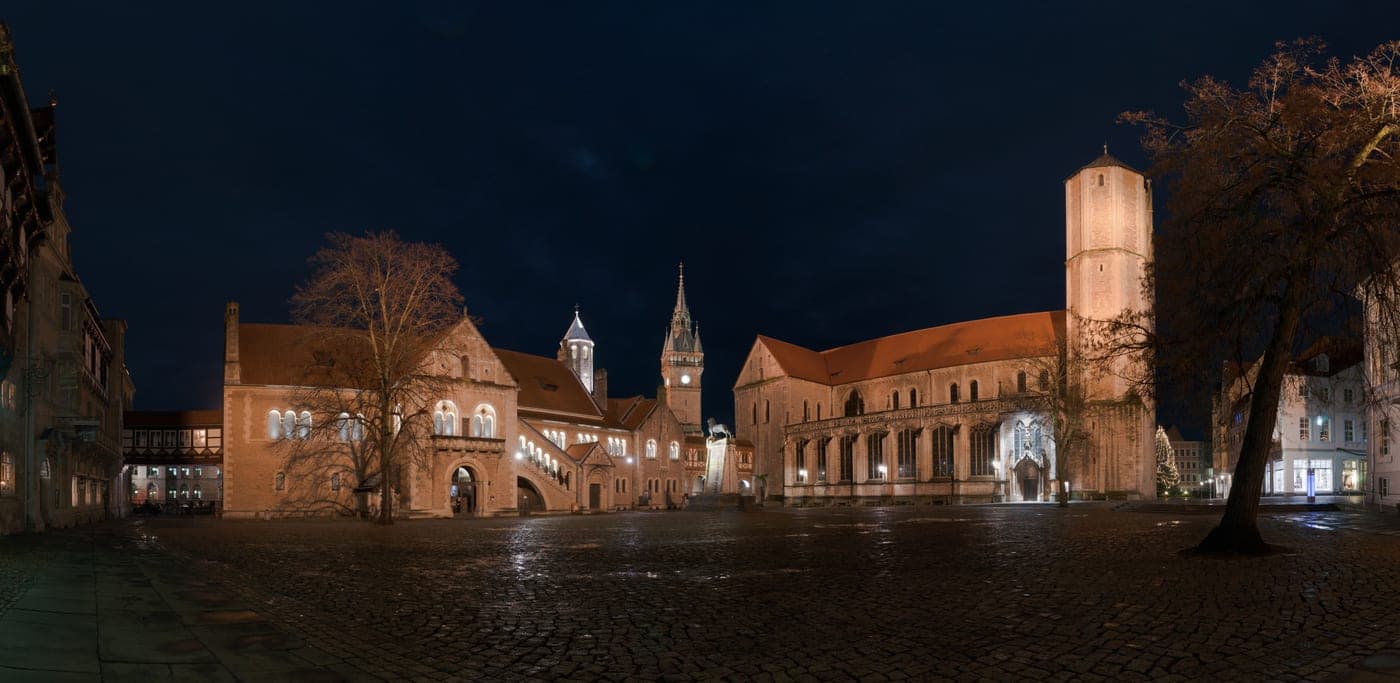
Braunschweig
Henry the Lion's city with cathedral, half-timbered houses, and tech scene
Camper Van RentalsHiking
1 region
 Cabins5 destinations
Lower Saxony
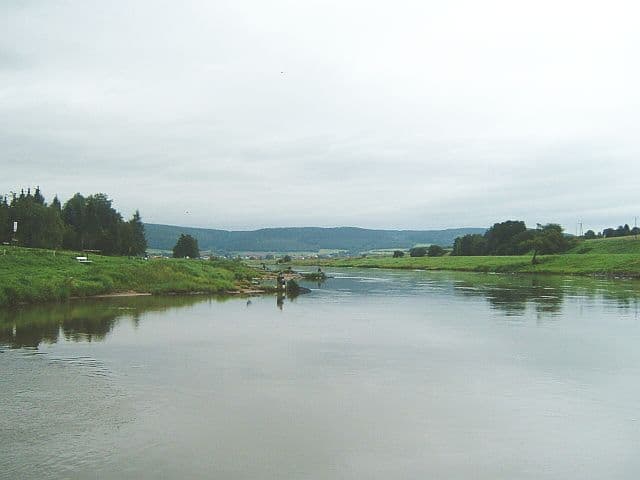
Lower Saxony is Germany's second-largest state, featuring a mix of landscapes from the North Sea coast to the Harz mountains. The historic city of Hanover offers a vibrant arts scene and beautiful gardens, while Göttingen is renowned for its university atmosphere and literary history. The coastal region features the Wadden Sea, a UNESCO World Heritage site known for its unique tidal flats and diverse wildlife. Off the beaten path, towns like Celle showcase well-preserved half-timbered houses. The region is also famous for its traditional horse breeding and local specialties like Braunschweiger sausage and East Frisian tea culture, inviting exploration beyond typical tourist routes.
CabinsCamper Van RentalsHikingCastles