Welsh
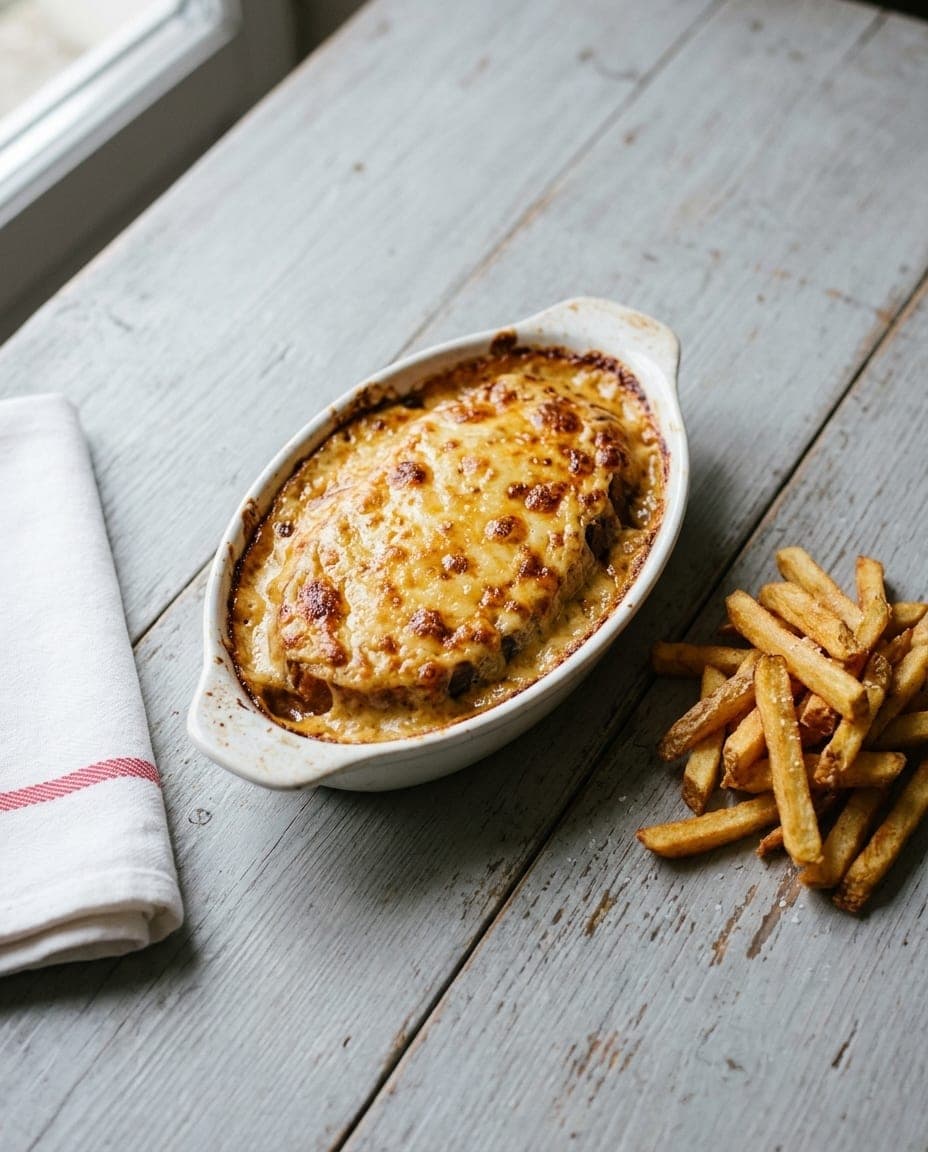
A thick slice of bread drowned in Cheddar, beer and ham, baked until bubbling
- Local name
- Welsh
- Served with
- Frites
- Best eaten at
- A Lille estaminet
- Pairs with
- Northern French beer
What it is
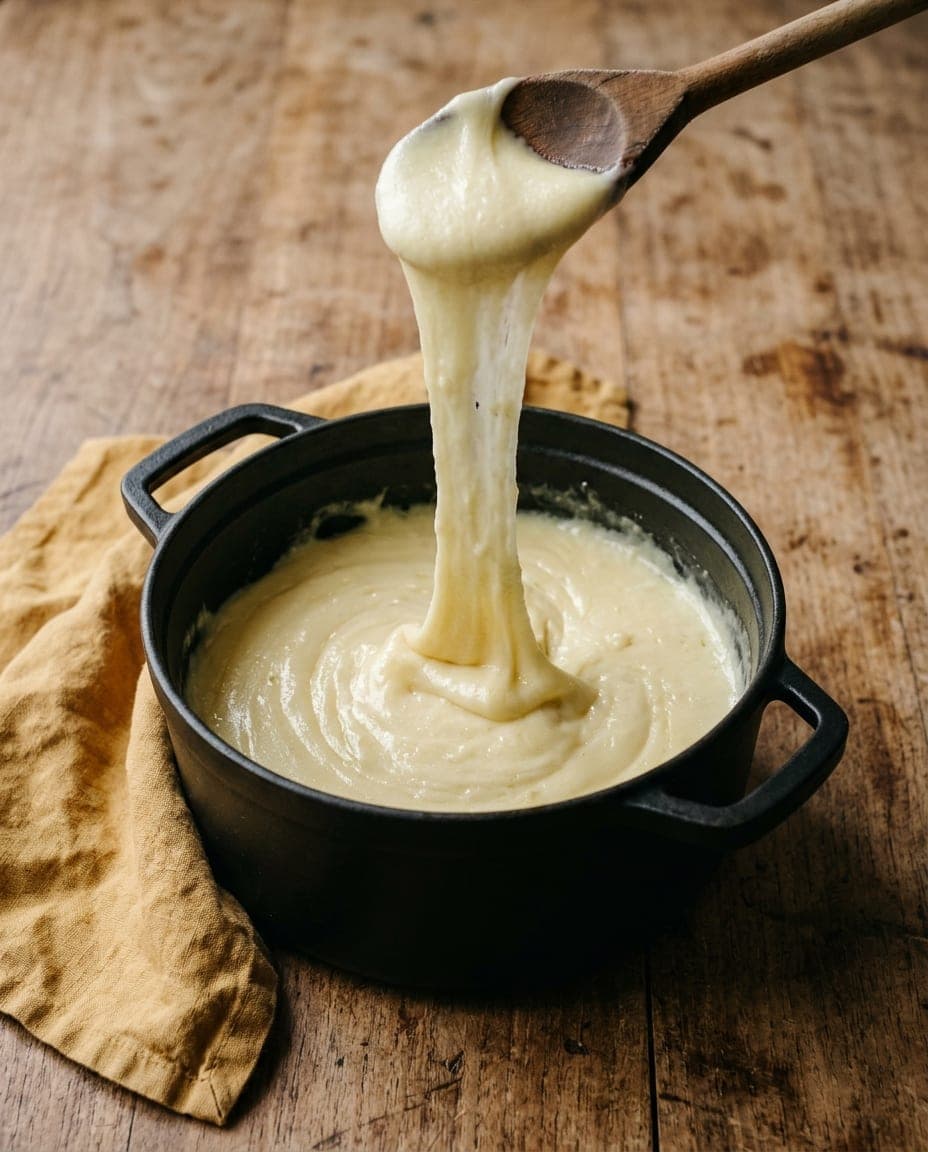
The Welsh is a dish of the Hauts-de-France region, especially Lille, the wider Nord and Pas-de-Calais, and the Côte d'Opale around Boulogne-sur-Mer and Dunkirk. Although it now appears on some menus elsewhere, including in Paris, it remains a northern speciality. The dish consists of a thick slice of bread placed in an ovenproof dish, covered with ham and a generous layer of Cheddar melted with beer and mustard, then baked or grilled until bubbling. A fried egg often sits on top, and the whole thing is served with a side of fries.
It is the northern French version of the British Welsh rarebit, but the two are not identical. The British original is essentially cheese on toast, sometimes made with ale and spices such as cayenne; the northern French variant is thicker, deep orange and far more filling. It uses Cheddar, a cheese unusual in French cooking and central to the dish's identity (older recipes used Chester). The beer is typically a local brown or blonde ale. The result is a heavy, salty, deeply savoury meal that feels more like a bake of bread and cheese than a simple toast.
The name itself is the first clue to its origins: it comes straight from "Welsh rabbit" or "Welsh rarebit", the British name for the dish, and is sometimes rendered in French as croque gallois.
Where it comes from
How the dish crossed the Channel is uncertain. One local theory credits a Welsh garrison stationed near Boulogne-sur-Mer during Henry VIII's siege of the town in 1544, but this is a tradition rather than documented history. What is clear is that the Côte d'Opale and the wider north, with their long-standing ties to Britain across the Channel, adopted the dish and made it their own.
The dish is not a national French speciality but a regional one bound up with the culture of the brasserie and the estaminet, the traditional Flemish-style tavern of the north. In these establishments, the Welsh is served in large portions, as a substantial meal rather than a snack. The use of Cheddar is a nod to its British roots.
What goes into it
There is no single official recipe, and every kitchen has its own variation, but the core components remain consistent:
- Thick bread, usually a sturdy white loaf or sandwich bread, sometimes moistened with beer, cut thick enough to hold the weight of the toppings.
- Ham, typically sliced, placed over the bread before the cheese.
- Cheddar cheese, in large quantity, which is essential for the dish's distinctive character.
- Local beer, either brown or blonde, heated with the cheese to make a rich sauce.
- Mustard, often old-style wholegrain, spread on the bread or added to the cheese for a sharp kick.
- A fried egg, often placed on top just before serving.
The dish is served with frites, which provide a textural contrast to the soft, molten cheese and bread. Some versions add bacon, béchamel or Worcestershire sauce.
How it is eaten
The Welsh is usually eaten as a main course, at lunch or in the evening, in an estaminet or brasserie. It arrives hot and bubbling in the same dish it was baked in. Diners use a knife and fork to cut through the layers of bread, ham, cheese and egg, or scoop up the sauce with the fries. The runny egg yolk mixes with the melted cheese as the dish is eaten.
A glass of northern French beer is the traditional companion, matching the maltiness of the sauce. The fries are used to mop up the remaining cheese and add a crisp contrast to the soft bread. The portion is generous enough that it needs little else.
Curious facts
- The name is English, but the dish has gone French. "Welsh" is simply short for Welsh rarebit, and the recipe has been adapted over generations to northern French tastes.
- Cheddar is the key ingredient. Unlike most French cheese dishes, which use local varieties, the Welsh relies on Cheddar, a British cheese.
- A Côte d'Opale classic. The dish is a staple of brasseries along the northern coast as well as in Lille.
- The beer matters. A local brown or blonde ale is preferred, as its maltiness balances the saltiness of the cheese and ham.
Where to try it
The best place to eat the Welsh is an estaminet or brasserie in Lille, or along the Côte d'Opale in towns such as Boulogne-sur-Mer and Dunkirk. These places serve it in generous portions, with a side of fries and a glass of local beer.
Where to try it
1 destination
 Camper Van Rentals
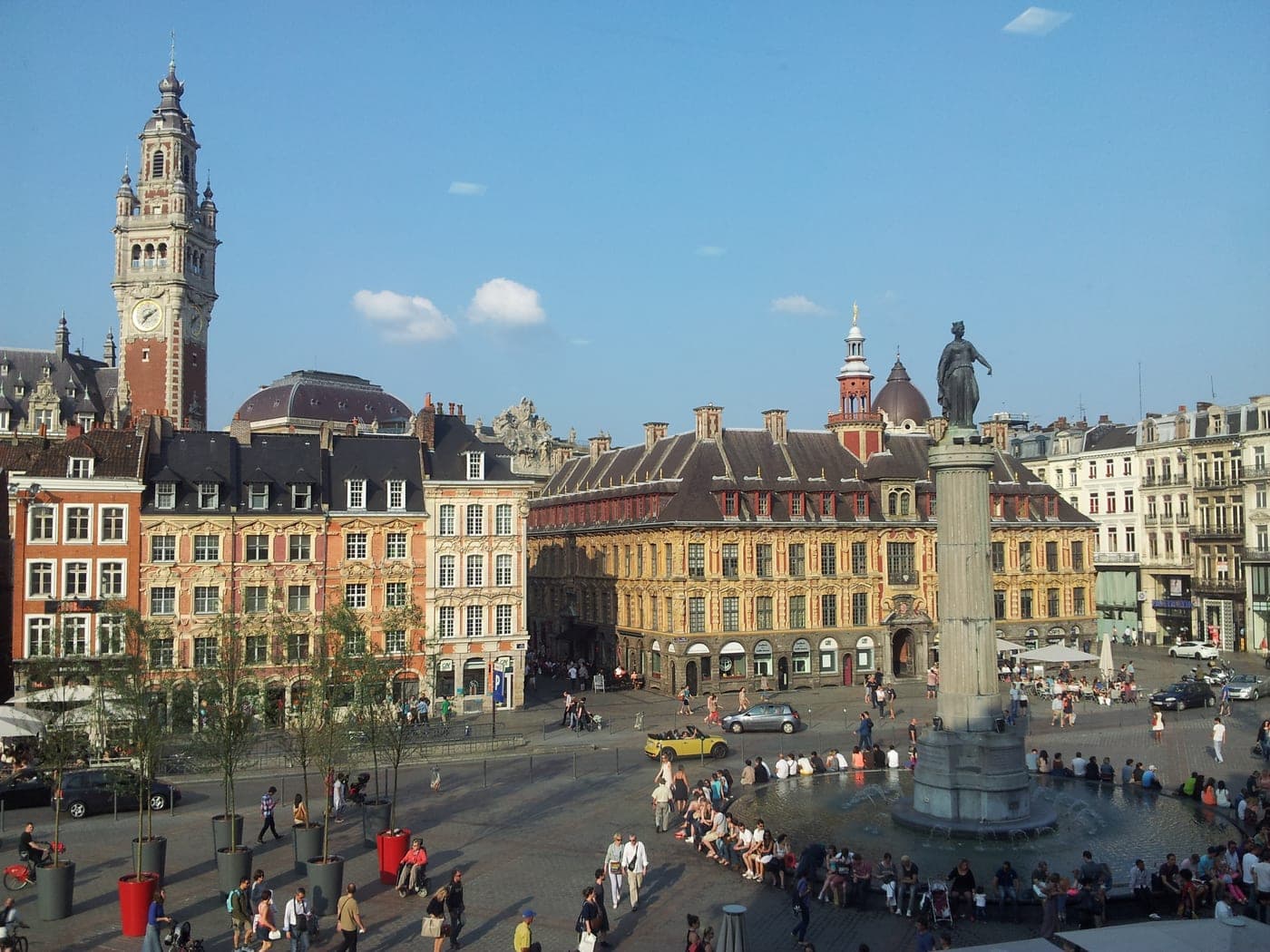
Lille
Historic city known for Flemish architecture and vibrant cultural scene.
Camper Van RentalsHiking
1 region
 Wine Tasting3 destinations
Hauts-de-France
Hauts-de-France is the northernmost region of France, known for its rich industrial heritage, unique cultural blend, and stunning coastal landscapes along the English Channel. Lille, the largest city, boasts vibrant Flemish architecture and a thriving arts scene. The region is the birthplace of French Impressionism, with museums dedicated to renowned artists like Van Gogh. The Somme Valley offers historic World War I sites, while the Opal Coast features breathtaking cliffs and charming fishing villages. Known for its local cuisine, Hauts-de-France is famous for dishes like 'potjevleesch' and 'moules-frites,' providing an authentic taste of the area. Off the beaten path, explore towns such as Arras, with its grand squares, or the serene countryside of the Avesnois Natural Park, rich in biodiversity and picturesque landscapes.
Wine TastingCamper Van RentalsHiking