Tapenade
A Provençal paste of black olives, capers and anchovies served on toast
- Local name
- Tapenade
- Served with
- Toasted bread, crudités
- Best eaten at
- A Provençal apéritif
- Pairs with
- Pastis or rosé
What it is
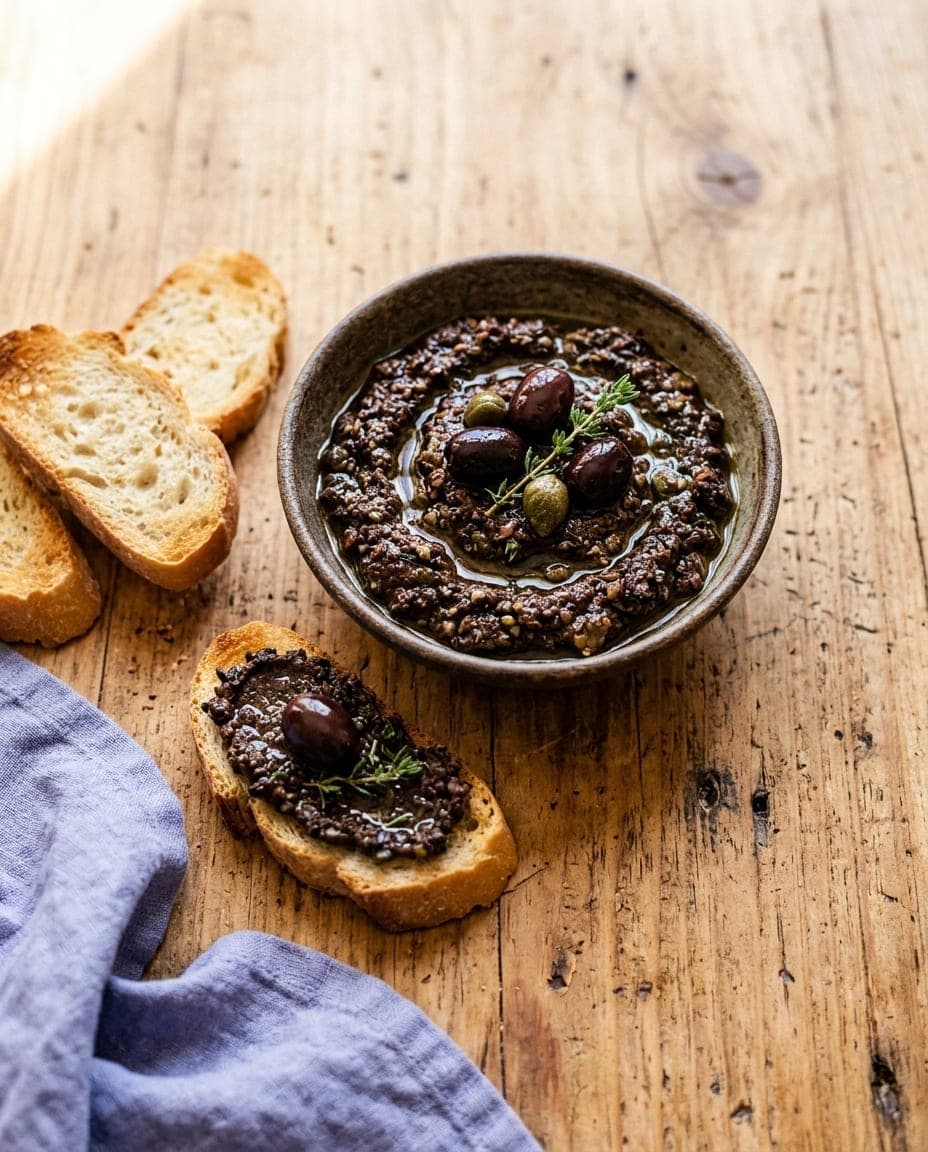
Tapenade is a thick, intensely flavoured paste from Provence in southern France, with a recipe traditionally credited to the port city of Marseille. It is not a dip for casual snacking but a concentrated condiment built on black olives, capers, anchovies and olive oil. The texture ranges from a coarse purée to a smooth spread, depending on whether it is pounded in a mortar or chopped by hand.
The name itself holds the key to understanding the dish. While the black olives form the visible bulk of the mixture, the word comes from tapeno, the Provençal term for capers. The dish is named after its most distinctive flavouring rather than its main ingredient. A true tapenade relies on the sharp, briny punch of the caper to cut the fat of the oil and the saltiness of the anchovies.
It is a dish of the Provençal apéritif tradition. Before a meal, it is spread generously onto toasted bread. It is also used to stuff hard-boiled eggs, served alongside raw vegetables like carrots and radishes, or paired with grilled fish.
How the name arrived in Marseille
The history of tapenade is tied closely to the city of Marseille. According to the Provençal cookery writers Jean-Baptiste Reboul and Charles Julliard, the recipe was created in 1880 by a chef named Meynier at the Maison Dorée restaurant in Marseille. His version used equal weights of capers and black olives, with anchovies, marinated tuna, spices, olive oil and a little cognac.
The attribution to a single chef does not mean the idea appeared out of nowhere. Olive pastes have a long history around the Mediterranean, and the Romans already made seasoned olive mixtures. What Meynier's recipe did was give the combination a name and a place on the Marseille table, from where it spread through the wider region.
The story of the name tapeno is also significant. In Provençal, a form of the Occitan language, the word for caper is quite distinct from the word for olive. By naming the dish after the caper, its creators signalled that the sharpness of the tapeno was what defined the character of the spread.
What goes into it
There is no single official recipe, and every cook in Provence has a variation they guard closely. The building blocks, however, remain consistent across traditional preparations. The base is usually black olives, pitted and pounded until they release their oil but retain some texture. A green version exists, using green olives for a slightly different, often sharper profile, but the black olive version remains the standard.
The second essential element is the tapeno, or capers. They are usually brined or salted, rinsed to remove excess salt, and then crushed into the mixture. Their role is to provide a distinct sharpness that cuts through the richness of the olives and the oil.
Anchovies form the third pillar. They are filleted and mashed into the paste, dissolving completely to add a deep savoury note. The anchovy does not taste fishy in the final product; instead, it adds a rich saltiness that binds the other flavours together.
Olive oil is the fourth component, acting as the binder and the carrier of flavour. It is added slowly while the ingredients are being pounded. Some versions include garlic for extra bite, a squeeze of lemon juice for acidity, thyme, or a splash of brandy to deepen the aroma, an echo of the cognac in the original recipe.
How it is eaten
Tapenade is primarily an apéritif dish. It is spread thickly onto slices of toasted bread, often from a rustic country loaf. The combination of the warm, crunchy toast and the cool, salty paste creates a satisfying contrast in temperature and texture.
Beyond the bread, it serves as a versatile accompaniment. It is common to see it served with a plate of raw vegetables, such as carrot sticks or cucumber slices, which act as neutral vessels for the strong flavour. In some households, hard-boiled eggs are halved and the yolks mashed with the paste before being spooned back in.
The pairing options reflect the regional habits of Provence. A glass of pastis, an anise-flavoured spirit diluted with water, is a classic companion. Alternatively, a dry rosé, for instance from the Coteaux d'Aix-en-Provence, works well, as its acidity cuts through the oil.
Where it comes from
The dish belongs firmly to Provence, and above all to Marseille and the Bouches-du-Rhône. Today it is sold in jars throughout France, but it remains most at home on Provençal tables.
The region's landscape suits the ingredients. The dry, sunny climate of Provence is ideal for olive trees and for the caper bush, which thrives on old stone walls and in dry, rocky ground. The Mediterranean has long supplied anchovies, which are traditionally preserved in salt.
Curious facts
- The name comes from the caper. Despite the dominance of black olives in the mixture, the word tapenade derives from tapeno, the Provençal term for capers.
- A Marseille creation. Provençal cookery writers credit the recipe to chef Meynier of the Maison Dorée in Marseille, in 1880.
- The original had tuna and cognac. Meynier's recipe included marinated tuna and a measure of cognac alongside the olives, capers and anchovies.
- Not a dip for quantity. The intense saltiness means it is served in small portions as an apéritif rather than a main course.
- A green variation exists. While black olives are standard, green olive tapenade offers a sharper alternative.
- Used as a stuffing. Beyond bread, the paste is used to fill hard-boiled eggs served on a platter.
Where to try it
Marseille is the natural place to taste tapenade, at apéritif bars and traditional bistros that focus on regional products, where it is often served with bread and vegetables as part of a larger spread of local delicacies.
The markets of Provence, from Marseille to Aix-en-Provence and the villages of the Alpilles, sell it alongside olives and other local products, and in the countryside it appears on almost every apéritif table, often made at home to a family recipe.
Where to try it
2 destinations
 Wine Tasting
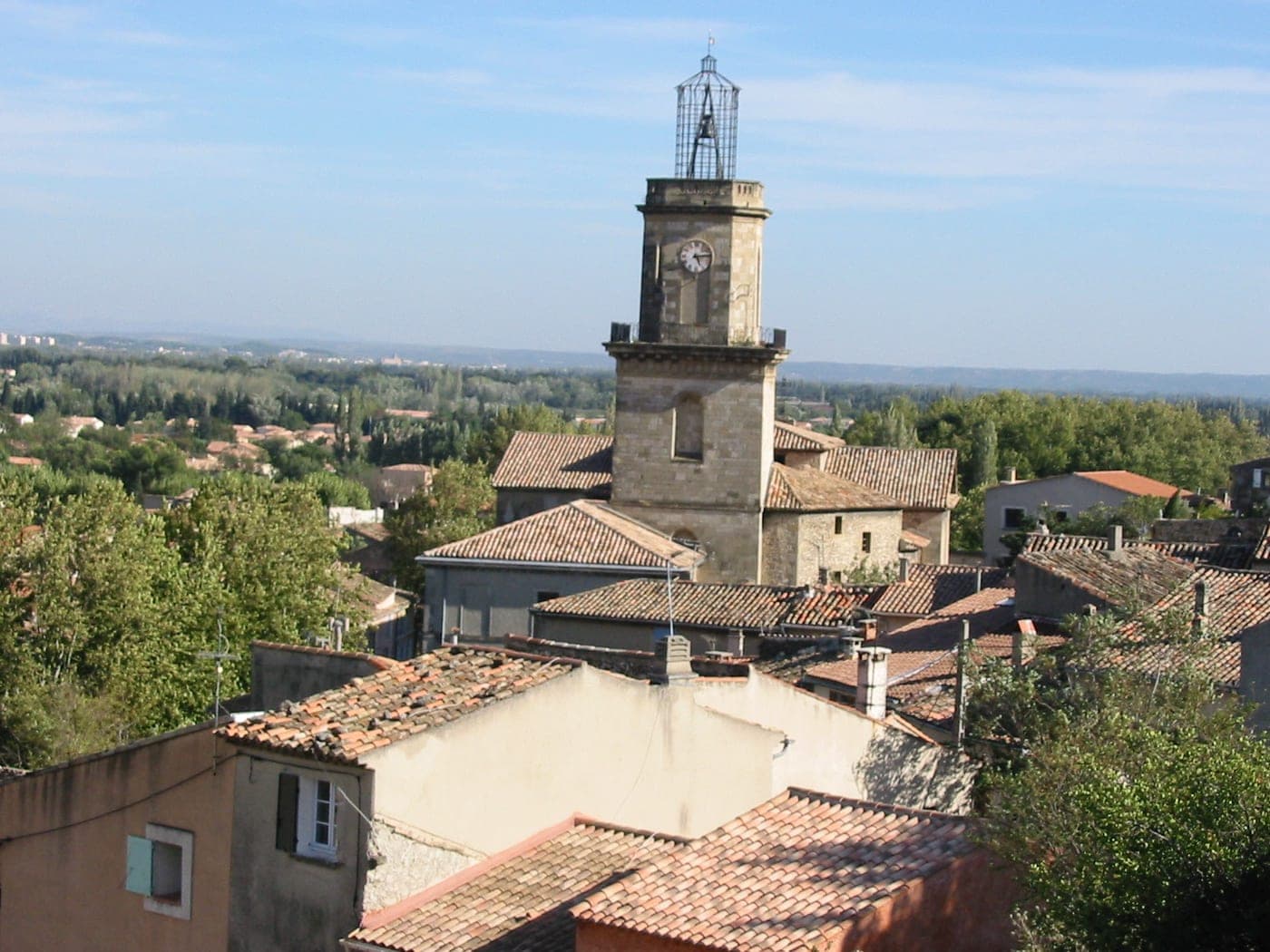
Eyguières
Alpilles village surrounded by Coteaux d'Aix-en-Provence vineyards and olive trees.
Wine TastingHiking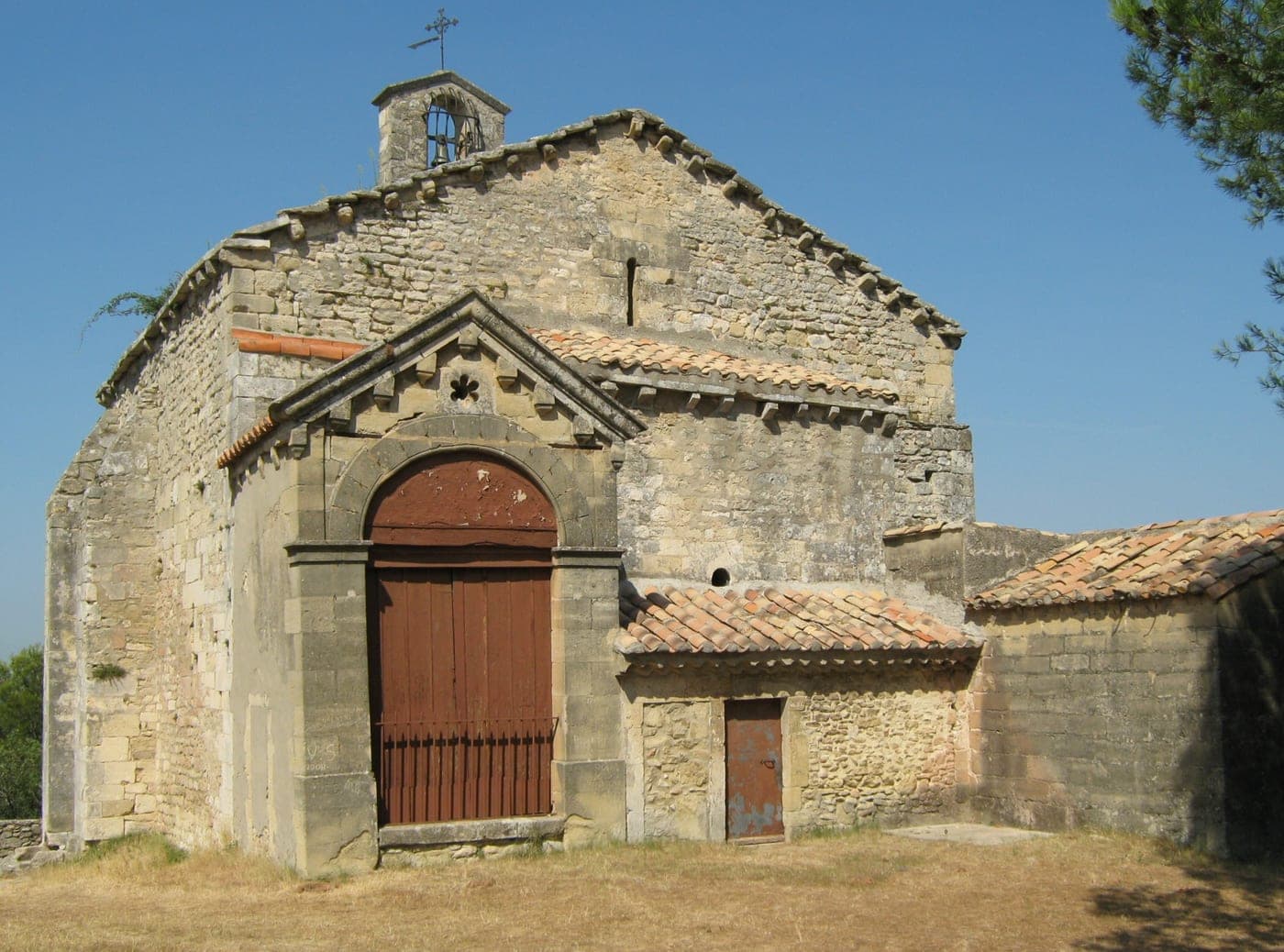 Wine Tasting
Saint-Étienne-du-Grès
Provençal village near Baux-de-Provence wine estates and olive groves.
Wine TastingHiking
1 region
 Wine Tasting44 destinations
Provence-Alpes-Côte d'Azur
This picturesque region in southeastern France is known for its diverse landscapes, from the rugged Alps to the stunning Mediterranean coastline. It is the only region with direct access to the coast, featuring historic towns like Nice and the artistic haven of Saint-Paul-de-Vence. The region is famous for its lavender fields, particularly around Valensole, and its vineyards producing renowned wines such as Bandol and Côtes de Provence. Lesser-known villages like Moustiers-Sainte-Marie are rich in pottery traditions, while the Verdon Gorge offers breathtaking hiking and kayaking opportunities. Local markets showcase seasonal produce like olives, herbs, and artisan cheeses, enhancing the immersive experience of this vibrant region.
Wine TastingHikingCamper Van RentalsLocal Cuisine