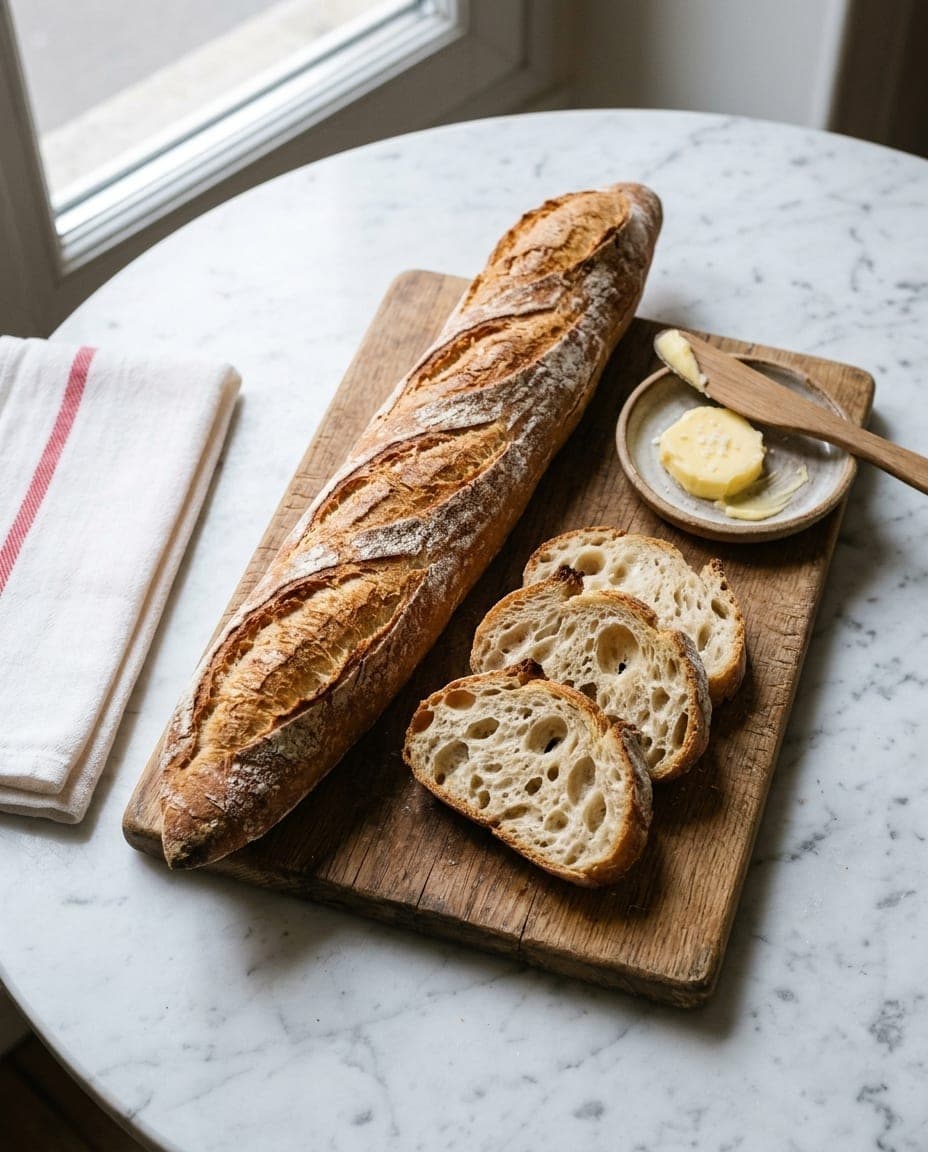
Soupe à l'oignon gratinée
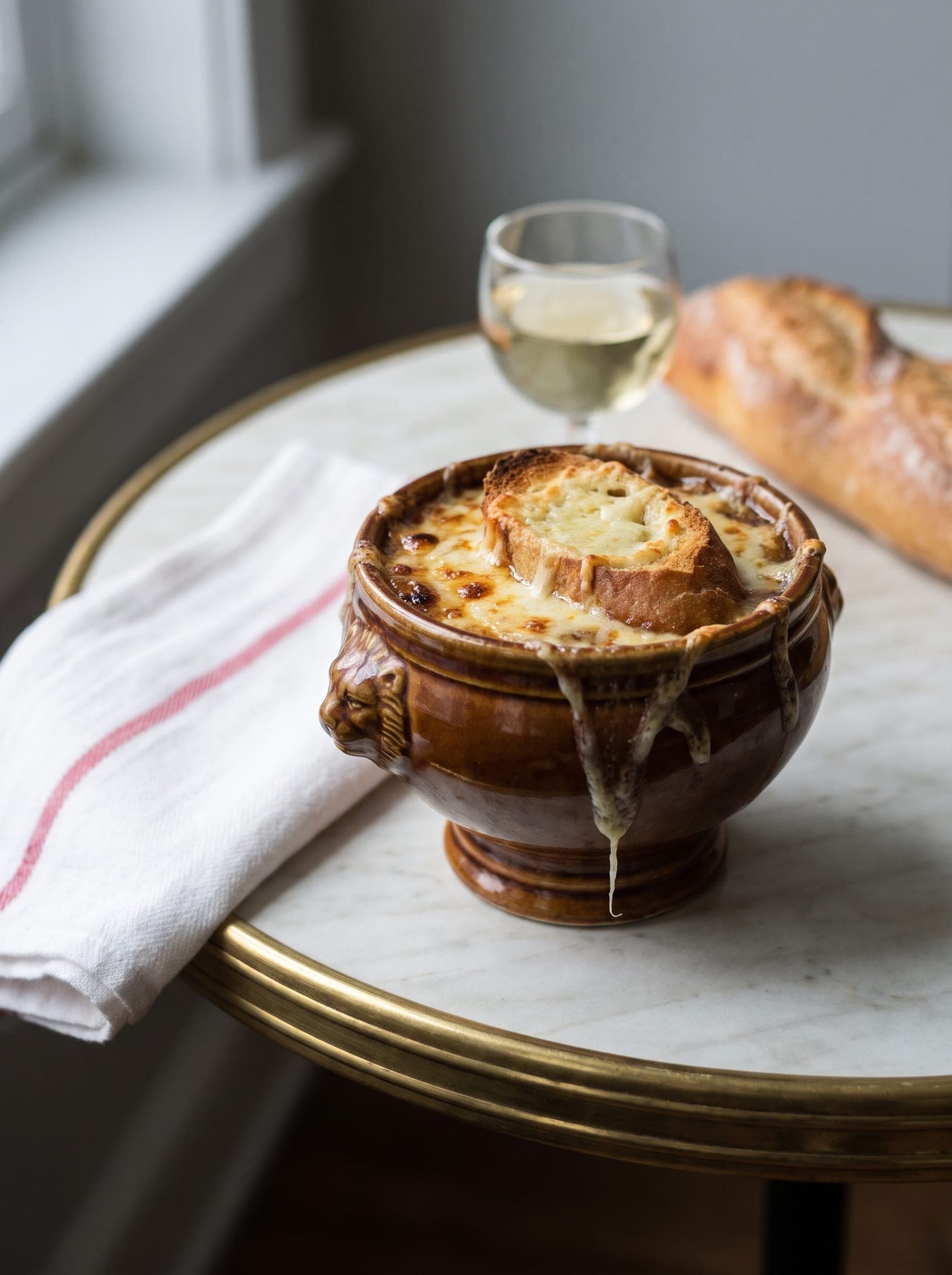
Onion soup from Les Halles topped with bread and melted Gruyère
- Local name
- Soupe à l'oignon gratinée
- Best eaten at
- A Parisian brasserie, late at night
- Pairs with
- White Burgundy or Alsace white
What it is
Soupe à l'oignon gratinée, often shortened to just soupe à l'oignon, is one of the most recognised dishes of French cooking, yet its heart lies specifically in Paris. It is not a light starter or a simple broth, but a substantial bowl of deeply flavoured onion soup finished with a slice of bread and a layer of melted cheese that has been browned under heat until it forms a golden crust. The dish relies entirely on the transformation of onions: they are sliced thin and cooked slowly in butter until they lose their sharpness and turn a deep, dark brown, providing much of the soup's colour and sweetness.
The result is a deeply savoury liquid. It is traditionally served in an ovenproof bowl, often a small crock, which allows the bread to soak up the broth while the cheese melts over the top. The texture is a study in contrasts: the soft, almost melting onions and the creamy, salty cheese against the chew of the toasted bread. While variations exist across France, the version that has become an international icon is the one found in Parisian brasseries, where it remains a staple on the menu all year round.
The story of Les Halles
The dish is inextricably linked to Les Halles, the great central market of Paris that once sat in the very heart of the city before its transfer to Rungis in 1969. For centuries, this was the place where the city bought and sold its food, a bustling quarter of noise, steam and the smell of fresh produce. It was here that soupe à l'oignon found its true home, serving as a restorative meal for the porters who hauled crates through the night and for the market workers who finished their shifts at dawn.
The market porters worked in the cold hours before sunrise. They needed something hot, filling and affordable to warm them after a long shift or to fuel them before a day of heavy lifting. The onions were cheap, the bread was often stale from the previous day, and the cheese was a small luxury that could be shared. Over time, this practical meal became a ritual for anyone coming home late at night in Paris, turning into a classic end to a Parisian evening out. The dish carries the memory of those early morning hours, when a hot bowl was the first thing many people ate before the sun had risen.
How it is made
The technique behind the soup is simple but demands patience. The onions must be sliced thinly and cooked very slowly in butter until they are deeply browned, a process that can take well over an hour and cannot be rushed without losing the essential sweetness. This caramelisation provides most of the colour of the soup; the stock is largely a vehicle for the flavour already drawn from the onions.
Once the onions have reached their dark amber hue, a liquid is added to the pan. This is usually a beef stock, though some versions use a vegetable or chicken base, and occasionally a splash of white wine is poured in to deglaze the pan. The mixture simmers for a long time to allow the flavours to meld. The soup is then ladled into individual ovenproof bowls, topped with a slice of stale baguette that has been toasted until it is firm, and covered with grated Gruyère or Comté cheese. Finally, the bowls are placed under a heat source, such as a grill or a salamander, until the cheese melts and forms a browned crust. The bread softens into the broth, creating a unified texture where the three elements—the onions, the bread and the cheese—become one.
How to eat it
Soupe à l'oignon is often eaten as a meal in itself rather than a starter, particularly in the evening or late at night when the city is quieter. It is often served in a traditional ovenproof bowl that retains heat well, allowing the diner to break the crust of cheese and mix it into the broth before taking the first spoonful. The bread should be soft enough to absorb the liquid but sturdy enough to hold its shape until the last bite.
The dish pairs naturally with a glass of white wine from Burgundy or Alsace, which cuts the fat of the butter and cheese. A cold beer is also a common companion in a brasserie setting. It is not a dish for rushing, and it is a comforting choice on a cold Parisian night.
Curious facts
- The colour comes from the onions. Unlike many soups where stock provides the base hue, the deep amber of this dish comes mainly from the slow caramelisation of the onions, which turn dark brown over long cooking.
- A dawn meal for workers. The soup is remembered as a staple for the porters of Les Halles market who worked through the night and needed a hot, filling meal before dawn.
- Stale bread is preferred. Traditional recipes call for day-old or toasted baguette, as fresh bread would turn to mush in the broth before the cheese had time to melt.
- A Parisian ritual. While onion soup exists in many forms across Europe, the version topped with melted cheese and a toasted crust is specifically associated with the brasseries of Paris.
- The bowl stays hot. The ovenproof crock is not just aesthetic; it goes under the grill to brown the cheese and keeps the soup warm as the diner works through the crust.
Where to try it
The best place to eat soupe à l'oignon is in a classic Parisian brasserie, particularly those that have kept their original menu and atmosphere. While the dish can be found in restaurants throughout France, its spirit is most alive in the capital, where it remains a favourite for anyone seeking a warm finish to their evening.
The brasseries around the former site of Les Halles, now the Forum des Halles, are natural choices, though many other neighbourhood brasseries across Paris serve excellent versions. A late-night visit to a local spot is the most atmospheric way to experience the dish.
Where to try it
1 destination
 Camper Van Rentals
Paris
Roadsurfer camper van rental station at Paris Orly & CDG airports.
Camper Van Rentals
1 region
- Camper Van Rentals1 destination
Île-de-France
Île-de-France is the smallest region in France, yet it is the most populous, primarily known for Paris, its capital. Beyond the iconic landmarks of the city, this region offers hidden gems such as the medieval town of Provins, a UNESCO World Heritage site, where well-preserved fortifications tell tales of its rich history. The Vexin Français Regional Natural Park showcases picturesque landscapes and charming villages like La Roche-Guyon. Unique culinary experiences abound, with local specialties like Brie cheese and wines from the Île-de-France vineyards. The region also hosts lesser-known châteaux, such as Château de Malmaison, once home to Joséphine Bonaparte. Travelers can explore art in places like Giverny, where Monet's gardens inspire creativity. Each corner of Île-de-France presents an opportunity to dive into local culture and history, making it a region worth exploring at a leisurely pace.
Camper Van Rentals