Rillettes du Mans
Shredded pork slow-cooked in fat from Le Mans, served on toast with cornichons
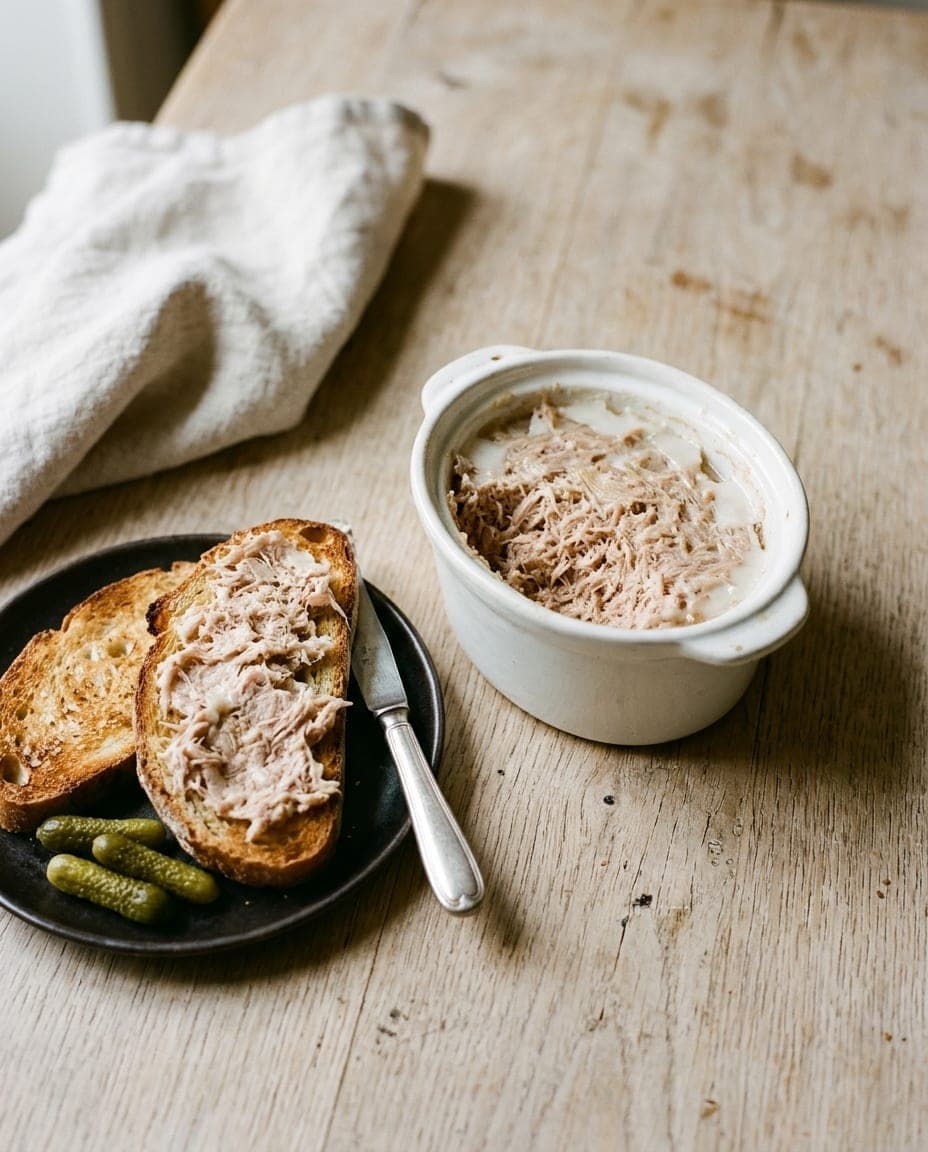
- Local name
- Rillettes du Mans
- Served with
- Toasted bread, cornichons
- Best eaten at
- A Le Mans market or bistro
- Pairs with
- Jasnières or Loire Chenin
What it is
Rillettes du Mans are a specific variety of potted meat from the city of Le Mans and the surrounding Sarthe department in the Pays de la Loire region. Compared with the well-browned rillettes of Tours, the Le Mans style is generally paler, with a more rustic texture and larger pieces of meat. The pork is cooked gently in fat until it falls apart into visible fibres and chunks, resulting in a soft, moist texture that spreads easily with a knife.
This dish is not merely a recipe but a regional identity. For generations, the people of the Sarthe have treated the preparation of rillettes as a craft, distinguishing their product from the darker versions produced in nearby Tours.
The result is a spread that is neither a pâté nor a purée, but uneven and full of shreds of meat when cut. It is deeply savoury, with an aroma close to cold roast pork. Its colour is the natural colour of the cooked meat, from grey-pink to blond or light caramel, with no colourings added.
The history of Le Mans rillettes
The origins of the dish are rooted in the farmhouse pig-killing of the Sarthe countryside. By the 18th century, households were cooking the trimmings left over after the main cuts had been prepared, preserving them through the winter months without access to refrigeration.
Cooking the pork slowly in its own fat offered a solution that worked well for both preservation and flavour. The fat acts as a seal, keeping air out and preventing spoilage, while the slow cooking breaks down the connective tissue without burning the meat. Over time, this method of preservation evolved into a culinary tradition that the city took pride in.
Commercial production began in the early 19th century and grew in the late 1800s, centred on the small town of Connerré, between Le Mans and La Ferté-Bernard. Producers formed an association in 1937, and a trade code of practice drawn up in 1969 defined the product and required slow cooking. Meanwhile, the Tours style, cooked until well browned, developed its own reputation, and the two cities are often cited as the great rivals in the history of the dish.
What goes into it
The ingredients for authentic Le Mans rillettes are simple, yet the execution requires patience and attention to detail. Three components make up the recipe.
- Pork: Only fresh pork is used. Noble cuts such as ham, shoulder and loin must make up at least 60 per cent of the meat, with ham alone at least a quarter.
- Fat: A layer of pork fat covers the meat during the long cooking process. This fat renders out and becomes the preserving medium for the dish.
- Salt and pepper: These are the only ingredients allowed besides the pork, added to enhance its natural flavour without masking it.
The slow cooking allows the fibres to separate into strands that are visible when the jar is opened. The texture should be soft enough to spread easily but firm enough to hold its shape on a slice of bread. No colourings or other additives are allowed, meaning the dish relies entirely on the quality of the pork and the skill of the cook.
How it is eaten
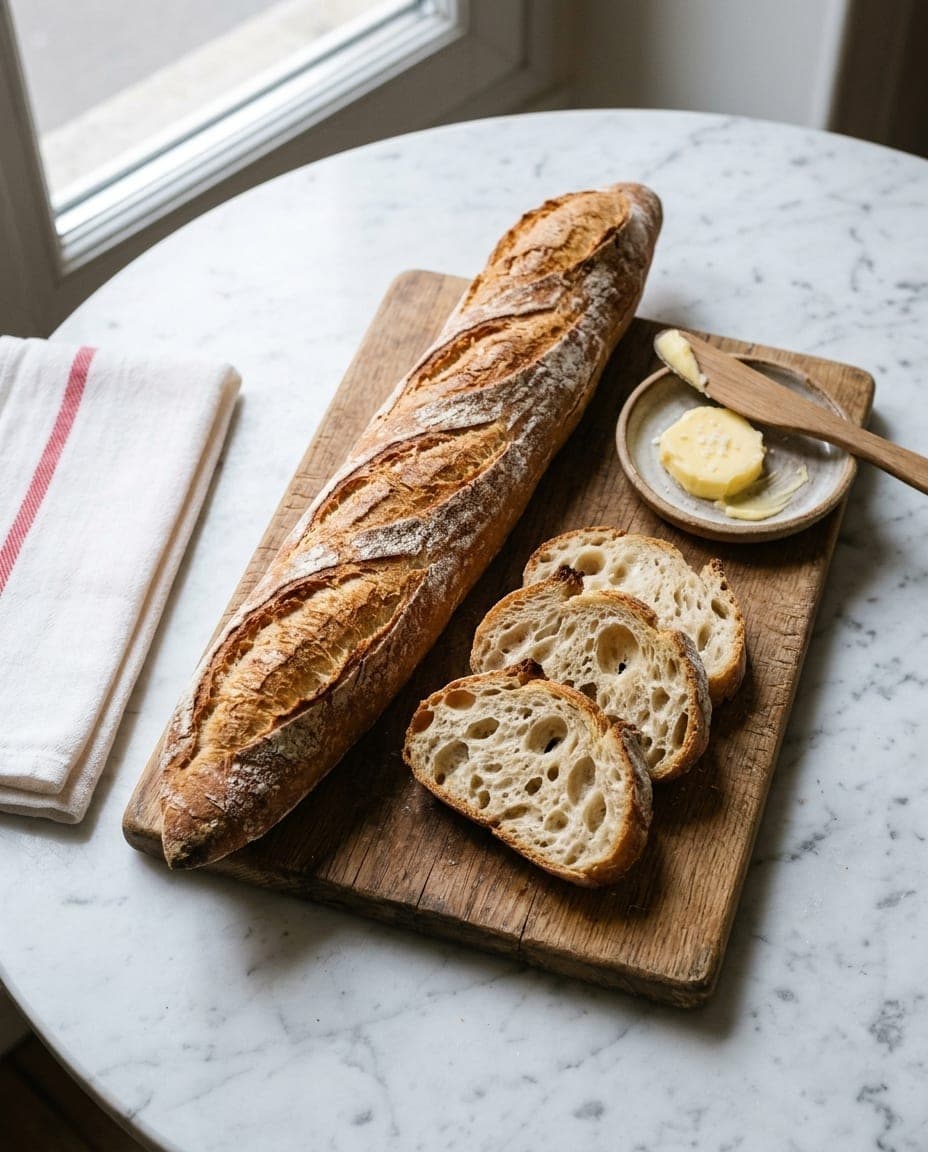
Rillettes du Mans are traditionally served as a starter or a light lunch item, often accompanied by toasted bread and cornichons. The bread is usually crusty, such as a baguette or a country loaf, toasted until golden to provide a sturdy base for the soft spread. The contrast between the warm, crisp toast and the cool, smooth rillettes is a key part of the experience.
Cornichons, small sharp pickled gherkins, are the classic partner. Their acidity cuts the richness of the pork, cleansing the palate with each bite. This combination creates a balanced taste where the savoury meat and the tangy pickle complement rather than compete with one another.
A glass of white wine from the Loire Valley is the standard companion. A dry Jasnières or a Chenin Blanc from the region pairs particularly well, as their crisp acidity mirrors that of the cornichons and lifts the heavy notes of the pork. The dish is often enjoyed at a Le Mans market stall or in a local bistro, where the atmosphere encourages a leisurely pace. It is also a popular choice for a picnic, as the fat layer preserves the meat well for short periods without refrigeration.
Curious facts
- Paler than Tours. Le Mans rillettes are usually lighter in colour than the deeply browned rillettes of Tours, ranging from grey-pink to blond.
- Only salt and pepper. The traditional recipe uses no seasonings other than salt and pepper.
- The fat seal. Once cooked, the rillettes are packed into jars or crocks and covered with a thick layer of fat, which acts as a natural preservative allowing them to keep for weeks unopened.
- The texture test. Le Mans rillettes should show visible fibres and pieces of meat rather than the smooth paste of a pâté.
- A regional rivalry. The city of Tours produces its own version of rillettes, darker and more caramelised, and the two styles are often compared.
Where to try it
The best place to experience authentic Rillettes du Mans is in Le Mans itself, particularly at its markets or in a traditional bistro in the old town. Local producers often sell their wares directly from jars, allowing visitors to see the long strands of meat and the layer of fat that seals them.
Outside the city, excellent versions can be found across the Sarthe, including Connerré, the historic centre of rillettes production. Country bistros serve them with fresh bread and regional wines, and the dish is available year-round.
Where to try it
1 region
 Camper Van Rentals1 destination
Pays de la Loire
This region is known for its diverse landscapes, from the coastal shores of the Atlantic to the lush vineyards of the Loire Valley. Nantes, the largest city, is famous for its historical sites, including the Château des Ducs de Bretagne, while Angers boasts a rich tapestry of medieval architecture. The region is also recognized for its unique wines, such as Anjou and Muscadet, and offers various local markets showcasing artisanal products. The coastal town of Les Sables-d'Olonne is a hub for maritime activities, while the picturesque village of Clisson reflects Italian influence in its architecture. Notably, this region is the only one in France with both a coastline and extensive vineyards, making it a distinctive area to explore slowly.
Camper Van RentalsHikingLocal Cuisine