Quiche lorraine
Savoury custard tart of smoked bacon and cream from Lorraine
- Local name
- Quiche lorraine
- Served with
- Green salad
- Best eaten at
- A Nancy or Metz bistro
- Pairs with
- Alsace Riesling
What it is
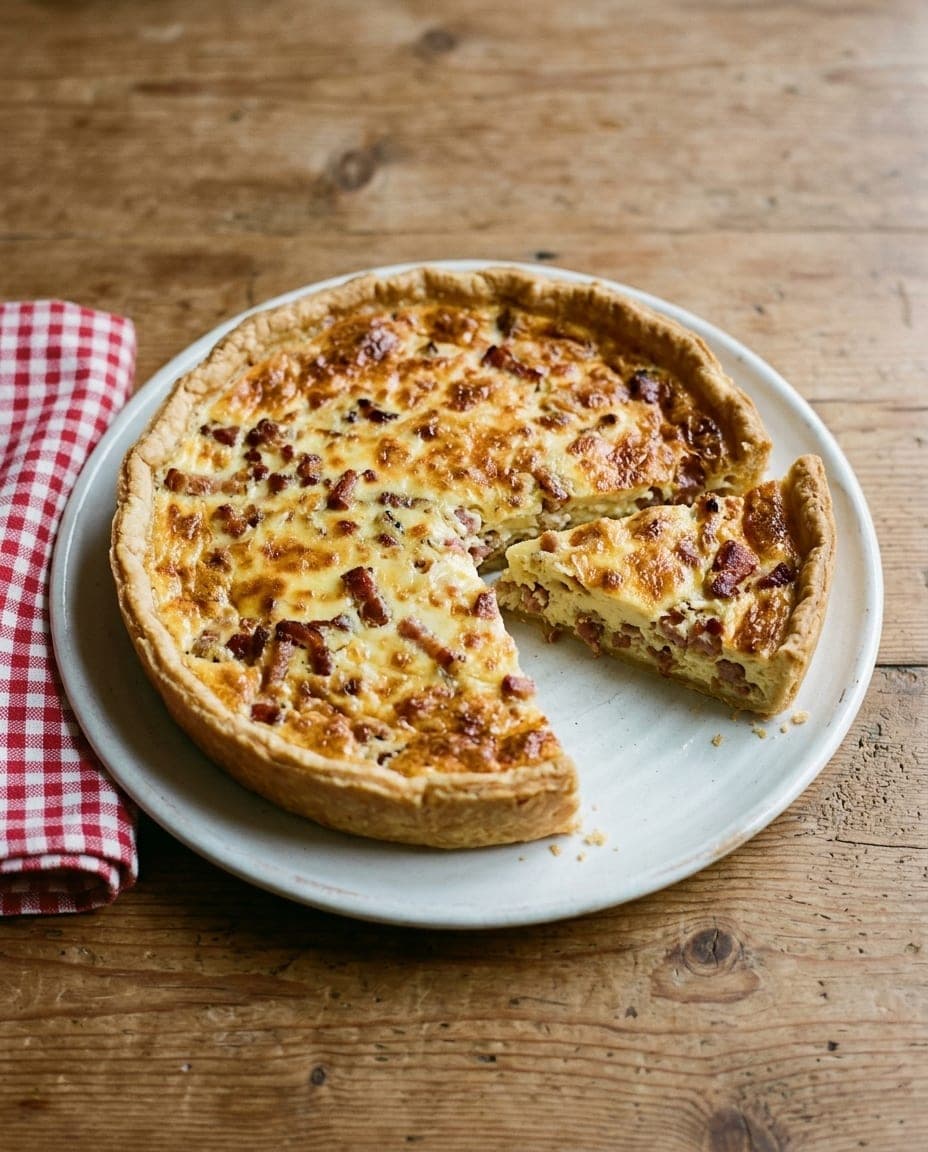
Quiche lorraine is an open tart from Lorraine, in today's Grand Est region of north-east France. It consists of a pastry case, now usually shortcrust (pâte brisée), filled with a custard of beaten eggs and cream and studded with strips of smoked pork belly called lardons. The filling is baked until it is just set, giving a texture that remains soft and slightly wobbly rather than firm or rubbery.
The dish is often misunderstood outside its home region. In many international kitchens, cheese, typically Gruyère, has become standard. However, the traditional version from Lorraine contains no cheese at all, and cheese is generally thought to have crept in once the dish became popular in Paris and beyond; a version with cheese is sometimes called quiche vosgienne. Onions do not belong in the Lorraine recipe either.
It is a dish that balances simplicity with richness. The pastry provides a buttery base, the eggs and cream offer a velvety body, and the smoked pork adds a deep, salty savouriness. It is substantial enough to serve as a light lunch or a starter before a larger dinner.
The Germanic roots of the name
The word quiche is usually traced to the Lorraine Franconian dialect, a Germanic language related to German Kuchen, meaning cake. The word is recorded in Lorraine in 1605, and in standard French only from the early 19th century. This linguistic origin places the dish within the history of a region where French and German influences have long intertwined; parts of Lorraine changed hands between France and Germany more than once.
The Kuchen tradition covers open tarts with all kinds of fillings, sweet and savoury. The specific combination of egg custard and smoked pork became the signature of Lorraine, developing its own identity through the use of lardons.
This Germanic heritage does not make the dish foreign to France; rather, it shows how regional cuisines absorb local history. The quiche remains a staple in households and cafés across Lorraine.
The essential components
The traditional version relies on three elements: the pastry, the filling and the pork.
- Pastry: The earliest quiches were made on a thin base of bread dough. Today, shortcrust pastry is standard: a savoury, buttery dough rolled out to form a case that holds the filling without becoming soggy.
- The migaine: This is the local term for the filling mixture of fresh eggs and thick cream, often seasoned with pepper and nutmeg. The ratio of egg to cream varies by cook, but the custard should set gently and keep a soft, creamy texture.
- Smoked pork belly: The defining ingredient is the lardons, cut into small batons and scattered through the filling. Their smoky flavour runs through the whole dish and contrasts with the richness of the cream and eggs.
Cheese is absent from this list, and so are onions and other vegetables. The focus remains on the egg, cream and smoked pork combination.
How it is eaten
Quiche lorraine is typically served warm, either as a starter or as a light main course, though it is also eaten at room temperature or cold. It is baked in a round tin and cut into wedges for serving. The texture should be soft enough to yield easily to a knife but firm enough to hold its shape on the plate.
It is almost always accompanied by a green salad. The salad, dressed with a sharp vinaigrette, provides acidity and crunch to balance the richness of the custard and the saltiness of the pork.
In bistros in Nancy or Metz, it might appear as part of a plat du jour or as an item available throughout the day.
A glass of Alsace Riesling is a popular pairing; its dry, aromatic notes complement the smoky pork and the creamy filling. A local Lorraine wine or a beer works just as well.
The story of the migaine
The name migaine refers specifically to the egg and cream mixture before it is baked, distinguishing it from other custards or creams used in baking.
Early references to quiche go back to the late 16th century: a quiche-like dish is recorded at a meal for Charles III, Duke of Lorraine, in 1586. The oldest Lorraine versions, sometimes linked to a preparation called féouse, were simple tarts of dough, migaine and butter, without meat; smoked bacon came later.
The story of the dish is one of practicality. In villages, tarts were traditionally baked in the bread oven, using spare bread dough and the remaining heat once the loaves were done. Eggs and cream came from the farm, and smoked pork could be stored for long periods. Together, they formed a meal that was quick to prepare and satisfying.
As the dish spread beyond the households of Lorraine, quiche lorraine became a standard offering in cafés and bistros, and eventually a classic across France and abroad.
Curious facts
- No cheese in the original. The most common misconception is that quiche lorraine contains cheese; the traditional Lorraine version does not.
- The name is Germanic. The word quiche is usually linked to the Lorraine dialect form of Kuchen, reflecting the region's ties to German-speaking areas.
- Bread dough first. The earliest quiches were baked on bread dough rather than shortcrust pastry.
- Served with salad. It is almost always accompanied by a green salad dressed in vinaigrette.
- A ducal mention. A quiche-like dish was served to Duke Charles III of Lorraine in 1586.
Where to try it
The most authentic experience can be found in a bistro or bakery in Nancy or Metz, where the dish is often still made without cheese, as part of a daily menu or sold by the slice.
A bistro that serves the dish with a green salad and a glass of white wine is likely to be following the traditional format. Small towns and villages across Lorraine also have bakeries and cafés selling local tarts, and the dish is available year-round.
Where to try it
1 region
 Wine Tasting19 destinations
Grand Est
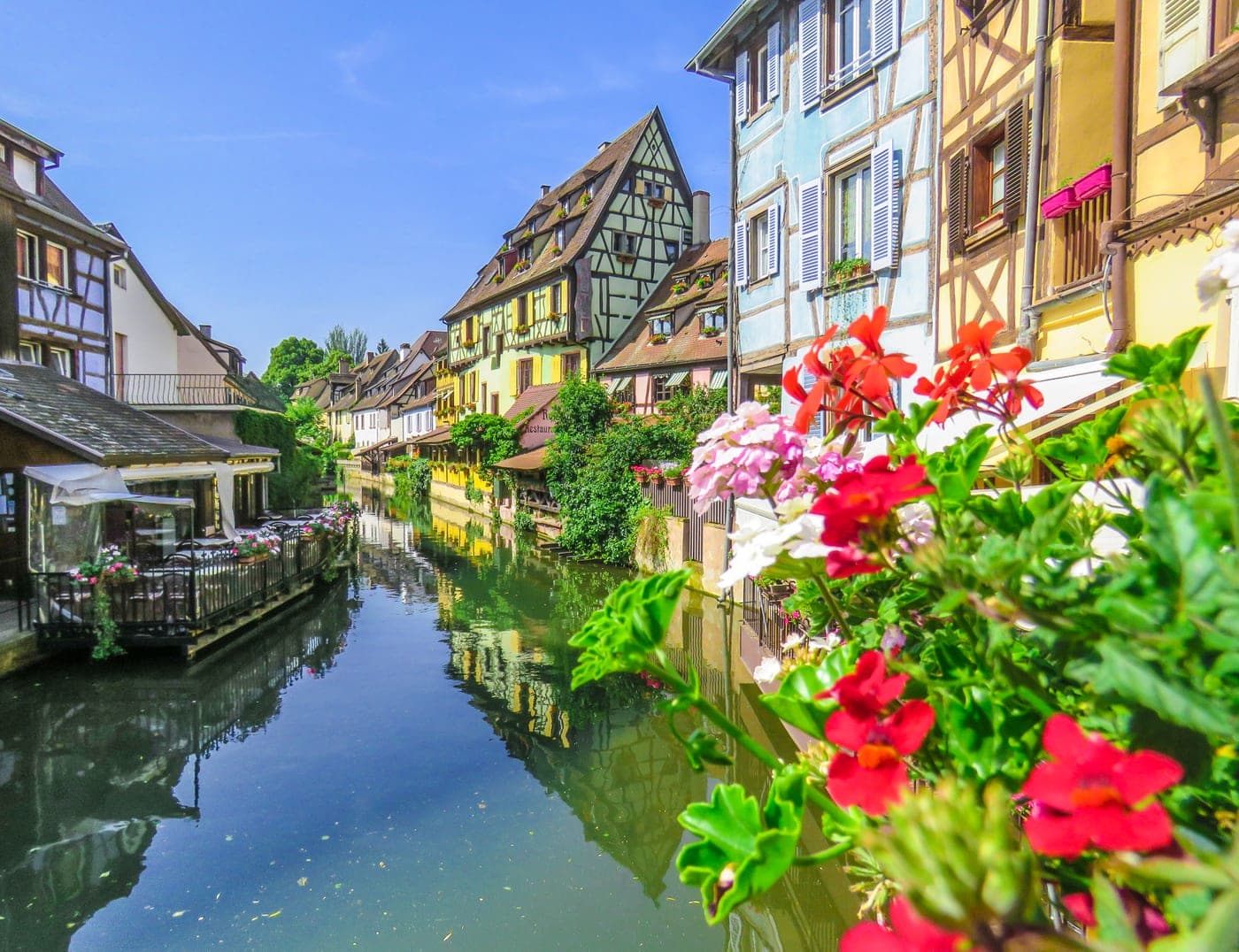
Nestled in northeastern France, this region is the second largest, blending rich history with diverse landscapes. It boasts Strasbourg, known for its Gothic cathedral and unique blend of French and German cultures. The vineyards of Alsace produce exquisite white wines, particularly Riesling, while the Vosges Mountains offer scenic hiking trails. Visitors can explore the historic town of Colmar, famous for its well-preserved medieval architecture. The region is dotted with charming villages like Riquewihr, known for its half-timbered houses. Grand Est is also home to the Champagne region, celebrated for its sparkling wines. Festivals throughout the year highlight local traditions, making it a vibrant area to experience local culture.
Wine TastingHikingLocal CuisineCamper Van Rentals