Poule au pot
A whole hen poached with vegetables and served in two courses, from Béarn
- Local name
- Poule au pot
- Served with
- Broth, vegetables, sauce gribiche
- Best eaten at
- A Béarn family Sunday lunch
- Pairs with
- Jurançon sec or light red
What it is
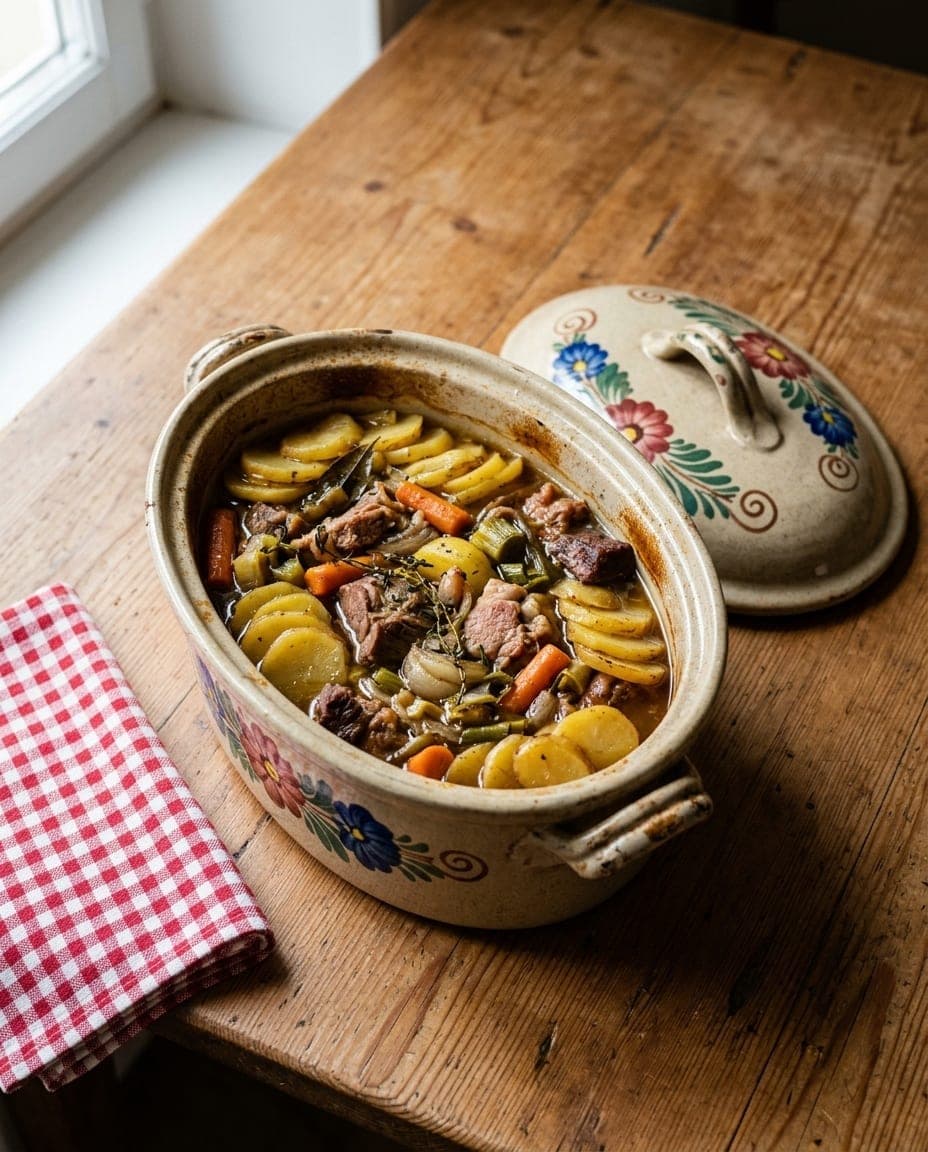
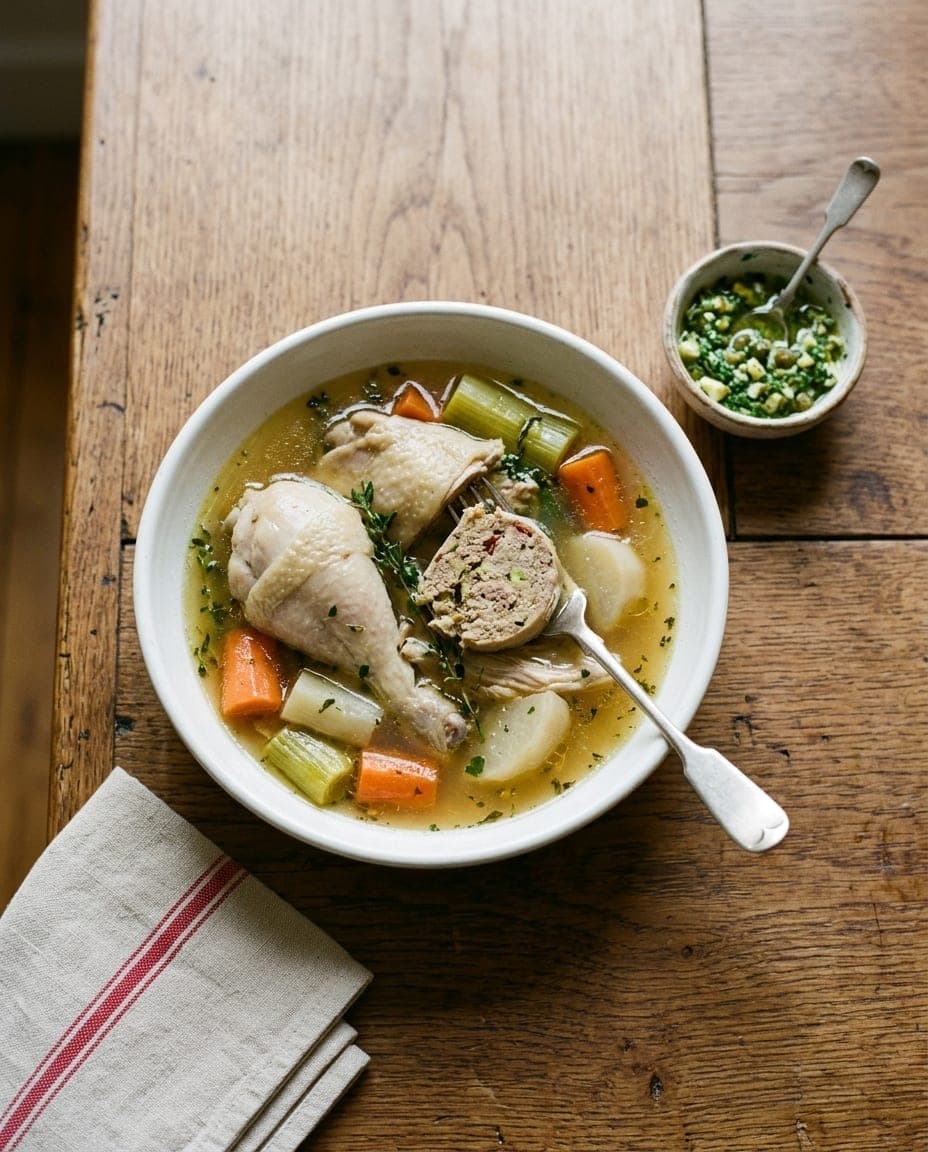
Poule au pot is a whole hen poached gently with root vegetables, served in two distinct stages. First comes the clear, golden broth, often with vermicelli. Then follows the bird itself, cut into pieces alongside the cooked vegetables, usually with a sharp sauce such as gribiche or a vinaigrette. The dish is cooked across France, but its spiritual home is Béarn in the south-west, in today's Nouvelle-Aquitaine.
The Béarnaise version is defined by the farce, a stuffing placed inside the bird before cooking. This mixture typically contains bread soaked in milk or broth, chopped ham, garlic, herbs and the bird's own liver, giving the meat a deeper savour than a simple poaching would provide. The result is a meal that feels substantial yet delicate, where the broth acts as a first course and the meat as the main event.
The king of Béarn and his promise
The dish is bound to Henri IV, the King of Navarre who became King of France in 1589. Born in Pau, the capital of Béarn, he is remembered as "le bon roi Henri", a king who wanted his people well fed. A famous saying is attributed to him: that there should be no peasant in his kingdom too poor to have a chicken in his pot on Sunday.
Whether he actually said it is uncertain. The phrase is first recorded by Hardouin de Péréfixe, tutor to the young Louis XIV, in his Histoire du roy Henry le Grand of 1661, half a century after the king's death, in a book written to present an exemplary monarch. The image of the king caring for his subjects resonated deeply with French culture, and the "chicken in the pot" became a symbol of royal benevolence. Whatever its truth, the legend is so entrenched that it serves as the dish's primary introduction today, and it ties the recipe firmly to Pau and Béarn.
In the south-west, a whole hen stuffed with ham and herbs was traditionally a sign of a good Sunday table, a moment of rest and abundance after a week of labour.
How it is made
The preparation begins with a whole hen, an older bird whose firmer meat stands up to long poaching. The cavity is filled with the farce: breadcrumbs or stale bread soaked in milk or broth, mixed with finely chopped ham, garlic, fresh herbs such as parsley, often an egg, and the chicken's liver.
The stuffed hen is then placed in a large pot with cold water. Root vegetables are added whole or in large chunks, typically carrots, turnips, leeks and onions, sometimes celery. The liquid is brought to a gentle simmer rather than a rolling boil, so the meat cooks slowly and remains tender. The cooking time is long, allowing the herbs, garlic and ham to flavour both the bird and the broth.
Once the hen is cooked through and the vegetables are soft, the broth is skimmed of foam and fat, then served first as a clear soup with vermicelli. After the soup, the hen is carved and the vegetables are arranged on a platter. A sauce gribiche, made from hard-boiled eggs, oil, vinegar, mustard and chopped herbs, is a popular accompaniment, its sharpness cutting through the richness of the poached meat.
A Sunday ritual in Béarn
Poule au pot is traditionally eaten as a Sunday lunch. It is not a dish for a quick weekday meal: it requires time to prepare and patience to cook, making it suited to a long family gathering.
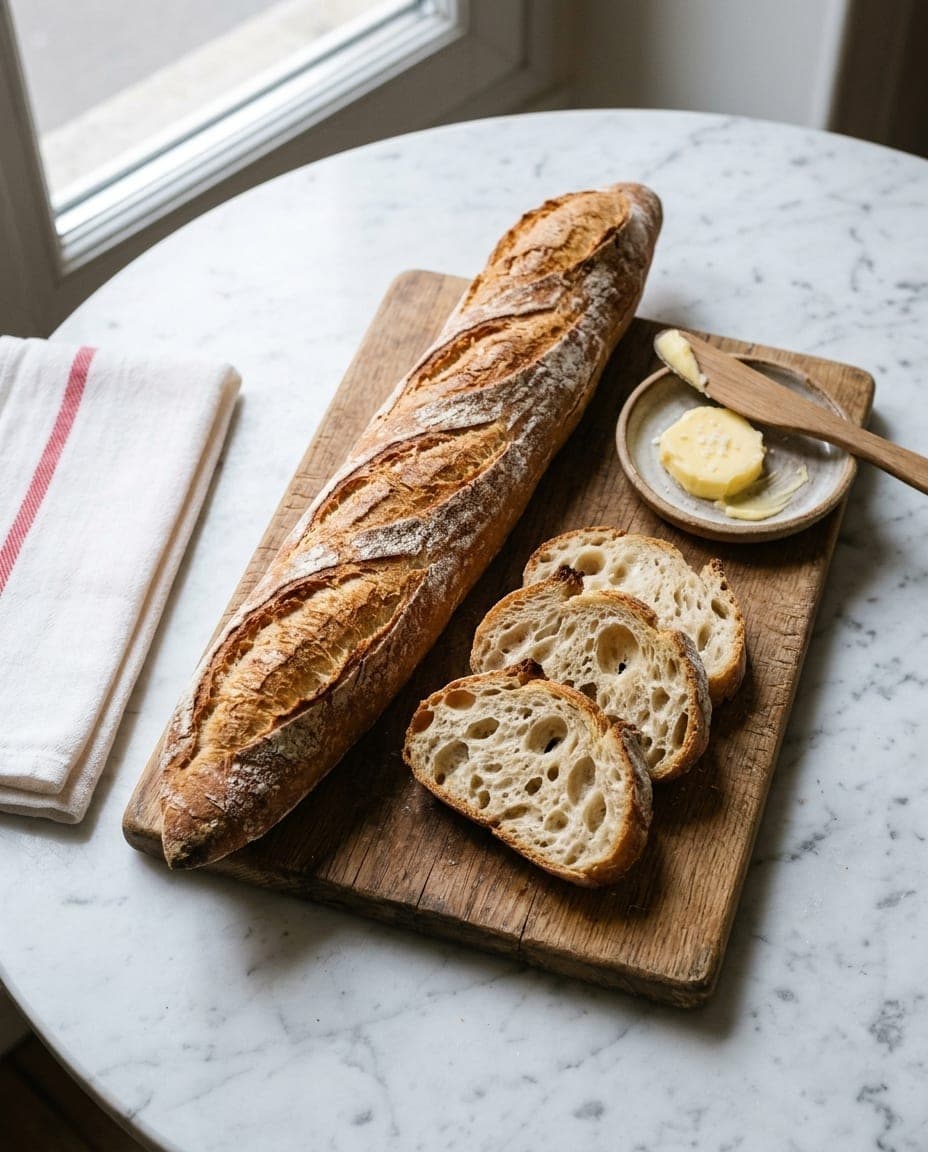
The ritual follows a specific order. The table is set with bread, often a rustic country loaf suitable for dipping into the broth. The soup arrives first in individual bowls, steaming and clear. Once the diners have finished the broth, the main course is brought out: the carved hen and the vegetables, with the sauce on the side.
This two-part service turns a single pot of food into a complete meal. It is a meal designed for conversation and lingering, often lasting well over an hour.
Where it belongs on the table
The dish finds its natural home around Pau and the wider Béarn area. Local ingredients, such as ham from the Pyrenees and vegetables from the surrounding plains, give the regional version its character.
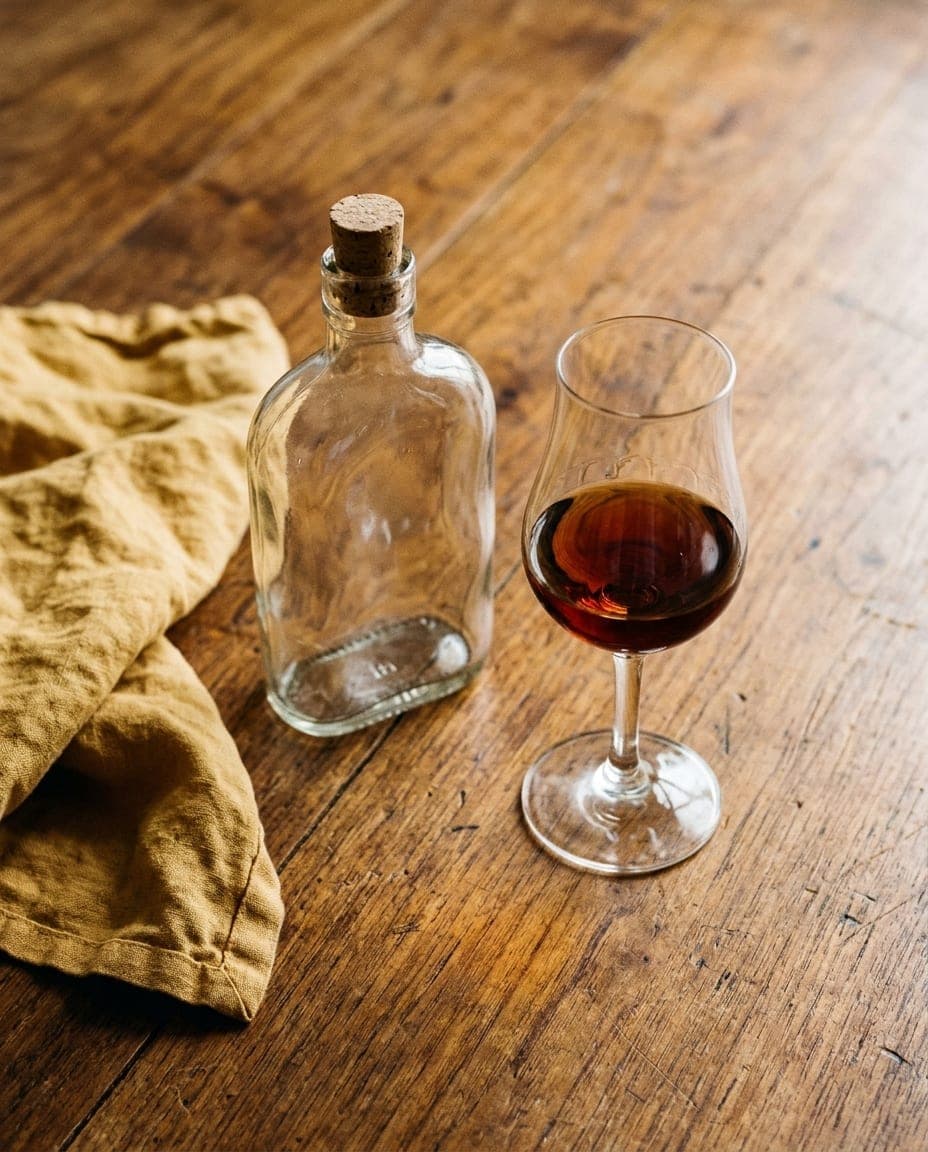
The pairing is straightforward. A glass of Jurançon sec, a dry white wine from the Pyrenean foothills near Pau, complements the stuffing and the clarity of the broth. Alternatively, a light red from the region can be served with the meat course.
Curious facts
- A two-course meal in one pot. Unlike many stews where everything is eaten together, poule au pot is served in two stages: first the broth with noodles, then the meat and vegetables.
- The stuffing defines the region. Boiled chicken exists everywhere, but the farce with ham, garlic and liver is what marks the Béarnaise speciality.
- A legend of royal benevolence. The quote about every peasant having a chicken on Sunday was first written down in 1661, decades after Henri IV's death, and may never have been said by him.
- A sharp sauce. A cold sauce such as gribiche or vinaigrette balances the richness of the poached bird and the ham.
- A national echo. Though rooted in Béarn, the dish is known across France, and the "chicken in every pot" idea later travelled as far as American political slogans.
Where to try it
The most authentic experience of poule au pot is found in Béarn, around Pau, where family-run restaurants and country inns may serve it on Sundays or as a dish of the day.
The dish usually appears under its own name, poule au pot. The full traditional version with both courses is the standard in Béarn, and the cold weather of late autumn and winter brings out its comforting qualities most.
Where to try it
1 destination
 Wine Tasting
Pau
Elegant city with Pyrenees views, gateway to Jurançon and Madiran wine regions.
Wine TastingHiking