Picodon
A small, sharp goat cheese from the Ardèche and Drôme valleys
- Local name
- Picodon
- Served with
- Crusty bread
- Best eaten at
- Drôme and Ardèche markets
- Pairs with
- Saint-Péray or Rhône white
What it is
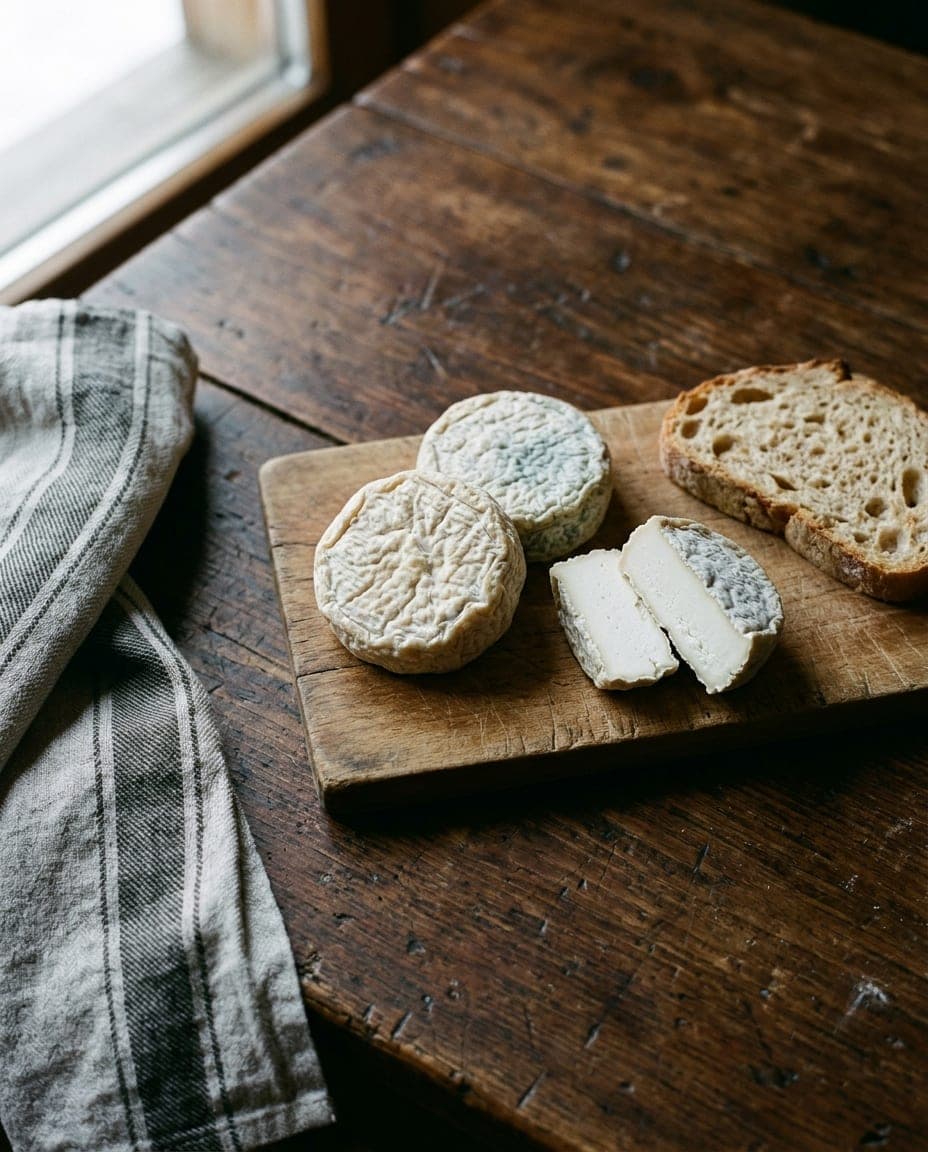
Picodon is a small, round goat's cheese produced in the Ardèche and Drôme departments of the Auvergne-Rhône-Alpes region, with its protected area also taking in the canton of Barjac in the Gard and the canton of Valréas in the Vaucluse. It sits on both banks of the Rhône River, where the dry climate shapes its character as much as any specific farm. Made from whole raw goat's milk, the cheese is flat and disc-shaped, only 5 to 7 centimetres across, with a thin, natural rind that changes colour as it matures. It has been an AOC since 1983 and is now a protected designation of origin (AOP).
When young, the paste is creamy and white with a mild, milky taste. As it ages, the cheese shrinks, the rind darkens to shades of blue-grey, and the flavour becomes pronouncedly sharp and spicy. The name itself comes from an Occitan word meaning "spicy" or "sharp". This description fits the mature version best, where the tang cuts through the richness of the cheese.
It is a regional speciality rather than a nationwide product. It is found most consistently at markets in the Drôme and Ardèche. Much of it is still made on farms and by small-scale producers who watch the drying process closely.
The shape of the name
The word Picodon describes what to expect from the cheese once it has dried out. In the early stages, when the cheese is soft and fresh, the sharpness is barely there. It is a gentle, creamy bite that tastes of fresh milk and grass. However, as the weeks pass and the moisture leaves the disc, the texture becomes firmer and the flavour intensifies.
This transformation is central to its identity. A young Picodon is mild enough for children or those who prefer soft cheeses, while an aged one offers a strong, goaty punch that can stand up to robust wines. The rind develops a greyish or bluish hue as it ages, a sign of the natural moulds that grow on the surface. This is not a defect but a feature of the traditional method.
How it is made
There are two main ways Picodon is matured. The standard method involves curdling the milk slowly with a small amount of rennet, draining it in small moulds, and then salting and drying the discs. This creates a cheese that is soft inside with a thin rind, and it can be sold after about twelve days.
The traditional Dieulefit method, or méthode Dieulefit, adds further steps. After drying, the cheeses are shut away for at least two weeks until they turn blue, then washed and confined again, once or several times, and sold no earlier than a month after making. This results in a slightly smaller, firmer and stronger cheese with a more intense flavour. Whether made by the standard way or the Dieulefit method, the goal is always to let the goat's milk develop its full character without rushing the process.
How to eat it
Picodon can be eaten at almost any stage of its life. The young version is good on a plate with crusty bread and a glass of cool white wine. As it matures, the cheese becomes firmer and can be grilled on toast until the rind blisters and the inside melts into a creamy pool.
Another common way to serve it is marinated in olive oil with bay leaves or herbs like thyme or rosemary. The oil keeps the cheese moist and infuses it with extra aroma, and it becomes a savoury condiment in its own right.
It pairs naturally with a Saint-Péray white wine from the nearby valley, or a Côtes du Rhône red that has enough tannin to balance the sharpness of the cheese.
Curious facts
- The name is literal. The Occitan word behind Picodon means "spicy", describing the intense flavour of an aged cheese rather than a young one.
- A small, flat shape. The discs are only a few centimetres across, which helps them dry evenly in the local air.
- The Dieulefit method. This traditional technique involves confining and washing the cheese during ripening to create a stronger final product.
- Oil marinades. Picodon marinated in olive oil with bay leaves is a familiar local preparation.
- Regional focus. While found elsewhere, the cheese can only carry the name when made in its protected area along the Rhône.
Where to try it
1 destination
 Wine Tasting
Grospierres
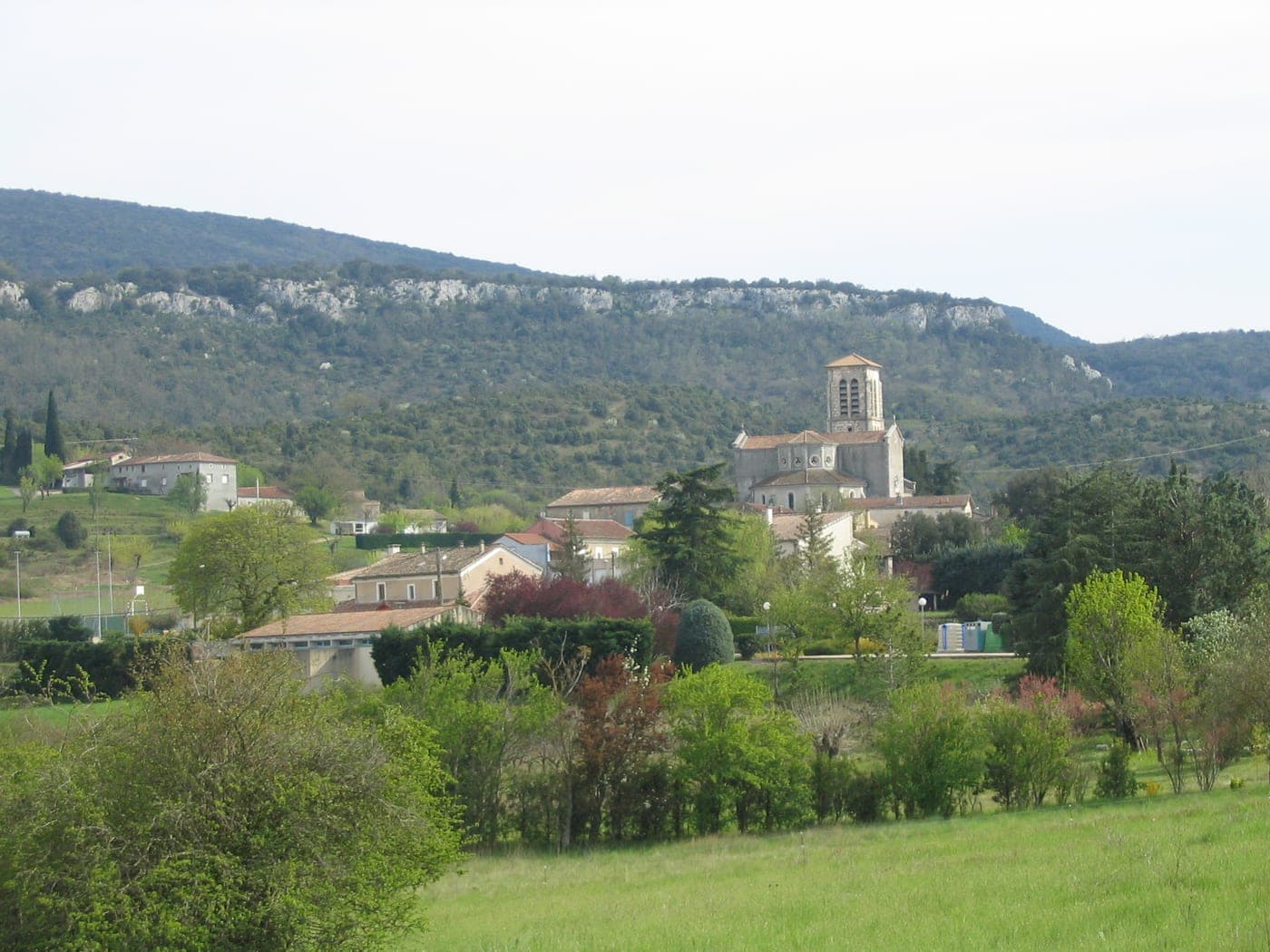
Southern Ardèche village with natural wine estates and medieval architecture.
Wine TastingHiking
1 region
 Wine Tasting25 destinations
Auvergne-Rhône-Alpes
Nestled in the heart of France, this region is the second-largest, known for its diverse landscapes from the rugged mountains of the Alps to the volcanic terrain of the Massif Central. Lyon serves as a vibrant urban center, celebrated for its gastronomy and silk heritage. Off the beaten path, explore the historic villages of Le Puy-en-Velay, famed for its unique lentils and pilgrimage routes, or the picturesque landscapes of the Ardèche, with its stunning gorges. The region is also home to the picturesque vineyards of Beaujolais, producing renowned wines, and the stunning Lac d'Aiguebelette, one of the cleanest lakes in France. Seasonal festivals, like the Fête de la Gastronomie, showcase the local culinary delights, making this area rich in culture and history, ideal for a deep exploration of French traditions.
Wine TastingCamper Van RentalsHikingCastles