Pélardon
A small AOP goat's cheese from the Cévennes and Languedoc
- Local name
- Pélardon
- Served with
- Bread, honey
- Best eaten at
- A Cévennes market
- Pairs with
- Languedoc white
What it is
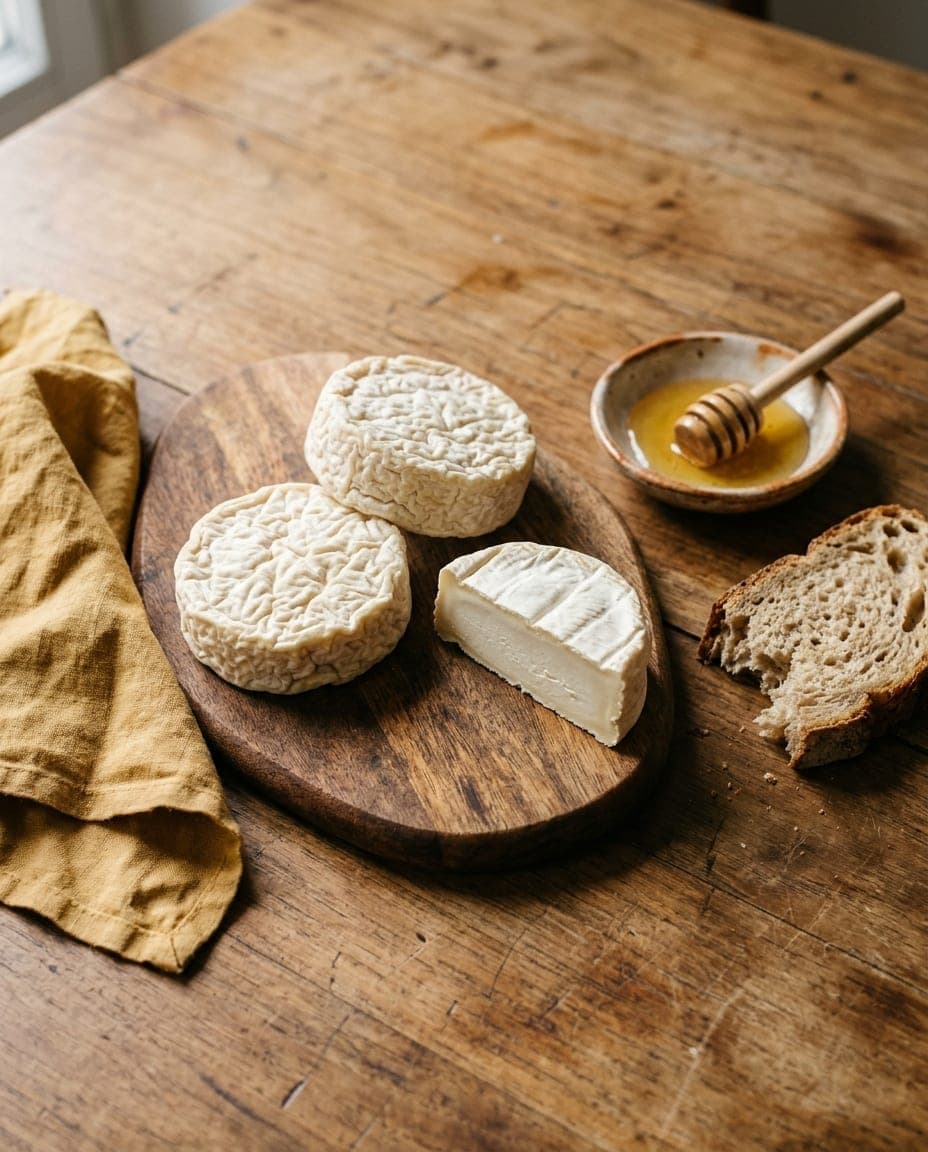
Pélardon is a small round goat's cheese from the Cévennes and the surrounding uplands of Languedoc in southern France, where the AOP label protects its name and production methods. The cheese is modest in size, no wider than a palm, a small cylinder with rounded edges. It is a cousin of the Picodon made further north-east in the Drôme and Ardèche, yet it carries a distinct character shaped by the dry hills, heathland and chestnut woods where its goats graze.
The cheese is made from raw goat's milk. The curd forms slowly with very little rennet, and is ladled into small moulds where it drains. When young, the paste is soft, white and faintly sweet, with a creamy mouthfeel that melts on the tongue. As it matures over a few weeks, a thin natural rind develops, the paste firms up and the flavour shifts toward nutty, earthy notes that can become quite sharp in the driest cheeses.
Where it comes from
The Cévennes are a rugged landscape of deep valleys and steep ridges where the soil is thin. Goats were well suited to this terrain, climbing the rocky slopes to graze on wild herbs, shrubs and grasses. Goat farming in these Mediterranean hills has a very long history: the appellation's own dossier cites Pliny the Elder's remarks on goats in this rugged land. This difficult terrain gave rise to a cheese that reflects the land: it is not a mass-produced item but a direct product of the hill pastures and the herders who tend the flocks.
The AOC status was granted in 2000 after years of effort by local producers to define the rules of making Pélardon, and the name is now protected across the EU as an AOP. The production area covers parts of the Aude, Gard, Hérault, Lozère and Tarn, and the rules require the goats to graze outdoors on the local rangeland for more than half the year. The cheese must be made from raw milk and ripened for at least 11 days. This protection ensures that the name remains tied to this specific part of Occitanie, where the climate and the vegetation give the cheese its profile.
What goes into it
The ingredients are few, and the process relies on time rather than complex technology:
- Raw goat's milk, from local herds that graze the hills of the appellation area.
- A small amount of rennet, used sparingly to allow for a slow, gentle curdling.
- Small moulds, which shape the cheese into its characteristic small discs and allow it to drain naturally.
- Time, as the cheese ripens for at least 11 days, evolving from soft to firm depending on how long it rests.
The result is a cheese that changes with age. The young version is mild and creamy, while the older cheese becomes harder, drier and more intense in flavour. It does not need cooking to be enjoyed, though warming it on toast is a common practice when the weather turns cold.
How it is eaten
Pélardon is often sold at Cévennes markets, where small cheeses are displayed alongside local honey and bread. A slice of country bread topped with a piece of young Pélardon and a drizzle of honey is a classic combination that balances the sweetness of the honey with the savoury depth of the cheese. In cooler months, it is common to see it warmed on toast until the paste softens and turns golden.
Older, drier cheeses develop a concentrated flavour that pairs well with a glass of Languedoc white wine. The cheese is usually eaten with bread, and sometimes with honey or in salads. A market visit in the Cévennes often ends with this simple combination, savoured slowly as the sun sets over the mountains.
Curious facts
- A small footprint. Each cheese fits in the palm of a hand, making it easy to carry and share among a small group of travellers or locals.
- The rind tells the story. The rind and paste change as the cheese ages, from soft and pale to firmer and more pronounced in flavour.
- A mountain tradition. The cheese grew out of the agropastoral life of the Cévennes and surrounding hills, where goats were well suited to the steep terrain.
- Market favourite. It is a staple at local markets in the Cévennes, often sold directly by the farmers who make it.
- Raw milk only. The appellation rules require raw goat's milk and at least 11 days of ripening.
Where to try it
The best place to taste Pélardon is at a market in the Cévennes, in towns such as Anduze, Saint-Jean-du-Gard or Florac, where local farmers sell their cheeses directly. Small farm shops and traditional fromageries in the region also stock the cheese, often offering both young and aged versions.
Where to try it
1 destination
 Wine Tasting
Sommières
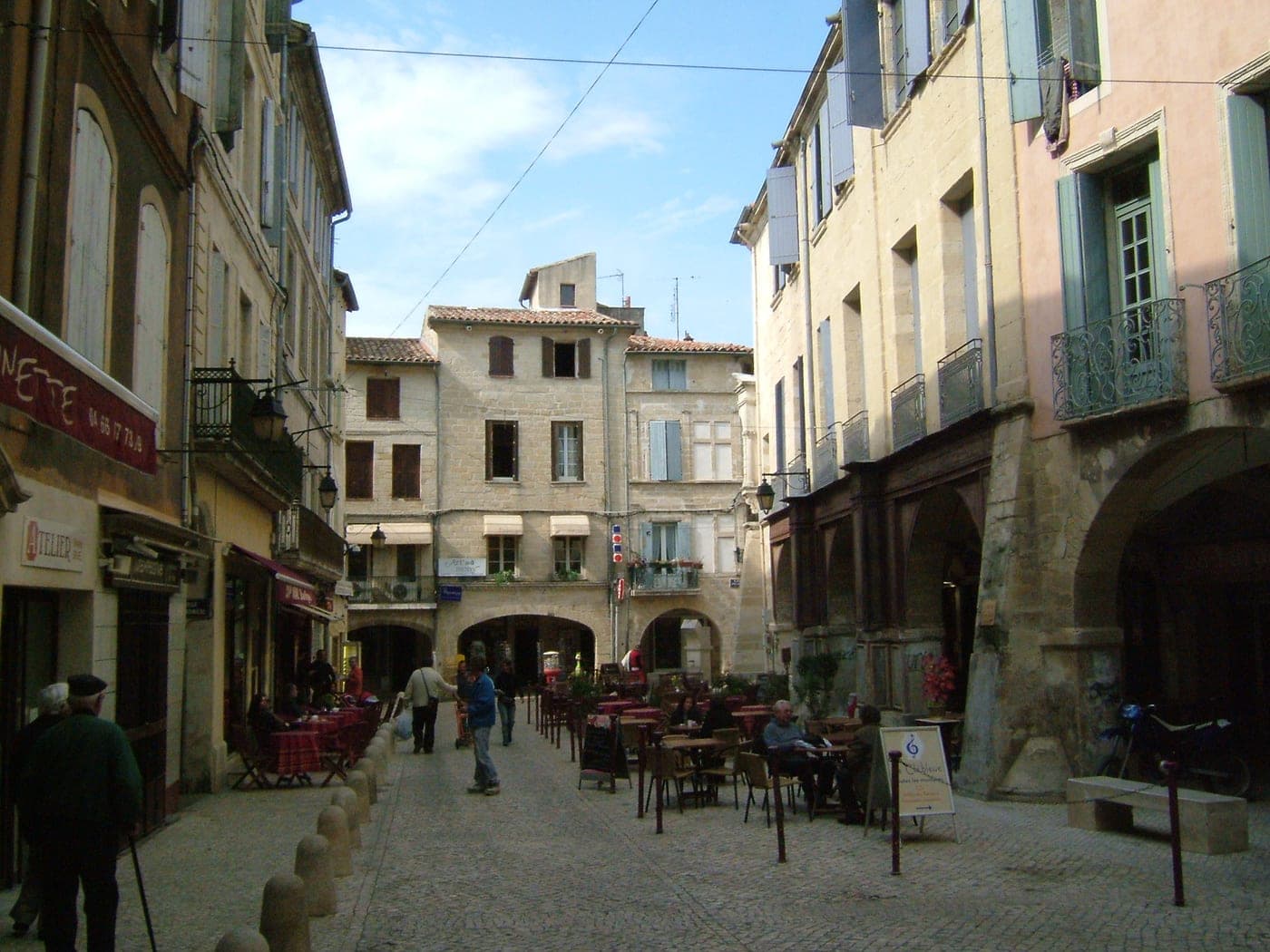
Medieval town on the Vidourle river with local wine estates and market.
Wine TastingHiking
1 region
 Wine Tasting56 destinations
Occitanie
This region is the largest in France and boasts a diverse landscape, including the picturesque Pyrenees mountains and a stunning Mediterranean coastline. Historic cities like Toulouse, known for its pink terracotta buildings, and Montpellier, with its vibrant student life, offer rich cultural experiences. The region is also famous for its wine production, particularly in areas like Languedoc, where unique varietals thrive. Beyond the cities, explore the medieval charm of Carcassonne, a fortified town with a remarkable castle. Occitanie hosts vibrant local festivals celebrating its heritage, and its traditional cuisine features dishes like cassoulet and regional cheeses. With beautiful hiking trails and quaint villages, this region invites leisurely exploration.
Wine TastingHikingCastlesLocal Cuisine