Papalines d'Avignon
Pink thistle-like chocolate from Avignon filled with oregano liqueur
- Vegetarian
- Local name
- Papalines d'Avignon
- Served with
- Coffee
- Best eaten at
- An Avignon chocolatier
What it is
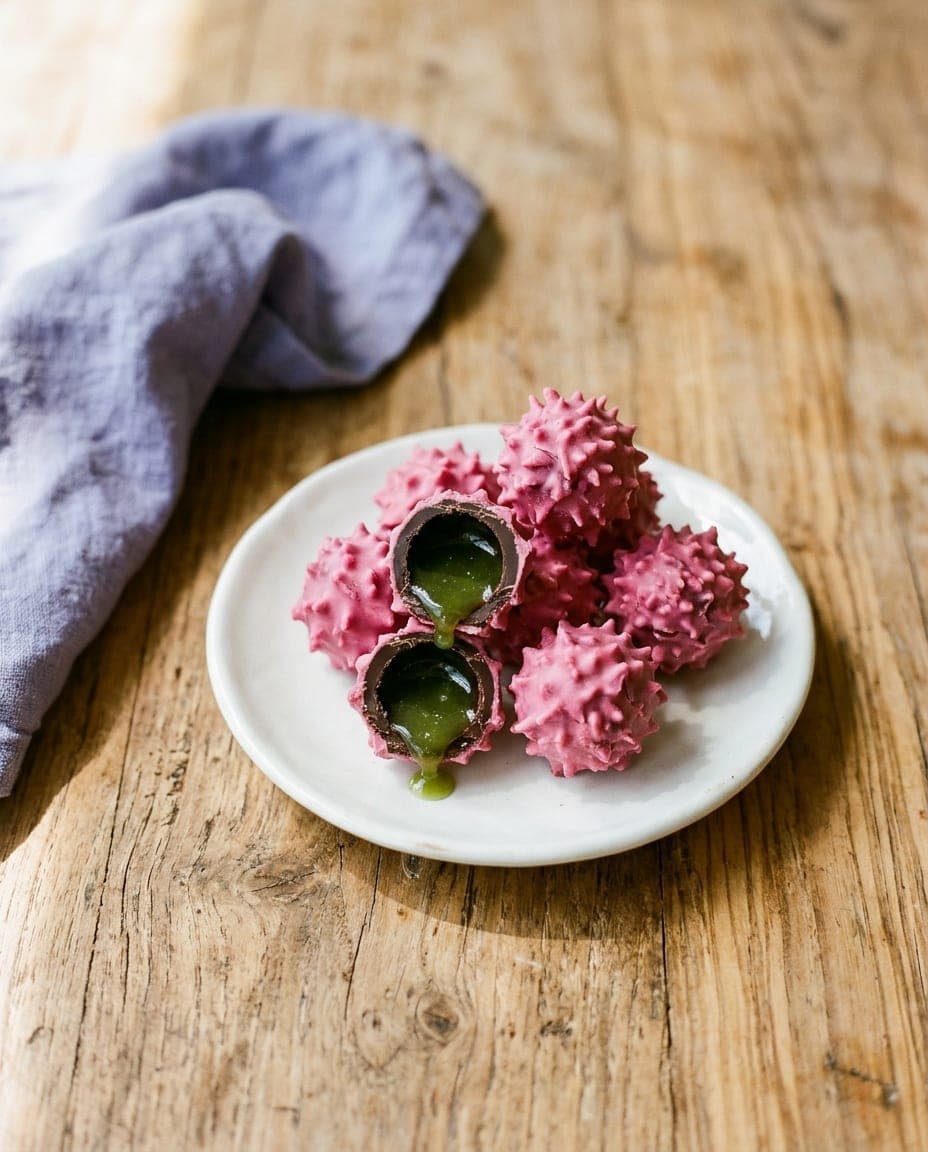
Papalines d'Avignon are small, delicate sweets that belong to the city of Avignon in the south of France. They are not a widespread national treat but a local speciality of the Vaucluse, in the Provence-Alpes-Côte d'Azur region. The confection consists of a thin chocolate shell with a pink outer coating whose small spikes give it the look of a thistle head.
Inside the shell lies a filling of a herbal liqueur known as Origan du Comtat. This drink is distilled from oregano and around sixty other plants gathered on the foothills of Mont Ventoux, the high mountain that dominates the landscape north-east of the city. The result is a sweet that balances the smoothness of chocolate with the sharp, aromatic flavour of the mountain herbs.
The pink colour has a specific meaning in this context. It is usually explained as a reference to the robes of the cardinals from the time when Avignon was the seat of the papacy in the 14th century. The sweet is small enough to be eaten in one or two bites, often enjoyed as an after-dinner treat or alongside coffee.
The history of a modern classic
The story of the papaline is rooted in the mid-20th century rather than the medieval era that inspired its name. The confection was created in 1960 by the Syndicat des maîtres-pâtissiers du Vaucluse, the local union of master pastry-makers, who wanted a truly local sweet for the city.
They chose to pay homage to the city's past as a residence for the popes. The name papaline directly references the papacy, while the pink colour evokes the vestments of the cardinals who once filled the Palais des Papes.
This is a modern invention with deep historical references. The confectioners did not claim to have found an ancient recipe but rather created something new that honoured the memory of the city's religious past. Since its debut, the papaline has remained a staple of Avignon's sweet shops, sold in small boxes and recognised by visitors as a genuine local product.
What goes into it
The composition of a papaline is simple but relies on specific regional ingredients. The inner shell is dark chocolate, covered with a thin outer layer of white chocolate tinted pink. The spikes are worked into this coating while it is still soft, giving the sweet its distinctive appearance. The filling is not a cream or a jam but a liqueur made from the herbs of the region.
The defining ingredient of the filling is Origan du Comtat, a herbal liqueur made by macerating and distilling plants from the slopes of Mont Ventoux and nearby hills. The distillation captures the sharp, spicy notes of the oregano, which contrast with the sweetness of the chocolate shell.
Many other herbs go into the liqueur to add complexity, but the oregano remains the defining element. The final product is not a heavy dessert but a light, aromatic sweet designed to be savoured slowly. It is usually eaten in small quantities, allowing the interplay between the chocolate and the herbal notes to come through.
How to eat it
Avignon's chocolatiers and confectioners display the sweets in small boxes, often as gifts.
Papalines are traditionally served with a cup of black coffee. The bitterness of the coffee complements the herbal notes of the liqueur and cuts through the sweetness of the chocolate shell.
There is no need to rush when eating one. The thin shell gives way quickly, releasing the aromatic liqueur filling. It is an after-dinner sweet rather than a dessert in its own right, well suited to a pause during a walk along the Rhône or a visit to the Palais des Papes.
Curious facts
- The shape matters. The spiky coating gives each papaline the look of a small thistle head.
- A 1960 origin. The sweet was invented in 1960 by the pastry-makers' union of the Vaucluse, making it a modern creation despite its medieval name.
- Pink robes. The pink colour is explained locally as a reference to the vestments of cardinals from the time of the Avignon papacy.
- Mountain herbs. The filling comes from Origan du Comtat, distilled from oregano and dozens of other plants from the foothills of Mont Ventoux.
- Small boxes. They are sold in small quantities, often as a gift or a personal treat rather than in large family-sized packs.
Where to try it
1 destination
 Wine Tasting
Avignon
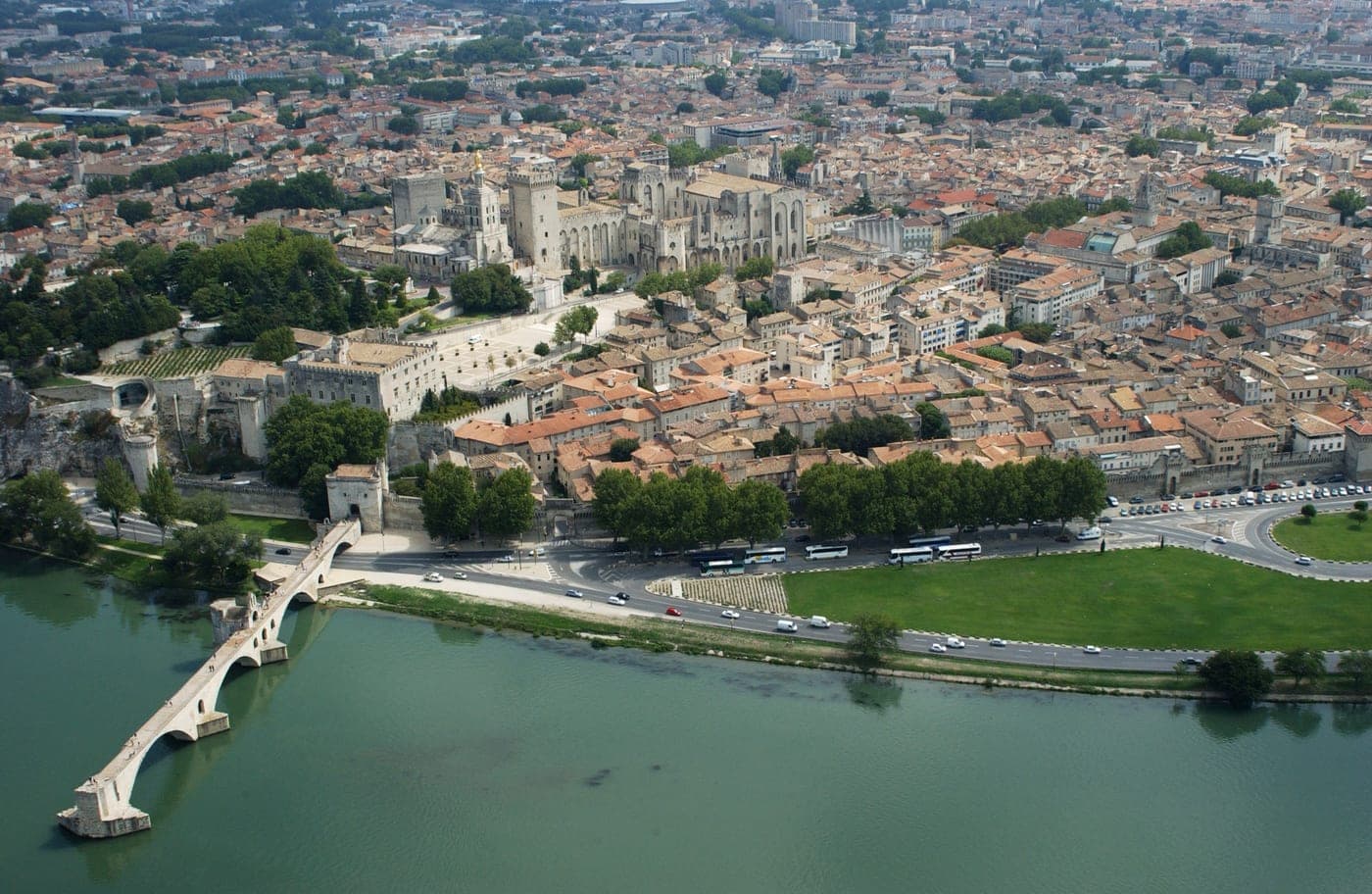
Avignon is a historic city on the Rhône River, famous for its UNESCO-listed Papal Palace and medieval ramparts. Beyond its architectural splendor, Avignon serves as a gateway to renowned wine regions including nearby Châteauneuf-du-Pape and Côtes du Rhône appellations. The city blends cultural heritage with wine tourism, hosting the world-famous theater festival each July. Ancient streets lined with cafés and wine bars create a lively atmosphere, while the surrounding countryside offers countless wine estates and picturesque villages.
Wine TastingLocal CuisineHiking