Nougat de Montélimar
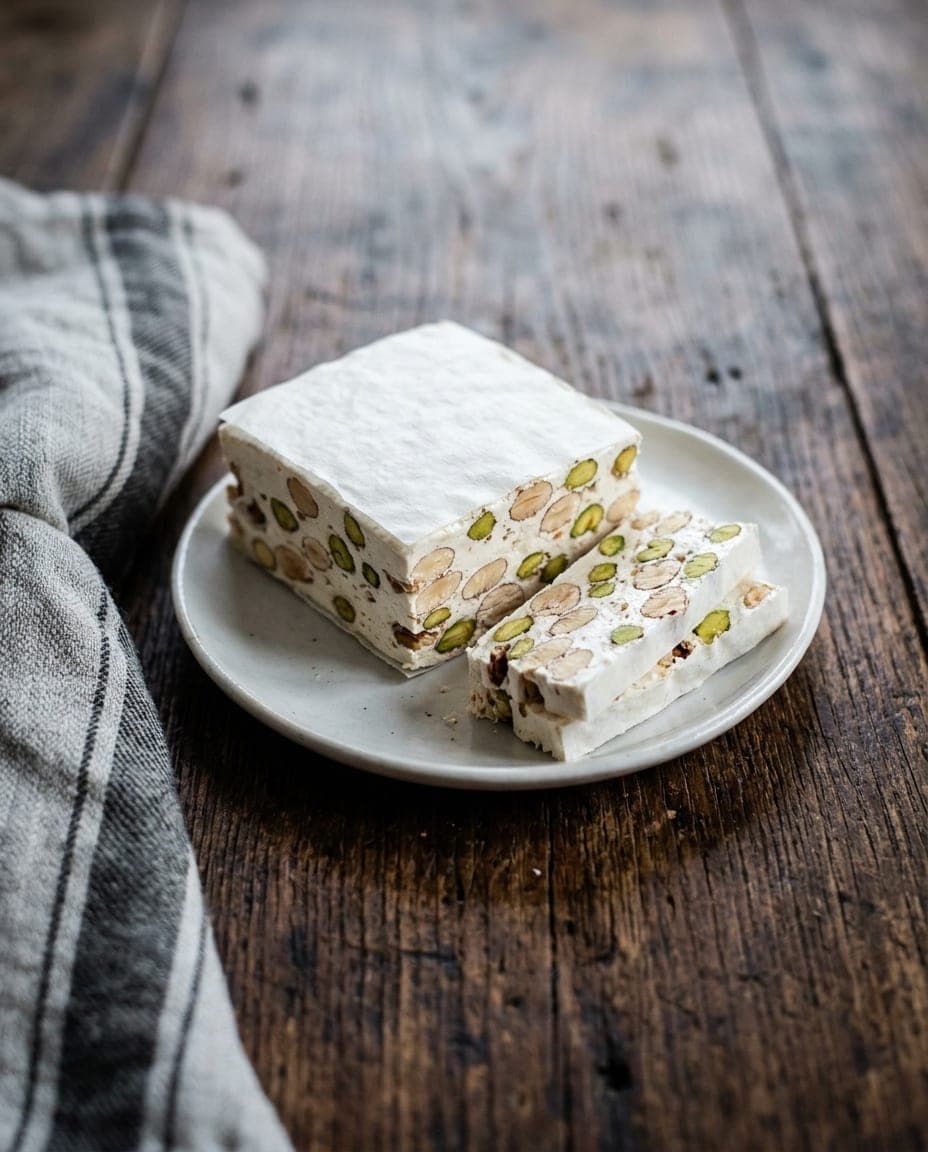
White nougat from Montélimar, made with honey, almonds and pistachios
- Vegetarian
- Local name
- Nougat de Montélimar
- Best eaten at
- Montélimar's nougat makers
- Pairs with
- Muscat de Beaumes-de-Venise
What it is
Nougat de Montélimar is a white confection from the town of Montélimar in the Drôme department of south-eastern France. It is distinguished by its pale, opaque appearance and comes in two textures: a hard, crunchy version and a soft, tender one (tendre). Either way, it is firm enough to be cut into neat rectangular blocks and is packed with whole nuts.
Montélimar lies in the Rhône valley, in the southern part of the Auvergne-Rhône-Alpes region, close to Provence. It sits on the old Route Nationale 7, the historic highway that once carried travellers from Paris to the Riviera. This location proved decisive for the sweet's reputation: as traffic passed through, drivers stopped to buy boxes of nougat as provisions or gifts, and nougat shops lined the roadside. The town became synonymous with the product, and since November 2024 the name has been protected as an EU Protected Geographical Indication (PGI).
White nougat is one of the thirteen desserts served at Christmas in Provence, though it is enjoyed year-round. It remains a regional speciality tied firmly to the Drôme. The white variety, made with honey and egg whites, stands in contrast to the darker nougat noir of Provence, which is made without egg white.
How it is made
The creation of Nougat de Montélimar relies on a method that transforms simple ingredients into an aerated paste. Honey and sugar are cooked to a high temperature and combined with egg whites whipped to a foam. This incorporates air and gives the nougat its white colour and light texture. The way the mixture is cooked determines whether the result is hard or soft.
The mass is then folded together with generous amounts of roasted almonds and pistachios, which stay crunchy within the paste. Finally, it is spread between two thin sheets of edible wafer paper (pain azyme, often called papier azyme), which stops the nougat from sticking and gives the blocks their neat finish.
The result is a block that is dense with nuts but light in texture. The honey provides a floral sweetness that permeates the entire confection, while the roasted nuts give a toasty counterpoint. The wafer is edible and does not need to be removed before eating.
The rules of composition
To carry the name Nougat de Montélimar, the confection must follow the PGI specification. The nuts must make up at least 30 per cent of the product: whole sweet almonds, roasted, which may be joined by green pistachios. Honey is equally critical: it must account for at least 25 per cent of the sweetening ingredients. The only flavouring allowed is vanilla.
Lavender honey from Provence is the preferred choice of many nougat makers and lends the sweet a distinctive aromatic note, though other honeys are also used. The production area covers Montélimar and 13 surrounding communes in the south of the Drôme.
The nuts are not just an addition but a structural element, and the green pistachios provide a visual contrast against the white nougat.
Where it came from
Nougat in Montélimar is linked to the agricultural landscape of the Drôme. Almond orchards spread through the region from the 16th century, and their nuts came to replace walnuts in the recipe. The Rhône valley climate let the trees thrive, giving confectioners a local supply of nuts.
The first mention of nougat in the town's archives dates from 1701, when it was a prized gift for notable visitors, and the trade of the nougatier became established in the late 18th century. In the 19th century, Émile Loubet, later President of France, helped make it known internationally.
The town's position on the Route Nationale 7 played a crucial role in spreading the reputation of the sweet. As the main artery between the capital and the Mediterranean coast, the road brought a steady stream of travellers through Montélimar, and the custom of buying nougat on the way south helped turn a local treat into a nationally recognised product.
How it is eaten
Nougat de Montélimar is enjoyed as a treat after a meal or with an afternoon coffee. Its firm texture makes it easy to cut into thin pieces, which are savoured slowly. The sweetness is pronounced but balanced by the nuttiness of the almonds and pistachios.
A good pairing is Muscat de Beaumes-de-Venise, a fortified sweet wine from the southern Rhône. The wine's floral, honeyed notes echo those of the nougat. At Christmas in Provence, white nougat takes its place on the table among the thirteen desserts.
Visitors to the town often seek out the workshops where the nougat is still made by traditional methods. Many offer samples, so buyers can judge the nuts and the texture before making a purchase.
Curious facts
- A protected name. Nougat de Montélimar has been an EU Protected Geographical Indication since 2024, with minimum shares of nuts and honey.
- The wafer trick. The thin edible wafer on each side of the nougat keeps the sticky mixture from clinging to tools and fingers.
- Lavender connection. Lavender honey from Provence is the favoured honey of many makers, giving the sweet its floral aroma.
- Roadside roots. The sweet's national fame grew from the town's location on the Route Nationale 7, where motorists stopped on their way to the Riviera.
- Hard or soft. The same recipe gives either a crunchy nougat or a soft, tender one, depending on how the mixture is cooked.
Where to try it
The best place to experience Nougat de Montélimar is in the town itself, where several confectioners have been making the sweet for generations. Their shops, many in or near the historic centre, offer a range of products from simple blocks to elaborate gift boxes.
For those interested in the production process, some of the larger manufacturers welcome visitors to watch the cooking and cutting stages. A tasting of fresh nougat, perhaps with a glass of Muscat de Beaumes-de-Venise, followed by a box to take home, is the classic way to end a visit.
Where to try it
1 destination
 Wine Tasting
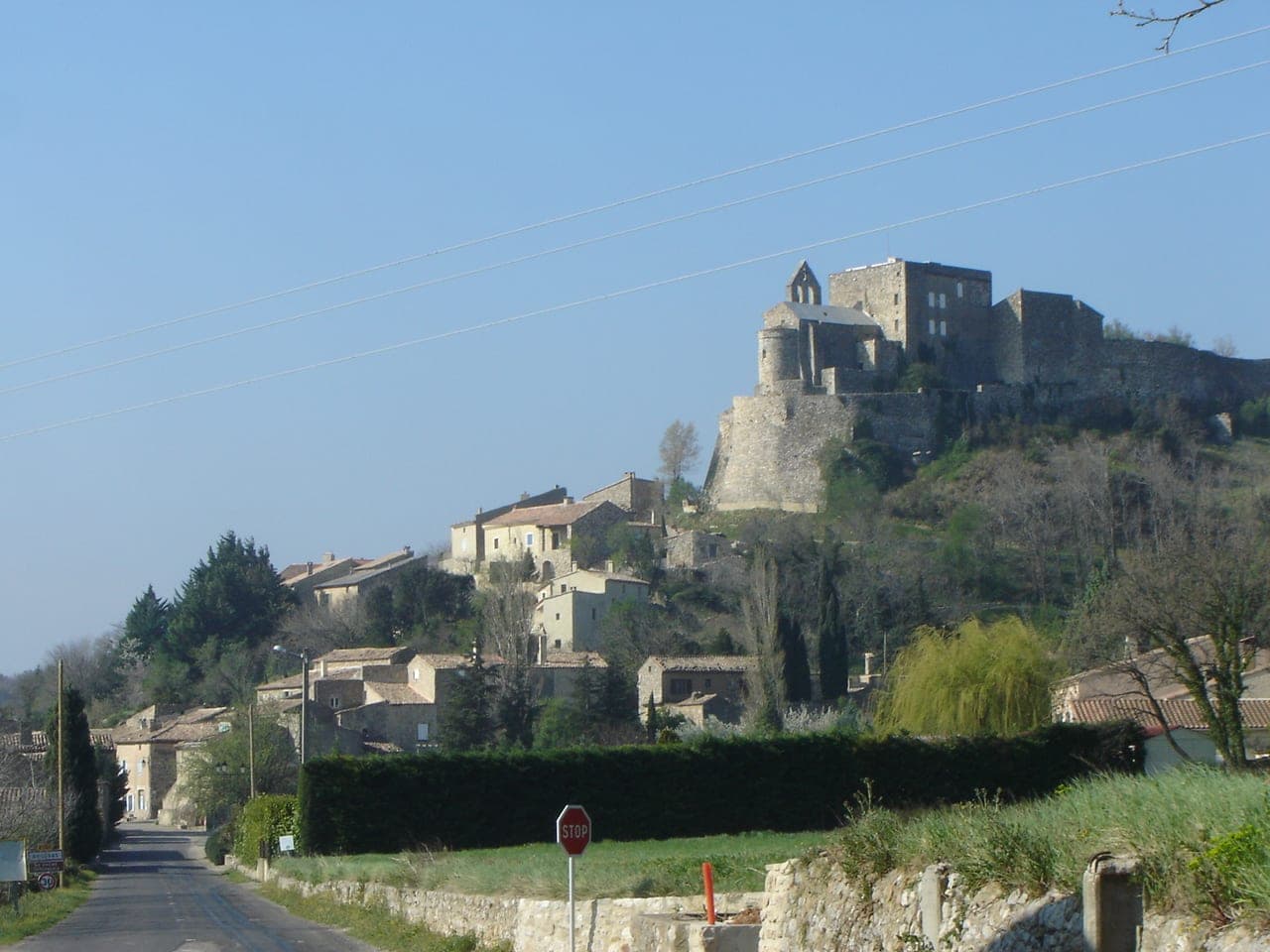
Roussas
Drôme village with Grignan-les-Adhémar wine estates and lavender fields.
Wine TastingHiking
1 region
 Wine Tasting25 destinations
Auvergne-Rhône-Alpes
Nestled in the heart of France, this region is the second-largest, known for its diverse landscapes from the rugged mountains of the Alps to the volcanic terrain of the Massif Central. Lyon serves as a vibrant urban center, celebrated for its gastronomy and silk heritage. Off the beaten path, explore the historic villages of Le Puy-en-Velay, famed for its unique lentils and pilgrimage routes, or the picturesque landscapes of the Ardèche, with its stunning gorges. The region is also home to the picturesque vineyards of Beaujolais, producing renowned wines, and the stunning Lac d'Aiguebelette, one of the cleanest lakes in France. Seasonal festivals, like the Fête de la Gastronomie, showcase the local culinary delights, making this area rich in culture and history, ideal for a deep exploration of French traditions.
Wine TastingCamper Van RentalsHikingCastles