Macarons de Saint-Émilion
Soft almond biscuits from Saint-Émilion, made to a convent recipe without filling
- Vegetarian
- Local name
- Macarons de Saint-Émilion
- Best eaten at
- A Saint-Émilion bakery
- Pairs with
- Coffee or a glass of Saint-Émilion
What they are
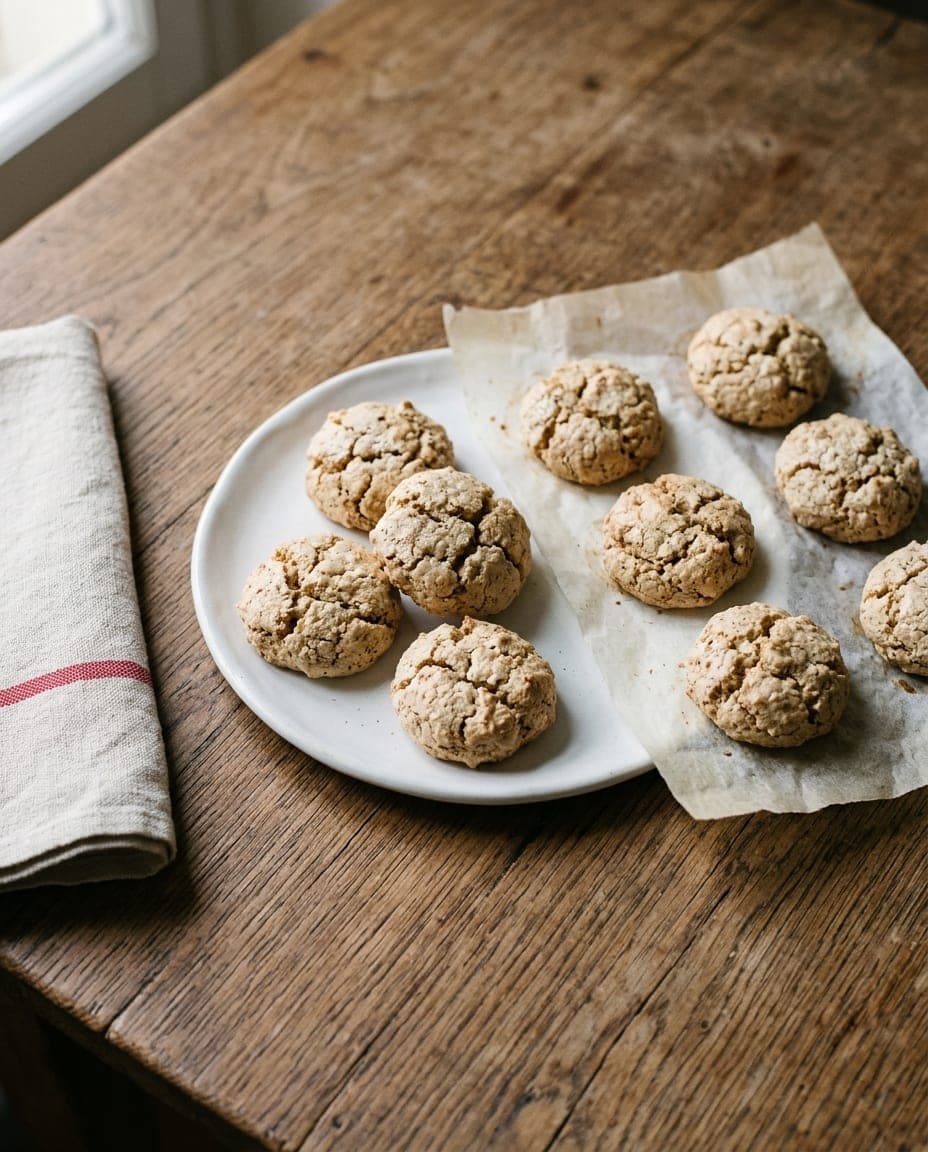
The macarons de Saint-Émilion are not the delicate, filled confections familiar to visitors in Paris. They are a distinct regional speciality of the wine town of Saint-Émilion in the Gironde, in the Nouvelle-Aquitaine region. These are flat, round biscuits with a lightly cracked surface and a soft, moist interior. They contain no filling, no cream and no bright food colouring. The essential ingredients are ground almonds (traditionally including a share of bitter almonds), sugar and egg white.
The texture is the defining feature. When bitten, they offer a slight resistance before giving way to a moist, nutty crumb. This contrasts sharply with the modern Parisian macaron, which is built as two meringue shells sandwiched around a creamy ganache or buttercream. The Saint-Émilion version belongs to an older tradition of simple almond biscuits that predates the elaborate pastries of the 20th century.
The Ursuline convent story
The origin of these biscuits is tied by tradition to the Ursuline convent in Saint-Émilion. The Ursuline sisters arrived in the town in 1620 to run a school for girls from poor families, and local tradition credits them with the macaron recipe, which was kept within the convent walls.
During the French Revolution, the order was banned and, in 1792, the convent's property was sold. According to legend, one of the former sisters, living in poverty, offered to reveal the secret recipe in exchange for shelter and food. Another account says the recipe was entrusted to a local widow, whose descendants passed it on. These stories are part of the town's oral history rather than documented fact.
Regardless of the exact details, the biscuits became a permanent feature of the town. They gained a reputation beyond the ramparts in the 19th century, and the local tourist office records that they were served alongside fine wines at the Universal Exhibition of 1867. After that, the number of shops selling them grew, and they are still made in Saint-Émilion today.
What goes into them
The composition of the macarons de Saint-Émilion is strictly limited to a few components. There are no liqueurs and no fillings added to the mixture.
- Ground almonds: The primary ingredient, providing the structure and the soft texture; a proportion of bitter almonds gives a distinctive aroma.
- Sugar: Binds the almonds and creates a fine crust on the outside while keeping the inside soft.
- Egg white: Used as the binder to create a smooth batter that holds its shape during baking but remains moist.
The batter is mixed until smooth and then piped onto sheets of special paper, on which the biscuits are baked until the tops are lightly cracked and golden. The lack of filling means the entire biscuit must deliver on flavour, relying on the quality of the almonds and the balance between the thin crust and the soft centre.
How they are eaten
These biscuits are rarely served as a dessert course on their own. They are usually eaten with a hot drink, and a strong black coffee is a popular partner, cutting through the sweetness and highlighting the nutty notes of the almonds. In a town built on wine, they are also enjoyed with a glass of the local red, or with a sweet white from elsewhere in the Bordeaux area.
They are sold in boxes or packets and make a good souvenir. Without a filling, they keep well for several days in an airtight container, though they are at their softest when fresh.
Where to try them
The natural place to find macarons de Saint-Émilion is Saint-Émilion itself. This specific version of the biscuit is rarely seen in Parisian pâtisseries or generic French supermarkets. Visitors usually buy them from a bakery or confectioner in the historic town, within the old ramparts.
These shops do not need grand signs or elaborate marketing; locals come to them for their daily bread and pastries as well. A glass of wine from the surrounding vineyards is a fitting companion, bridging the gap between the town's wine history and its culinary tradition.
Curious facts
- No filling required. Unlike their Parisian cousins, these macarons are single biscuits with no cream or jam sandwiched inside.
- A convent recipe. Tradition links them to the Ursuline nuns who settled in Saint-Émilion in 1620.
- Soft texture. The interior is moist and tender, contrasting with the fine outer crust.
- Simple ingredients. Almonds, sugar and egg white are the essentials; there are no added colourings.
- Regional only. These biscuits are a speciality of Saint-Émilion and are rarely produced outside this town in the Bordeaux wine country.
Where to try it
1 destination
 Castles
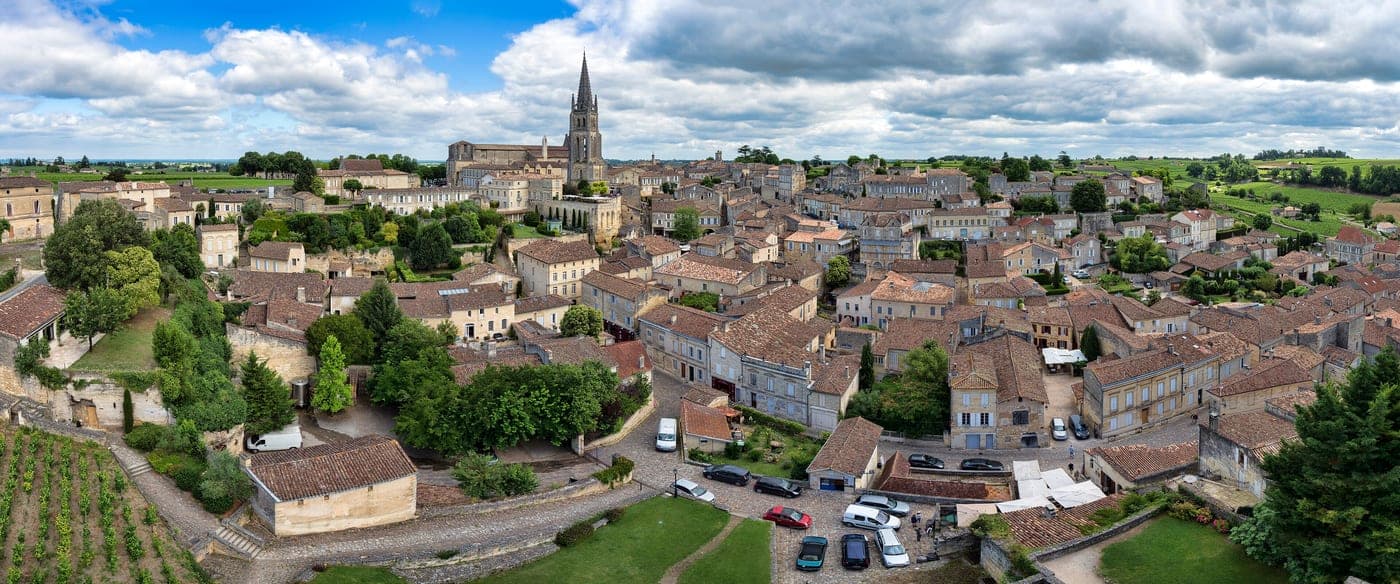
Saint-Émilion
UNESCO-listed medieval wine town in Bordeaux with Roman origins, underground churches and world-class Merlot.
CastlesHiking
1 region
 Wine Tasting31 destinations
Nouvelle-Aquitaine
This expansive region is the largest in France, boasting a stunning coastline along the Atlantic Ocean. Known for its diverse landscapes, Nouvelle-Aquitaine features the Pyrenees mountains, rolling vineyards, and historic towns. Bordeaux, the region's major city, is celebrated for its world-class wines, particularly Merlot and Cabernet Sauvignon. Other notable areas include the picturesque village of Saint-Émilion and the stunning Dune du Pilat, the tallest sand dune in Europe. The region's rich history is reflected in its architecture, with medieval castles and Roman ruins scattered throughout. Local markets offer artisan cheeses and fresh seafood, highlighting the region's culinary delights. Festivals celebrating wine and local culture are common, providing deeper insights into the area's heritage.
Wine TastingHikingCamper Van RentalsLocal Cuisine