Jambon de Bayonne
Salt-cured raw ham from the Adour basin, aged in the Pyrenees south wind
- Local name
- Jambon de Bayonne
- Served with
- Baguette, butter
- Best eaten at
- Bayonne's Easter ham fair
- Pairs with
- Irouléguy red
What it is
Jambon de Bayonne is a dry-cured raw ham from the Adour basin, covering parts of the Basque Country, Béarn and the Landes in southwestern France. It is one of the best-known cured meats in France, and its home lies in the Nouvelle-Aquitaine region, where the Pyrenees meet the Atlantic coast.
The ham is not smoked. Its flavour comes from salting and the slow natural drying process. The meat matures for at least seven months, often much longer, in cool, airy drying rooms. During this time, the drying gradually firms the flesh while the fat stays soft and the muscle develops a deep, complex taste.
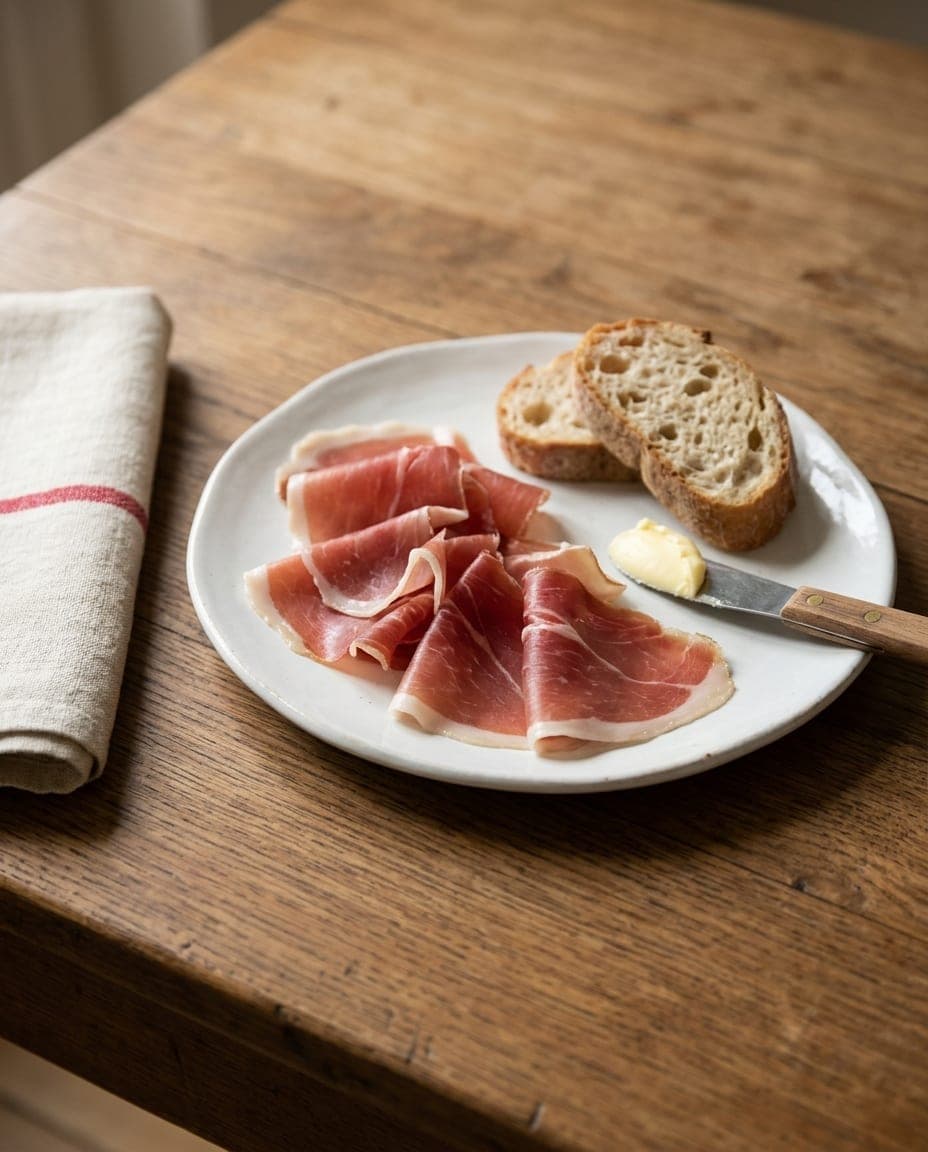
Visitors usually encounter the ham in thin slices served cold. It is a staple of the local table, appearing on charcuterie boards, in sandwiches with butter, or alongside melon. The texture is firm yet tender, and the flavour is salty but not aggressive, with a sweetness that develops as the meat matures.
The origin of the Adour basin ham
The reputation of Jambon de Bayonne goes back at least to the 16th century, rooted in the traditions of the Basque Country and Béarn. A popular legend tells of a wild boar wounded by Gaston Fébus, Count of Foix, in the 14th century and found months later perfectly preserved in a salt spring at Salies-de-Béarn. Whatever the truth of that story, the region's salt and its climate of cool winters and dry south winds suited this kind of preservation.
The ham takes its name from Bayonne, at the mouth of the Adour, which served as the port and market through which hams cured in the surrounding countryside were shipped further afield.
Since 1998 the ham has held Protected Geographical Indication (PGI) status. Curing must take place in the Adour basin, bounded by the Atlantic, the Pyrenees and the river Adour, while the pigs come from a defined area of 22 departments in southwestern France.
What goes into it
The quality of Jambon de Bayonne depends on two essential elements: the salt and the air.
- Salt from the Adour basin: The hams are cured with rock salt that must come from the salt works of the Adour basin, notably Salies-de-Béarn and Bayonne-Mouguerre. Salt has been extracted here since antiquity.
- The hams themselves: The legs come from pigs raised in southwestern France. They are trimmed and then rubbed with the local salt.
- The air of the Adour basin: After salting, the hams are rested and then hung to dry. The region's warm, dry south wind, the foehn, can make humidity drop sharply within hours, and it has long been part of the drying tradition.
- Pork fat: During the final maturation, the exposed lean surfaces are coated with pork fat, a step known as pannage. This protects the meat from drying out too fast and forming a crust, while allowing it to continue ageing slowly.
- Espelette pepper: Some producers rub the ham with Espelette pepper, a mild chilli from the nearby Basque Country, adding a subtle spice to the surface.
The result is a ham that is dry-salted and air-dried, with smoking and brine both excluded by the rules. Its flavour develops over time as the meat concentrates.
How Bayonne makes its mark
The city of Bayonne has long been the heart of this trade. Its Foire au jambon, held each year around Easter, has been recorded since 1462 and is the main event in the calendar for the product. Producers display their hams, offer samples to visitors and celebrate the new season's hams.
The fair draws crowds from across the region and beyond, and reinforces the connection between the ham and the place where it is made.
Beyond the fair, the ham is a daily presence in the region. It appears on menus in Bayonne's traditional taverns, in Basque country restaurants, and across Nouvelle-Aquitaine.
How it is eaten
Jambon de Bayonne is best eaten raw, sliced very thin. It is typically served as part of a cold board, alongside other charcuterie, cheeses and fresh produce.
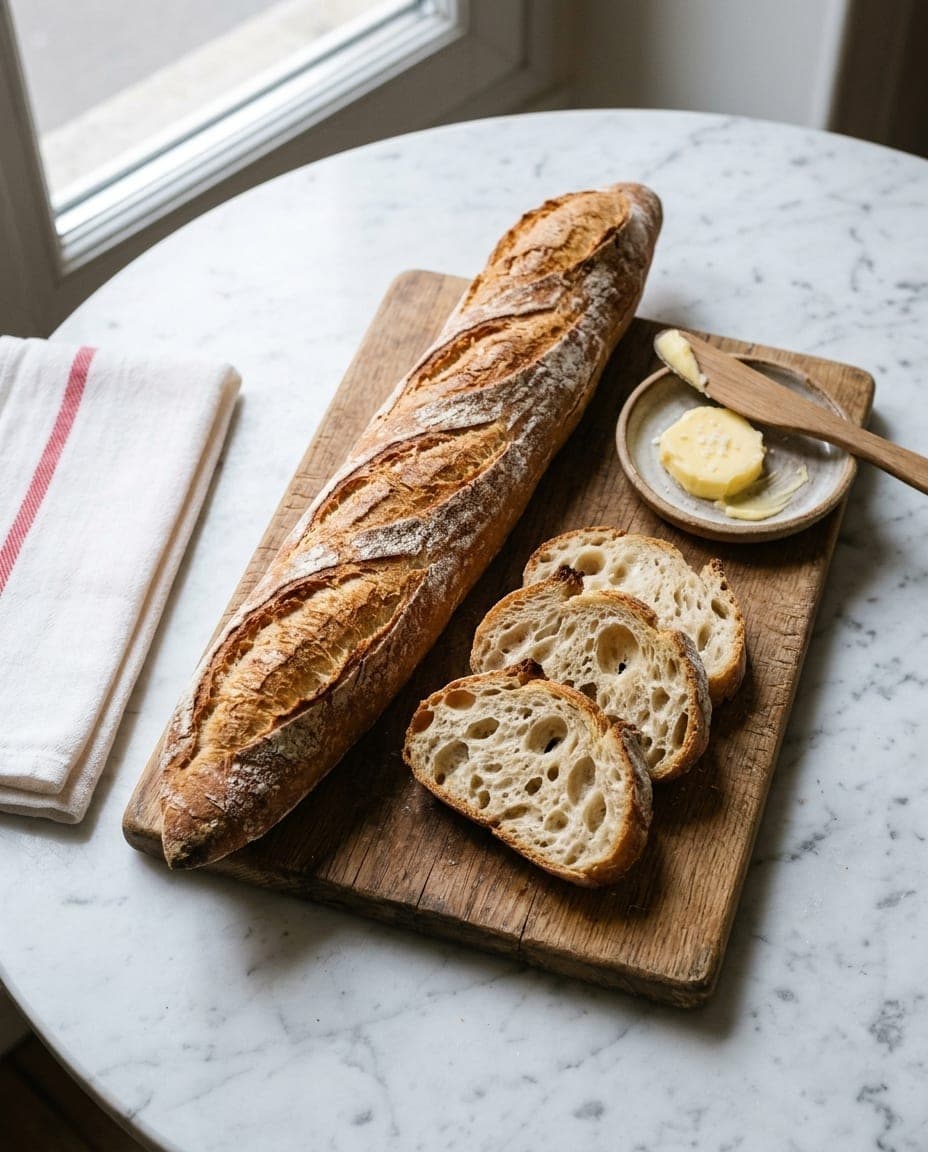
The simplest way to enjoy it is with a crusty baguette and butter. A slice of ham, folded or rolled, sits on a piece of buttered bread, the saltiness of the ham balancing the richness of the butter. It is also served with slices of ripe melon, where the sweetness balances the savoury notes of the cured meat.
For a drink, a red Irouléguy from the Basque Country is a classic local pairing, its tannins standing up to the salt and fat. A glass of cider or a light beer can also work.
The ham can also be used to flavour soups and stews, but the purest experience lies in tasting it raw, cold and thin-sliced. Good slices show a deep red colour with white fat that should feel soft to the touch.
Curious facts
- Local salt only. The salt must come from the salt works of the Adour basin; no other salt is allowed under the PGI rules.
- No smoke involved. Unlike many cured meats, Jambon de Bayonne is never smoked; its flavour comes from salt, air and time.
- A wind with a reputation. Victor Hugo described the hot south wind as "the wind from Spain that drives people mad".
- A fair with a long history. The Bayonne ham fair has been held since the 15th century.
- Fat as protection. The coating of pork fat applied during maturation stops the exposed meat from drying out too quickly.
- A regional pride. While known well beyond France, the ham remains bound up with the Basque Country and Béarn, where it is a source of local identity rather than just an export product.
Where to try it
The best place to taste Jambon de Bayonne is in the city of Bayonne itself, especially during the Easter ham fair when the hams are on display and samples are plentiful. Traditional taverns in the old town serve the ham with baguette and butter.
Outside the city, Basque country restaurants and rural inns in the Adour basin serve it as a matter of course, and some curing houses open their drying rooms to visitors. The ham is also widely available in delicatessens across Nouvelle-Aquitaine. It is a product of patience and place, best savoured where it was made.
Where to try it
1 region
 Wine Tasting31 destinations
Nouvelle-Aquitaine
This expansive region is the largest in France, boasting a stunning coastline along the Atlantic Ocean. Known for its diverse landscapes, Nouvelle-Aquitaine features the Pyrenees mountains, rolling vineyards, and historic towns. Bordeaux, the region's major city, is celebrated for its world-class wines, particularly Merlot and Cabernet Sauvignon. Other notable areas include the picturesque village of Saint-Émilion and the stunning Dune du Pilat, the tallest sand dune in Europe. The region's rich history is reflected in its architecture, with medieval castles and Roman ruins scattered throughout. Local markets offer artisan cheeses and fresh seafood, highlighting the region's culinary delights. Festivals celebrating wine and local culture are common, providing deeper insights into the area's heritage.
Wine TastingHikingCamper Van RentalsLocal Cuisine