Gratin dauphinois
Thin-sliced potatoes baked in cream and garlic, a Dauphiné classic
- Vegetarian
- Local name
- Gratin dauphinois
- Served with
- Roast lamb or beef
- Best eaten at
- A Dauphiné family table
- Pairs with
- Light red wine
What it is
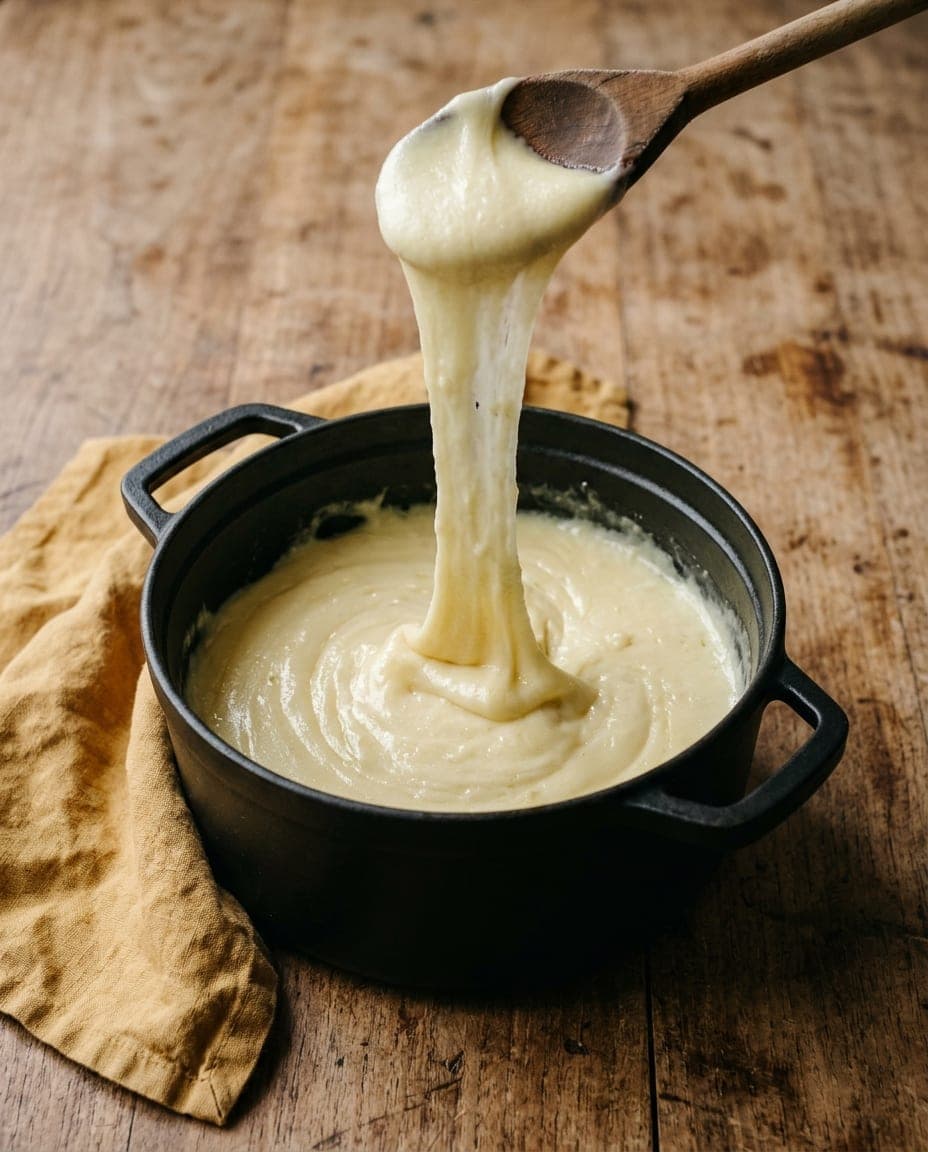
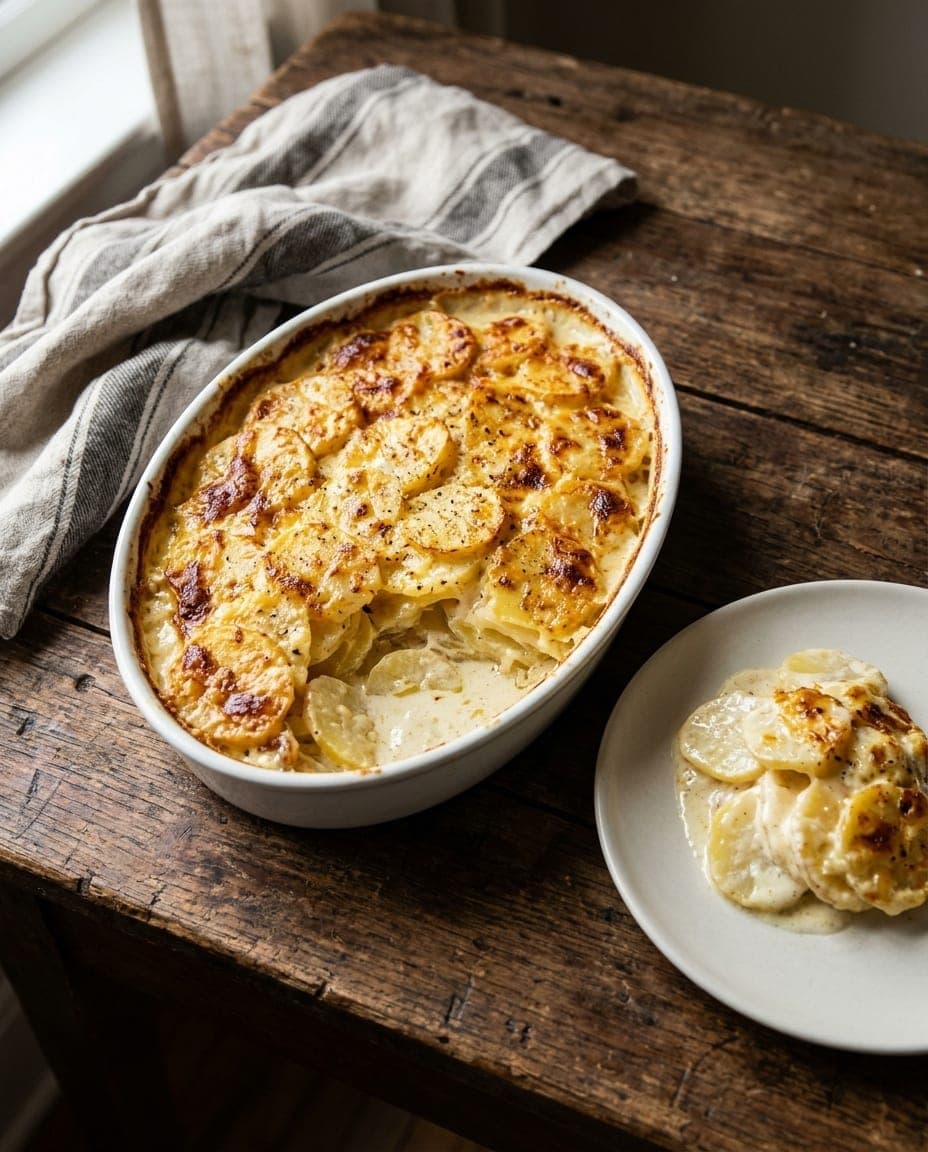
Gratin dauphinois is a dish of simple appearance but precise rules. It consists of thin slices of raw potato baked slowly in cream, or a mixture of milk and cream, seasoned with salt and pepper, and often infused with garlic. The result is a soft, creamy interior topped with a golden-brown crust that forms without the use of cheese or egg. The potatoes themselves release their starch into the liquid, creating a dense, velvety texture that holds together when served.
This dish belongs to the Dauphiné, the historic province around Grenoble and the surrounding Alpine valleys, now part of Auvergne-Rhône-Alpes. It is a regional speciality that has gained fame far beyond its home. The word gratin refers to the browned crust that forms on top, and by extension to the shallow dish it is baked in. In the Dauphiné, the rule is strict: a true gratin dauphinois contains no cheese. Its neighbour, the gratin savoyard from Savoy, is made differently, with cheese but no cream, and cooks in the Dauphiné keep the two firmly apart.
The texture is the defining feature. The potatoes are not rinsed after slicing, so that the starch remains to bind the cream. They are cut into uniform slices, usually a few millimetres thick, and arranged in overlapping layers. When baked slowly, the liquid reduces and the starch thickens it, creating a cohesive dish that can be cut with a spoon yet melts on the tongue. It is a dish of patience rather than technique, relying on time and temperature to achieve its character.
The history of the Dauphiné table
The origins of gratin dauphinois are not tied to a single inventor, but its first written mention is precise. On 12 July 1788, the Duke of Clermont-Tonnerre, lieutenant-general of the Dauphiné, served a gratin of potatoes with ortolans at a dinner for the municipal officers of Gap, in what is now the Hautes-Alpes.
Potatoes had reached Europe in the 16th century and gradually became an important crop in cooler mountain areas where wheat was harder to grow. Combined with the milk and cream of local herds, they made a rich dish to accompany the roasts of the winter months.
The dish gained wider recognition as French cuisine was codified and celebrated internationally, and it appeared in cookbooks that set out to define the culinary identity of specific regions. Not all of them respected the local rules: some well-known chefs published versions with cheese and eggs. Its spread was not one of sudden fame but of steady adoption, moving from family tables to restaurant menus as travel increased.
What goes into it
The ingredients are few, and their quality matters more than any quantity. There is no official recipe, yet the components remain consistent across traditional kitchens in Grenoble and the surrounding valleys.
- Potatoes: Waxy or all-purpose varieties are used, cut into thin, uniform slices. They are not rinsed, preserving the starch that thickens the dish.
- Cream and milk: Fresh cream, sometimes combined with whole milk, is poured over the layers. The ratio varies by cook, but the liquid must almost cover the potatoes.
- Garlic: A clove of garlic is rubbed around the inside of the buttered baking dish, or sliced thinly and layered with the potatoes to infuse the cream.
- Salt and pepper: These are the main seasonings, though some cooks add a pinch of nutmeg.
The dish is baked slowly until the top forms a golden crust and the interior is tender enough to be pierced easily. The process requires no stirring; the potatoes cook in the reducing liquid. If cheese is added, local cooks no longer consider it a gratin dauphinois.
How it is eaten
Gratin dauphinois is almost always served as a side dish rather than a main course. It accompanies roast meats, particularly lamb or beef. The richness of the potato dish balances the savoury flavour of the meat, creating a complete meal without needing additional sides.
The crust should be crisp on top, while the interior remains soft and creamy. A light red wine pairs well with the dish, cutting through the creaminess without overpowering the potato flavour.
It is not a dish typically eaten alone or as a starter. Its texture and richness call for a main course to balance it. In restaurants across Grenoble and the surrounding mountains, it appears on menus alongside other local specialities, serving as the classic accompaniment to roasted meats.
Where the dish belongs
The gratin dauphinois is rooted in the landscape of the Dauphiné, a region defined by its mountains and valleys. The tradition is strongest in the households of the region, where the dish has been a staple for generations.
In the cities of the region, such as Grenoble, the dish is found in traditional restaurants and family-run bistrots that specialise in local cuisine. Elsewhere, recipes are often diluted with cheese or other ingredients, so the purest versions are found in places that respect the distinction between gratin dauphinois and its cheese-topped cousins.
Potatoes are available year-round, but the gratin appears most often in winter, when roast meats are more common.
Curious facts
- The cheese rule is strict. A true gratin dauphinois contains no cheese; the Savoyard gratin, made with cheese but no cream, is treated as a separate dish.
- A dated debut. Its first recorded appearance was at a dinner in Gap on 12 July 1788.
- Starch does the work. The dish relies on potato starch to thicken the cream, requiring the potatoes to be sliced thinly and not rinsed before cooking.
- Served with roast meat. It is usually paired with lamb or beef, acting as a rich side rather than a standalone dish.
- No egg required. Unlike many baked potato dishes, this version does not use eggs to bind the layers, relying instead on the natural starch of the potatoes.
Where to try it
The best place to eat gratin dauphinois is in the Dauphiné itself, particularly in Grenoble and the surrounding mountains. Traditional restaurants serve the dish as a side to roast lamb or beef, often baked in large earthenware dishes for sharing. Family-run establishments are more likely to keep to the orthodox version without cheese.
For visitors to the region, a local auberge or a family table in the countryside offers the most authentic experience. Outside the Dauphiné, versions with cheese are common, so it is worth checking the menu description to be sure of tasting the true gratin dauphinois.
Where to try it
1 region
 Wine Tasting25 destinations
Auvergne-Rhône-Alpes
Nestled in the heart of France, this region is the second-largest, known for its diverse landscapes from the rugged mountains of the Alps to the volcanic terrain of the Massif Central. Lyon serves as a vibrant urban center, celebrated for its gastronomy and silk heritage. Off the beaten path, explore the historic villages of Le Puy-en-Velay, famed for its unique lentils and pilgrimage routes, or the picturesque landscapes of the Ardèche, with its stunning gorges. The region is also home to the picturesque vineyards of Beaujolais, producing renowned wines, and the stunning Lac d'Aiguebelette, one of the cleanest lakes in France. Seasonal festivals, like the Fête de la Gastronomie, showcase the local culinary delights, making this area rich in culture and history, ideal for a deep exploration of French traditions.
Wine TastingCamper Van RentalsHikingCastles