Grand aïoli
A meal of salt cod, vegetables and garlic emulsion from Provence
- Local name
- Grand aïoli
- Served with
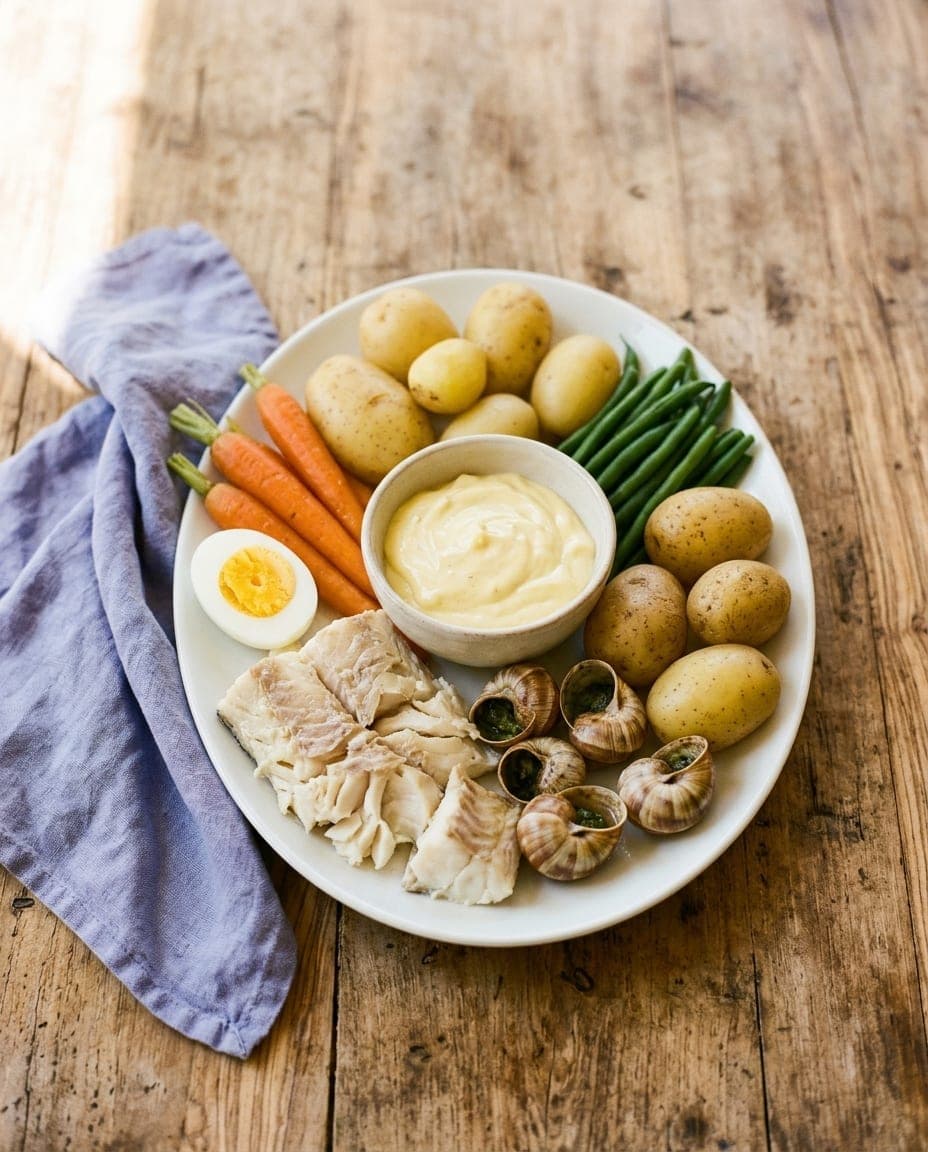
- Salt cod, vegetables, snails, eggs
- Best eaten at
- A Provençal village feast
- Pairs with
- Provence rosé
What it is
Grand aïoli, also called aïoli garni or simply aïoli, is a substantial meal rather than a side dish or condiment. It comes from Provence in the south-east of France, where it remains a central feature of village life. The dish is built around a thick emulsion of garlic and olive oil, placed in the centre of the table as the anchor for a spread of poached salt cod, boiled vegetables, hard-boiled eggs, snails and whatever seasonal produce is available.
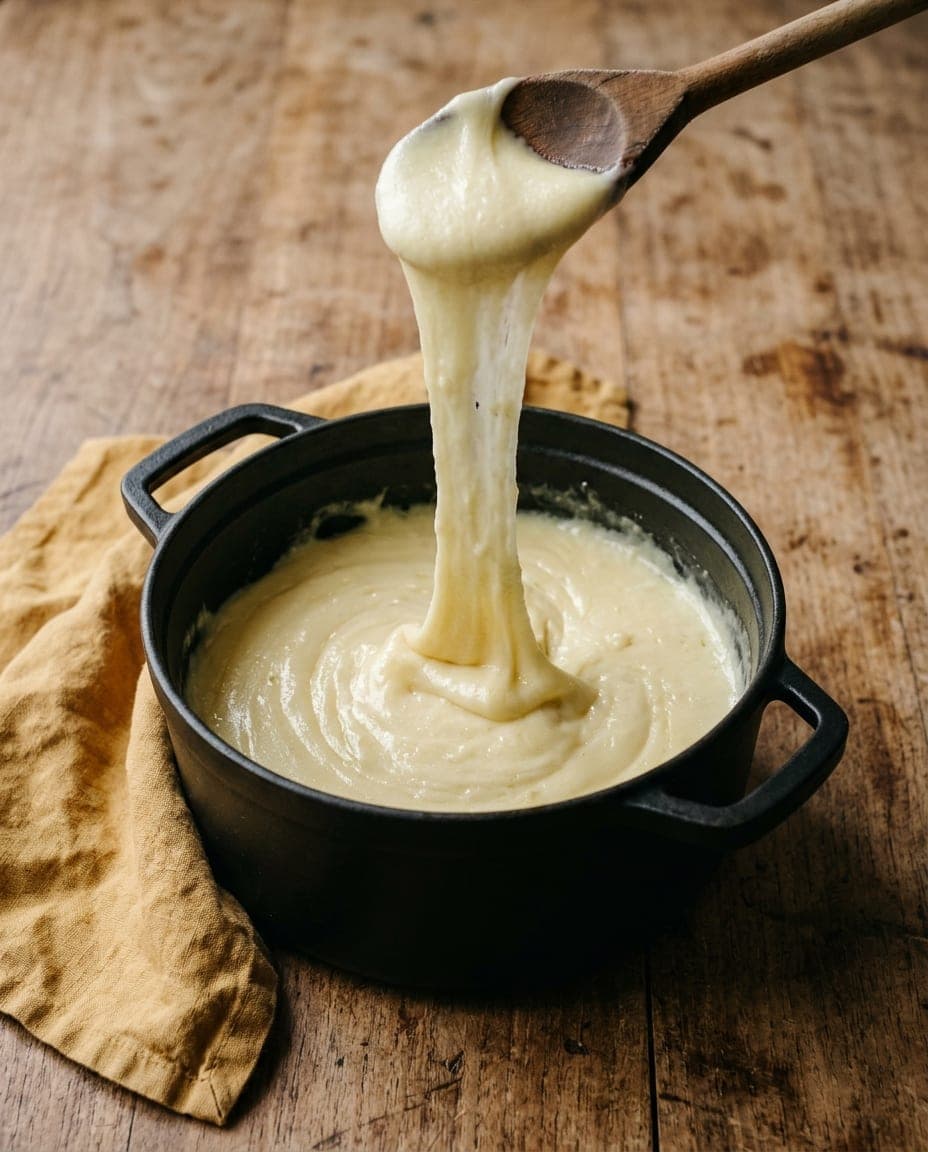
While many kitchens serve a garlic mayonnaise alongside fish or chips, the traditional Provençal grand aïoli is a full meal in its own right. The sauce is not merely drizzled over food; it is the main event. The texture is key: a true aïoli is thick enough to coat a spoon and hold its shape, achieved by slowly working the ingredients together until they bind into a single, creamy mass.
The scale of the meal varies with the occasion. In a family home, it might be a lunch for six or eight people. At a village feast it can be served to hundreds of people at long communal tables. It is a dish designed for sharing.
Fridays and summer feasts
The grand aïoli is linked to the rhythm of the Provençal year. It is traditionally eaten on Fridays, when the Catholic custom of abstaining from meat led households to prepare fish dishes, and it also belongs to Christmas Eve. Salt cod, which kept for months and needed only soaking and poaching, became the perfect partner for the garlic emulsion. The habit persists today, and Friday remains a reliable day to find the dish on menus across the region.
Beyond the weekly tradition, the grand aïoli is the star of summer village feasts. Many towns in Provence close their summer festivities with a giant communal aïoli. Tables are laid out in the town square, and the garlic sauce and platters of cod and vegetables are brought out for all to share.
What goes into it
The composition of the grand aïoli is fairly fixed, though the exact vegetables shift with the season. The core remains constant: a thick emulsion of garlic and olive oil, served with poached salt cod, boiled potatoes, carrots, green beans, beetroot or cauliflower, hard-boiled eggs and snails.
The sauce itself is the subject of much debate among cooks in Provence. The purist method uses only garlic cloves, a little salt and olive oil, pounded together in a large mortar until they become a single, smooth emulsion. Many cooks, and the version now usual around Marseille, add an egg yolk, which stabilises the sauce and gives it the look of a mayonnaise. Traditionalists argue about whether the egg belongs, but the debate is rarely hostile; it is a matter of preference and local custom. Either way, the challenge lies in the technique: if the oil is added too quickly, the mixture breaks and turns into a loose liquid.
The vegetables are boiled until tender but not mushy. Salt cod must be soaked for at least 24 hours to remove excess salt before being poached gently. Snails are traditionally boiled in a seasoned court-bouillon, often with fennel and onion, and some cooks use sea snails or whelks instead. The vegetables are not served with a separate dressing; the garlic emulsion is the only condiment required.
How it is eaten
The ritual of eating grand aïoli is designed for communal dining. The bowl of emulsion is placed in the centre of the table, surrounded by platters of the boiled vegetables, fish and snails. Diners help themselves to the cod and vegetables and add a generous spoonful of aïoli to each mouthful.
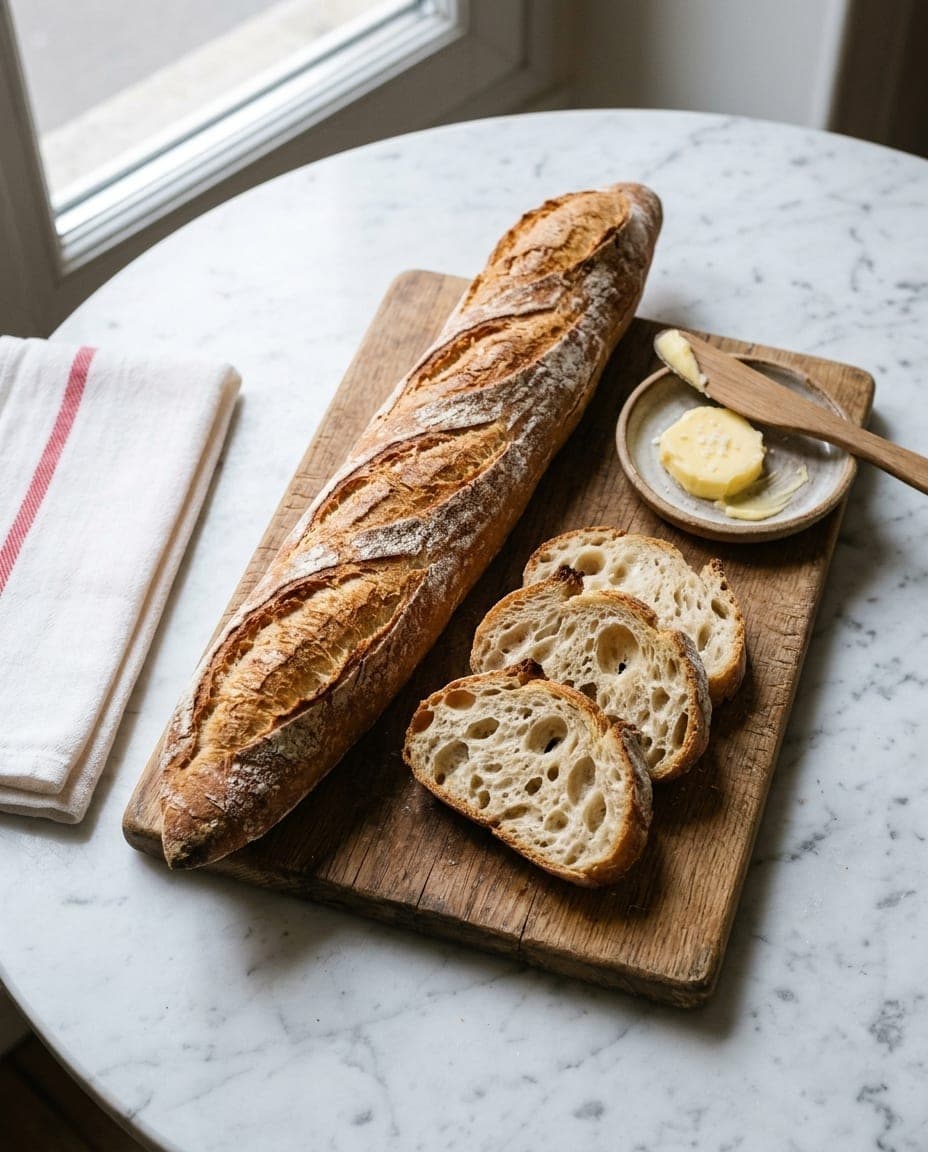
Bread plays a supporting role; a crusty loaf is often used to wipe up the remaining sauce once the main ingredients are finished. The shared bowl reinforces the social nature of the meal.
The pace is unhurried. Because the dish requires soaking, boiling and careful emulsification, it is rarely rushed in its preparation or consumption. It is a lunch that can last an hour or more, accompanied by conversation and a glass of local rosé or white wine.
Where it fits in Provence
The grand aïoli reflects the agricultural and social fabric of Provence. It combines local garlic, olive oil and vegetables with salt cod, long traded into Mediterranean ports from the North Atlantic fisheries. The dish is a product of the need to preserve food and the desire to gather people together.
It is not a dish for a hurried lunch. It belongs to the rhythm of the region, where food is prepared slowly and eaten with care. Whether at a small family table or a village feast, the grand aïoli remains a symbol of Provençal generosity and the enduring power of a shared meal.
Curious facts
- A cultural journal. The Provençal writer Frédéric Mistral founded a newspaper in 1891 called L'Aiòli, named after the sauce he described as concentrating the heat, strength and joy of the Provençal sun.
- The egg question. Purists insist that a true aïoli contains only garlic, salt and olive oil, while many cooks add an egg yolk to keep the sauce from breaking.
- A test of skill. Making a perfect emulsion by hand requires patience and technique. A broken batch is a common failure for those attempting the traditional method for the first time.
- Friday tradition. The link to salt cod stems from the Catholic practice of abstaining from meat on Fridays.
- A communal bowl. Rather than individual portions of sauce, the grand aïoli is usually presented with one large central bowl for everyone to share.
Where to try it
The most authentic experience of grand aïoli is found in the villages of Provence, particularly during the summer festival season, when towns such as Saint-Rémy-de-Provence, Graveson and Trets hold large communal aïolis. Many restaurants in Marseille and Aix-en-Provence also serve it, often as a Friday special.
A version served with a small pot of ready-made garlic mayonnaise is a simplified one. The true grand aïoli depends on a well-made emulsion and the communal aspect of the meal.
Where to try it
1 region
 Wine Tasting44 destinations
Provence-Alpes-Côte d'Azur
This picturesque region in southeastern France is known for its diverse landscapes, from the rugged Alps to the stunning Mediterranean coastline. It is the only region with direct access to the coast, featuring historic towns like Nice and the artistic haven of Saint-Paul-de-Vence. The region is famous for its lavender fields, particularly around Valensole, and its vineyards producing renowned wines such as Bandol and Côtes de Provence. Lesser-known villages like Moustiers-Sainte-Marie are rich in pottery traditions, while the Verdon Gorge offers breathtaking hiking and kayaking opportunities. Local markets showcase seasonal produce like olives, herbs, and artisan cheeses, enhancing the immersive experience of this vibrant region.
Wine TastingHikingCamper Van RentalsLocal Cuisine