Gougère
Savoury cheese puffs from Burgundy wine cellars
- Local name
- Gougère
- Best eaten at
- A Burgundy wine-cellar tasting
- Pairs with
- Chablis or white Burgundy
What it is
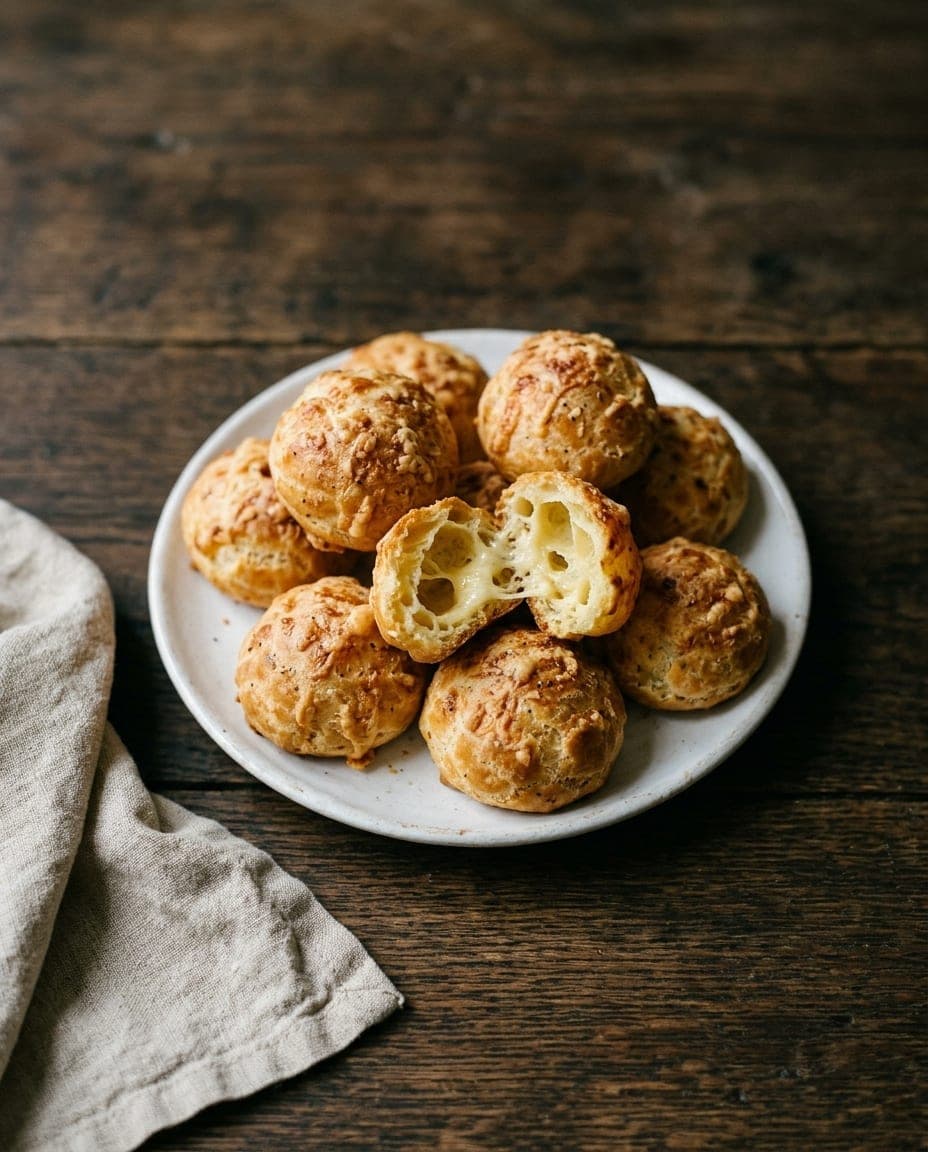
The gougère is a small savoury pastry from the Burgundy region of eastern France, and is often said to come from the town of Tonnerre in the Yonne. It is a puff of choux paste, baked until hollow and crisp on the outside while remaining soft within, flavoured with the sharp, nutty taste of grated cheese. Unlike the sweet choux pastries known elsewhere as profiteroles or cream puffs, the gougère contains no sugar in its dough. Instead, the paste is made from water, butter, flour and eggs before being mixed with generous amounts of Comté, Gruyère or Emmental cheese.
The result is a golden, airy bun that rises dramatically in the oven. The cheese melts into the pastry, creating pockets of savoury intensity within the light shell. Gougères are made as small individual rounds or piped into a larger ring to share among a group. The texture is distinctive: crisp on the first bite, giving way to a soft interior.
While choux pastry exists across France, the gougère is bound up with the wine culture of Burgundy. It is not merely a snack but part of the local tasting ritual, a savoury bite that sits comfortably alongside a glass of wine.
The cheese in the dough
The defining characteristic of a gougère is the cheese used within the dough. While recipes vary from kitchen to kitchen, tradition calls for a hard, aged cheese that can withstand the heat of the oven without losing its character. Comté, from the nearby Jura mountains, is a common choice for its complex nutty notes. Gruyère is equally traditional, and some bakers use Emmental, which melts into a smooth, elastic consistency.
The cheese is not a topping or a filling added after baking. It is mixed directly into the choux paste while it is still warm, before the mixture is piped onto the baking tray, and a little more is often scattered on top. As the dough bakes, the cheese melts into the walls of the puff, creating a savoury flavour that contrasts with the crisp exterior. The ratio of cheese to dough determines the final texture; too little and the pastry lacks substance, too much and the structure may collapse.
This method distinguishes the gougère from other savoury pastries. The cheese is integral to the body of the pastry itself, making every bite a blend of buttery dough and sharp dairy flavour.
A role in the wine cellar
The gougère found its enduring fame through its place in the Burgundy wine trade. In the region's wine cellars, known as caves, where producers host tastings for visitors and professionals alike, gougères are a familiar sight. They are savoury rather than sweet, so they do not clash with the delicate fruit and mineral notes of Burgundy wines.
During a tasting, guests are often offered a plate of gougères alongside their glasses of wine, sometimes warm, sometimes cold. The cheese provides a salty, fatty counterpoint between sips, and the pastry offers more flavour than plain bread. This is why they are rarely served as a dessert; their place is at the start of the meal, during the apéritif.
The creamy, salty profile of the cheese complements the acidity and fruitiness of white Burgundy wines such as Chablis or Meursault. This relationship between the gougère and the wine cellar is what gives the dish its cultural weight beyond being a simple snack.
How it is eaten
In Burgundy, the gougère is above all an apéritif item. When served warm, straight from the oven, the cheese is still soft inside the hollow shell. Diners take one or two pieces at a time, using their fingers as they would with other small pastries.
Beyond the cellar, it is offered alongside a glass of white wine or a kir, the local apéritif made with crème de cassis and white wine. In some cases, larger rings of gougère are placed on a central platter for sharing, allowing guests to pick pieces as they converse and taste.
The gougère also appears on menus in traditional restaurants and bistrots throughout the region. It may be served with charcuterie or as a standalone starter before a meal. However, its primary identity remains tied to the wine-tasting ritual.
Curious facts
- The hollow centre is intentional. Choux pastry relies on steam to expand; when baked correctly, the gougère is largely air inside.
- No sugar in the dough. Unlike its sweet cousin the profiterole, the gougère contains no sugar in its base paste, relying on the saltiness of the cheese for flavour.
- A Burgundian staple. While choux pastry is found across France, the savoury cheese version is most closely associated with Burgundy, and especially with Tonnerre in the Yonne.
- An old name. In earlier centuries the word gougère covered several different preparations, including cheese tarts; the choux version is the one that survived.
- A tasting companion. Its savoury profile sits easily alongside wine, unlike sweet pastries, which can leave a lingering aftertaste.
Where to try it
The most memorable experience is found in the wine cellars of Burgundy, from Chablis and the Yonne to the Côte de Beaune and Côte de Nuits. Many producers offer tasting sessions that include a plate of gougères. These cellars are often family-run and located among the vineyards themselves, offering a direct connection between the land and the food.
In towns such as Beaune, Chalon-sur-Saône and Dijon, traditional restaurants and small wine bars also serve them. The gougère is rarely a gourmet showpiece here; it is a humble item served with the same casual care as the wine itself, and the combination of a cheesy puff and a crisp, mineral white remains one of the region's most enduring culinary traditions.
Where to try it
1 region
 Castles5 destinations
Bourgogne-Franche-Comté
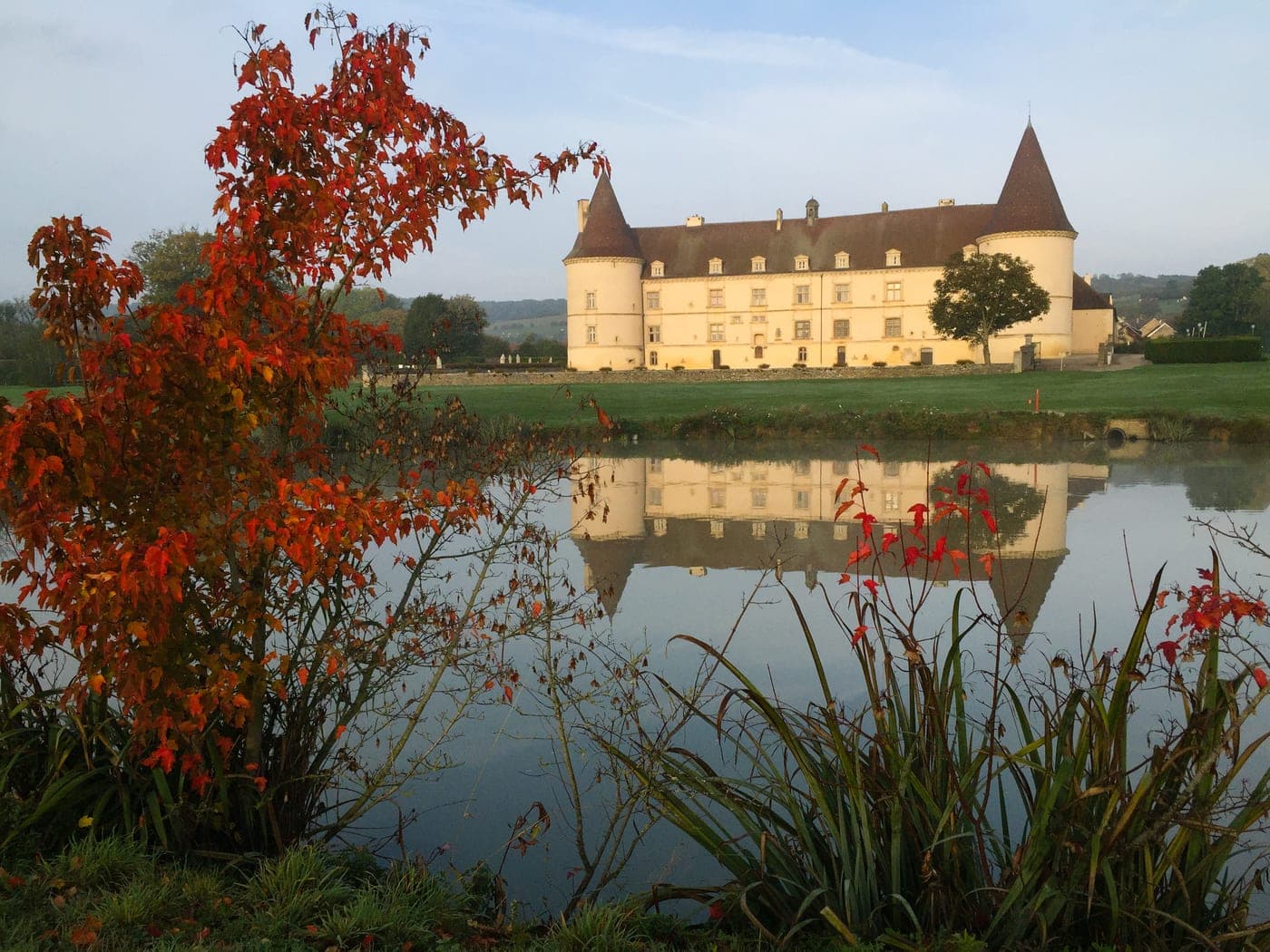
Bourgogne-Franche-Comté is France's largest region, rich in history and culture. It's renowned for its exceptional wines, particularly those from the Burgundy area, which produce some of the world's finest Pinot Noir and Chardonnay. The region features historic cities like Dijon, known for its mustard and vibrant markets, and Besançon, famous for its citadel and watchmaking heritage. Natural landscapes include the Jura mountains and the picturesque Doubs River, perfect for hiking and cycling. The region is dotted with charming villages such as Arbois and Nans-sous-Sainte-Anne, offering a taste of local crafts and cuisine. Festivals celebrating wine and regional traditions add to its cultural depth, attracting those looking to experience France beyond the usual tourist paths.
CastlesWine TastingHiking