Coq au vin
A rooster braised slowly in red wine with mushrooms and lardons from Burgundy
- Local name
- Coq au vin
- Served with
- Boiled potatoes or noodles
- Best eaten at
- A Burgundian bistro
- Pairs with
- Red Burgundy (Pinot Noir)
What it is
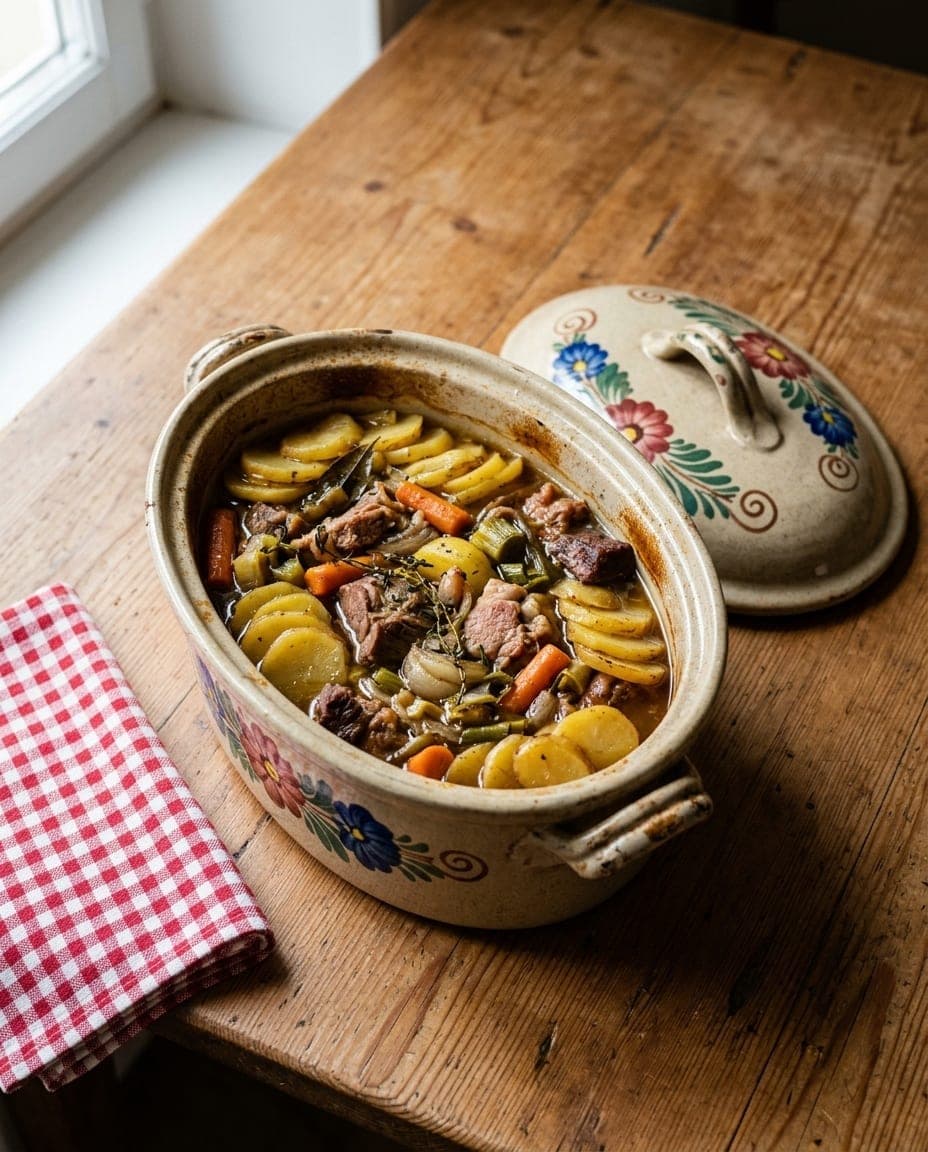
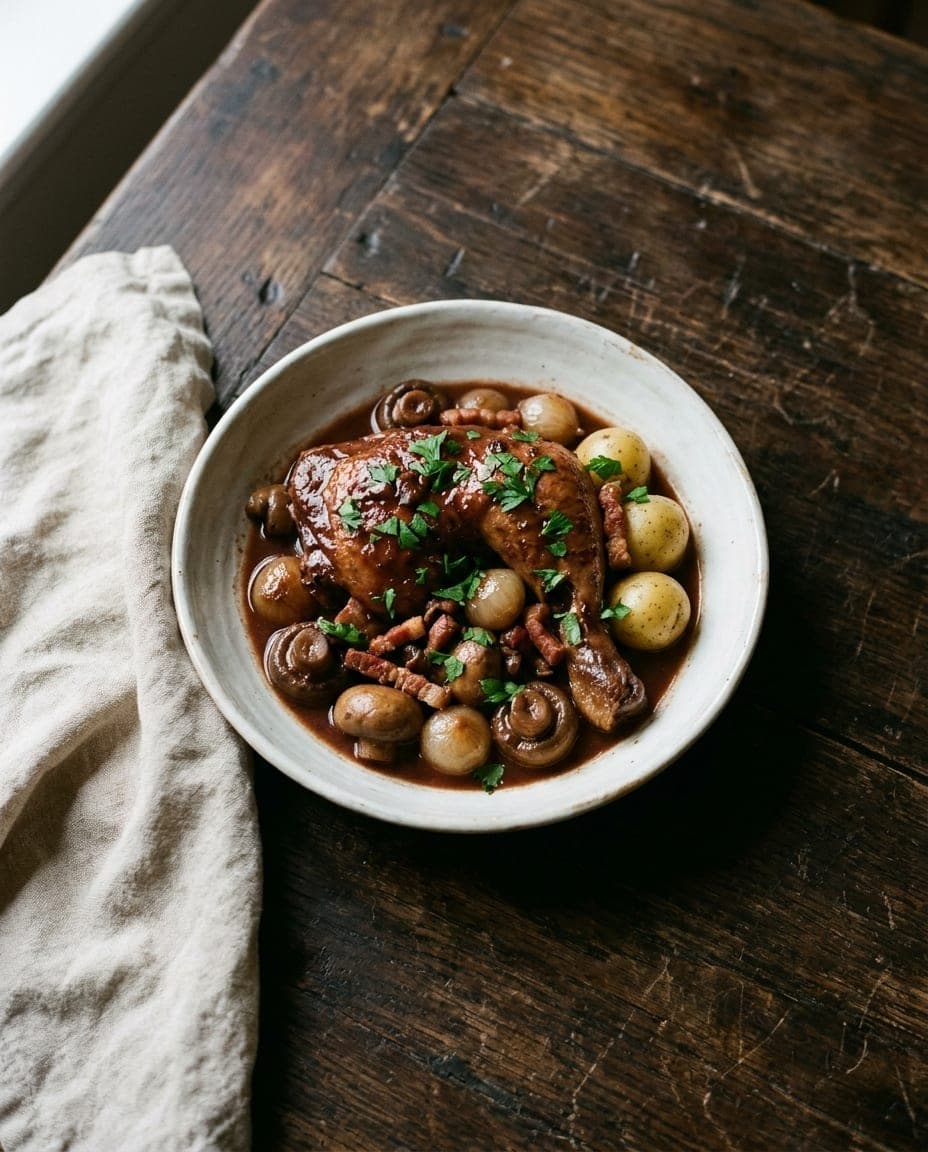
Coq au vin is one of the most recognised dishes of French cooking, most closely associated with Burgundy, in today's Bourgogne-Franche-Comté. It consists of poultry, traditionally an old rooster, braised slowly in red wine until tender, then served in a thickened wine sauce with lardons, mushrooms and small onions.
The name translates literally to "rooster in wine". While the term rooster remains on menus, the bird used today is usually a free-range chicken. An old cock was once essential to the recipe because its tough flesh required long hours of slow cooking in an acidic medium to become edible. Modern chickens are more tender and cook faster, yet the method remains the same.
The sauce is the heart of the dish. In older versions, it is thickened at the end with the bird's own blood, in the manner of a civet. This gives the sauce a dark colour and a distinctive, iron-rich taste. Most contemporary kitchens instead thicken it with flour, either as a roux or a beurre manié, a paste of equal parts soft butter and flour, which gives a smooth, stable sauce.
The history of the tough bird
A popular legend links the dish to the Gallic chieftain Vercingetorix and Julius Caesar: the Gauls are said to have sent the Roman general a rooster as a symbol of defiance, and Caesar to have returned the gesture by inviting them to eat it cooked in wine. There is no historical evidence for the tale, which is best read as a story that gives a humble peasant dish a heroic ancient past.
The reality lies much closer to the practical needs of rural life. In the Burgundian countryside, as across rural France, keeping poultry was common. A rooster kept for breeding would eventually become too tough for quick frying or roasting. Instead of discarding it, a cook would place the bird in a pot with wine, onions and bacon and let it simmer for hours. The acidity of the wine broke down the connective tissues, turning a tough old bird into a meal that could feed a family.
The dish evolved alongside the development of Burgundian viticulture. As the region became famous for its red wines, particularly Pinot Noir, it was natural to use the local produce as the braising liquid. Written recipes only appear in the early 20th century, after which the dish moved from farm kitchens to bistros in Paris and Dijon, eventually becoming a staple of French gastronomy.
What goes into it
The core components are:
- Poultry: Traditionally an old rooster, now usually a free-range chicken. The meat should be dark and flavourful.
- Red wine: A dry red from Burgundy is the standard choice, typically Pinot Noir. The wine must be drinkable on its own; a poor wine will result in a poor sauce.
- Lardons: Thick strips of salted pork belly or bacon, often smoked, which provide fat and a salty counterpoint to the wine.
- Mushrooms: Button mushrooms are the classic choice, sautéed separately before being added to the stew to retain their texture.
- Pearl onions: Small white onions, peeled and whole, which soften and sweeten during the long cooking process.
- Aromatics: Garlic, thyme, parsley, bay leaves and sometimes a splash of brandy or marc, flamed, are used to deepen the flavour.
The herbs are often tied together as a bouquet garni.
How it tastes and what accompanies it
The final result is a dark, glossy dish where the meat is deeply infused with the flavour of the wine. The lardons offer a chewy, salty contrast to the soft onions and tender mushrooms. Because the wine is cooked down, the alcohol evaporates, leaving behind a concentrated fruitiness that balances the fat of the pork.
Coq au vin is typically served as a main course, often at lunch or dinner. It is best eaten with boiled potatoes or egg noodles, which act as a neutral base to absorb the sauce. Crusty bread is often used to mop up the remaining sauce.
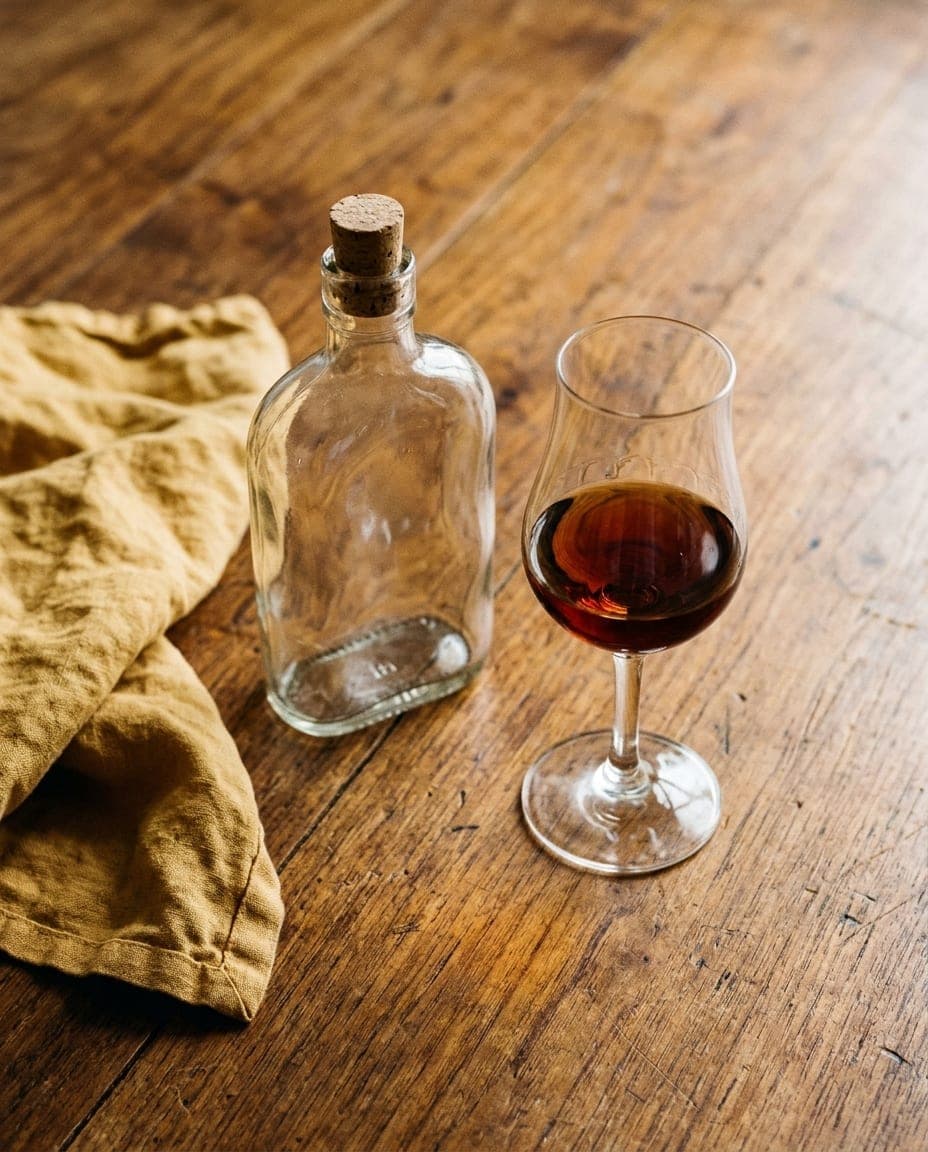
A glass of red Burgundy, specifically Pinot Noir, is the traditional companion. Ideally it matches the wine used in the cooking.
Where it comes from
Burgundy is generally regarded as the home of coq au vin, a region where both poultry-keeping and winegrowing were part of rural life.
While the dish is now served across France and internationally as a symbol of French country cooking, other wine regions have their own versions: coq au Riesling in Alsace, made with white wine, and coq au vin jaune in the Jura, often with morels.
The dish is closely linked to another Burgundian classic, bœuf bourguignon. Both dishes share the same garniture bourguignonne, the combination of lardons, mushrooms and pearl onions. The difference lies in the main protein: beef for one, poultry for the other.
Curious facts
- The blood thickening: Blood-thickened versions are rare today, as fresh blood is difficult to obtain and handle.
- The wine rule: A fundamental rule of the dish is that the wine used for cooking must be drinkable. If a cook would not drink it from a glass, it should not go into the pot.
- A television star: The recipe in Mastering the Art of French Cooking (1961), and Julia Child's demonstrations of it on The French Chef, helped make coq au vin one of the best-known French dishes in America.
- Other wines, other birds: Alsace has coq au Riesling, the Jura coq au vin jaune, and there are versions made with Champagne or Beaujolais.
Where to try it
The best place to eat coq au vin is in a Burgundian bistro, particularly in towns like Beaune, Dijon or Chalon-sur-Saône. These establishments often serve the dish as a daily special or on a fixed menu.
In rural areas, the dish may be found in auberges or small farmhouses that serve traditional regional cooking. Some offer a version closer to the original, made with an older bird.
The dish is available year-round, and a simple meal of coq au vin with boiled potatoes and a glass of red wine is one of the most direct ways to taste the region's culinary heritage.
Where to try it
1 region
 Castles5 destinations
Bourgogne-Franche-Comté
Bourgogne-Franche-Comté is France's largest region, rich in history and culture. It's renowned for its exceptional wines, particularly those from the Burgundy area, which produce some of the world's finest Pinot Noir and Chardonnay. The region features historic cities like Dijon, known for its mustard and vibrant markets, and Besançon, famous for its citadel and watchmaking heritage. Natural landscapes include the Jura mountains and the picturesque Doubs River, perfect for hiking and cycling. The region is dotted with charming villages such as Arbois and Nans-sous-Sainte-Anne, offering a taste of local crafts and cuisine. Festivals celebrating wine and regional traditions add to its cultural depth, attracting those looking to experience France beyond the usual tourist paths.
CastlesWine TastingHiking