Confit de canard
Duck legs slow-cooked in their own fat until tender, then crisped
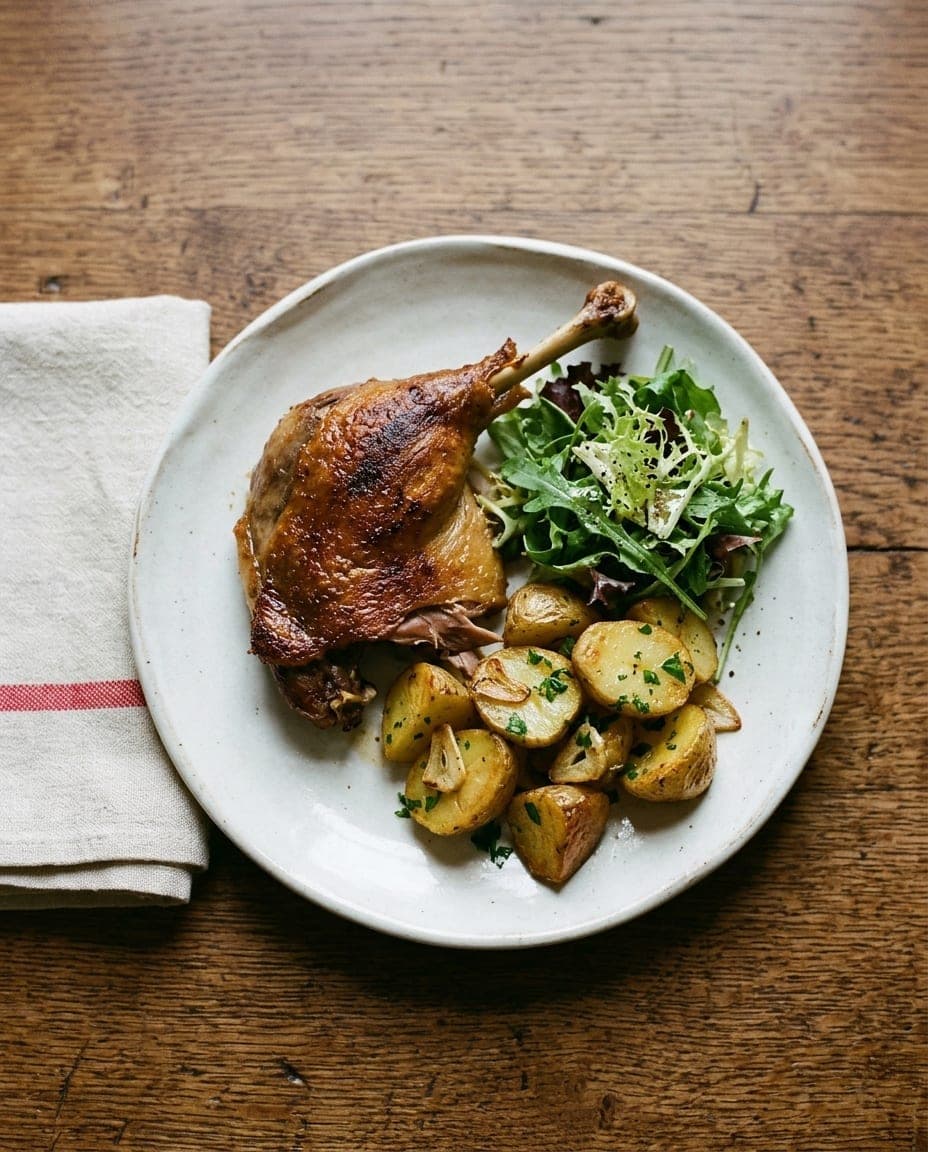
- Local name
- Confit de canard
- Served with
- Sarladaise potatoes, green salad
- Best eaten at
- A Périgord farmhouse auberge
- Pairs with
- Cahors or Madiran
What it is
Confit de canard is a dish of deep roots in the south-west of France, particularly the Périgord, Gascony, Quercy and the Landes, in today's Nouvelle-Aquitaine and Occitanie. It consists of duck legs that have been salted overnight with herbs, then cooked slowly until the meat is falling off the bone, all while submerged in their own rendered fat. The name comes from the verb confire, which means to preserve. Before the arrival of refrigeration, this method allowed households to keep duck meat for months in a cool larder without it spoiling.
Today, the dish is no longer a necessity but a celebration of technique and flavour. The process demands patience: the legs must be salted, then cooked at a very low temperature so they soften without breaking apart. When served in a traditional setting, the legs are lifted from the pot of fat and fried skin-side down in a hot pan until the skin turns hard and glassy while the meat remains soft and succulent. The result is a contrast between a crisp, salty crust and a melting interior that has absorbed the scent of thyme and garlic.
Where it comes from
The story of confit de canard belongs to the rural economy of the south-west, where the duck was raised for multiple purposes. In areas like the Landes, the Gers and the Périgord, farmers kept ducks (and geese) largely for their foie gras, but every part of the bird was put to use. The fat was rendered down to preserve the meat, while the legs were salted and cooked in that same fat. The practice is long established in the region, tied to the need to store meat through the winter.
While similar preservation techniques exist across Europe, the specific application to duck legs became a hallmark of Gascony and the Périgord. Although it now appears on bistro menus across France, it remains a regional speciality rooted in the valleys of the Garonne and the Dordogne, a landscape where poultry farming was central to daily life.
What goes into it
The duck legs themselves are the star, usually taken from ducks raised in the south-west, typically the Mulard (a Muscovy–domestic duck cross) or the Muscovy itself, raised for foie gras and with rich, dark meat suitable for slow cooking. The magret is the breast of these same birds.
- Duck fat: Rendered from the bird itself, this is the cooking medium and the preserving agent. It is often strained and reused, accumulating flavour over time.
- Garlic: Whole cloves are used during the salting process to infuse the meat with a sharp, aromatic base.
- Thyme: Fresh sprigs add an earthy, woodsy note that cuts through the richness.
- Bay leaves: These provide a subtle bitterness and floral undertone to balance the saltiness.
- Salt: Coarse salt is applied generously before cooking to draw out moisture and cure the meat.
The dish is often served with pommes sarladaises, sliced potatoes fried in duck or goose fat with garlic and parsley, which absorb the same savoury notes as the meat. White beans are another common accompaniment, particularly when the confit is used as part of a larger stew like the cassoulet.
How it is eaten
In its traditional form, confit de canard is a main course rather than a starter. It is typically served on a warm plate with the skin side up, showing off the crisp texture. The meat is so tender that it often falls away from the bone when touched with a fork. Diners usually expect to eat it with a side of green salad dressed with a sharp vinaigrette to cut the fat, or with the aforementioned Sarladaise potatoes.
The dish pairs naturally with the red wines of the south-west. A glass of Cahors, known for its dark, full body and notes of black fruit, complements the gamey flavour of the duck. Similarly, a Madiran from the nearby Pyrenees foothills, with its tannic structure, stands up well to the fatty texture. Both are long-standing regional partners for the dish.
In a ferme-auberge, a farmhouse restaurant, the serving style can vary slightly. Some kitchens serve the leg whole, while others cut it into pieces before frying. The key is that the skin must be rendered until it is crisp and the meat remains moist.
The whole-duck economy
In the Périgord and Gascony, the duck is treated as a complete resource. While foie gras may be the most famous product, the breast becomes magret, the gizzards and wings are confited, and the fat is kept for cooking.
The practice of confit is bound up with the seasonal rhythm of the south-west. Ducks were fattened in autumn and winter, and their fat was rendered in large quantities in the colder months. The legs were then salted and stored in jars or earthenware pots, covered with a layer of solidified fat to seal out air. This method allowed families to eat duck meat well into the spring, long after the birds had been slaughtered.
This was a practical solution for rural households who needed to make food last, and the legacy is visible in the way local cooks still use duck fat as a primary cooking medium.
Curious facts
- The fat is reused. Strained duck fat is kept and used again for further confits or for frying potatoes, carrying flavour from one batch to the next.
- Not just a leg. While the legs are the most famous part, the technique applies to other parts of the duck, including the wings, gizzards and even the breast; goose is confited in the same way.
- A regional identity. Tinned and jarred confit is sold all over France, but the dish remains most closely tied to the duck-farming country of the south-west, where it is a fixture of farmhouse menus.
Where to try it
The best place to eat confit de canard is in a ferme-auberge, a farmhouse restaurant in the Périgord or Gascony. Many raise their own ducks. They are scattered through the countryside of the south-west, away from the busy tourist centres, and a glass of Cahors or Madiran is the natural accompaniment.
Where to try it
1 region
 Wine Tasting31 destinations
Nouvelle-Aquitaine
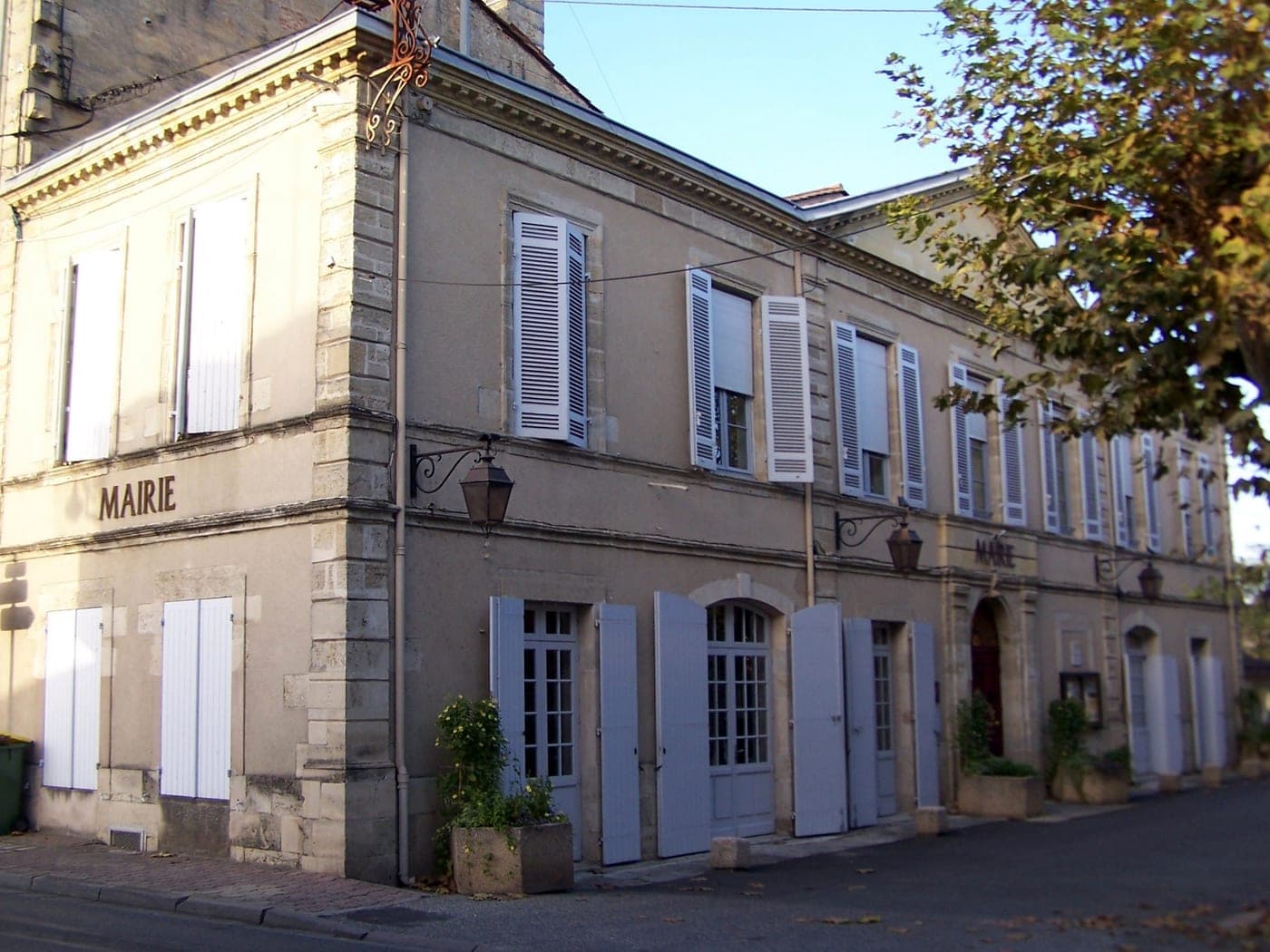
This expansive region is the largest in France, boasting a stunning coastline along the Atlantic Ocean. Known for its diverse landscapes, Nouvelle-Aquitaine features the Pyrenees mountains, rolling vineyards, and historic towns. Bordeaux, the region's major city, is celebrated for its world-class wines, particularly Merlot and Cabernet Sauvignon. Other notable areas include the picturesque village of Saint-Émilion and the stunning Dune du Pilat, the tallest sand dune in Europe. The region's rich history is reflected in its architecture, with medieval castles and Roman ruins scattered throughout. Local markets offer artisan cheeses and fresh seafood, highlighting the region's culinary delights. Festivals celebrating wine and local culture are common, providing deeper insights into the area's heritage.
Wine TastingHikingCamper Van RentalsLocal Cuisine