Carbonnade flamande
Beef braised in brown beer with onions, gingerbread and mustard
- Local name
- Carbonade flamande
- Served with
- Frites
- Best eaten at
- A Lille estaminet
- Pairs with
- Flemish brown ale or bière de garde
What it is
Carbonnade flamande, also written carbonade flamande – dictionaries accept both spellings – is the defining stew of French Flanders. It belongs to the same family as Belgian stoofvlees, a dish that crosses the border between the Nord department and Belgium with little distinction in ingredients or method. The word carbonade comes from the Provençal carbonada or Italian carbonata, from the word for charcoal: it first meant meat grilled over embers, and only later came to describe this slow braise in the north.
The dish consists of large chunks of beef braised slowly in beer until the meat falls apart. It is distinguished by a balance of sweet, sour and bitter flavours that no wine-based stew can quite replicate. The sweetness comes from caramelised onions, brown sugar and pain d'épices, the region's spiced gingerbread. Sourness arrives through a splash of vinegar, while the bitterness is provided by the malt of the beer.
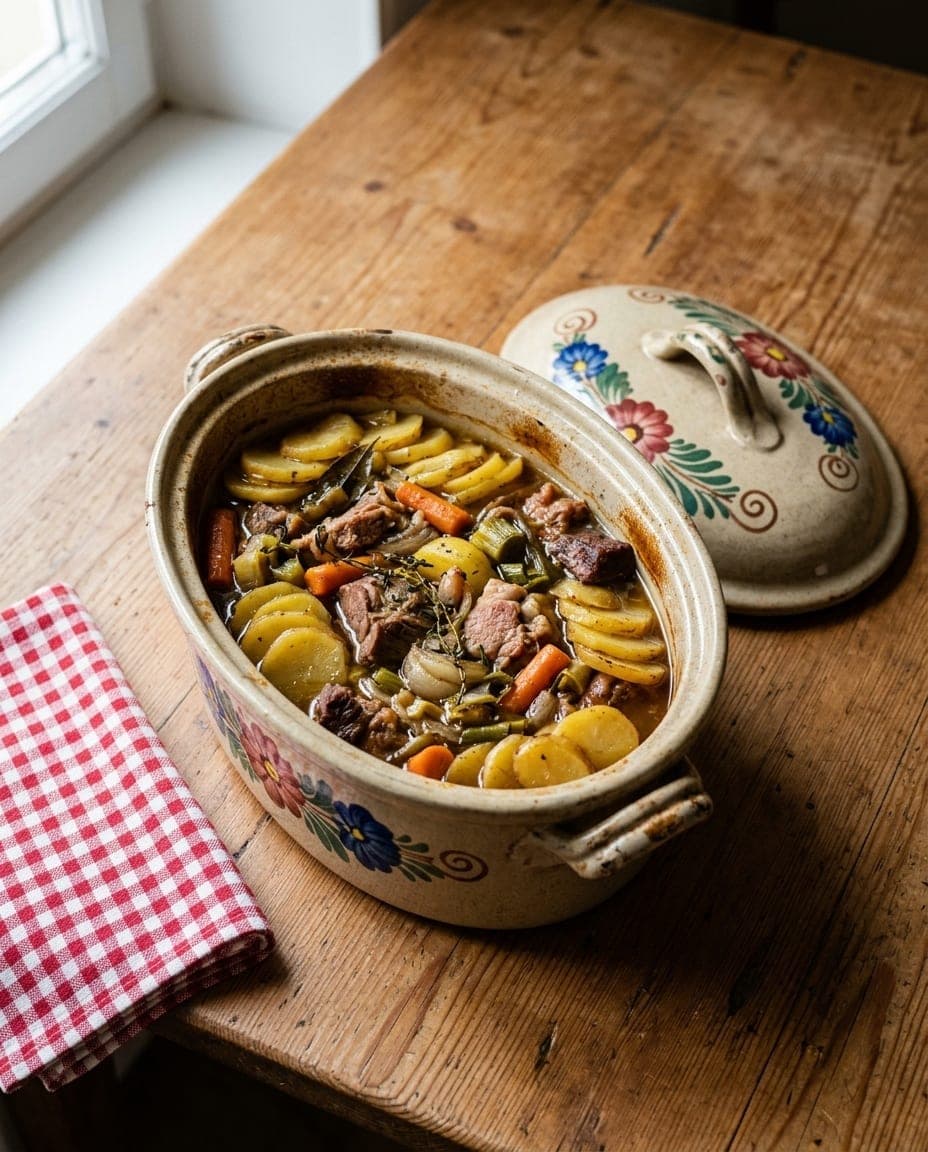
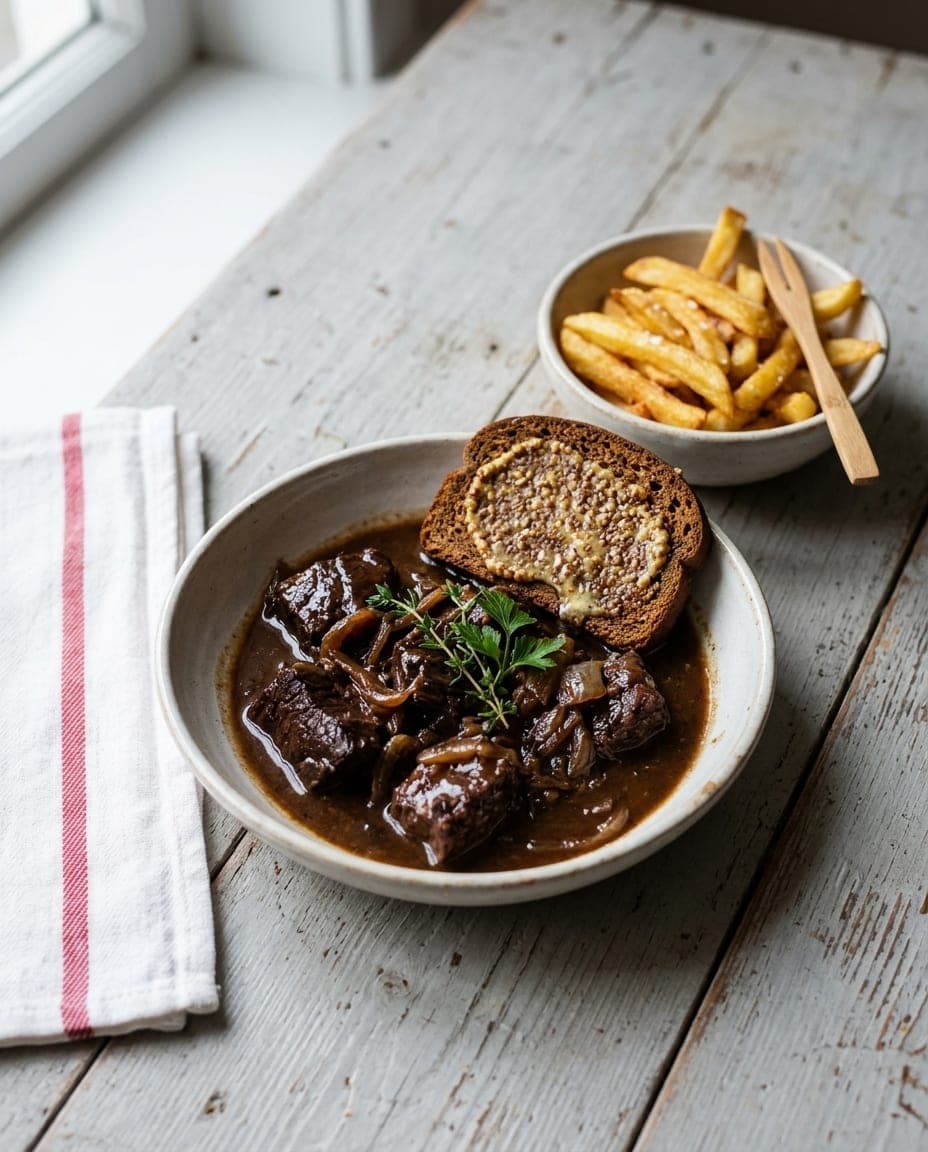
Unlike many stews, carbonnade flamande relies on slices of gingerbread or bread spread with mustard to thicken the liquid. These sit on top of the meat during cooking, dissolving into the sauce and creating a deep, glossy texture that clings to the beef and onions. The result is a dark brown stew that is served hot in a ceramic bowl or earthenware pot.
The borderless history
The dish has no single point of origin because the region it comes from was long a fluid frontier between French and Flemish territories. For centuries, the area now in the Hauts-de-France and the Belgian province of West Flanders shared a language, a diet and a way of life that ignored political borders. The culinary traditions overlapped: beef braised in local beer, sweetened with gingerbread, and served with fried potatoes.
In France, the dish is called carbonnade flamande. In Belgium, it is known as stoofvlees or stoverij in Dutch, or carbonades flamandes in French. Despite the different names, a cook in Lille and a cook in Ghent would make very similar versions. Long, slow cooking in beer was a practical way to tenderise tougher cuts of beef.
The dish became a staple of the estaminet, the traditional Flemish café-tavern. These small taverns served as community hubs where people gathered to eat a hearty meal that could be prepared in advance and kept warm on the stove. The recipe has been passed down through families for generations.
Where it belongs
Carbonnade flamande belongs to the far north of France, particularly Lille and the Flemish towns and countryside of the Nord, with versions found across the wider Hauts-de-France. It is far less common elsewhere in France and appears in Paris mainly at restaurants that specialise in northern French cooking.
Today, the dish is a point of local pride in Lille. It appears on the menu of almost every traditional estaminet in the city, often listed as a house speciality.
What goes into it
There is no single official recipe, but the building blocks remain consistent:
- Beef, usually a tough cut such as chuck or shin, cut into large chunks that need long cooking to soften.
- Beer, usually a brown or amber beer such as a local bière de garde, which provides the colour and malty backbone of the sauce. Some cooks use a blonde beer, but darker beers are the norm.
- Onions, used in generous quantities. They are sliced and cooked slowly until golden brown and caramelised, forming the base of the stew.
- Pain d'épices and brown sugar, such as cassonade or vergeoise, which add sweetness and a subtle spice note to balance the bitterness of the beer.
- Vinegar, added in small amounts to sharpen the sauce.
- Mustard, spread on the gingerbread or bread placed on top of the stew to thicken the sauce as it cooks.
- Herbs, typically thyme and bay, sometimes with cloves.
The final texture is thick and glossy, with the onions melting into the sauce and the beef becoming tender enough to cut with a spoon.
How it is eaten
Carbonnade flamande is almost always served as a main course. It arrives in a deep earthenware bowl or a small cast-iron pot, often still bubbling. Every bite should include beef, soft onions and a generous amount of the dark, glossy sauce.
The traditional accompaniment is frites, served on the side so they stay crisp, ready to be dipped into the sauce. Boiled potatoes are also an option, crushed into the sauce on the plate, but fries are the usual choice in estaminets.
A glass of beer similar to the one used in the cooking is the classic pairing. A brown ale or a bière de garde echoes the malt flavours and cuts through the richness with its carbonation. Bread is often on the table to soak up any remaining sauce.
Curious facts
- Gingerbread as thickener. Instead of relying only on flour, carbonnade flamande uses slices of gingerbread or bread spread with mustard, which dissolve into the sauce and give it a velvety texture.
- A shared border dish. Very similar versions are cooked in Lille and Ghent, reflecting the long shared history of French and Belgian Flanders.
- A grilling word. The name originally referred to meat grilled over charcoal, not stewed – a shift in meaning that food historians have found hard to explain.
- A winter favourite. The dish is particularly popular in colder months, when the slow cooking fills the kitchen with a deep, spicy aroma.
Where to try it
The best place to eat carbonnade flamande is in an estaminet in Lille or one of the surrounding towns of French Flanders. These small taverns, often with low ceilings and wooden beams, are where the dish feels most at home.
The estaminets of Lille are the most accessible option, with many located in and around the old town. A visit to a local brewery in the region might also offer a chance to taste the kind of beer used in the stew, though the dish itself is best enjoyed in the tavern where it belongs.
Where to try it
1 region
 Wine Tasting3 destinations
Hauts-de-France
Hauts-de-France is the northernmost region of France, known for its rich industrial heritage, unique cultural blend, and stunning coastal landscapes along the English Channel. Lille, the largest city, boasts vibrant Flemish architecture and a thriving arts scene. The region is the birthplace of French Impressionism, with museums dedicated to renowned artists like Van Gogh. The Somme Valley offers historic World War I sites, while the Opal Coast features breathtaking cliffs and charming fishing villages. Known for its local cuisine, Hauts-de-France is famous for dishes like 'potjevleesch' and 'moules-frites,' providing an authentic taste of the area. Off the beaten path, explore towns such as Arras, with its grand squares, or the serene countryside of the Avesnois Natural Park, rich in biodiversity and picturesque landscapes.
Wine TastingCamper Van RentalsHiking