Brie de Meaux
The soft, bloomy-rind cheese of the Brie country known as the king of cheeses
- Local name
- Brie de Meaux
- Served with
- Baguette
- Best eaten at
- A French cheese course
- Pairs with
- Champagne or light red
What it is
Brie de Meaux is a large, flat cheese made from raw cow's milk, named after the market town of Meaux in the Brie country east of Paris. It belongs to the family of soft cheeses with a bloomy white rind, but its size and texture set it apart from many others. The wheel is wide and low, 36 to 37 cm across and weighing around 2.8 kg, and is usually sold as wedges cut from the whole rather than as individual small rounds.
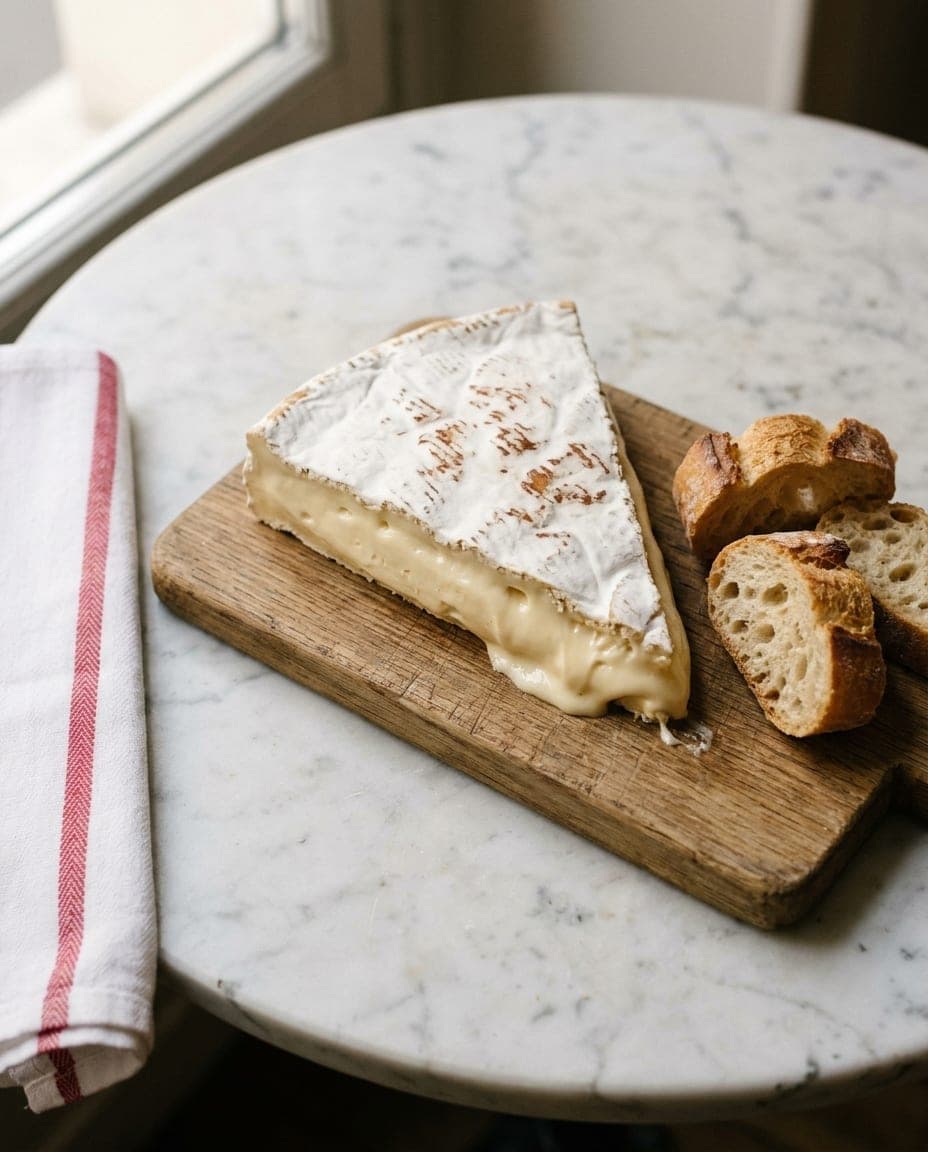
The cheese is defined by its appearance and its scent. When ripe, the paste inside is pale straw in colour, supple and slightly bulging at the edge where the rind meets the interior. The white crust, formed by a specific mould, is edible and contributes to the experience. A properly matured wheel smells of mushroom, undergrowth and cellar, with no hint of ammonia. This is not a sharp or salty cheese; it is creamy, rich and deeply savoury, often described as having notes of cream, butter and hazelnut.
It is distinct from other cheeses that share the name Brie. The most notable difference lies with Brie de Melun, named after a town south-west of Meaux. That cheese is smaller in size, saltier on the palate and possesses a stronger, more intense flavour. Industrial pasteurised brie cannot carry the name at all.
The history of the king of cheeses
The reputation of this cheese is tied to a story that has circulated for over two centuries, though its details remain a matter of debate. It is widely repeated that during the Congress of Vienna in 1814–15, where diplomats from across Europe gathered, the French statesman Talleyrand championed Brie de Meaux and it was hailed as the king of cheeses.
Whether the event happened exactly as described is not certain. The cheese was already popular in Paris long before 1815, and the story may have been embellished over time.
The cheese has been made in the Brie country for centuries. It was traditionally produced on farms and sold at the Meaux market to Parisian ripeners. In the early 19th century, production spread east towards the Meuse, where large dairies were developing, and today most Brie de Meaux is made in dairies rather than on farms, with little production left around Meaux itself.
Brie de Meaux became an AOC in 1980 and an EU protected designation of origin in 1996. The protection ensures that only cheese made from raw milk in the defined area, following strict rules, can bear the name. That area covers Seine-et-Marne and parts of the Loiret, Aube, Marne, Haute-Marne and Meuse departments.
What goes into it
The production of Brie de Meaux relies on a small number of essential elements: raw cow's milk, rennet, salt, a bloomy rind culture, and time. The milk is not pasteurised, which preserves the complex microflora necessary for the development of its distinctive aroma and taste.
The process begins with the curdling of the raw milk, followed by gentle moulding by hand with a flat pelle à brie and slow draining, without pressing. This keeps the interior soft and creamy. The wheels are salted the day after moulding and then moved to ripening rooms where the temperature and humidity are carefully controlled.
The white mould that forms the bloomy crust spreads across the surface, creating a velvety rind. As the cheese matures for at least four weeks, and often six to eight, the enzymes work from the rind towards the centre, transforming the firm curd into a supple, sometimes slightly runny paste. The wheels are turned by hand throughout.
The final product is a wheel that should be pale straw inside with a soft, yielding texture, ripened right through to the centre. It is traditionally cut in wedges from the centre towards the rind, so that each slice gets its share of both. The rind is fully edible and is meant to be eaten along with the paste.
How to eat it
Brie de Meaux is best enjoyed at room temperature. Serving it cold from the refrigerator dulls the aroma and masks the creamy texture, so it should be taken out well in advance of serving. The cheese is traditionally presented as part of a cheese course rather than an appetiser or dessert.
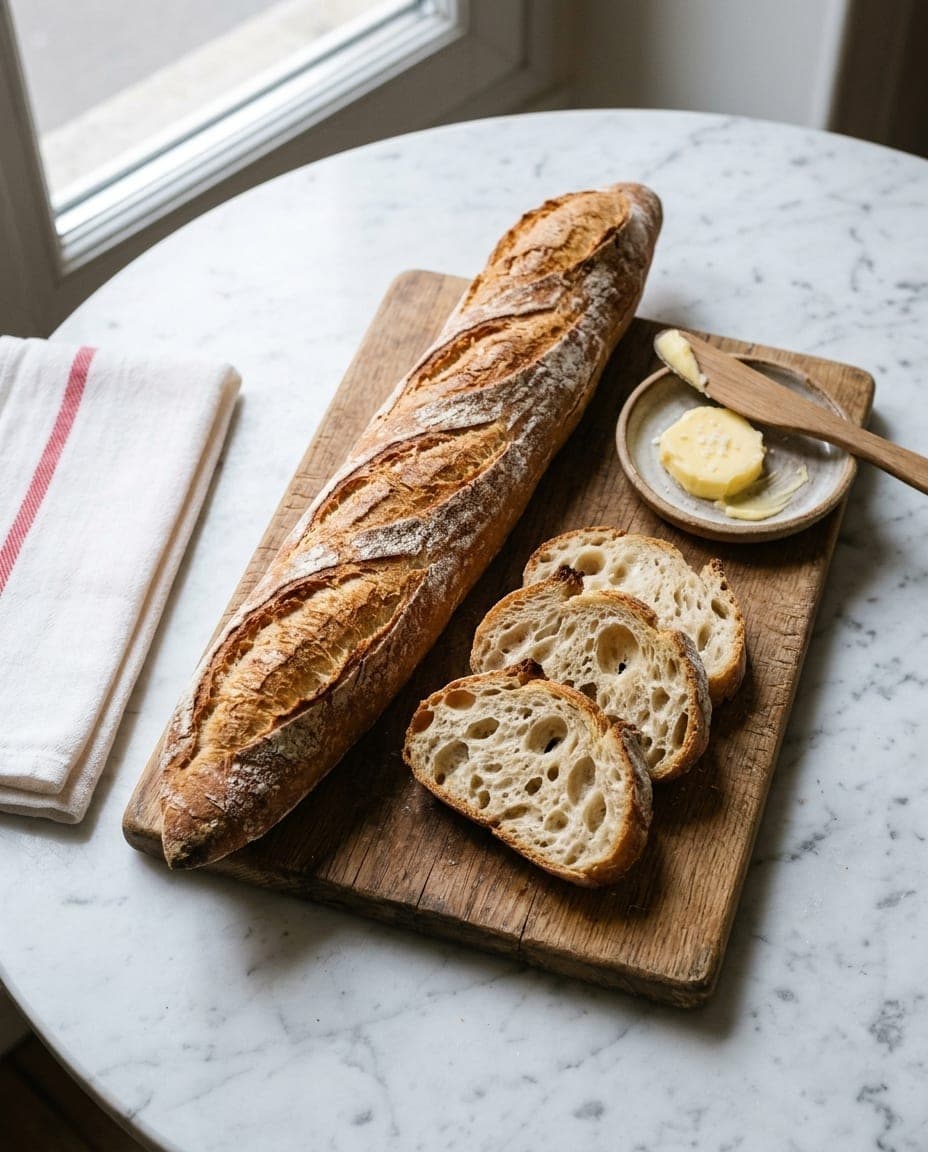
It is served with a baguette, cut into thick slices to support the soft interior. The rind is usually eaten too. The cheese is often accompanied by fresh fruit, such as grapes or apple slices, which provide a sweet counterpoint to the richness of the milk.
Pairing is a key part of the ritual. Champagne is a classic companion, its bubbles and acidity cutting through the creaminess of the cheese. A light red wine such as a Pinot Noir also works well, offering a subtle fruitiness that complements the earthy notes.
Curious facts
- The king's title is debated. While the story of the Congress of Vienna crowning it king of cheeses is famous, the details cannot be confirmed with certainty.
- Raw milk is mandatory. Unlike mass-produced brie, authentic Brie de Meaux must be made from raw milk to retain its complex taste and natural microflora.
- Little of it comes from Meaux. The appellation stretches as far east as the Meuse, where large dairies took up production in the 19th century.
- Usually not vegetarian. Traditional French cheeses of this kind are generally curdled with animal rennet.
Where to try it
The Brie country of Seine-et-Marne, with Meaux at its heart, is the natural place to taste Brie de Meaux, in village fromageries, small cheese shops and the remaining farm producers.
In Paris, many traditional cheese shops and restaurants serve the cheese as part of a cheese course, often paired with Champagne or light red wine. A proper fromagerie will stock wheels at various stages of ripeness, allowing customers to choose their preferred level of softness. Industrial brie, while convenient, lacks the depth and complexity of a well-ripened Brie de Meaux.
Where to try it
1 region
 Camper Van Rentals1 destination
Île-de-France
Île-de-France is the smallest region in France, yet it is the most populous, primarily known for Paris, its capital. Beyond the iconic landmarks of the city, this region offers hidden gems such as the medieval town of Provins, a UNESCO World Heritage site, where well-preserved fortifications tell tales of its rich history. The Vexin Français Regional Natural Park showcases picturesque landscapes and charming villages like La Roche-Guyon. Unique culinary experiences abound, with local specialties like Brie cheese and wines from the Île-de-France vineyards. The region also hosts lesser-known châteaux, such as Château de Malmaison, once home to Joséphine Bonaparte. Travelers can explore art in places like Giverny, where Monet's gardens inspire creativity. Each corner of Île-de-France presents an opportunity to dive into local culture and history, making it a region worth exploring at a leisurely pace.
Camper Van Rentals