Soparnik
A thin chard pie baked under embers, Poljica's fasting treat
- Vegetarian
- Local name
- Soparnik
- Best eaten at
- Poljica villages near Omiš
- Pairs with
- Dalmatian white wine
What it is
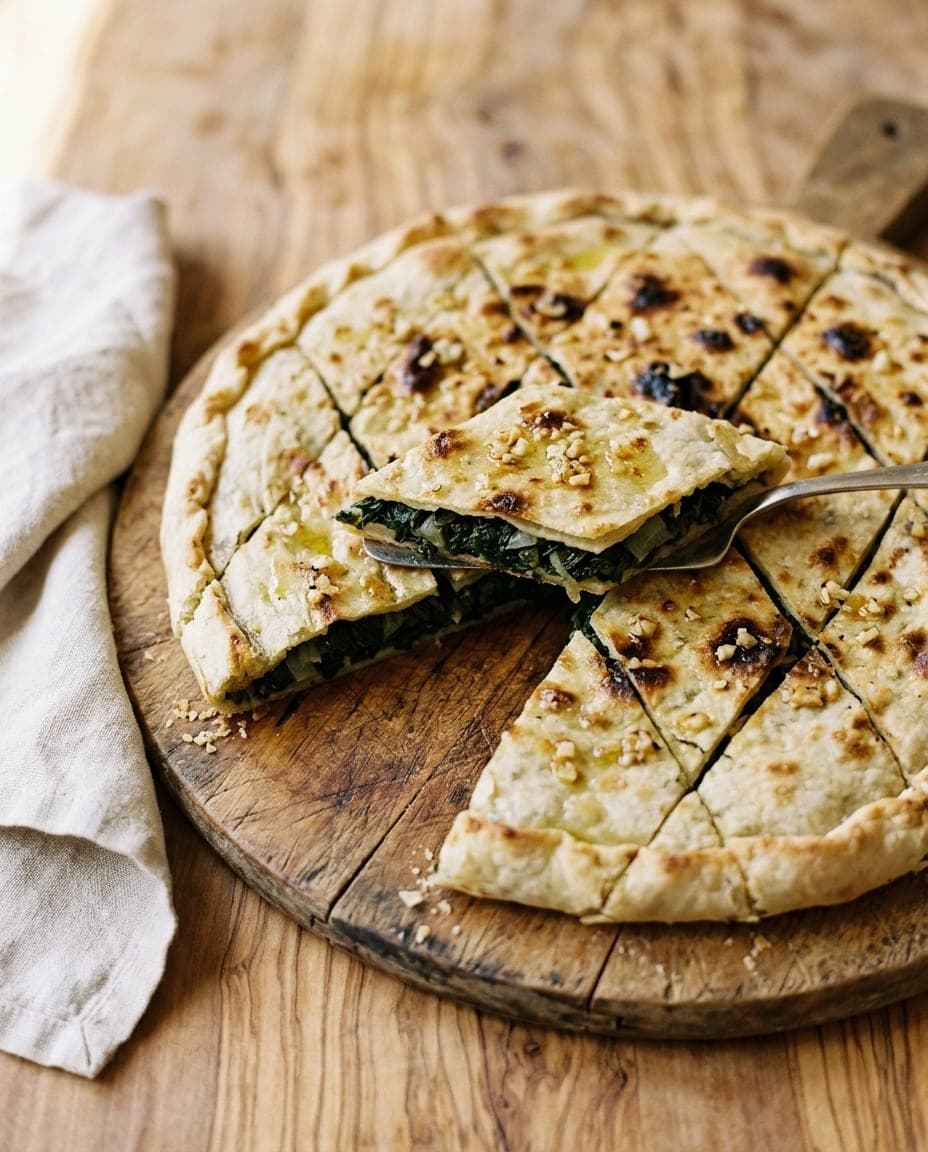
Soparnik is a thin, flat pie originating from the Poljica area, the stretch of hills and coast between Split and Omiš in Split-Dalmatia. It is not a dish found throughout Croatia but remains a specific local pride, particularly within the villages of Poljica. The pastry consists of two thin rounds of unleavened dough, often close to a metre across, enclosing a filling of chopped chard, onion and olive oil. Once sealed at the edges, it is baked directly on the stone hearth under embers and ash, then brushed with more oil and chopped garlic before being cut into diamond shapes.
The texture is distinct: the dough becomes crisp and brittle where it touches the hot stones, yet remains soft and pliable where it rests on the filling. The flavour is earthy and savoury, relying entirely on the quality of the chard and the olive oil rather than eggs or dairy. Historically, this was a dish for fasting days when meat and animal products were forbidden, and it is particularly associated with Christmas Eve and Good Friday.
How Poljica bakes it
The cooking method is the defining feature of soparnik and one of the few archaic baking techniques still in practice in Dalmatia. The open fireplace, the komin, is heated for about an hour, the hearth is swept clean, and the pie is placed directly onto the hot surface. Embers and ash are then raked over the top to provide heat from both above and below. This direct contact with the fire gives the pastry its characteristic smoky aroma and uneven, rustic surface; it bakes in little more than ten to twenty minutes.
When it comes out, the ash is brushed off the crust. Once baked, the soparnik is removed and brushed generously with olive oil mixed with crushed garlic. The garlic gives the finished pie its sharp edge. The final step involves cutting the round into small diamonds, which are sold by the piece at markets and festivals.
The fasting tradition
Soparnik belongs to the cycle of Catholic fasting in Dalmatia. Because the dough contains no eggs and the filling relies on vegetables and oil rather than meat or dairy, it fits the strict rules of Advent and Lent. It is remembered as part of the Christmas Eve and Good Friday meals in Poljica villages, where families would gather to prepare the pies together.
The dish is tied to the region's history of subsistence farming. Chard was a common crop in the rocky hills behind Omiš, easy to grow and at its sweetest in the colder months. The use of olive oil instead of butter or lard reflected the local abundance of olives and the religious restrictions on animal fats during fasting periods. This combination created a meal that was filling and nutritious without breaking the fast.
What goes into it
Everything in it comes from the local fields and groves:
- Unleavened dough, made from flour, water, a pinch of salt and a little olive oil, rolled thin enough to be almost transparent in places.
- Chard, the leaves and tender stems cut into strips to form the bulk of the filling; some cooks add parsley.
- Onion, chopped and mixed raw with the chard to add sweetness and depth.
- Olive oil, used both in the filling and as a generous coating on the finished pie.
- Garlic, chopped into the final oil glaze for a sharp, aromatic finish.
No cheese, eggs or meat appear in the traditional version. The result is a light, crisp pastry with a moist, savoury centre that softens slightly once the garlic oil is applied.
Curious facts
- PGI status. Since 2016, "Poljički soparnik" (also called zeljanik or uljenjak) has been a Protected Geographical Indication in the European Union, and its preparation is also listed as Croatian intangible cultural heritage.
- Hearth-baked. The method of baking directly under embers is rare in modern Europe and predates the common use of ovens.
- No eggs allowed. During traditional fasting periods, the absence of eggs and dairy was essential for the dish to be considered valid.
- Sold by the diamond. At markets and festivals it is sold by the piece rather than as whole rounds.
- A winter treat. While available year-round in some places, it is most strongly associated with the Christmas season and Good Friday.
Where to try it
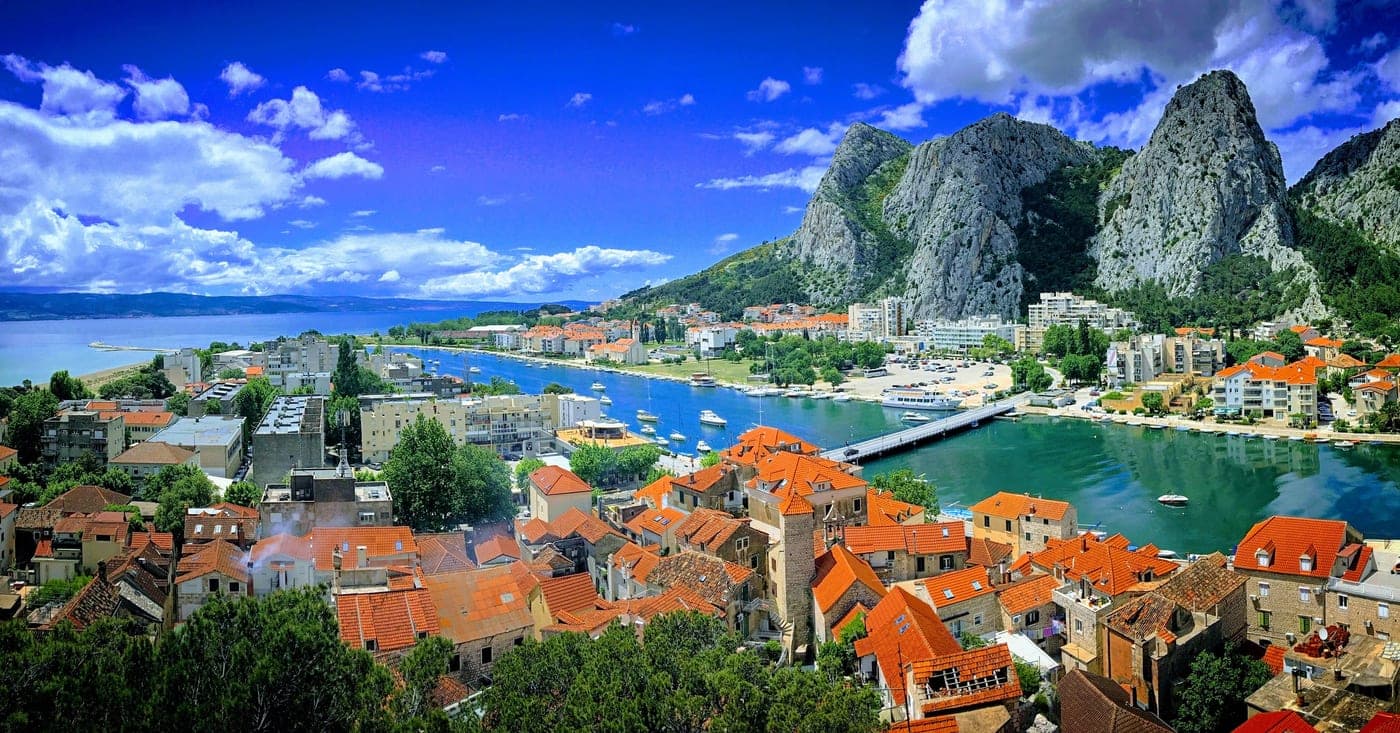
The best place to eat soparnik is in the Poljica villages near Omiš, where it remains a seasonal and festival staple. Village festivals and local gatherings, such as the soparnik festival in Dugi Rat, are where local associations sell it by the diamond off large trays. In winter the taverns in Omiš put it on, as a fasting dish or a snack with a glass of white.
It is sold warm and faintly greasy from the oil. The diamonds are small enough to eat by hand, but the crisp edges can shatter if handled roughly. Pairing it with a local white wine helps balance the earthy chard and the sharp garlic.
Where to try it
1 destination
1 region
 Boat Rentals4 destinations
Split-Dalmatia
Split-Dalmatia is the largest county in Croatia, known for its stunning coastline along the Adriatic Sea. The city of Split, with its UNESCO-listed Diocletian's Palace, serves as the region's cultural heart. Beyond the city, the county boasts lesser-known gems like the historic town of Trogir, famous for its medieval architecture, and the serene islands of Hvar and Brač, known for their local wines and olive oil. Nature lovers can explore the rugged beauty of the Biokovo Mountain range or the hidden coves along the coast. This region is rich in traditional gastronomy, featuring fresh seafood, local cheeses, and the unique wines of the Dalmatian hinterland. Festivals such as the Split Summer Festival showcase local arts and culture, providing an authentic glimpse into life here.
Boat RentalsHiking