Pršut
Wind-dried ham from Croatia's coast and islands
- Local name
- Pršut
- Served with
- Paški sir cheese, olives, bread
- Best eaten at
- A Dalmatian konoba
- Pairs with
- Plavac Mali red
What it is
Pršut is the Croatian word for dry-cured ham, but the term refers to something far more specific than the generic idea of a cured leg of pork. It is a regional speciality found along the Adriatic coast and on its islands, where the meat hangs in open-sided lofts to be dried by the bura, a cold, dry north-east wind that sweeps down from the mountains. Where many European hams are matured mainly in cellars, pršut is defined by this wind. The air is so strong and dry that it strips moisture from the meat without rotting it, creating a texture that is firm yet tender when sliced.
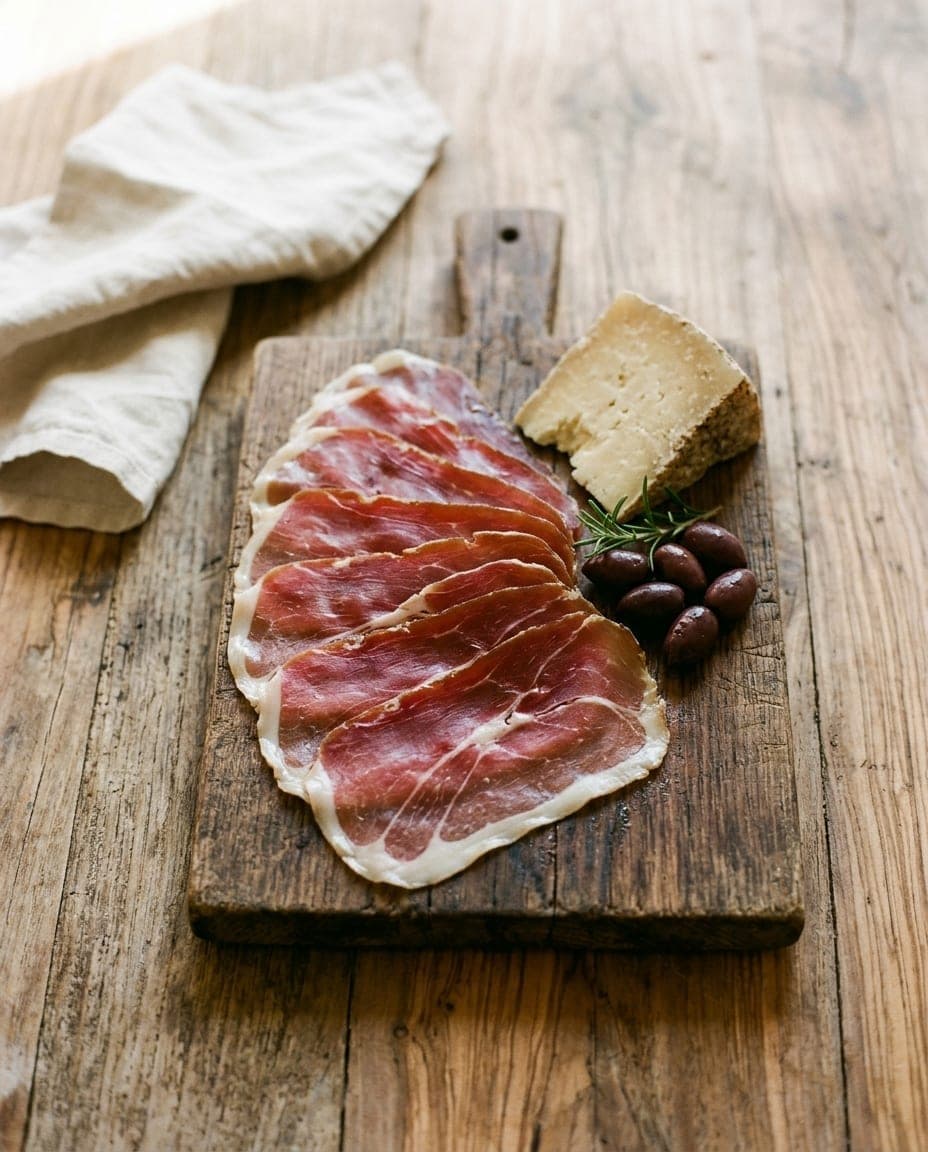
Four versions of the ham carry European Union protected designations: Dalmatian pršut, Drniš pršut, Krk pršut and Istrian pršut. These distinctions are not merely about geography but about the specific methods used in each area. The result is a savoury, salty meat that serves as the cornerstone of coastal dining. It is rarely cooked; instead, it is sliced paper-thin and presented as the first course of a meal, often accompanied by local sheep's cheese, olives, and crusty bread.
How the wind shapes the ham
The technique behind pršut relies above all on the local climate. In Dalmatia and on the island of Krk, the hams are hung in buildings designed to catch the bura. This wind is not a gentle breeze but a force capable of stripping roof tiles from houses. The drying sheds are often open-sided or have slatted walls to allow this air to circulate freely around the meat. Dalmatian and Drniš pršut are, however, also cold-smoked over hardwood such as beech or oak during drying, while Krk pršut is never smoked and relies on salt and the relentless dry air alone.
In Istria, the method shifts slightly. Here, the ham is trimmed of its skin and fat and salted with a mixture of sea salt, black pepper, garlic, bay leaves and rosemary before it hangs. It is not smoked; the wind does the work. Croatian pršut makes the most of a harsh environment, turning a powerful natural force into a culinary asset.
The regional variations
While the name remains the same, the taste changes depending on where the pig was raised and where the ham hung. Dalmatian pršut, including the Drniš variety, keeps its skin intact during curing. This protects the meat from the wind while it dries, and the light smoking adds to its deep red colour and savoury flavour. The Drniš area, inland between Šibenik and Knin, produces a version with its own protected name and a strong local reputation.
On the island of Krk, the pršut takes on a distinct character from the island's bura-swept climate: it keeps its skin, is salted with sea salt and black pepper, sometimes with bay and rosemary, and is never smoked. In Istria, the addition of spices like rosemary and bay gives the ham a more aromatic profile before it ever reaches the plate. These regional differences mean that a visitor might taste three distinct versions of pršut in a single day while travelling between the coast and the islands.
What goes into it
Two basic ingredients; the process is where the work is. The starting point is always a large, high-quality leg of pork. The meat is then dry-cured in sea salt for several weeks to draw out moisture and preserve it.
For Istrian pršut, the salted legs are rubbed with a blend of black pepper, garlic, bay leaves and rosemary before hanging. Dalmatian versions skip spices entirely, relying on salt, smoke and the wind. All four protected types must cure for at least twelve months from salting, and many are aged longer. Once dried, the ham is ready to be sliced.
How to eat it
Pršut is almost never cooked. It is eaten raw, sliced as thin as paper, and served as the first course of a meal. This tradition turns the dining table into a tasting board of local produce. The thin slices are arranged on a plate alongside Paški sir, a salty sheep's cheese from the island of Pag, along with green or black olives and fresh bread.
The pairing is deliberate. A glass of Plavac Mali, a red wine from the Dalmatian coast, complements the saltiness of the ham and the sharpness of the cheese. The wine's tannins cut through the fat of the meat, while the fruit notes balance the savoury depth. This combination is so common that it defines the meal in many places.
A traditional setting for this experience is a konoba, a rustic tavern found throughout Dalmatia and Istria. These are small, neighbourhood establishments where the focus is on local food and drink rather than elaborate service. In a Dalmatian konoba a board of pršut, cheese and bread often reaches the table before anyone has ordered.
Curious facts
- The wind does the work. Unlike most cured meats, pršut relies above all on the bura wind rather than cellars for its drying and texture; only the Dalmatian and Drniš types add a light smoke.
- Protected status. Four regional types carry EU protection: Istrian pršut as a PDO, and Dalmatian, Drniš and Krk pršut as PGIs.
- Skin matters. Dalmatian and Krk versions keep the skin on during curing, while Istrian pršut is trimmed of its skin before drying.
- A raw starter. The ham is served raw and thin, usually as the very first dish on the table alongside local cheese and bread.
- Learned by feel. Each protected type now has a written specification, but on farms the method is still passed down through observation of the wind and salt.
Where to try it
The best place to taste authentic pršut is in a Dalmatian konoba or an Istrian farmhouse tavern, particularly in Split-Dalmatia, Šibenik-Knin, inland Istria, or on the island of Krk. In these locations, the ham is often displayed hanging from the rafters, showing its deep colour and cured state before it is sliced. It is on menus the length of the coast, and the smaller neighbourhood places tend to buy from a producer they can name.
Travel to Istria or Krk to taste the specific regional variations that define these areas. A meal there typically begins with a plate of pršut, Paški sir, and bread, accompanied by a glass of Plavac Mali. The combination offers a direct connection to the wind and the land that created it.
Where to try it
2 destinations
 Boat Rentals
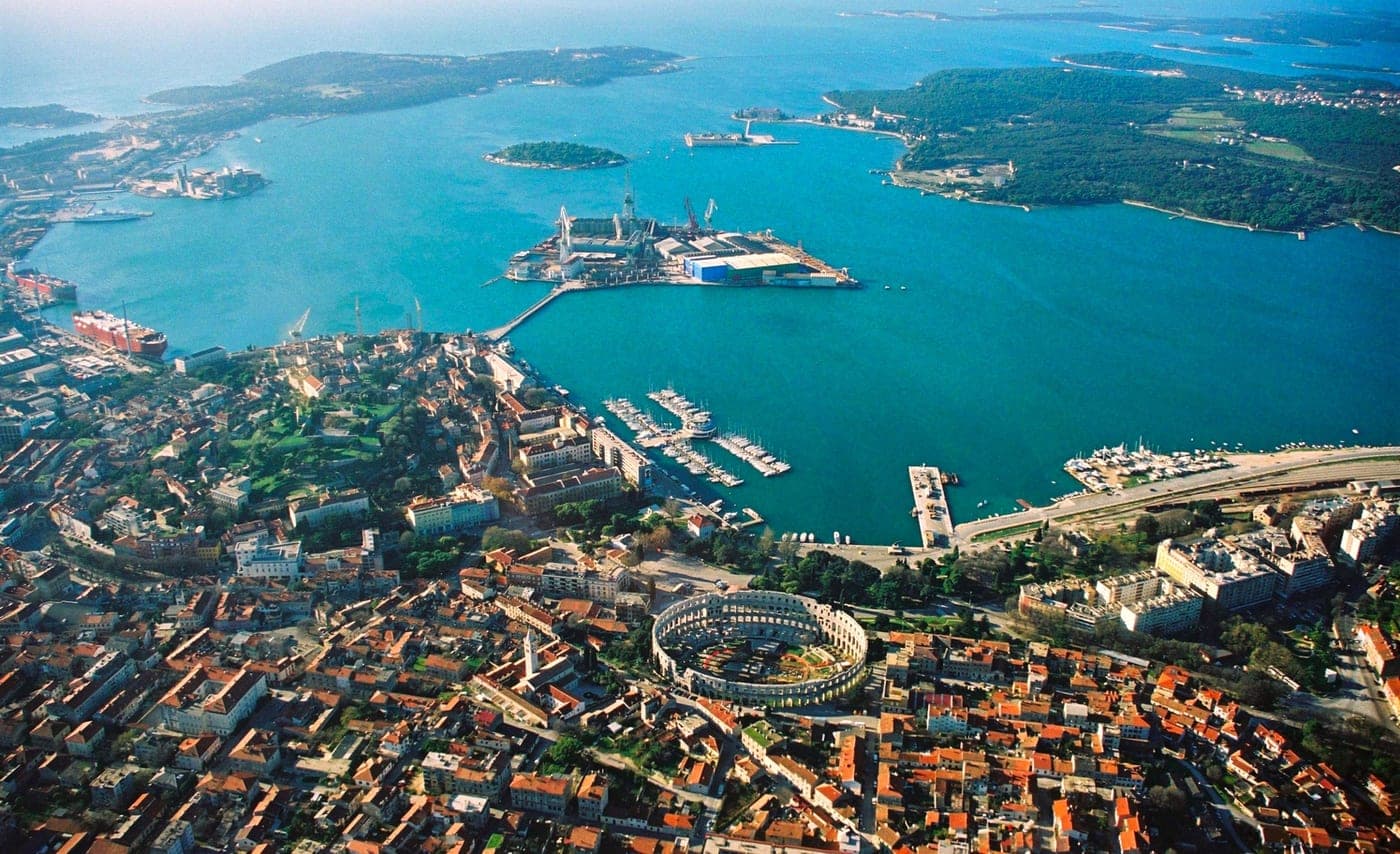
Pula
Ancient Istrian city with remarkably preserved Roman amphitheater and port.
Boat RentalsHikingLocal Cuisine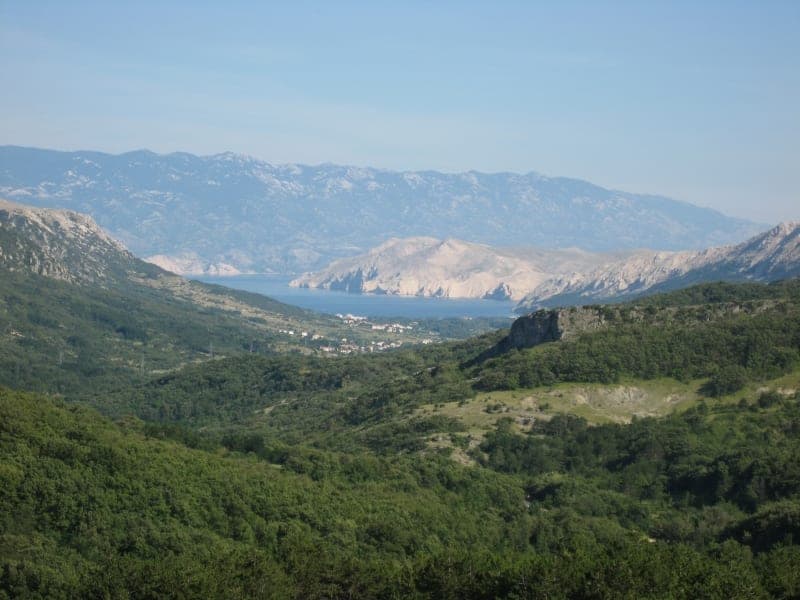 Boat Rentals
Krk
Historic walled town on Croatia's largest island with medieval cathedral.
Boat RentalsHiking
4 regions
 Boat Rentals4 destinations
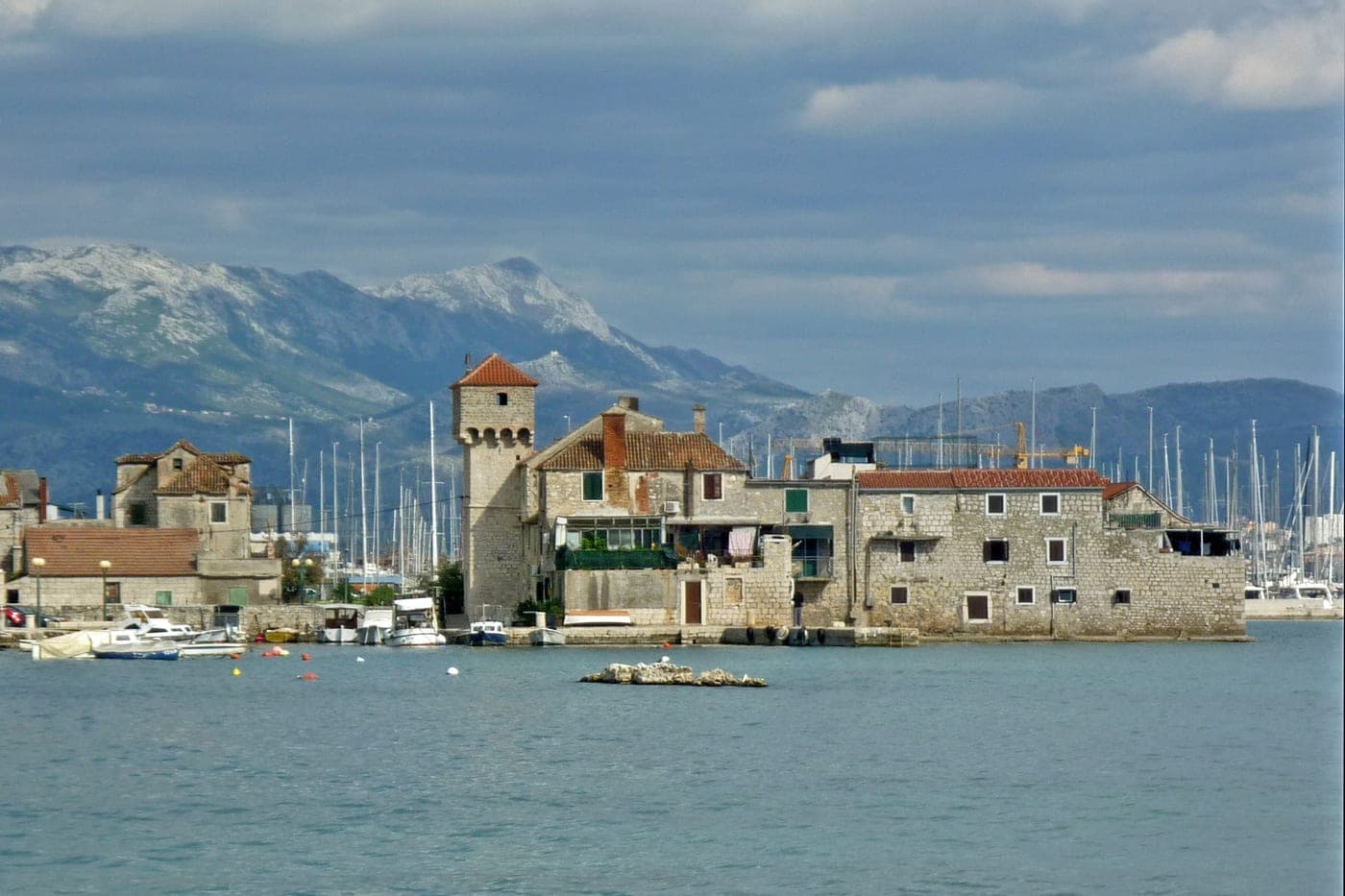
Split-Dalmatia
Split-Dalmatia is the largest county in Croatia, known for its stunning coastline along the Adriatic Sea. The city of Split, with its UNESCO-listed Diocletian's Palace, serves as the region's cultural heart. Beyond the city, the county boasts lesser-known gems like the historic town of Trogir, famous for its medieval architecture, and the serene islands of Hvar and Brač, known for their local wines and olive oil. Nature lovers can explore the rugged beauty of the Biokovo Mountain range or the hidden coves along the coast. This region is rich in traditional gastronomy, featuring fresh seafood, local cheeses, and the unique wines of the Dalmatian hinterland. Festivals such as the Split Summer Festival showcase local arts and culture, providing an authentic glimpse into life here.
Boat RentalsHiking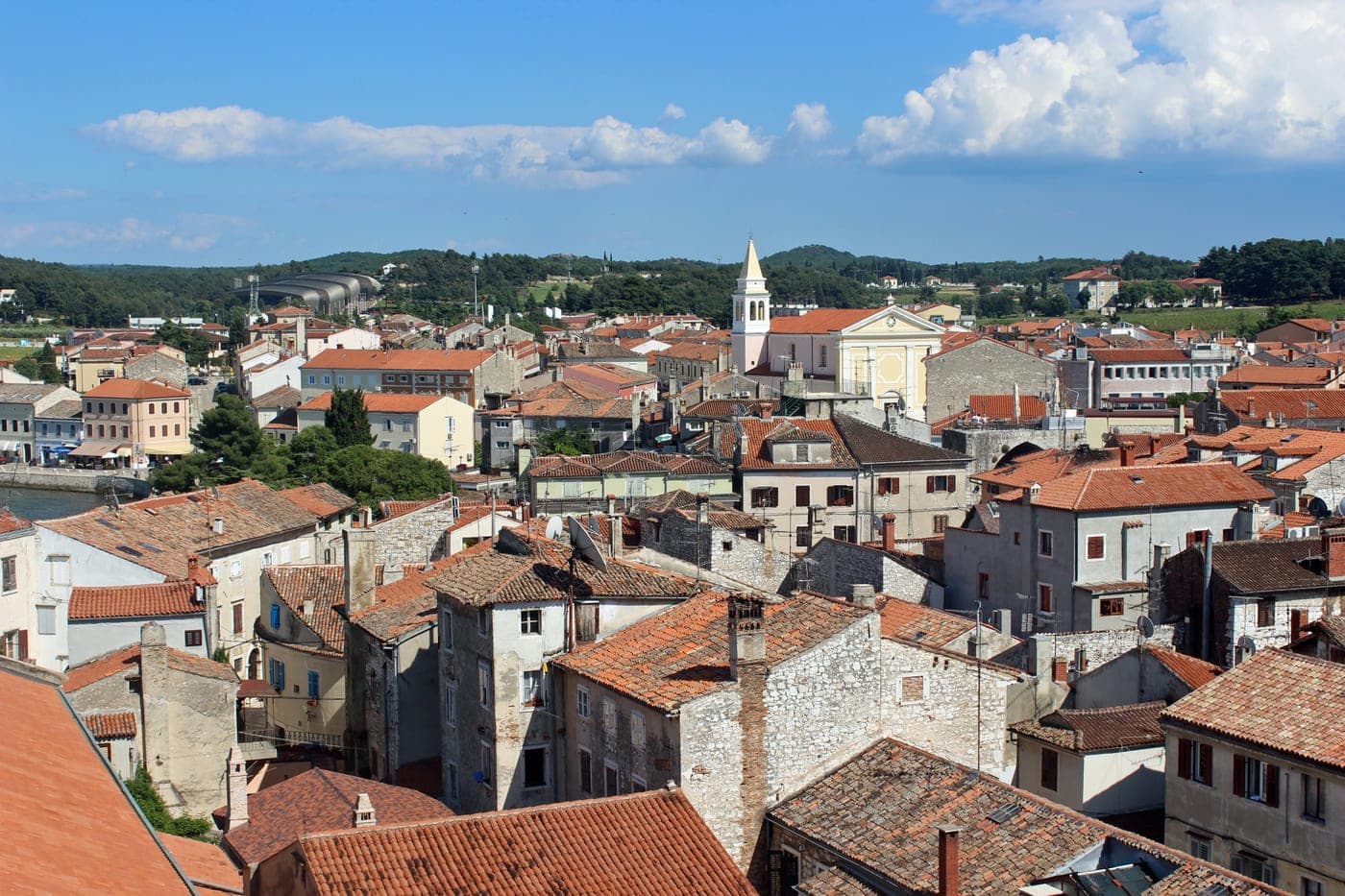 Boat Rentals5 destinations
Istria
Istria is Croatia's largest peninsula, known for its diverse landscape of rolling hills, vineyards, and olive groves. This region features charming towns like Rovinj, famous for its colorful waterfront and Venetian architecture, and Pula, home to one of the best-preserved Roman amphitheaters in the world. The coastal areas provide access to beautiful beaches, while inland, the hilltop villages of Motovun and Grožnjan offer stunning views and rich history. Istria is celebrated for its culinary delights, particularly truffles and local wines like Teran and Malvazija. The region also hosts various cultural festivals, showcasing its vibrant traditions and arts. It's a place where ancient history meets rich gastronomy, ideal for those who wish to explore beyond typical tourist paths.
Boat RentalsHikingLocal Cuisine Boat Rentals2 destinations
Šibenik-Knin
Šibenik-Knin is a significant region in Croatia, known for its unique blend of coastal and inland landscapes. It boasts the only major city in the country with a UNESCO World Heritage-listed fortification system, Šibenik. The region features Krka National Park, famous for its stunning waterfalls and diverse flora and fauna. Small towns like Knin, rich in Ottoman and medieval history, offer insights into Croatia's past. Local traditions thrive, with festivals celebrating everything from olive oil to traditional music. The region's wine production, particularly the indigenous Babic grape, adds to its appeal, making it a delightful area for discovery away from the usual tourist paths.
Boat Rentals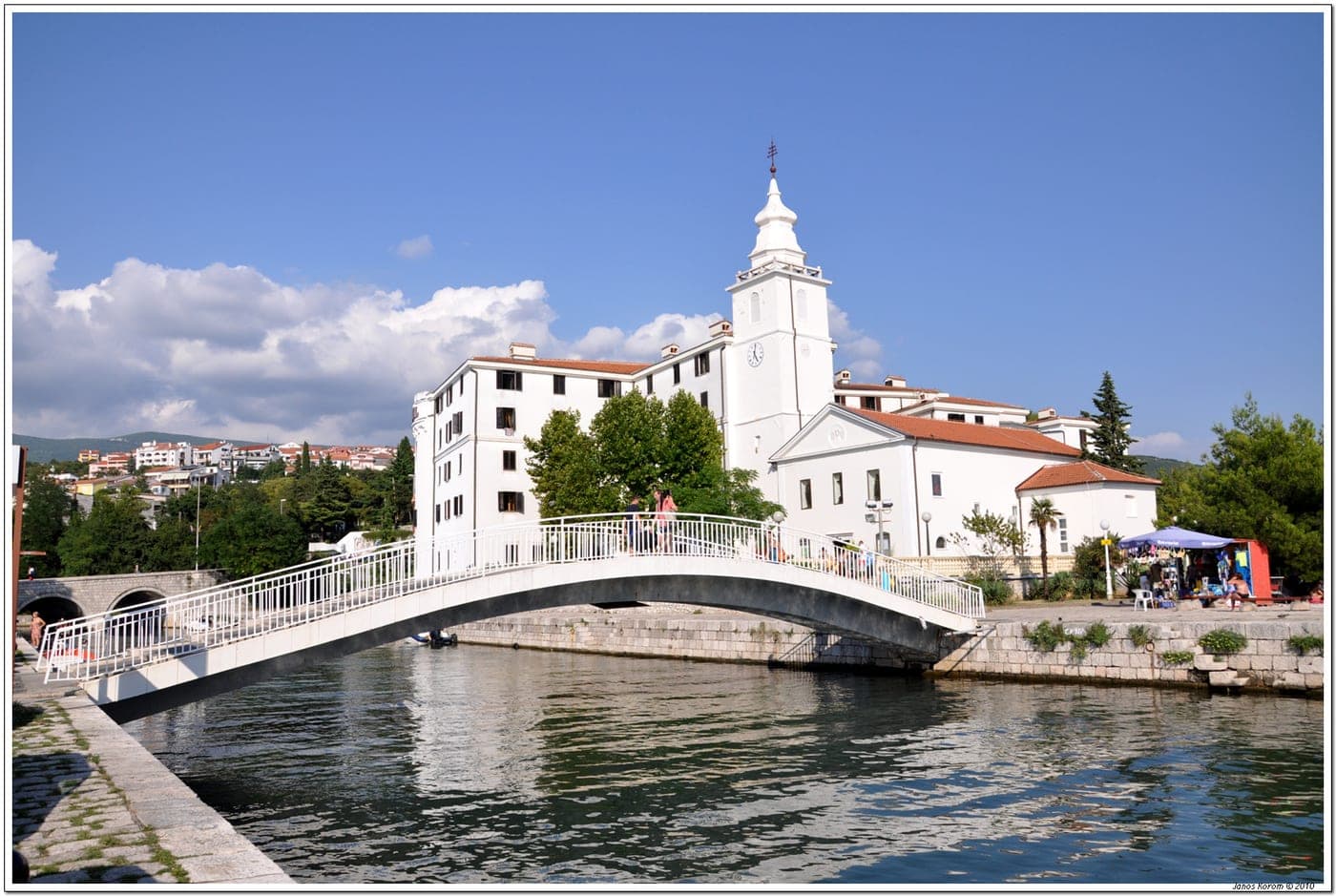 Boat Rentals7 destinations
Primorje-Gorski Kotar
Nestled along the northern Adriatic, this region is the largest in Croatia by area, featuring a diverse landscape of mountains, islands, and coastal towns. The city of Rijeka serves as a cultural hub, known for its vibrant festivals and rich maritime history, including the Trsat Castle overlooking the city. Opatija, with its historic villas and seaside promenade, offers a glimpse into the 19th-century Austrian Riviera. Nearby, the islands of Cres and Lošinj boast stunning natural parks and traditional fishing villages. Nature lovers can explore the Risnjak National Park, while wine enthusiasts can taste local Vrbnička Žlahtina. This region thrives on its rich cultural tapestry and local gastronomy, emphasizing sustainable practices and authentic experiences that reflect its heritage.
Boat RentalsHiking