Tomaat-garnaal
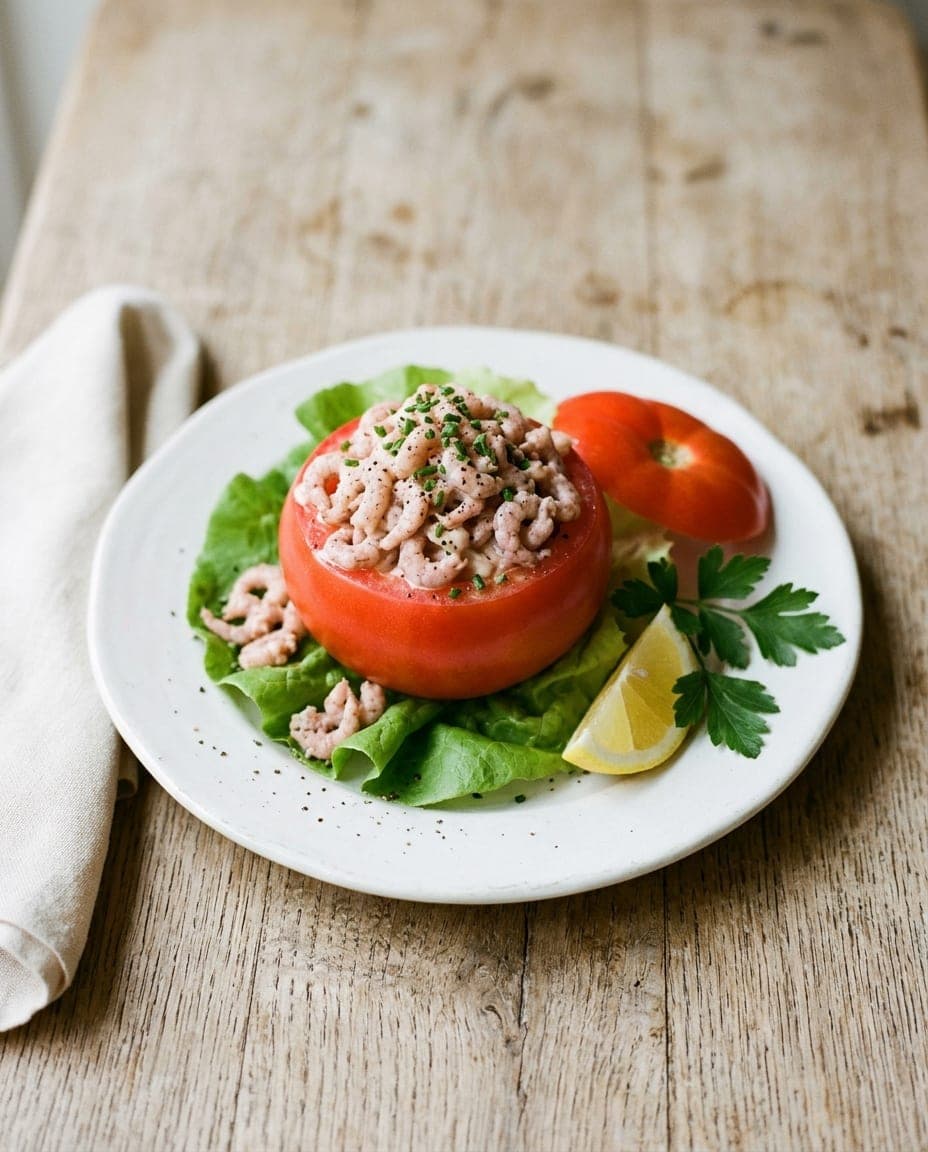
Hollowed tomato filled with North Sea grey shrimp mayonnaise
- Local name
- Tomaat-garnaal
- Served with
- Lettuce, lemon, fries
- Best eaten at
- A Belgian coast brasserie
- Pairs with
- Dry white or blonde ale
What it is
Tomaat-garnaal, the Dutch name for a tomato stuffed with shrimp (tomate aux crevettes in French), is a cold starter that defines the coastal dining culture of Flanders. It is found in brasseries across Belgium, but it is most at home along the North Sea coast, particularly in Oostende and its neighbouring towns. The presentation is simple yet striking: a large, ripe tomato is hollowed out, its flesh scooped away to leave a sturdy cup. This vessel is then filled with a creamy mixture of mayonnaise and small grey shrimp from the North Sea before being topped with the reserved lid, often set on one side rather than perfectly aligned.
The dish relies entirely on the quality of its two main components. The tomato must be firm enough to hold the filling without weeping, while the shrimp are the small, grey Crangon crangon, cooked on board soon after the catch and then peeled. In the best kitchens the mayonnaise is homemade, rich and emulsified, acting as the glue that binds the shrimp together. It is a dish that stands or falls on these elements, offering a cool, savoury contrast to the warmth of the sea air.
The coastal brasserie tradition
Tomaat-garnaal belongs to the world of the Belgian brasserie. These are not fancy hotels but sturdy, welcoming establishments where the focus is on local produce and straightforward service. In Oostende, the dish appears on most traditional menus, from the seaside promenade to smaller cafés inland that serve the coastal crowd. It is a cold starter suited to the summer months, though it remains available year-round in many places.
The experience of eating it extends beyond the tomato itself. A typical serving arrives with crisp lettuce and a wedge of lemon, often alongside a portion of golden fries. This combination transforms the dish from a simple appetiser into a complete lunch. The diner might squeeze the lemon over the shrimp or dip the fries directly into the creamy filling. It is a meal that encourages a slow pace, suited to the rhythm of the coast where time moves differently than in the cities.
What goes into it
There is no single official recipe, but the building blocks are consistent:
- The tomato, usually a large beef variety, hollowed out to create a sturdy container for the filling.
- North Sea grey shrimp, the small Crangon crangon, peeled so that no shell remains in the final dish.
- Mayonnaise, ideally homemade with egg yolk and oil, providing a rich texture that holds the shrimp together without being too heavy; some cooks add lemon juice and chopped parsley or chives.
- Lettuce, served fresh on the side to add a crunchy contrast to the soft filling.
- A lemon wedge, essential for cutting through the richness of the mayonnaise.
The result is a dish that feels light yet substantial, with the sweetness of the tomato balancing the briny depth of the shrimp. It is not a vegetarian dish, as the shrimp are the central element, and the mayonnaise contains egg. The fries served alongside turn it into a full meal, offering a satisfying crunch to match the soft interior of the tomato.
How to eat it
Tomaat-garnaal is typically served as a substantial starter or a light main course at lunch. It often comes to the table on a large plate, accompanied by lettuce and fries. It is eaten with a knife and fork, cutting into the tomato so that each bite combines flesh and filling. A squeeze of lemon over the top is standard practice, adding a bright note that lifts the rich flavours.
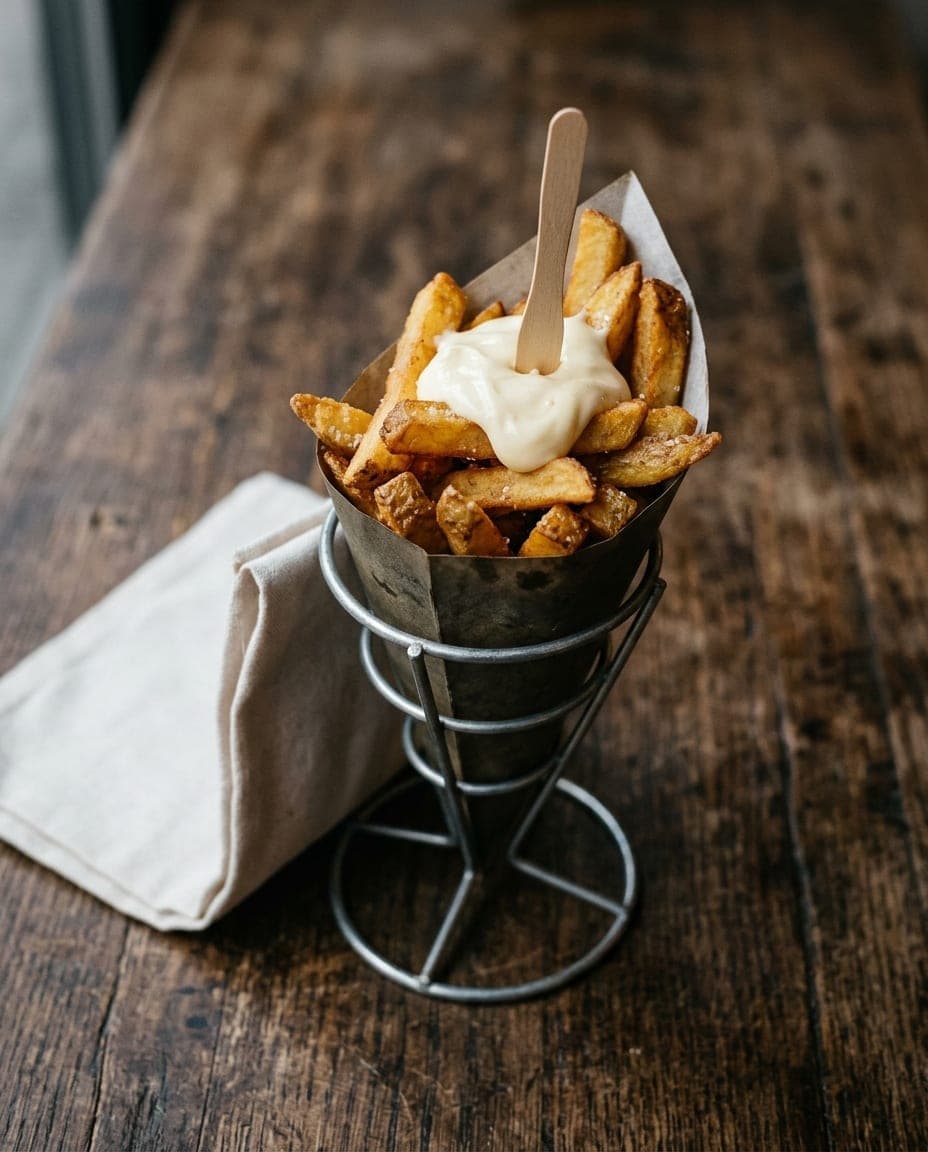
The fries are often eaten alongside the dish, dipped into the remaining mayonnaise or taken separately.
Curious facts
- A cold feast. Unlike many shrimp dishes served hot, this is a chilled starter; the shrimp are already cooked on the boat, so the dish needs no further cooking.
- The lemon rule. The wedge of lemon is considered essential to cut the richness of the mayonnaise and enhance the sweetness of the tomato.
- Fries as a sidekick. While the tomato is the star, the fries are often treated as an equal partner, creating a complete meal in one serving.
- Hand-peeled shrimp. Freshly hand-peeled grey shrimp are especially prized for this dish.
- Coastal identity. Although served all over Belgium, the dish tastes most of its origins on the Flemish coast, where the grey shrimp are landed.
Where to try it
The best place to eat tomaat-garnaal is along the Belgian coast, particularly in Oostende where the tradition runs deepest. The dish is also available in nearby coastal towns like De Haan and Knokke-Heist, and in traditional brasseries throughout the country. It is worth arriving hungry, as the combination of shrimp, tomato and fries often turns into a full lunch rather than a simple starter.
Where to try it
1 destination
 Boat Rentals
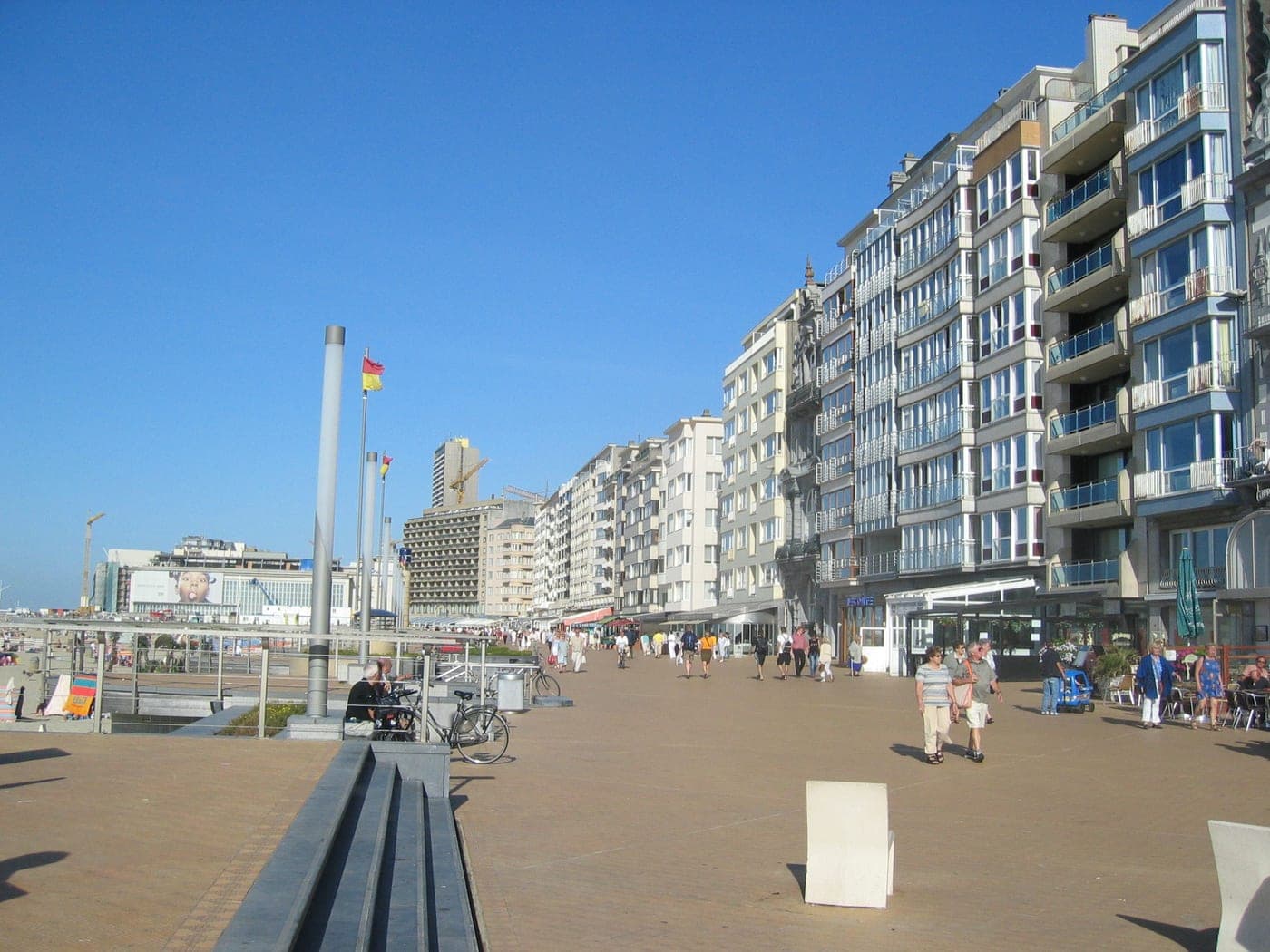
Oostende
Belgium's seaside resort with royal villa, beaches, and seafood restaurants.
Boat RentalsHikingLocal Cuisine
1 region
 Wine Tasting7 destinations
Flanders
Flanders is the Dutch-speaking region of northern Belgium, and its short distances between towns hide a slow, layered kind of travel. Villages in Flanders and its larger cities share a way of asking for attention: a market square, a belfry, a stretch of canal reflecting brick gables. The pace here rewards stopping, and the region's compact size makes it possible to settle into a handful of places instead of covering ground. The medieval old towns are the backbone of any Flanders itinerary. Ghent carries the largest and least polished of them, its student population keeping the streets lived-in. Bruges is smaller and more carefully kept, its canal loop and lace-making tradition drawing people who want the postcard version of Flanders done well. Antwerp brings energy to the mix: a working port, a Baroque cathedral, a fashion district, and a diamond trade still run on old trust. Mechelen and Leuven sit close to the bigger cities and carry the same belfry-and-canal character at a quieter volume. Flemish painting shaped much of what these cities still show today. Ghent's cathedral holds an early masterpiece of Flemish painting, and Antwerp's museums keep strong collections from the city's own Baroque painters. These works were made for the churches and guild halls that still stand on the same streets, which gives them a different weight than seeing them somewhere unconnected to their making. Beer culture in Flanders runs deep and steady. Trappist monasteries brew to support their communities, following recipes kept inside their own walls for generations, and abbey beers named after those monasteries fill the menus of ordinary town cafés. A brown café in Ghent or Antwerp — dim, wood-panelled, unhurried — is where this culture is actually lived, over a single well-poured glass at a corner table. Chocolate carries a similar seriousness. Family-run chocolatiers in Bruges, Ghent and Antwerp still hand-dip pralines and temper chocolate by hand, and a short exchange with the person behind the counter often teaches more than any shop sign. A small box eaten the same afternoon suits the tradition better than a large one carried home. Flanders' countryside opens quickly beyond the larger cities into flat farmland, poplar-lined canals, and villages that rarely appear on an international itinerary. Damme, close to Bruges along a canal path, holds a windmill, a church and a handful of houses, and needs little more than that. Further south and east, the villages around Ypres carry the memory of the First World War: cemeteries, memorials, and the Last Post sounded each evening at the Menin Gate sit alongside the region's more familiar reputation for beer and lace. The coast changes the rhythm again. Oostende keeps a working fishing fleet and a long promenade, while smaller resorts such as De Haan hold onto early-twentieth-century villas and quiet dunes once summer ends. The flat sand and open sky offer a clear contrast to the cobbled squares and canal reflections inland. Traditions stay visible through the year. Processions, guild festivals, and beer events give each town its own calendar, kept by the community rather than staged for visitors. Slow travel here means choosing depth over distance. The region's small scale makes it tempting to plan a long list of towns, but it holds together better when explored through fewer stops, each one given room to open up: a market square seen at different times of day, a canal walk repeated at dusk, a return visit to the same chocolate shop once the first box runs out. Ghent and Bruges alone hold enough layers — museums, churches, quiet residential streets away from the centre — to fill a visit, and pairing either with a coastal stop or a village like Damme adds contrast without adding rush. Flanders rewards this kind of attention because so much of its character sits just below the surface: a monastery's own beer recipe, a canal town's working history before tourism arrived, a village whose only claim is a windmill and a church that has stood for generations. Most of it opens up only once the rushing stops.
Wine TastingHikingBoat RentalsLocal Cuisine