Belgian pralines
Filled chocolate bonbons invented in Brussels in 1912 by Jean Neuhaus II
- Vegetarian
- Local name
- Pralines
- Best eaten at
- A Brussels chocolatier
- Pairs with
- Coffee
What they are
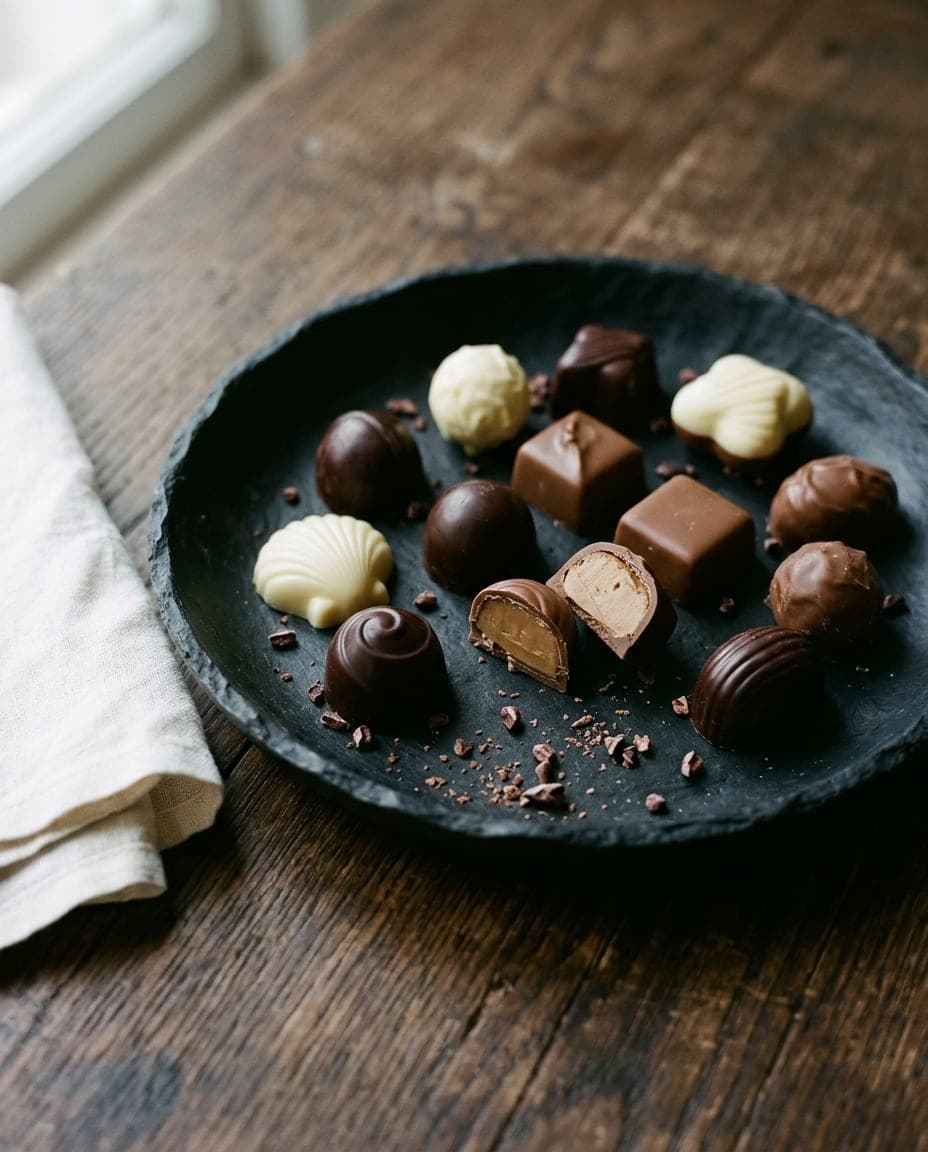
Belgian pralines are filled chocolates that combine a smooth outer shell with a soft interior, creating a confection defined by texture and contrast. The term refers to the entire sweet, not just the filling. This differs from French usage, where praliné describes only the paste of caramelised nuts ground into a powder or butter. In Belgium, the word covers the whole bonbon: a shell of chocolate, tempered to a glossy finish, encasing a centre that might be ganache, nut paste, buttercream, marzipan, or even liqueur.
These sweets were born in Brussels and remain closely associated with the capital, although other chocolatiers and bakers soon copied the idea and pralines are now made and sold all over Belgium. The experience is tactile and visual; the shell cracks cleanly to reveal a filling that ranges from firm to fluid, often designed to melt slowly on the tongue.
The invention of the filled chocolate
The story of the praline begins in Brussels in 1912. Jean Neuhaus II, the grandson of the founder of the famous Neuhaus house, developed the technique for creating a filled chocolate shell. Before this, chocolate was sold mostly as solid bars and tablets. Neuhaus created a moulded shell that could hold a soft centre without leaking, allowing for a wide variety of textures and flavours within a single piece.
This invention changed the way sweets were made and eaten. The ability to encase a liquid or semi-liquid filling inside a hard shell meant that confectioners could experiment with ingredients that would previously have been impossible to use in chocolate form. The result was a sweet that offered a surprise upon breaking the surface, a moment of discovery that became central to the Belgian praline experience.
The presentation also evolved alongside the invention itself. In 1915, Jean Neuhaus II's wife, Louise Agostini, is credited with creating the ballotin, the stiff, folded box used to display and transport these bonbons. This packaging allowed for the arrangement of individual pieces in a way that highlighted their variety and craftsmanship. The box became an essential part of the ritual, turning the purchase of sweets into a curated selection rather than a bulk transaction.
How they are made
The construction of a praline relies on the relationship between the shell and the filling. The chocolate used for the outer layer is tempered to ensure it sets with a snap and a glossy sheen. Once cooled, the shell is filled with the chosen centre and sealed. The filling can be anything from a simple caramelised nut paste to a complex ganache made with cream, butter, or liqueur.
The variety comes from the fillings rather than the shape. While some pralines are round or square, many are custom-moulded to fit specific centres. A shell might be designed to hold a liquid centre that flows when bitten, or one that remains firm until it reaches body temperature. The craftsmanship lies in ensuring the shell does not crack during filling and that the two components remain distinct yet complementary when eaten.
The final product is often sold by weight rather than by the piece. This method allows customers to select individual bonbons based on their personal preference for texture or flavour. A shop might offer a dozen different centres, each with its own shell thickness and chocolate type. The customer chooses the mix, and the chocolatier arranges them in a box or bag.
How to eat them
Pralines are best enjoyed slowly, allowing the filling to melt and release its flavours. They are not meant to be eaten quickly like a solid bar of chocolate. The ideal approach is to place one piece on the tongue and let it warm until the shell softens, then gently bite or swallow as the filling flows. This process highlights the contrast between the crisp shell and the creamy interior.
They are typically served as a dessert or a sweet treat alongside coffee. A strong black coffee or an espresso provides a bitter counterpoint to the sweetness of the praline, cleansing the palate between pieces. The pairing is a familiar one in Belgium, where a small chocolate often arrives on the saucer beside a coffee.
When visiting a Brussels chocolatier, the experience involves looking at the displayed boxes and choosing individual pieces. The staff may offer samples to help decide on the fillings, particularly if you are unsure about a new flavour. Once selected, the box is assembled by hand, with the chocolates arranged carefully to prevent them from shifting or breaking during transport.
Where they come from
The praline is bound up with Brussels and the specific history of its confectionery scene. While chocolate has been made in Belgium for centuries, the filled version is a product of the early 20th century and the innovation of the Neuhaus house. The city remains the heart of this tradition, with many chocolatiers continuing to produce pralines using techniques that have changed little since their invention.
The region's influence extends beyond the shop window. Brussels is a city where coffee culture and sweet treats are intertwined, and the praline fits naturally into this rhythm. Visitors often find them in the windows of small shops in the city centre, alongside other Belgian treats like gaufres and speculoos. The presence of these sweets in the urban landscape reinforces their status as a home-grown speciality rather than a generic imported treat.
Curious facts
- The word means something different. In France, praliné is the nut paste and a praline a sugar-coated almond; in the American South, a praline is a pecan candy. In Belgium, the term describes the entire filled chocolate bonbon.
- They are sold by weight. Unlike many countries where sweets are pre-packaged, Belgian pralines are often chosen piece by piece and weighed in the shop before being boxed.
- The shell is a technical feat. The invention required precise tempering of the chocolate to create a shell that could hold liquid or semi-liquid fillings without leaking or cracking.
- The box was an innovation too. The ballotin was introduced by Louise Agostini in 1915 to provide a sturdy, attractive way to display and transport the delicate filled chocolates.
- They are not just for adults. While often associated with adult indulgence, pralines are common gifts for children and special occasions in Belgium, presented in beautifully decorated boxes.
Where to try them
Brussels has many independent chocolatiers, often family-run, that focus on the art of filling and shaping chocolate rather than mass production. You will find them scattered through the city centre, particularly in areas with a concentration of traditional confectioners.
When visiting a Brussels chocolatier, take your time to look at the variety on display. The shelves might hold dozens of different centres, each with its own shell and texture.
The combination of the sweet, the coffee, and the atmosphere of Brussels is a classic way to experience these confections.
Where to try it
1 destination
 Camper Van Rentals
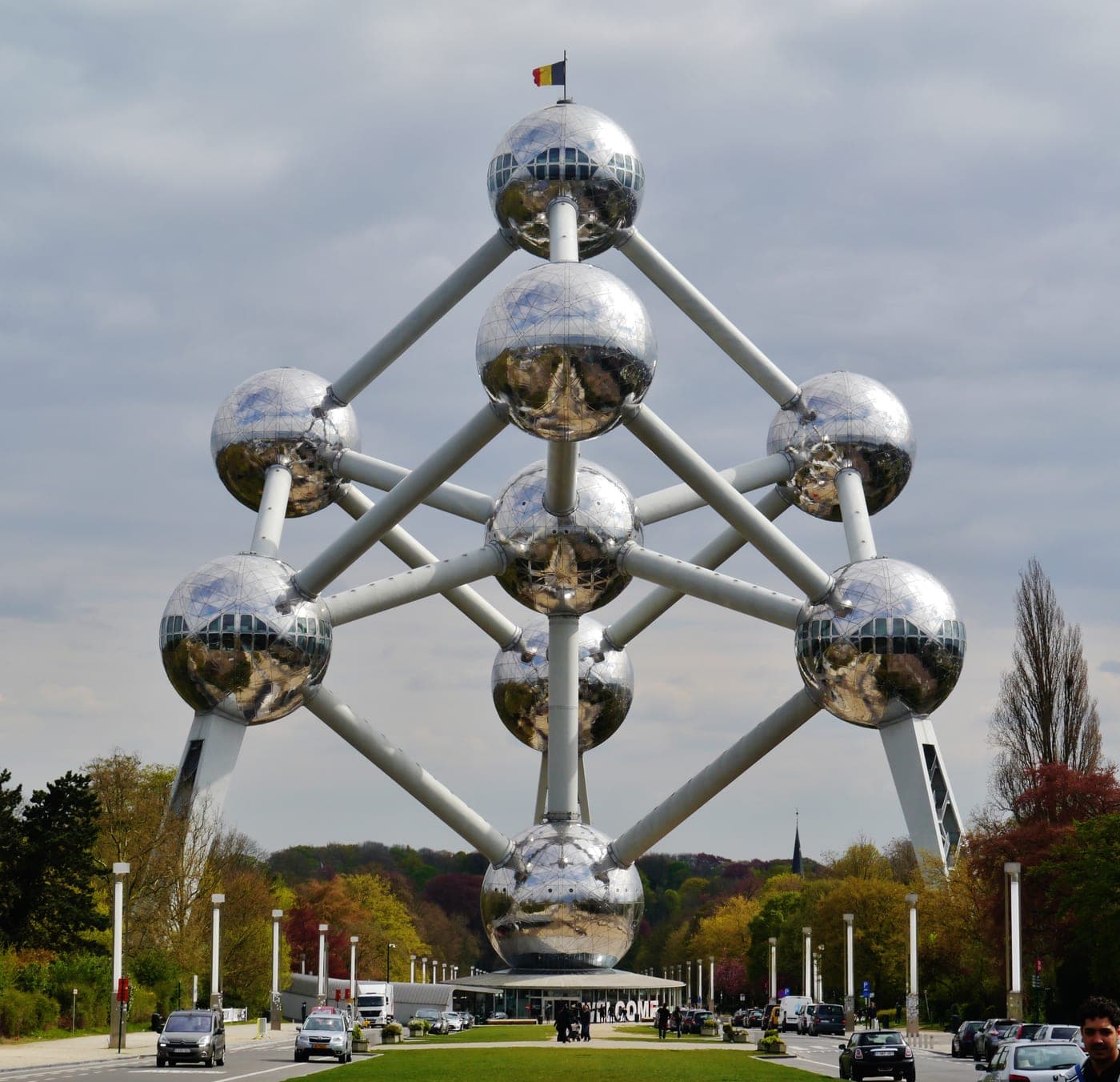
Brussels
Belgium's capital with Grand Place, Art Nouveau, chocolate, and EU institutions.
Camper Van RentalsHiking
1 region
- Camper Van Rentals1 destination
Brussels
Brussels sits at the meeting point of French and Flemish Belgium, and that mix shapes everything about how the region feels: two languages on every street sign, two culinary traditions on every menu, and a pace that has never quite caught up with its role as a capital of European institutions. Away from the glass towers of the EU quarter, the older city keeps its own rhythm, built around guild squares, covered arcades, and small bars that have poured the same abbey beers for generations. The Grand Place is the obvious starting point, a market square ringed by gilded guildhalls that once belonged to the city's bakers, brewers, and boatmen. It is a UNESCO World Heritage Site, and even on a busy afternoon the carved facades reward slow looking rather than a quick photo. From here, narrow lanes lead into the Îlot Sacré, where waffle stands sit beside chocolate shops that still temper cacao by hand. Belgian chocolate culture runs deep in Brussels: family-run ateliers sell pralines by weight, and a few keep working display kitchens where the process is part of the shop. Beer is the other constant. Brussels is where lambic and gueuze are still brewed using spontaneous fermentation. Traditional estaminets pour these alongside Trappist and abbey beers, often with a matching cheese or a plate of frites on the side. A few breweries in the city centre still run tours through working cellars, and tasting a gueuze where it is made is a different experience from drinking it anywhere else. Beyond the tourist core, Brussels holds neighbourhoods that reward unhurried wandering. Saint-Géry is now full of small galleries and bars built into old warehouses. The Marolles keeps a flea market running through its cobbled streets, where dealers lay out furniture, glassware, and old postcards each morning. Matongé, the Congolese quarter near Porte de Namur, brings West African fabrics, music shops, and cooking into the same few blocks, a reminder that Brussels' identity is not only Franco-Flemish but genuinely international. Ixelles and Saint-Gilles hold rows of townhouses with curved iron balconies and stained-glass stairwells from the era of architect Victor Horta. Walking these streets without a fixed plan is often how they're noticed, since many of the finest facades sit on quiet residential blocks rather than main avenues. Brussels' long-standing love of comic art shows up in a similar way: painted murals of characters from Belgian comics appear on gable walls across the centre, part of a public trail that turns a walk between neighbourhoods into something like a treasure hunt. The Zenne river, mostly covered over in the nineteenth century, still shapes the city's geography, and the canal that runs north from the centre connects Brussels to Antwerp and the Flemish lowlands beyond it. Along its banks, old industrial warehouses have become galleries, breweries, and weekend markets, giving the canal district a slower, more local feel than the tourist streets around the Grand Place. As a region, Brussels works as a base for exploring the smaller Flemish and Walloon towns that ring it, each with its own guildhalls, beer traditions, and market squares, all reachable within short distances of the capital. Together they form a compact, walkable corner of Belgium where medieval architecture, brewing traditions, and chocolate craft sit within easy reach of one another.
Camper Van RentalsHiking