Stella Artois
A pale pilsner from Leuven, launched as a Christmas beer in 1926
- Alcoholic
- Local name
- Stella Artois
- Served
- Chilled, in a chalice glass
- Best eaten at
- A café on Leuven's Oude Markt
- Pairs with
- Belgian fries, snacks
What it is
Stella Artois is a pale lager brewed in Leuven, the historic university city in the Flemish Brabant region of Belgium. It is a pilsner-style beer, light in colour and crisp in finish, with an alcohol strength of 5.2% in Belgium, the usual level for a Belgian pilsner. While the country is famous for its complex sour lambics, dark Trappist ales, and fruity saisons, Stella Artois occupies a different space in the Belgian landscape. It is not a speciality beer reserved for connoisseurs or special occasions; it is an everyday staple that locals reach for without thinking about it.
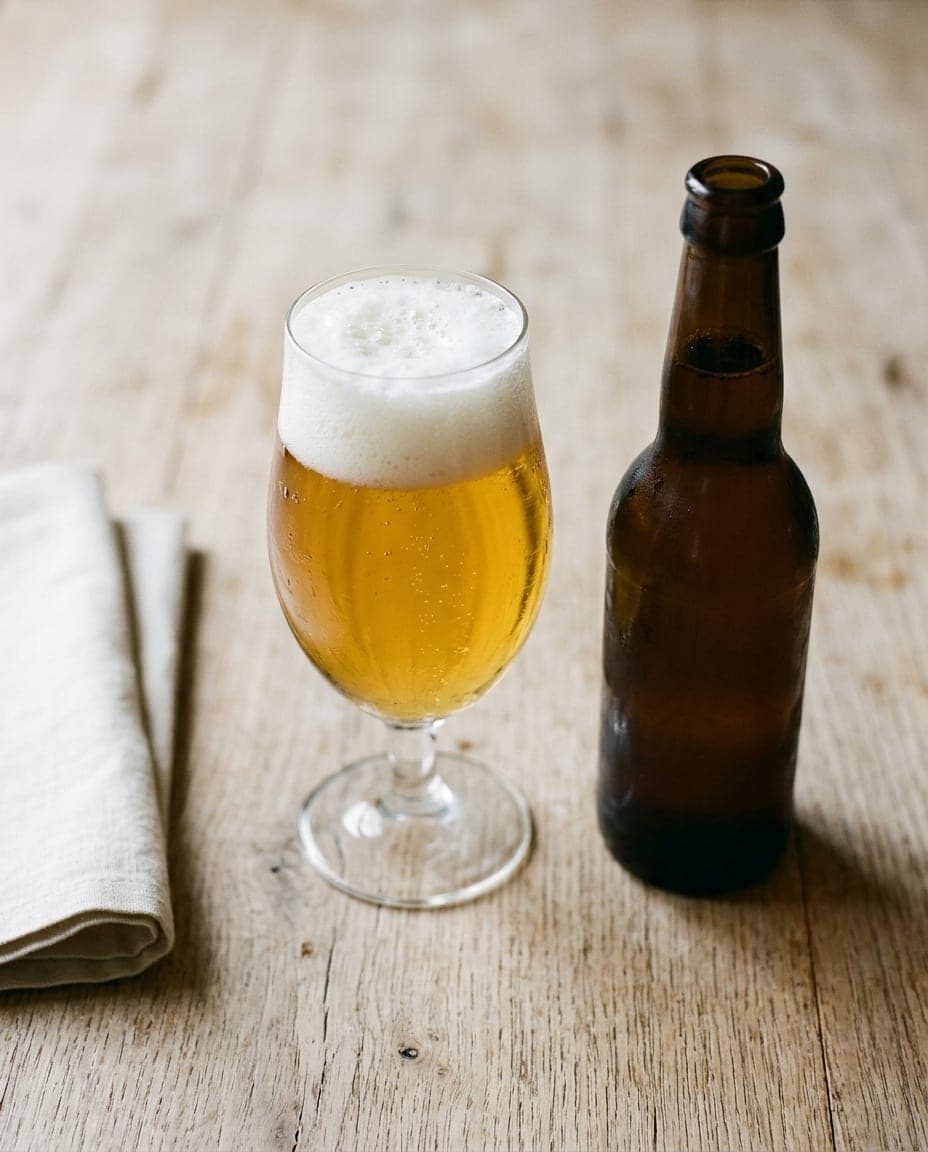
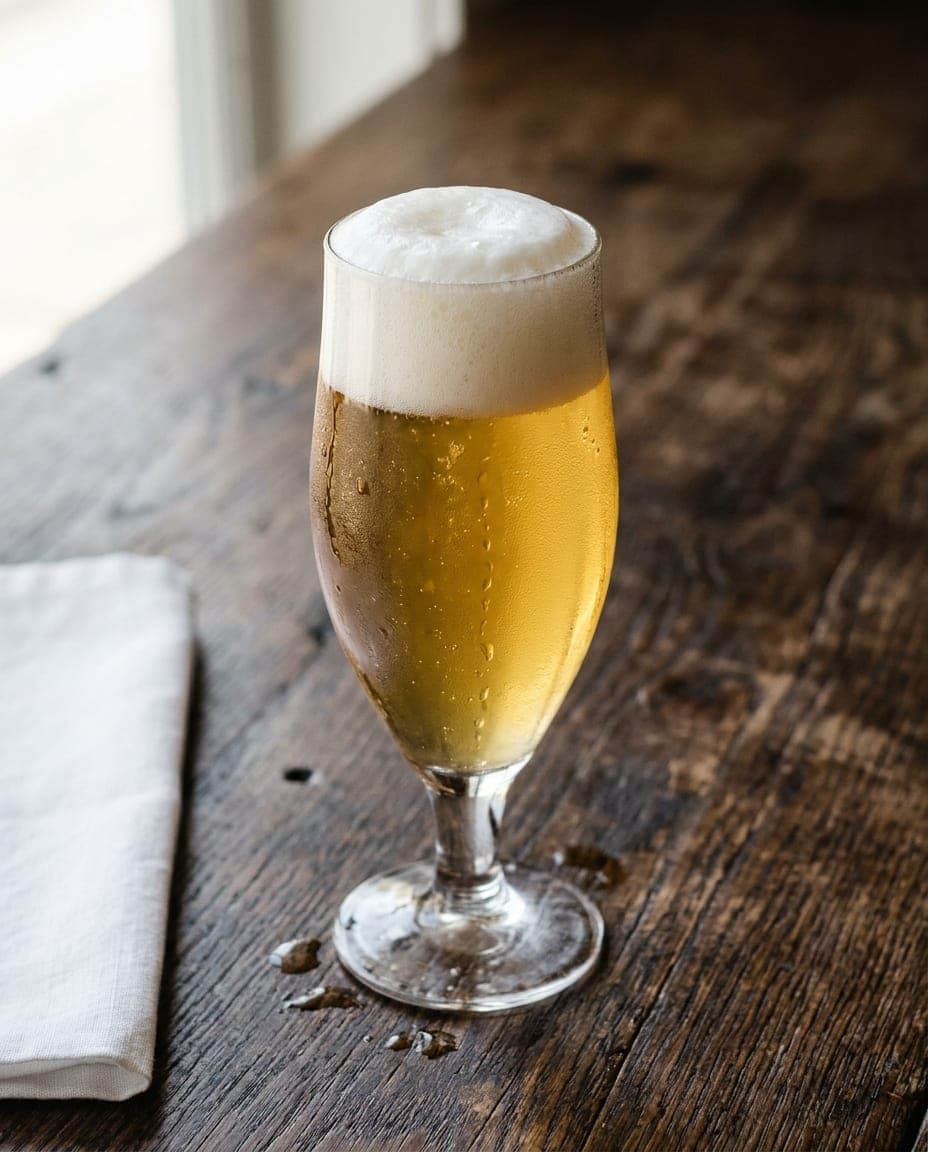
The beer is defined by its clarity and its serving vessel. It arrives at the table well-chilled in a distinctive stemmed glass, known as a chalice or stengelglas, which features a wide bowl tapering to a narrower rim. This shape is designed to support the beer's foam head while keeping the drink cold. The liquid itself is pale gold, clear and bright, with a subtle bitterness from the hops that balances the grainy sweetness of the malt.
Despite its global fame as an export brand, the beer remains bound up with its place of origin. It is the product of a brewery with deep historical ties to Leuven, tracing its lineage to the Den Hoorn brewery, first recorded more than six centuries ago. The name Stella Artois combines two elements: Stella, Latin for star, referencing the Christmas launch date and the logo; and Artois, the surname of a master brewer who took charge of the brewery in the 18th century.
The history of the Den Hoorn brewery
The origins of Stella Artois are tied to a specific location in Leuven that has been brewing beer since at least the 14th century. The brewery traces its lineage to the Den Hoorn, a historic site first recorded in 1366. For centuries, this location produced beer for the local population and the university students who flocked to the city.
The name Artois entered the story in 1708, when Sebastiaan Artois became master brewer of Den Hoorn; nine years later he bought the brewery and put his name on the façade. His family's brewery grew over the following generations, eventually leading to the creation of the modern Stella brand. Brewing has continued in Leuven ever since, today in a large modern brewery owned by AB InBev, just across the canal basin from the old Den Hoorn buildings.
Around Christmas 1926, the brewery introduced a new beer marketed for the festive season. They named it Stella, after the star that guided the Magi to Bethlehem, reflecting the winter timing of its release. The label featured a gold star, a motif that remains central to the brand's identity today. This seasonal brew proved so popular that it eventually stayed on the market year-round, eventually becoming the flagship product of the brewery and expanding far beyond the borders of Flanders.
How Leuven claims it
Leuven is a city defined by its university, where thousands of students gather each year to study, socialise, and drink. The beer belongs to this specific urban ecosystem rather than the wider countryside. While Belgian beers are often associated with rural monasteries or village breweries, Stella Artois is an urban product of one of Belgium's great brewing cities, where dozens of breweries once lined the Dijle.
The heart of this connection is the Oude Markt, a single square in the centre of Leuven lined end to end with some forty cafés and nicknamed "the longest bar in Europe". This square is the natural home for the beer. It is not uncommon to see groups gathered around small tables, sharing rounds of Stella Artois alongside simple snacks.
The Oude Markt serves as a social hub where the beer is consumed in its intended context: cold, crisp, and paired with simple snacks. The cafés here are not themed bars dedicated to craft brewing; they are traditional neighbourhood taverns where the focus is on conversation and community. In this setting, Stella Artois functions as a reliable companion rather than a curiosity to be analysed.
What goes into it
The composition of Stella Artois follows the classic pilsner template, relying on a few key ingredients to create its characteristic profile. The base consists of pale malted barley, which provides the light colour and the foundational grainy sweetness. This is balanced by hops, traditionally the Czech Saaz variety, which contribute a gentle bitterness and a subtle floral or herbal aroma without overwhelming the palate.
Water, treated to ensure consistency, allows the brewery to maintain the same taste profile regardless of seasonal changes. Yeast is used to ferment the mixture, converting sugars into alcohol and carbon dioxide.
Unlike many Belgian beers that undergo secondary fermentation in the bottle or use wild yeasts, Stella Artois is a standard lager fermented at cooler temperatures. This process results in a clean, smooth finish with no residual sweetness or complex fruit notes. The beer is filtered to ensure clarity, giving it its signature bright appearance. There are no added spices or fruits; the flavour comes entirely from the interaction of malt, hops, water, and yeast.
How to drink it
Stella Artois is served well chilled in a stemmed chalice glass, a design the brand introduced in the 1970s. The glassware is central to the brand's serving ritual, as the shape helps maintain the beer's temperature and supports a thin, persistent head of foam. The stem allows the drinker to hold the glass without warming the liquid with their hand.
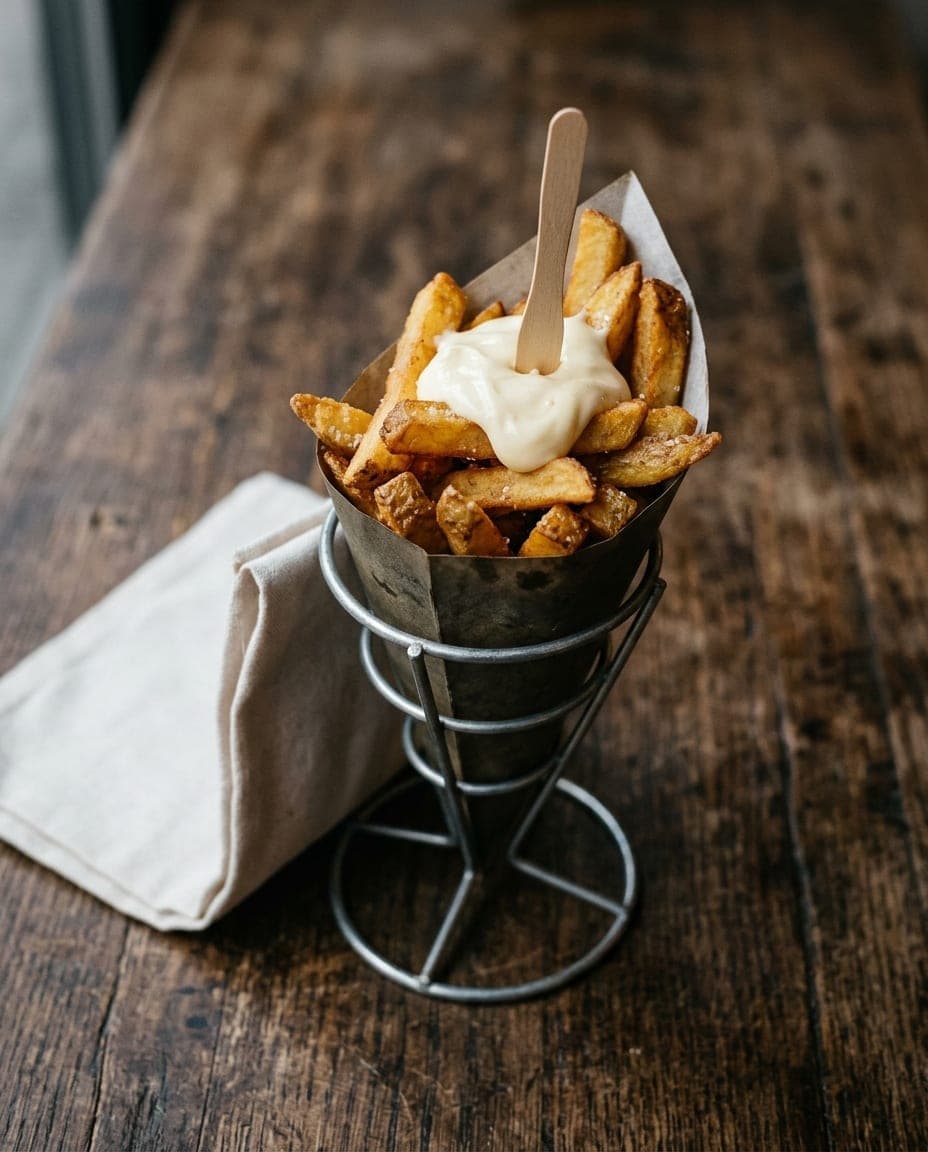
In Leuven, particularly at the cafés of the Oude Markt, the beer is rarely consumed in isolation. It pairs naturally with the city's most famous snack: Belgian fries. These are typically deep-fried in beef tallow or vegetable oil, served hot and crispy in a paper cone or a cardboard box. The saltiness of the fries complements the crispness of the lager, creating a simple but satisfying combination.
The beer also sits well with other traditional café snacks, such as small plates of cheese and salami cubes. It is an everyday drink, meant to be enjoyed casually rather than sipped slowly like a fine ale. The high carbonation and refreshing chill make it suitable for the bustling atmosphere of the Oude Markt, where noise and conversation often drown out quiet contemplation.
Curious facts
- The name means star. Stella is the Latin word for star, chosen to reflect the Christmas launch date of 1926 and the gold star that appears on every label.
- A university city staple. The beer is bound up with Leuven's status as a university town, where it remains a default choice for students and locals alike.
- The glass matters. The chalice glass is not just an aesthetic choice; it is designed to keep the beer cold and support the foam head, which is a key part of the drinking experience.
- From Christmas to year-round. Originally marketed as a Christmas beer, it became so popular that it was eventually sold throughout the year.
- A regional icon. While known globally, the beer retains its identity as a product of Leuven and the Flemish Brabant region, rather than a generic national brand.
Where to try it
The most authentic place to experience Stella Artois is in Leuven itself, specifically at one of the cafés lining the Oude Markt. These establishments offer the beer in its natural environment, where it is consumed by locals who have drunk it for generations.
Visitors looking for this specific experience should head to the square during the day or early evening. The cafés are easy to find, often marked by their traditional signage and outdoor seating areas. It is worth noting that while the beer is available in many countries, the context in which it is served in Leuven differs significantly from its presentation elsewhere.
For those interested in the history of the brewery, the old Den Hoorn buildings by the Vaartkom canal basin, now a business and events centre, remain a point of interest in the city, though the focus for most visitors is simply to enjoy a cold glass in the company of good food and lively conversation. The Oude Markt offers a glimpse into the daily life of Leuven, where Stella Artois flows freely.
Where to try it
1 destination
 Wine Tasting
Oud-heverlee
Small Flemish village near Leuven with peaceful countryside and walking paths.
Wine TastingHiking
1 region
 Wine Tasting7 destinations
Flanders
Flanders is the Dutch-speaking region of northern Belgium, and its short distances between towns hide a slow, layered kind of travel. Villages in Flanders and its larger cities share a way of asking for attention: a market square, a belfry, a stretch of canal reflecting brick gables. The pace here rewards stopping, and the region's compact size makes it possible to settle into a handful of places instead of covering ground. The medieval old towns are the backbone of any Flanders itinerary. Ghent carries the largest and least polished of them, its student population keeping the streets lived-in. Bruges is smaller and more carefully kept, its canal loop and lace-making tradition drawing people who want the postcard version of Flanders done well. Antwerp brings energy to the mix: a working port, a Baroque cathedral, a fashion district, and a diamond trade still run on old trust. Mechelen and Leuven sit close to the bigger cities and carry the same belfry-and-canal character at a quieter volume. Flemish painting shaped much of what these cities still show today. Ghent's cathedral holds an early masterpiece of Flemish painting, and Antwerp's museums keep strong collections from the city's own Baroque painters. These works were made for the churches and guild halls that still stand on the same streets, which gives them a different weight than seeing them somewhere unconnected to their making. Beer culture in Flanders runs deep and steady. Trappist monasteries brew to support their communities, following recipes kept inside their own walls for generations, and abbey beers named after those monasteries fill the menus of ordinary town cafés. A brown café in Ghent or Antwerp — dim, wood-panelled, unhurried — is where this culture is actually lived, over a single well-poured glass at a corner table. Chocolate carries a similar seriousness. Family-run chocolatiers in Bruges, Ghent and Antwerp still hand-dip pralines and temper chocolate by hand, and a short exchange with the person behind the counter often teaches more than any shop sign. A small box eaten the same afternoon suits the tradition better than a large one carried home. Flanders' countryside opens quickly beyond the larger cities into flat farmland, poplar-lined canals, and villages that rarely appear on an international itinerary. Damme, close to Bruges along a canal path, holds a windmill, a church and a handful of houses, and needs little more than that. Further south and east, the villages around Ypres carry the memory of the First World War: cemeteries, memorials, and the Last Post sounded each evening at the Menin Gate sit alongside the region's more familiar reputation for beer and lace. The coast changes the rhythm again. Oostende keeps a working fishing fleet and a long promenade, while smaller resorts such as De Haan hold onto early-twentieth-century villas and quiet dunes once summer ends. The flat sand and open sky offer a clear contrast to the cobbled squares and canal reflections inland. Traditions stay visible through the year. Processions, guild festivals, and beer events give each town its own calendar, kept by the community rather than staged for visitors. Slow travel here means choosing depth over distance. The region's small scale makes it tempting to plan a long list of towns, but it holds together better when explored through fewer stops, each one given room to open up: a market square seen at different times of day, a canal walk repeated at dusk, a return visit to the same chocolate shop once the first box runs out. Ghent and Bruges alone hold enough layers — museums, churches, quiet residential streets away from the centre — to fill a visit, and pairing either with a coastal stop or a village like Damme adds contrast without adding rush. Flanders rewards this kind of attention because so much of its character sits just below the surface: a monastery's own beer recipe, a canal town's working history before tourism arrived, a village whose only claim is a windmill and a church that has stood for generations. Most of it opens up only once the rushing stops.
Wine TastingHikingBoat RentalsLocal Cuisine